✨ VS Analyses · VacuumSpain comparison technology. Explanation created with AI from verified technical data.
Introduction
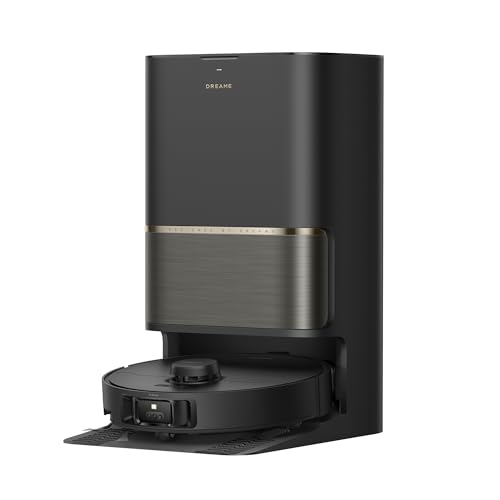
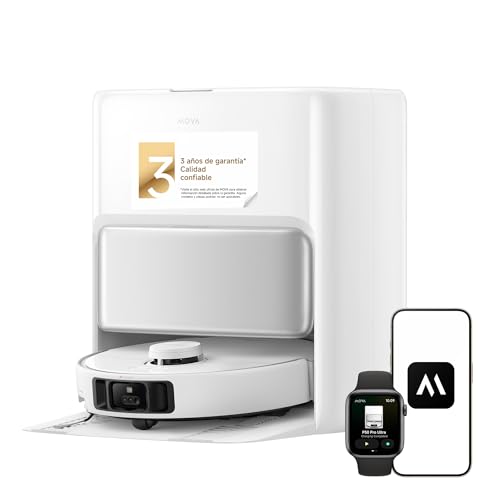
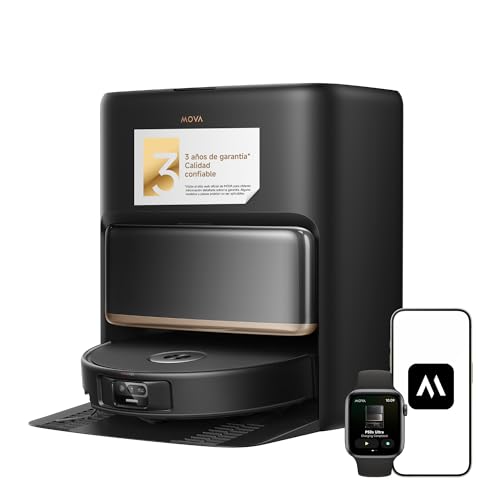
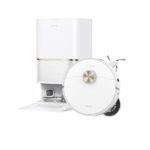
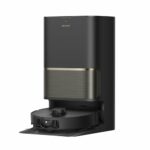
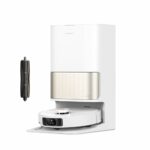
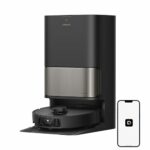
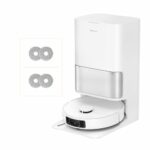
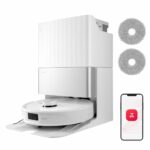
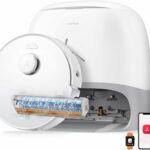
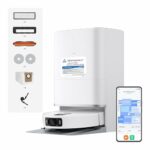
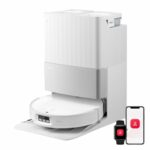
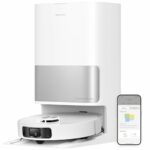
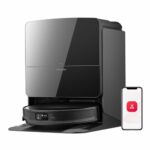
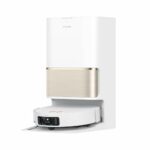
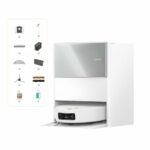
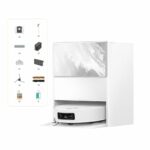
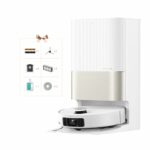
Choosing between the Dreame L50s Pro Ultra and the Mova P50 Pro Ultra and Mova P50s Ultra models involves analysing three high-end robots that share more similarities than you might expect. This makes sense: Mova is Dreame's second brand, which explains why they share design philosophy and many technical solutions. All three units integrate a complete multifunctional base with mop washing and drying, advanced navigation systems with dual AI cameras, and features designed for users seeking total autonomy in home maintenance.
The Dreame L50s Pro Ultra arrives in 2026, whilst the two Mova options were launched in 2025. We're talking about robots prepared for medium-to-large homes, with the capacity to manage both carpets and hard floors, and equipped with sufficient technology for homes with pets thanks to their anti-tangle systems and intelligent obstacle detection.
Power and Suction
Suction power marks the first important difference in this robot vacuum comparison. The Dreame L50s Pro Ultra leads with 30,000 Pa, a figure that places it in the market elite. The Mova P50s Ultra remains at 24,000 Pa, still a more than respectable power for most situations. The Mova P50 Pro Ultra offers 19,000 Pa, sufficient for regular domestic use but with less margin on long-pile carpets or ingrained dirt.
Regarding the main brush, we find two different approaches. The Dreame L50s Pro Ultra and the Mova P50s Ultra feature a dual HyperStream brush, a system with two brushes anchored at one end that minimises hair tangles. The Mova P50 Pro Ultra uses TriCut 3.0, which combines bristles with blades designed to cut hairs that wrap around. All three models raise the main brush during mopping and also lift the side brush, which is additionally extendable and anti-tangle in all cases.
For homes with pets, both the dual brush of the Dreame and that of the Mova P50s Ultra offer clear advantages over the TriCut of the P50 Pro Ultra, although the latter also incorporates effective anti-tangle solutions.
Mopping
All three robots opt for the same mopping system: two rotating mops with edge extension and Roboswing movement, which allows the robot to make a slight swing to get the mops under furniture and overhangs. Mop lifting reaches 10.5 mm in all of them, a height that allows crossing thin carpets without wetting them.
All will mop with cold water, both on the floor and when washing mops in the base. All three bases wash the mops with hot water and dry them with hot air, which speeds up the process and helps prevent bad odours. During cleaning, the robots periodically return to the base to wash the mops, ensuring they always mop with clean mops. Upon finishing, they wash them again and dry them completely.
Dirt detection works on two levels: they detect both dirt on the mops themselves and stains on the floor, adjusting cleaning behaviour as necessary. All three allow automatic mop removal at the base when you only want to vacuum, avoiding having to do it manually.
Navigation System
Here a relevant technical difference appears. The Dreame L50s Pro Ultra and the Mova P50 Pro Ultra use a traditional LiDAR turret to map the home. The Mova P50s Ultra, however, features the FlashPulse system, which dispenses with the raised turret and reduces the robot's total height to 82.5 mm.
All three are equipped with dual AI cameras and a front 3D laser sensor. The difference lies in the number of obstacles they recognise: the Dreame robot vacuum identifies up to 220 different objects, the Mova P50s Ultra reaches 200, and the Mova P50 Pro Ultra remains at 160. In practice, all recognise pets, curtains, and common household objects, but the Dreame offers greater precision in complex situations.
All three models integrate LEDs for night vision and allow remote camera access from your mobile, a useful function for surveillance or simply to see what your pet is doing when you're not at home. All incorporate intelligent cleaning via CleanGenius and AI stain recognition.
Autonomy and Battery
The Mova P50s Ultra stands out with a 6,400 mAh battery, clearly superior to the 5,200 mAh of the Dreame L50s Pro Ultra and the Mova P50 Pro Ultra. We only know the autonomy of the Mova P50 Pro Ultra: 210 minutes of continuous operation, sufficient for homes of up to 200 square metres without needing an intermediate recharge.
The P50s Ultra's greater battery capacity should translate into superior autonomy, although the manufacturer doesn't specify the exact minutes. What is evident is that all three robots are sized for large homes, with capacity to complete extensive cleans without interruptions.
Smart Features
The Dreame L50s Pro Ultra can overcome simple steps, a capability that isn't specified exactly but that goes beyond the 22 mm that the Mova P50 Pro Ultra manages. The Mova P50s Ultra also mentions capability for simple steps, which suggests similar performance to the Dreame in this aspect. This is useful in homes with small level changes between rooms or door thresholds.
All three robots integrate their own voice assistant and compatibility with Alexa and Google Home. None features a robotic arm, a function that for now only appears in very specific market models.
Multifunctional Cleaning Base
All three bases share similar architecture: third-generation tray self-cleaning, detergent tank, 3.2-litre dust bag, and hot air drying. The most notable difference is that only the Mova P50s Ultra incorporates UV disinfection, an extra that helps eliminate bacteria in the washing tray.
Regarding tanks, the Dreame L50s Pro Ultra offers 4.5 litres of clean water and 4 litres of dirty water. The two Mova models remain at 4 litres of clean water and 3.5 of dirty water. The differences are minimal in real use: we're talking about capacity for several mopping sessions without needing to refill or empty.
Only the Dreame L50s Pro Ultra offers an optional plumbing connection kit, which is purchased separately. None of the three comes with integrated connection from the factory. This kit can be convenient for those who don't want to deal with refilling and emptying tanks, although it's not a determining function for most users.
Dimensions
The diameter is identical in all three: 350 mm. Height marks the main difference. The Mova P50s Ultra, thanks to its FlashPulse system without turret, measures only 82.5 mm tall. This allows it to slip under furniture and beds where the Dreame L50s Pro Ultra and the Mova P50 Pro Ultra, at 103.8 mm height, won't reach.
This difference of more than 2 centimetres can be decisive in homes with low furniture, sofas with little height, or beds with reduced storage bases. If you need the robot to clean under all furniture without restrictions, the P50s Ultra has a clear advantage.
The bases also differ in dimensions. The Dreame measures 340 mm wide, 590 mm tall, and 457 mm deep. The two Mova models are wider (420 mm) but less tall (470 mm), with practically identical depth (458 mm). In practice, all require similar space, although the Dreame's base is more vertical and Mova's more horizontal.
Real-World User Experience
For large homes, all three robots work well, but the Mova P50s Ultra offers an advantage with its 6,400 mAh battery. If you have more than 150 square metres, that extra autonomy can make a difference in complete cleans without interruptions.
In homes with pets, the Dreame L50s Pro Ultra and the Mova P50s Ultra have an advantage with their dual HyperStream brush, which reduces tangles more effectively than the TriCut of the P50 Pro Ultra. The Dreame's greater suction power also helps with hairs embedded in carpets.
If you have low furniture or beds with reduced-height storage bases, the Mova P50s Ultra is the only viable option with its 82.5 mm height. The other two models, at over 10 centimetres, will be excluded from many spaces.
For those who value maximum hygiene, the Mova P50s Ultra adds UV disinfection in the base, a detail that may be interesting though not essential. The Dreame, with its capacity to recognise 220 obstacles, offers more precise navigation in homes with many objects or complex layouts.
Conclusion: Which to Choose?
Choose the Dreame L50s Pro Ultra if you're looking for maximum suction power (30,000 Pa), you have thick carpets or pets that shed a lot of hair, and you value the most precise navigation with recognition of 220 obstacles. Also if you're interested in having the option to connect the base to plumbing in the future, even if via an optional kit. It's the best robot vacuum of the three in terms of raw power and ability to adapt to demanding situations.
Choose the Mova P50 Pro Ultra if you're looking for a balance between performance and price, you don't need maximum power, and your home has a simple layout without too many complex obstacles. With 19,000 Pa and recognition of 160 obstacles, it remains a very capable robot, especially on hard floors and short-pile carpets. Its autonomy of 210 minutes is confirmed, which provides peace of mind for medium-to-large homes.
Choose the Mova P50s Ultra if you have low furniture and need the robot to clean under all of it without restrictions. Its 82.5 mm height is unbeatable in this comparison. Additionally, it offers the largest battery (6,400 mAh), UV disinfection in the base, and intermediate power of 24,000 Pa. It's the most versatile option for large homes with hard-to-reach spaces, especially if you value maximum autonomy and want the robot to literally reach every corner without being excluded from any furniture.