✨ VS Analyze · VacuumSpain comparison technology. AI-generated explanation based on verified technical data.
Introduction
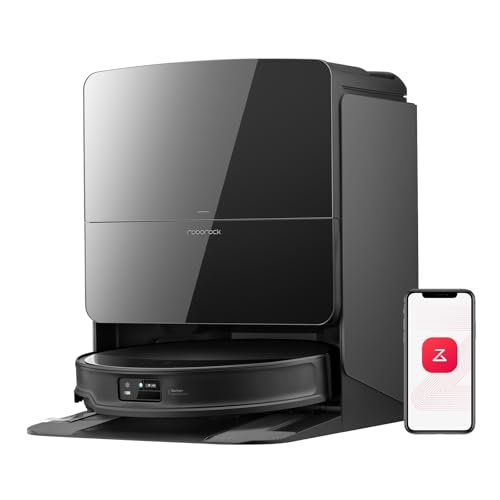
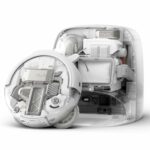
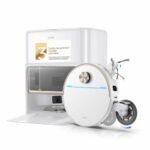
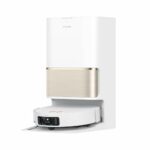
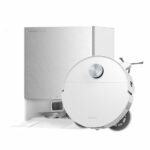
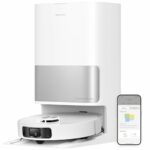
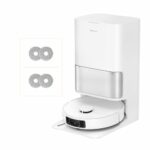
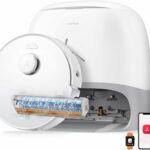
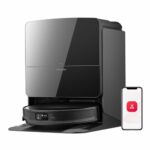
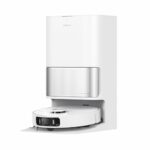
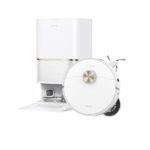
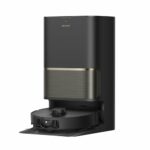
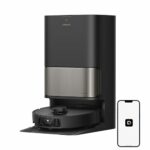
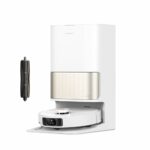
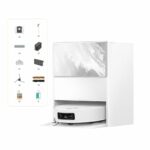
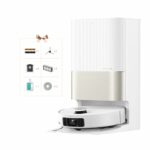
The Dreame Aqua 10 Ultra Roller and the Roborock Saros 10R represent two flagship approaches to autonomous home cleaning in 2025. Both manufacturers have equipped these models with advanced multifunctional bases, high-capacity batteries, and sophisticated AI navigation systems. However, their philosophies diverge significantly in certain areas: whilst Dreame has opted for a rotating roller mopping system with exceptional suction power, Roborock has refined its dual rotating mop design with enhanced versatility in mop management.
These are premium models designed for users seeking comprehensive automation in both vacuuming and mopping, particularly suited to medium to large homes with mixed flooring types. Understanding the technical differences between them becomes essential when deciding which robot aspirador fits specific household needs.
Power and Suction
The Dreame Aqua 10 Ultra Roller delivers a formidable 30,000 Pa of suction, making it one of the most powerful robot aspiradores currently available. This substantial advantage over the Roborock Saros 10R's 18,500 Pa translates into more aggressive pickup of embedded dirt, particularly beneficial for homes with thick carpets or heavy pet hair accumulation.
Regarding brush technology, Dreame employs its dual HyperStream roller system, which uses two brushes anchored at one end to minimise hair tangling. The Roborock Saros 10R counters with its DuoDivide anti-tangle design that channels hair towards the central suction opening. Both approaches effectively address the common problem of hair wrapping, though through different mechanical solutions.
Both models feature elevating main brushes during mopping operations, alongside extensible and elevating side brushes. These side brushes also incorporate anti-tangle technology, ensuring consistent edge cleaning without maintenance interruptions. In practical terms, the Dreame's higher suction might prove decisive for households with multiple pets or high-traffic areas, whilst the Roborock offers more than adequate power for most residential scenarios.
Mopping Performance
The mopping systems represent fundamentally different engineering choices. Dreame's 12N pressure roller applies consistent downward force across a cylindrical mopping surface, theoretically offering more uniform contact with floor irregularities. The Roborock Saros 10R uses dual rotating mops that spin to scrub surfaces, a proven design that works exceptionally well on flat, hard floors.
Both models extend their mopping components to reach edges and corners more effectively. When it comes to mop elevation, the Dreame lifts 14 mm and includes a curtain mode for additional clearance, whilst the Roborock offers adjustable lift between 12-22 mm. This greater flexibility in the Roborock allows better adaptation to different carpet pile heights.
A notable distinction appears in floor mopping temperature: the Dreame Aqua 10 Ultra Roller uses cold water during operation, whereas the Roborock Saros 10R employs warm water, which typically improves cleaning efficacy on greasy residues. At the base, the Dreame washes mops with hot water, as does the Roborock, ensuring thorough sanitisation between cleaning cycles.
The Roborock Saros 10R can automatically dismount its mops at the base when vacuuming-only mode is selected, preventing unnecessary mop wear and avoiding dragging damp pads across carpets. The Dreame lacks this automatic removal feature. Both robots detect dirt on mops and floors, triggering rewashing or additional passes when necessary. Conviene considerar these differences if you frequently alternate between vacuuming and mopping tasks.
Navigation System
Navigation intelligence relies on sophisticated sensor arrays in both models. The Dreame Aqua 10 Ultra Roller employs a retractable LiDAR system combined with dual RGB cameras, whilst the Roborock Saros 10R uses its StarSight 2.0 navigation with dual cameras. Both incorporate frontal 3D laser sensors for close-range obstacle detection and LED illumination for low-light conditions.
Where they diverge significantly is in obstacle recognition capacity. The Dreame's AI Sage 15.0 octa-core processor can identify 240 distinct objects, substantially more than the Roborock's 108 recognised obstacles powered by the RR Mason 11.0 algorithm. This expanded recognition database means the Dreame can theoretically make more nuanced decisions about how to navigate around unfamiliar items.
The Dreame also detects curtains specifically, allowing it to navigate around hanging fabrics without becoming entangled—a feature absent in the Roborock. Both models recognise pets and offer remote camera access, useful for checking on animals or general home monitoring whilst away. In practice, this enhanced object recognition becomes valuable in cluttered environments or homes with children's toys scattered across floors.
Battery and Autonomy
Both robot aspiradores share identical 6,400 mAh battery capacity, yet their runtime differs slightly. The Dreame Aqua 10 Ultra Roller operates for approximately 160 minutes on a single charge, whilst the Roborock Saros 10R extends this to 180 minutes. This twenty-minute advantage in the Roborock likely stems from its lower suction power consumption and different motor efficiency characteristics.
For most homes under 200 square metres, either runtime proves sufficient to complete a full cleaning cycle without recharging. Larger properties might see the Roborock complete the task in a single session where the Dreame requires a mid-clean recharge, though modern robots handle this automatically by returning to base and resuming afterwards.
Smart Functions
Both models can surmount simple obstacles up to a certain height, facilitating movement over door thresholds and minor floor transitions. Neither incorporates a robotic arm, keeping their designs focused on core vacuuming and mopping capabilities.
Each robot aspirador includes its own proprietary voice assistant alongside compatibility with external systems like Alexa and Google Home. This dual approach allows users to choose between manufacturer-specific commands or integrate the robots into broader smart home ecosystems. The AI-driven cleaning systems—CleanGenius in the Dreame and SmartPlan 2.0 in the Roborock—both analyse room layouts and adjust cleaning patterns accordingly, learning household patterns over time.
Multifunctional Cleaning Base
The bases handle multiple maintenance tasks automatically. Both empty the robot's dust container, wash mops with hot water, and store considerable quantities of clean and dirty water. The Dreame's base holds a 3.2-litre dust bag compared to the Roborock's 2.5-litre capacity, meaning slightly less frequent bag replacements.
Water tank capacities show minor differences: both use 4-litre clean water reservoirs, but the Dreame's dirty water tank holds 3.5 litres versus 3 litres in the Roborock. These modest variations rarely impact daily use.
The Roborock Saros 10R features version 2.0 of its tray self-cleaning system, automatically rinsing the area where mops are washed to prevent residue buildup. This function isn't specified for the Dreame base. The Roborock also dries mops with hot air, whilst mop drying details for the Dreame remain unspecified in available data.
Regarding detergent dispensing, the Dreame incorporates dual detergent tanks, potentially allowing separate cleaning solutions for different floor types or cleaning intensities. The Roborock uses a single detergent reservoir. The Dreame offers an optional plumbing connection kit (purchased separately) for continuous water supply, eliminating manual refilling—this option doesn't exist for the Roborock.
Dimensions
Physical dimensions reveal important practical considerations. The Roborock Saros 10R measures just 79.8 mm in height, making it one of the slimmest robot aspiradores available and capable of accessing beneath most furniture. The Dreame Aqua 10 Ultra Roller stands considerably taller at 97.5 mm, potentially limiting access under low-clearance sofas or cabinets.
Diameter differs minimally: 350 mm for the Dreame versus 353 mm for the Roborock, an insignificant variation in manoeuvrability. The onboard dust container in the Roborock holds 270 ml compared to 220 ml in the Dreame, though this matters little given both return frequently to their bases for emptying.
Base station footprints differ slightly. The Dreame base measures 420 mm wide, 500 mm tall, and 440 mm deep, whilst the Roborock occupies 381 mm width, 488 mm height, and 475 mm depth. The Roborock base is narrower but deeper, considerations worth measuring against available floor space before purchase.
Real-World Usage Experience
For homes with pets, the Dreame's superior 30,000 Pa suction and dual HyperStream brushes offer compelling advantages in managing shedding, particularly during seasonal coat changes. The higher suction also benefits households with deep-pile carpets or rugs where debris embeds more stubbornly.
The Roborock Saros 10R's 79.8 mm profile makes it ideal for furniture-dense environments where accessing beneath beds, sofas, and cabinets proves essential. Its warm water mopping and automatic mop removal enhance convenience for users who frequently switch between floor types throughout their homes.
Larger properties might appreciate the Roborock's extended 180-minute runtime, reducing the likelihood of mid-clean recharging interruptions. The Dreame's dual detergent tanks appeal to households with varied flooring that benefits from specialised cleaning solutions—perhaps one for sealed wood and another for tiles.
Maintenance frequency differs slightly: the Dreame's larger 3.2-litre dust bag requires replacement less often, though its taller profile may necessitate more frequent checks under low furniture. The Roborock's automatic tray cleaning and hot air mop drying reduce manual intervention, particularly valuable for users seeking maximum automation.
Conclusion: Which to Choose?
Choose the Dreame Aqua 10 Ultra Roller if: maximum suction power is paramount, particularly with multiple pets or thick carpets; you value extensive obstacle recognition for complex, cluttered environments; dual detergent tanks suit your varied flooring needs; and furniture clearance isn't restrictive in your home. The optional plumbing kit also appeals if you prefer eliminating water tank refills entirely.
Choose the Roborock Saros 10R if: accessing beneath low-clearance furniture matters significantly; warm water mopping improves your floor cleaning results; automatic mop removal streamlines your workflow between vacuuming and mopping; and you prefer the convenience of automatic base tray cleaning with hot air mop drying. Its slightly longer runtime also benefits larger homes completed in single sessions.
Both represent excellent choices among 2025's mejor robot aspirador options, with the decision ultimately hinging on whether raw cleaning power and recognition capability (Dreame) or refined automation and compact access (Roborock) better matches your household's specific requirements.