✨ VS Analyses · VacuumSpain comparison technology. Explanation created with AI from verified technical data.
Introduction
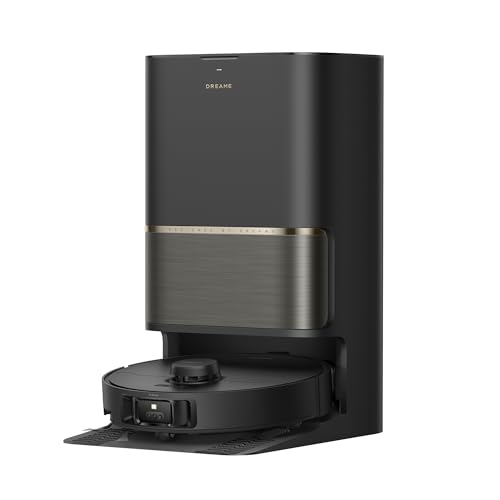
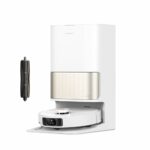
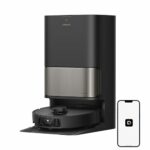
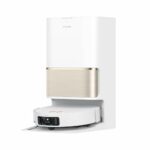
The Dreame Aqua 10 Ultra Roller and the Dreame L50s Pro Ultra represent two distinct approaches to automated floor cleaning from the same manufacturer. The Aqua 10 Ultra Roller arrived in 2025 with an innovative roller-based mopping system, whilst the L50s Pro Ultra launched in 2026 featuring a more traditional dual rotating mop design. Both models deliver 30,000 Pa suction power and come equipped with comprehensive multifunctional bases that handle auto-emptying, mop washing, and drying.
These robots target households seeking premium cleaning performance with minimal manual intervention. The Aqua 10 Ultra Roller focuses on delivering commercial-grade mopping through its unique roller mechanism, whereas the L50s Pro Ultra offers automatic mop removal functionality that appeals to users who frequently switch between vacuuming and mopping tasks.
Power and Vacuuming
Both robots deliver identical 30,000 Pa suction, which provides strong performance across different floor types. They share the same HyperStream dual brush system, a design that minimises hair tangles by using two brushes anchored at one end. This proves particularly effective in homes with pets or long-haired residents.
The side brush configuration matches across both models. Each features an extendable side brush that reaches into corners more effectively, plus elevation capability during mopping to prevent the brush dragging through wet areas. The anti-tangle design extends to the side brush as well, reducing maintenance frequency.
Where the Aqua 10 Ultra Roller differs is in battery capacity. Its 6,400 mAh cell outpaces the 5,200 mAh unit in the L50s Pro Ultra, translating to approximately 160 minutes of runtime for the former. This extended autonomy suits larger properties or homes where the robot needs to complete extensive cleaning cycles without returning to recharge.
Mopping Performance
The mopping systems represent the most fundamental difference between these robots. The Aqua 10 Ultra Roller employs a roller-based mechanism applying 12N of downward pressure, mimicking the action of a traditional mop being pressed firmly against the floor. This roller extends to clean edges and combines with a 14 mm mop lift system that includes complete coverage elevation.
The L50s Pro Ultra takes a different path with dual rotating mops that extend outward to reach edges, incorporating a movement system for improved border cleaning. Its 10.5 mm mop elevation proves sufficient for most carpets, though slightly less than its sibling model.
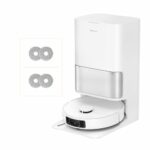
What sets the L50s Pro Ultra apart is its ability to automatically remove mops at the base station. This allows the robot to vacuum without any mopping components attached, eliminating the need to manually detach pads when you only want to vacuum. The Aqua 10 Ultra Roller lacks this feature entirely.
Both models detect dirt on mops and floors, triggering additional cleaning passes when necessary. They return to their bases during cleaning sessions to wash mops with hot water, ensuring consistent mopping quality throughout the job. The L50s Pro Ultra dries mops with hot air, whilst the drying specification for the Aqua 10 Ultra Roller remains unclear from available data.
Navigation System
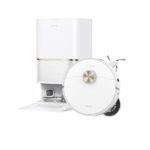
Navigation technology proves nearly identical. The Aqua 10 Ultra Roller uses a retractable LiDAR system, allowing the robot to achieve its lower 97.5 mm profile height. The L50s Pro Ultra features a traditional LiDAR turret and stands 103.8 mm tall, which may limit access under certain furniture pieces.
Both robots incorporate dual RGB cameras working alongside 3D laser sensors for obstacle detection. The Aqua 10 Ultra Roller recognises 240 different object types, slightly ahead of the 220 objects identified by the L50s Pro Ultra. In practical terms, this difference rarely impacts daily cleaning performance.
Remote camera access comes standard on both models, alongside LED illumination for navigation in dark spaces. Pet recognition and curtain detection prevent the robots from disturbing animals or tangling in window dressings. The CleanGenius AI system optimises cleaning patterns based on room layout and dirt levels detected during operation.
Battery and Autonomy
The Aqua 10 Ultra Roller's 6,400 mAh battery delivers 160 minutes of runtime, providing ample capacity for larger homes or thorough cleaning sessions. This larger cell requires more physical space within the robot chassis but translates to fewer interruptions during cleaning.
The L50s Pro Ultra's 5,200 mAh battery offers reduced capacity, though specific runtime figures aren't available. For most average-sized homes, this proves adequate, particularly given the robot's efficient navigation and ability to resume cleaning after recharging if necessary.
Smart Features
Both robots handle simple obstacles identically, climbing over thresholds and minor floor transitions without assistance. Neither model includes a robotic arm for advanced object manipulation.
Each robot features its own voice assistant alongside compatibility with external systems like Alexa and Google Home. This dual approach allows for voice control whether you prefer using Dreame's native assistant or integrating the robot into existing smart home ecosystems.
Multifunctional Base Station
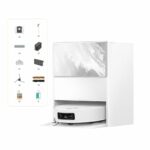
The base stations share core functionality: auto-emptying into 3.2-litre dust bags, hot water mop washing, and detergent dispensing. The Aqua 10 Ultra Roller includes dual detergent tanks, potentially allowing different cleaning solutions for various floor types, whilst the L50s Pro Ultra features a single detergent reservoir.
A significant distinction emerges in base maintenance. The L50s Pro Ultra incorporates third-generation self-cleaning for its washing tray, automatically maintaining the area where mops are cleaned. The Aqua 10 Ultra Roller requires manual cleaning of this component.
Water capacity differs slightly between models. The Aqua 10 Ultra Roller holds 4 litres of clean water and 3.5 litres of dirty water, whilst the L50s Pro Ultra increases these to 4.5 litres and 4 litres respectively. For extensive mopping sessions, the additional capacity reduces refill frequency.
Both bases support optional plumbing connection kits, purchased separately, allowing automatic water refilling and drainage. Neither includes this as standard, so it remains an additional investment for users wanting truly hands-free operation.
Dimensions
At 97.5 mm tall, the Aqua 10 Ultra Roller fits under more furniture than the 103.8 mm L50s Pro Ultra. This 6.3 mm difference may seem minor but proves crucial for cleaning beneath low-clearance sofas, beds, or cabinets. Both robots share a 350 mm diameter.
The robot's dust bin capacity reaches 220 ml on the Aqua 10 Ultra Roller versus 250 ml on the L50s Pro Ultra. Given both auto-empty regularly, this difference matters little in practice. More notable is the onboard water tank: 160 ml on the Aqua 10 Ultra Roller compared to just 80 ml on the L50s Pro Ultra, though both return to base for mop washing during cleaning sessions.
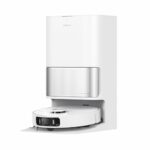
Base station footprints differ considerably. The Aqua 10 Ultra Roller's base measures 420 mm wide, 500 mm tall, and 440 mm deep. The L50s Pro Ultra's base stands taller at 590 mm but narrower at 340 mm wide and 457 mm deep. Consider your available floor space when choosing between these configurations.
Real-World Usage
The Aqua 10 Ultra Roller suits homes prioritising mopping performance and extended runtime. Its roller-based mopping with 12N pressure delivers deeper cleaning on hard floors, whilst the 6,400 mAh battery handles larger properties without interruption. The lower profile proves advantageous for furniture clearance, though you'll need to manually clean the base's washing tray periodically.
The L50s Pro Ultra appeals to users who frequently alternate between vacuuming-only and combined cleaning modes. Automatic mop removal eliminates manual intervention when you want pure vacuuming performance. The third-generation self-cleaning tray reduces base maintenance, and the slightly larger base water tanks extend mopping capacity. The taller profile may limit access under some furniture.
For pet owners, both robots perform identically. The HyperStream dual brush system, anti-tangle features, and strong 30,000 Pa suction handle pet hair effectively. The dual cameras and extensive object recognition prevent collisions with pet bowls, toys, or the animals themselves.
Conclusion: Which to Choose?
Choose the Dreame Aqua 10 Ultra Roller if: you prioritise mopping performance above all else and want the deepest clean on hard floors. The roller system with 12N pressure outperforms traditional mops for stubborn dirt. Opt for this model if you have a larger home benefiting from the extended 160-minute runtime, or if low-clearance furniture requires the 97.5 mm profile height. The dual detergent tanks suit households with multiple floor types requiring different cleaning solutions.
Choose the Dreame L50s Pro Ultra if: you value convenience features like automatic mop removal for vacuuming-only sessions without manual intervention. The self-cleaning washing tray reduces base maintenance, appealing to users wanting minimal upkeep. Select this option if your furniture clearance exceeds 104 mm and you prefer the slightly larger water capacity for extended mopping sessions. The 2026 release suggests more recent technology refinements, though core performance remains comparable to its predecessor.