✨ VS Analyses · VacuumSpain comparison technology. Explanation created with AI from verified technical data.
Introduction
The Dreame D20 and Dreame D20 Pro Plus represent the brand's 2025 lineup, sharing the same core cleaning power but diverging significantly in their approach to automation. Both models deliver 13,000 Pa suction and feature the innovative dual HyperStream brush system, which minimises hair tangles through its unique twin-anchor design. The 5,200 mAh battery provides solid runtime for medium to large homes, though the practical difference in autonomy becomes clearer when examining the specifications.
The fundamental distinction lies in how much maintenance you're willing to handle yourself. The D20 follows a more traditional route with manual emptying, whilst the D20 Pro Plus incorporates a self-emptying base with a 5-litre dust bag. This comparison explores which approach suits different households, from compact flats to larger properties with pets.
Power and Suction
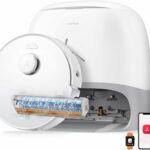
Both machines match each other with 13,000 Pa suction, placing them firmly in the mid-to-upper performance bracket for 2025. This level handles everyday debris, pet hair, and fine dust across hard floors and low-pile carpets without issue. The identical dual HyperStream brush configuration means neither model suffers from the chronic hair-wrapping problems that plague conventional roller designs. The twin brushes anchor at one end only, allowing hair to slide off rather than wind around the mechanism.
Where the D20 Pro Plus pulls ahead is in the side brush department. It incorporates an extendable mechanism that swings outward to reach into corners and along skirting boards more effectively. The anti-tangle feature on this side brush prevents the buildup of hair and fibres that typically accumulate after a few cleaning sessions. The D20 uses a standard fixed side brush without these enhancements, which means you'll likely spend more time cutting away tangled hair with scissors.
Neither robot offers brush elevation during mopping, so the main roller continues spinning when the mop pad is attached. In practice, this works adequately on hard floors but isn't ideal for delicate surfaces where you might want gentler treatment.
Mopping Performance
The mopping systems are identical across both models: static mop pads with cold water only, no extension for edge coverage, and no automatic lifting. This keeps things simple but limits effectiveness compared to higher-end alternatives with rotating or vibrating pads.
Both robots mop with cold water drawn from the 350 ml onboard tank. There's no heated water option, no automatic mop removal when returning to the base, and no dirt detection to trigger additional passes over stubborn marks. The mops don't lift when crossing carpets or rugs, so you'll need to remove them manually or use the app to create no-mop zones.
For light maintenance mopping on tiles, vinyl, or sealed wood, this setup manages acceptably. Expecting deep cleaning or stain removal would be unrealistic given the static pad design and lack of automated mop maintenance.
Navigation System
Navigation hardware is shared between the two: a 360-degree LiDAR turret combined with a front-mounted 3D laser sensor for obstacle detection. This dual-sensor approach maps rooms accurately and avoids common hazards like cables, shoes, and furniture legs.
Neither robot includes AI-powered camera recognition, so they won't distinguish between specific object types or provide visual feedback through the app. There's no pet recognition, curtain detection, or night-vision LED. Remote camera access isn't available either, which rules out using the robot as a mobile security device.
The navigation performs reliably for structured cleaning patterns and creating virtual boundaries. Just don't expect the advanced object identification found in premium models with front-facing cameras and neural processing.
Battery and Autonomy
The 5,200 mAh battery capacity matches across both models, but Dreame only specifies runtime for the D20 Pro Plus: 285 minutes in standard mode. That translates to roughly four and a half hours, sufficient for covering large homes of 250-300 square metres in a single session.
The absence of stated autonomy for the standard D20 leaves a gap in direct comparison, though the identical battery suggests similar performance. In real-world use, runtime varies depending on suction level, floor type, and how often the robot recalculates routes around obstacles.
Both machines support automatic recharge-and-resume, returning to the base when power runs low and continuing from where they left off once recharged.
Smart Features
The 20 mm obstacle-climbing ability is standard on both robots, allowing them to mount door thresholds, transition strips, and thick rugs without getting stranded. This measurement sits in the average range for 2025 models.
Voice control works through external assistants like Alexa and Google Home rather than an integrated assistant. Neither robot includes a robotic arm for advanced manipulation tasks, which remains a feature reserved for experimental or ultra-premium models.
Self-Cleaning Base
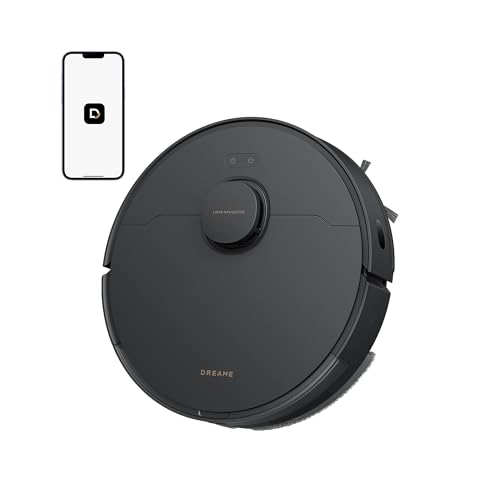
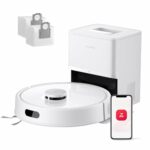
This is where the comparison becomes straightforward. The D20 ships with a simple charging dock measuring 126 mm wide, 92.6 mm tall, and 130 mm deep—essentially a low-profile pad that tucks against walls without consuming much floor space.
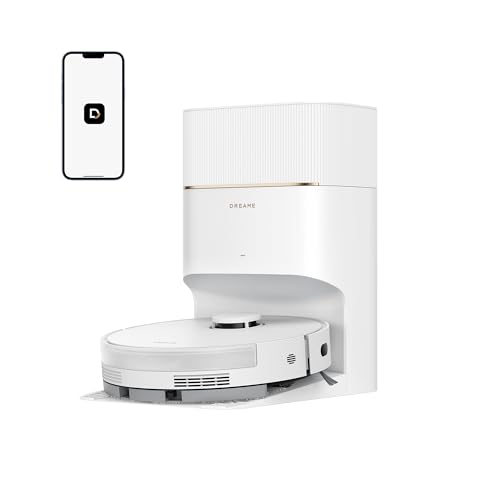
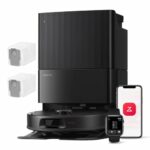
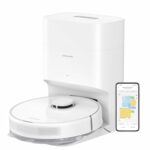
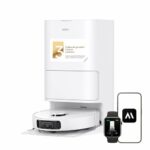
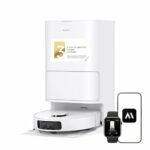
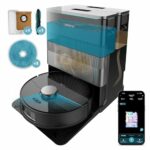
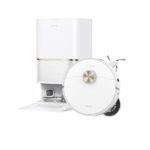
The D20 Pro Plus comes with a self-emptying station that dwarfs the basic charger: 298 mm wide, 452 mm tall, and 440 mm deep. The integrated 5-litre dust bag holds weeks of debris depending on household size and shedding pets. When the robot docks, suction transfers dust from the 500 ml onboard bin into this larger bag.
Neither base offers mop washing, drying, UV sterilisation, or detergent dispensing. There's no self-cleaning tray or plumbing connection kit. The Pro Plus base focuses purely on dust management, which it handles effectively but without the full-service approach of true multifunction stations.
The D20's larger 700 ml dust bin partially compensates for the lack of auto-emptying, requiring less frequent manual trips to the bin compared to models with smaller onboard capacity.
Dimensions
The robots themselves are identical: 350 mm diameter and 96.8 mm tall. This height allows them to slip under most sofas, beds, and cabinets with standard clearance. The circular footprint navigates tight spaces reasonably well, though square-cornered rooms will always present challenges for round robots.
Base size becomes the deciding factor for placement. The D20's compact charging pad fits almost anywhere—behind doors, in cupboards, or against short wall sections. The D20 Pro Plus demands dedicated floor space for its 440 mm-deep station, which protrudes significantly from the wall and stands nearly half a metre tall. Measure your intended location before committing to the Pro Plus version, especially in smaller homes where floor space comes at a premium.
Real-World Usage Scenarios
For flats and smaller homes up to 100 square metres without pets, the D20 makes practical sense. The 700 ml bin handles several cleaning sessions before needing emptying, and the compact base preserves valuable floor space. Manual maintenance takes minutes and keeps costs down.
The D20 Pro Plus suits larger properties, particularly those with shedding pets. The self-emptying base reduces interaction to replacing the 5-litre bag every month or two, whilst the extendable side brush with anti-tangle technology copes better with hair accumulation along edges. The stated 285-minute runtime ensures complete coverage of expansive floor plans without mid-clean recharging.
Both models handle hard floors and low-pile carpets adequately. The mopping function works for maintenance cleaning but won't replace manual mopping for deep sanitation. Homes with multiple area rugs require careful zone mapping since the mops don't lift automatically.
Conclusion: Which to Choose?
Choose the Dreame D20 if: you live in a compact space where the smaller base fits better, don't mind emptying the dust bin regularly, want to minimise upfront cost, or prefer straightforward operation without additional automation. The larger 700 ml onboard capacity reduces emptying frequency compared to typical robot vacuums.
Choose the Dreame D20 Pro Plus if: you want minimal maintenance involvement, have pets that shed heavily, need the extended autonomy for larger homes, value the improved edge cleaning from the extendable side brush, or have suitable floor space for the larger self-emptying base. The convenience of weekly or monthly bag changes rather than daily bin emptying justifies the price difference for many households.
Neither model represents a complete hands-off solution due to the basic mopping system and lack of automated mop maintenance. They're best viewed as capable robot aspiradors with supplementary mopping rather than comprehensive floor-care systems. The choice ultimately depends on how much automation you need and whether your home layout accommodates the Pro Plus base dimensions.