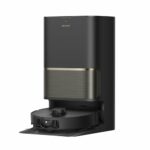
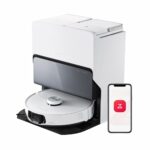
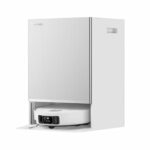
✨ VS Analyses · VacuumSpain comparison technology. Explanation created with AI from verified technical data.
Introduction
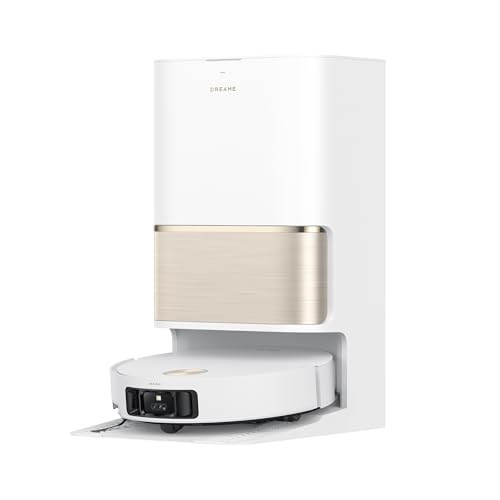
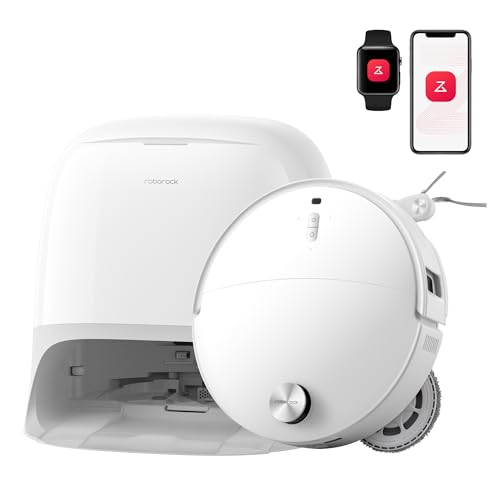
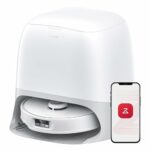
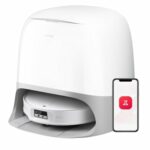
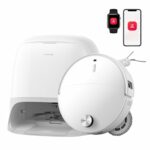
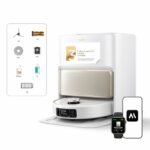
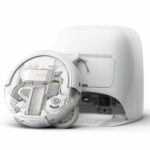
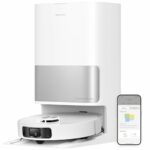
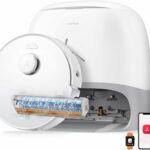
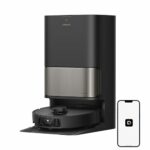
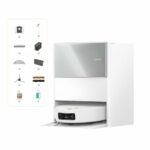
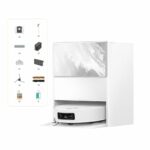
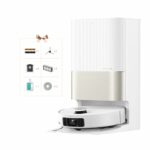
The Dreame L50 Pro Ultra and the Roborock Qrevo Curv 2 Pro represent two of the most advanced robot vacuum cleaners launched in 2025. Both models come equipped with multifunctional bases that handle everything from self-emptying to mop washing and drying, making them suitable for users who want minimal maintenance. These aren't entry-level devices—they're designed for households that demand serious cleaning performance with intelligent automation.
The Dreame model brings its signature HyperStream dual brush system and RoboSwing technology, whilst Roborock counters with its DuoDivide anti-tangle design and SmartPlan 3.0 intelligence. Both feature retractable LiDAR, dual AI cameras, and comprehensive obstacle avoidance. For anyone looking to invest in a premium robot aspirador in 2025, understanding the differences between these two flagship models becomes essential.
Power and Suction
The Roborock Qrevo Curv 2 Pro delivers 25,000 Pa of suction power, which gives it a noticeable advantage over the Dreame L50 Pro Ultra's 19,500 Pa. In practical terms, this extra muscle can make a real difference when dealing with ground-in dirt on carpets or stubborn debris in grout lines.
Where things get interesting is in the brush design. The Dreame employs its HyperStream dual brush system—two brushes anchored at one end that work to prevent hair tangles. Roborock opts for its DuoDivide anti-tangle design, which pushes hair towards the central suction opening. Both approaches tackle the same problem from different angles, and both prove effective for homes with pets or long-haired residents.
Both models can elevate their main brushes when mopping, preventing cross-contamination between vacuuming and wet cleaning. The side brushes on both extend to reach into corners, and both feature anti-tangle technology. However, only the Dreame can elevate its side brush during mopping—a detail that prevents the brush from dragging through wet areas and potentially spreading dirt.
Mopping Performance
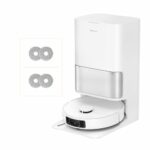
Both robot aspirador models use dual rotating mops for wet cleaning. The Dreame L50 Pro Ultra incorporates RoboSwing technology, which allows the robot to perform a wiggling motion that extends the mop slightly under furniture edges and skirting boards. The Roborock Qrevo Curv 2 Pro features standard mop extension without the wiggling movement, though it still reaches edges effectively.
Mop lift height differs between the two. The Dreame offers 10.5 mm of elevation, whilst the Roborock provides adjustable lift ranging from 7 mm to 17 mm. That upper range on the Roborock means it can better clear thicker carpets and rugs without dragging wet mops across them.
Both bases wash mops with hot water and dry them using warm air—crucial features for maintaining hygiene and preventing odours. The third-generation self-cleaning tray technology appears on both models, ensuring the washing area itself stays clean. Both robots can detect dirty mops and re-wash them, and both identify heavily soiled floor areas for additional passes. They can also automatically remove their mops at the base when you only want vacuuming.
One significant difference: the Dreame base includes a detergent dispenser, whilst the Roborock does not. For those who prefer adding cleaning solution to their mopping routine, this gives the Dreame an edge.
Navigation System
Both models use retractable LiDAR for mapping and navigation, paired with dual AI cameras and 3D laser sensors at the front. This combination allows for precise room mapping and intelligent obstacle avoidance. LED lighting assists both robots when cleaning in low-light conditions, and remote camera access lets you check in on your home through the app.
The Roborock Qrevo Curv 2 Pro can recognise up to 200 different objects, compared to 180 for the Dreame L50 Pro Ultra. Both identify pets and adjust their behaviour accordingly. However, only the Dreame includes specific curtain detection, which helps it navigate around hanging fabrics without getting tangled.
The Dreame runs on AI Sage 13.0 with octa-core processing and CleanGenius AI for intelligent cleaning decisions. Roborock counters with SmartPlan 3.0 intelligence. Both systems learn your home layout and adapt cleaning patterns based on room type and floor condition. Both robots also feature built-in voice assistants alongside compatibility with Alexa and Google Home.
Battery and Autonomy
Both models pack 6,400 mAh batteries, but runtime tells a different story. The Roborock Qrevo Curv 2 Pro manages 290 minutes on a single charge, whilst the Dreame L50 Pro Ultra runs for 200 minutes. That 90-minute difference becomes relevant in larger homes where the robot might need to complete extensive cleaning sessions without returning to recharge.
For most homes under 200 square metres, either robot should handle a complete cleaning cycle without issue. Larger properties benefit from the extended runtime of the Roborock, particularly when combining vacuuming and mopping in a single session.
Smart Functions
Both robots can climb obstacles up to 4 cm high, allowing them to transition between different floor surfaces and clear common household thresholds. Neither model includes a robotic arm, and neither requires one given their comprehensive sensor arrays and intelligent navigation.
The built-in voice assistants on both models let you issue commands directly to the robot without pulling out your phone. This proves handy when you want to quickly spot-clean a spill or send the robot back to its base.
Multifunctional Base Station
Both bases handle the complete maintenance cycle: self-emptying the dust bin, washing mops with hot water, and drying them with warm air. The third-generation self-cleaning tray technology keeps the washing area hygienic on both models.
Storage capacity differs notably. The Dreame base holds a 3.2-litre dust bag compared to the Roborock's 2.5-litre capacity. For clean water, the Dreame provides 4.5 litres versus 4 litres on the Roborock. Dirty water storage is 4 litres on the Dreame and 3 litres on the Roborock. These differences mean the Dreame requires slightly less frequent maintenance—particularly the dust bag, which you'll empty less often.
The Dreame base includes that detergent dispenser, which automatically adds cleaning solution during mop washing. The Roborock lacks this feature. Dreame also offers an optional plumbing connection kit (purchased separately) that can connect the base directly to your home's water supply and drainage, though this isn't integrated from the factory. Roborock doesn't offer this option at all.
Dimensions and Footprint
The robots measure nearly identically in diameter—350 mm for the Dreame versus 352 mm for the Roborock. Height makes the real difference: the Roborock stands 79.8 mm tall whilst the Dreame measures 89 mm. That 9.2 mm reduction helps the Roborock slip under lower furniture where the Dreame might struggle.
Base dimensions vary considerably. The Dreame base measures 340 mm wide, 590.5 mm tall, and 456.7 mm deep. The Roborock base forms a more compact cube at 450 mm in all dimensions. The Roborock base takes up more floor space width-wise but sits lower, which might matter depending on where you plan to position it.
Real-World Usage
For larger homes, the Roborock Qrevo Curv 2 Pro makes more sense. That 290-minute runtime and higher 25,000 Pa suction power tackle extensive floor areas without needing a mid-clean recharge. The lower profile also means it reaches under more furniture pieces during its cleaning routine.
The Dreame L50 Pro Ultra suits households that value convenience features like the detergent dispenser and larger consumable capacities. The 3.2-litre dust bag and 4.5-litre clean water tank extend the time between maintenance tasks. The RoboSwing mopping motion and side brush elevation add refinement to edge cleaning and mopping performance.
Both models handle homes with pets effectively thanks to their anti-tangle brush designs and strong suction. The hot water mop washing and warm air drying ensure hygiene when dealing with muddy paw prints or pet accidents. Carpets benefit from the brush elevation features on both robots, and the Roborock's adjustable mop lift up to 17 mm provides extra clearance for thicker pile carpets.
For homes with varied furniture heights, the Roborock's lower profile proves advantageous. If you have mostly standard furniture clearances but want the longest possible runtime and strongest suction, the Roborock again edges ahead. Choose the Dreame if you prefer the convenience of automated detergent dispensing and appreciate the wiggling mop extension for thorough edge cleaning.
Conclusion: Which to Choose?
Choose the Dreame L50 Pro Ultra if: you want a detergent dispenser built into the base, prefer larger consumable capacities to reduce maintenance frequency, value the RoboSwing mopping technology for edge cleaning, or plan to potentially add the plumbing connection kit in future. It suits medium-sized homes where the 200-minute runtime proves sufficient, and where the 89 mm height clears your furniture.
Choose the Roborock Qrevo Curv 2 Pro if: you need maximum suction power at 25,000 Pa, require extended battery life for larger properties, want the lowest profile robot to access more under-furniture areas, or prefer the DuoDivide brush system. The 290-minute runtime and adjustable mop lift up to 17 mm make this the better choice for expansive homes with varied flooring and thick carpets. It represents the stronger option for those prioritising raw cleaning performance and extended autonomy over convenience features.