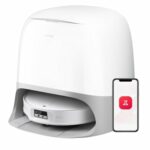
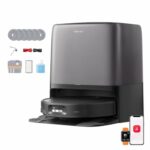
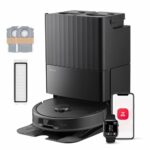
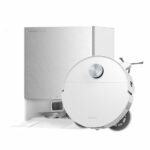
✨ VS Analyze · VacuumSpain comparison technology. AI-generated explanation based on verified technical data.
```html
Introduction
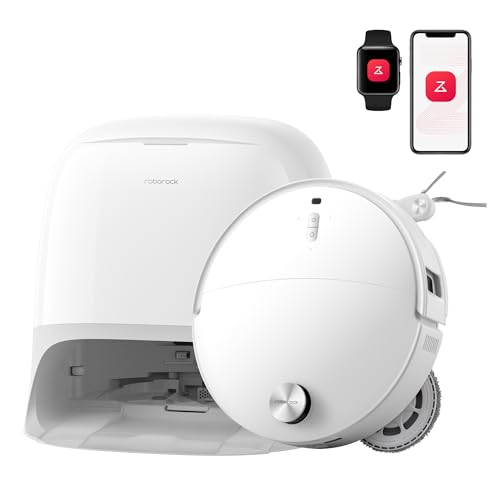
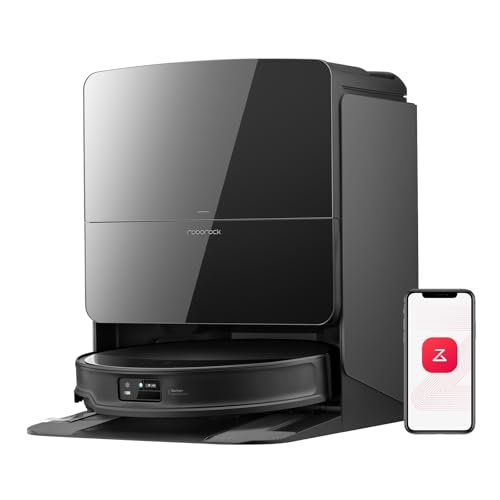
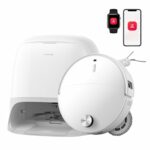
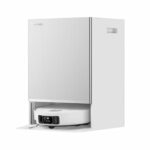
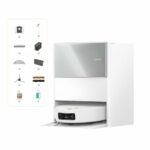
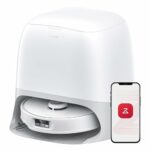
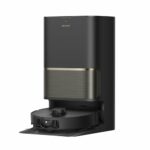
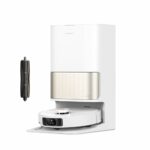
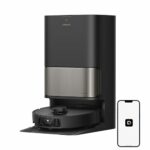
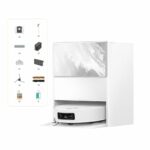
We are looking at three high-end robots launched in 2025 that represent the most advanced on the current market. The Dreame Aqua 10 Ultra Roller opts for a mopping system with a rotating roller, whilst the Roborock Qrevo Curv 2 Pro and the Roborock Saros 10R maintain the traditional spinning mop system. All of them incorporate complete multifunction bases, intelligent navigation with cameras and autonomous cleaning capabilities that minimise manual intervention.
The Dreame model stands out for its raw suction power, reaching 30,000 Pa, a figure that positions it as one of the most powerful on the market. The two Roborock units differ from each other in several key aspects: the Qrevo Curv 2 Pro offers exceptional autonomy of 290 minutes, whilst the Saros 10R incorporates warm water for floor mopping and greater mop lifting capacity. These robots are designed for users seeking total automation without sacrificing professional results.
Power and Suction
The most striking difference in this section is marked by the Dreame Aqua 10 Ultra Roller with its 30,000 Pa of suction power. This figure far exceeds the 25,000 Pa of the Roborock Qrevo Curv 2 Pro and the 18,500 Pa of the Saros 10R. In practice, this advantage translates into greater capacity to extract embedded dirt from carpets and better performance with heavy particles.
The brushing system also presents notable differences. The Dreame incorporates a double brush specifically designed to work alongside the roller system, whilst the two Roborock models mount the DuoDivide anti-tangle brush, which pushes hairs towards the central gap to minimise tangles. All three units can raise the main brush during mopping to avoid wetting carpets.
As for the side brush, the Dreame Aqua 10 Ultra Roller and the Saros 10R can raise it during mopping, a function that is not present on the Qrevo Curv 2 Pro. All three models feature an extendable side brush to improve corner cleaning and all incorporate anti-tangle design. For homes with long-haired pets, the DuoDivide system on the Roborock models may offer additional advantages in terms of maintenance.
Mopping
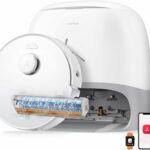
Here we find the most important conceptual difference in this comparison. The Dreame Aqua 10 Ultra Roller uses a rotating roller with 12N of pressure, a system that covers the entire surface continuously and is especially effective on adhered dirt. The two Roborock models opt for the traditional system of two spinning mops, proven and effective in most situations.
Mop lifting capacity varies significantly. The Dreame offers 14 mm plus additional roller lifting, the Qrevo Curv 2 Pro reaches between 7 and 17 mm, and the Saros 10R reaches up to 22 mm at its maximum. This last figure allows it to overcome thicker carpets without wetting them. All three models extend their mopping systems to better reach edges.
A notable difference is found in water temperature. Only the Roborock Saros 10R incorporates warm water for mopping the floor, which improves the dissolution of grease and difficult stains. The Dreame and the Qrevo Curv 2 Pro use cold water.
Both Roborock models can automatically remove the mops at the base when only vacuuming is needed, avoiding dragging them unnecessarily. The Dreame does not have this function due to its integrated roller design. All three units detect dirt both on the mops and on the floor to adjust cleaning intensity.
Navigation System
All three robots mount advanced navigation systems with retractable LiDAR and dual RGB camera with artificial intelligence. All incorporate front 3D laser sensor, LED for night vision and remote camera access from the mobile app.
Obstacle recognition capacity shows significant differences. The Dreame Aqua 10 Ultra Roller can identify up to 240 different objects, the Roborock Qrevo Curv 2 Pro reaches 200, and the Saros 10R recognises 108. In practice, this translates into greater precision for avoiding small objects and better adaptation to complex environments.
An exclusive function of the Dreame is curtain detection, which allows the robot to adjust its behaviour when approaching hanging fabrics to avoid getting tangled. All three models recognise pets and can adapt their cleaning accordingly.
The Dreame uses the AI Sage 15.0 algorithm with CleanGenius system to optimise cleaning routes. The Saros 10R mounts the RR Mason 11.0, whilst the specific processor for the Qrevo Curv 2 Pro is not specified, although it incorporates SmartPlan for intelligent planning.
Autonomy and Battery
All three units mount 6,400 mAh batteries, but real performance varies considerably. The Roborock Qrevo Curv 2 Pro reaches 290 minutes of autonomy, an exceptional figure that allows cleaning very large homes in a single session without intermediate recharges.
The Roborock Saros 10R offers 180 minutes of continuous operation, whilst the Dreame Aqua 10 Ultra Roller remains at 160 minutes. This difference is explained by the Dreame's greater suction power and the additional consumption of its rotating roller system. For medium-sized homes, all three offer sufficient autonomy, but on surfaces exceeding 150 square metres the Qrevo Curv 2 Pro stands out.
Smart Functions
All three robots can overcome simple steps thanks to their advanced navigation systems and adaptive wheels. All incorporate their own voice assistant in addition to compatibility with Alexa and Google Home, allowing voice command control both through their own systems and through external home automation ecosystems.
Multifunction Cleaning Base
All three bases incorporate auto-emptying of the dust bin, mop washing and drying, although with important differences in their implementations. Mop washing is carried out with hot water in all three cases, guaranteeing better hygienisation.
Mop drying presents an unknown on the Dreame, as it is not specified whether it uses hot or cold air. Both Roborock models confirm drying with hot air, a system that speeds up the process and prevents bad odours more effectively.
Self-cleaning of the washing tray marks notable differences. The Roborock Qrevo Curv 2 Pro incorporates version 3.0 of this system, the Saros 10R version 2.0, whilst the Dreame Aqua 10 Ultra Roller does not include this function. This implies a greater need for manual cleaning of the tray on the Dreame model.
As for the detergent tank, the Dreame stands out with a double tank that allows using different products depending on the type of floor. The Saros 10R includes a single tank, and the Qrevo Curv 2 Pro does not incorporate this function, requiring detergent to be added manually to the clean water tank if you wish to use it.
Dust bag capacity favours the Dreame with 3.2 litres compared to the 2.5 litres of both Roborock models. Clean water tanks are identical at 4 litres, but dirty water varies: 3.5 litres on the Dreame compared to 3 litres on the Roborock models.
Only the Dreame Aqua 10 Ultra Roller offers an optional plumbing connection kit, which is purchased separately and allows eliminating manual filling and emptying of tanks. This extra is worth considering if you seek total automation, although it involves additional installation.
Dimensions
Robot height marks the most relevant difference in this section. The Dreame Aqua 10 Ultra Roller measures 97.5 mm tall, whilst both Roborock models remain at 79.8 mm. These almost 18 millimetres of difference can be decisive for passing under certain furniture, sofas or low beds. The diameter is practically identical on all three models, around 350 mm.
The bases present different configurations. The Dreame's measures 420 mm wide, 500 mm tall and 440 mm deep. The Qrevo Curv 2 Pro has a more square base of 450x450x450 mm. The Saros 10R offers the most compact base in width at 381 mm, although it reaches 488 mm in height and 475 mm in depth. These differences should be considered depending on the available space to locate the cleaning station.
Real-World Experience
For large homes, the Roborock Qrevo Curv 2 Pro offers clear advantages thanks to its 290 minutes of autonomy. It can complete full cleans of over 200 square metres without interruptions. The Saros 10R and the Dreame are more suitable for surfaces up to 150 square metres.
In homes with pets, the DuoDivide system on the Roborock models minimises hair tangles, although the Dreame's greater suction power (30,000 Pa) may be more effective for extracting embedded hair from carpets. All three units feature pet recognition and adjust their behaviour accordingly.
If the home has low furniture, both Roborock models have a clear advantage with their 79.8 mm height compared to the Dreame's 97.5 mm. This difference can mean accessing or not accessing important cleaning areas.
For floors with difficult stains or grease, the Saros 10R's warm water offers better results. The Dreame's roller system may be more effective on adhered dirt thanks to its continuous mechanical action and 12N pressure.
Base maintenance is more convenient on both Roborock models thanks to tray self-cleaning, especially in the Qrevo Curv 2 Pro's version 3.0. The Dreame requires more frequent manual cleaning of this component, although it compensates with greater dust bag capacity and double detergent tank.
Conclusion: Which One to Choose?
Choose the Dreame Aqua 10 Ultra Roller if you seek the maximum suction power on the market and prefer the mopping system with rotating roller. It is ideal for homes with thick carpets where deep extraction is needed, and is interesting if you value the double detergent tank for different types of flooring. Also if you are considering plumbing connection as a future option. The greater dust bag capacity reduces maintenance frequency.
Choose the Roborock Qrevo Curv 2 Pro if you have a large home that requires extended autonomy. Its 290 minutes of continuous operation are unrivalled in this comparison. The 3.0 tray self-cleaning minimises maintenance, and its reduced height allows access under more furniture. It is the most balanced option for those seeking proven Roborock reliability without needing
```