✨ VS Analyze · VacuumSpain comparison technology. AI-generated explanation based on verified technical data.
Introduction
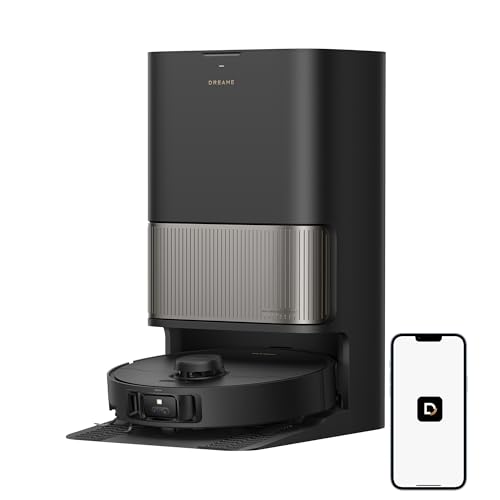
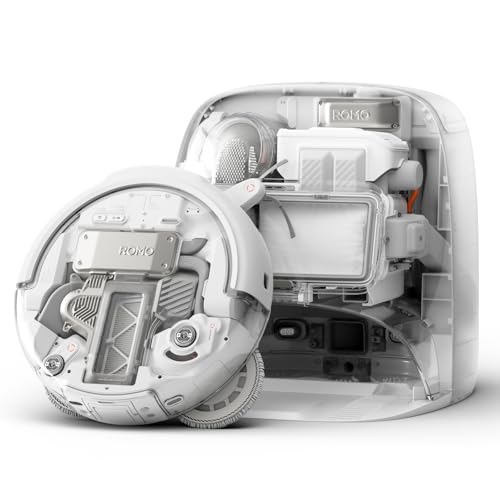
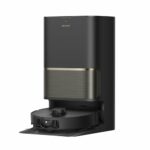
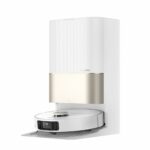
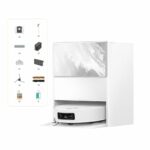
The DJI Romo P (Transparent Robot and Dock) and Dreame L40s Pro Ultra are two high-end models launched in 2025 that compete directly in the premium segment of robot vacuum cleaners with multifunction docks. DJI, known worldwide for its drones, enters the home-cleaning market with a model boasting exceptional suction power of 25,000 Pa. Dreame, a manufacturer with extensive experience in the sector, focuses on balancing advanced features with extended runtime in its L40s Pro Ultra.
Both models are designed for demanding homes where complete automation is required: they vacuum, mop, wash their mop pads with hot water and dry them to prevent unpleasant odours. Choosing between them will depend on specific priorities such as raw suction power, battery runtime or technical details relating to their mopping and navigation systems.
Suction power and vacuuming
The most notable difference in this area comes from the DJI Romo P and its 25,000 Pa of suction power, considerably more than the 19,000 Pa offered by the Dreame L40s Pro Ultra. This advantage gives the DJI model a greater ability to remove embedded dirt from carpets or pick up heavier particles in a single pass.
As for the brush system, the DJI features a Dividid-type main brush, while the Dreame uses a dual anti-tangle brush. Both models come with anti-tangle main brushes already installed, and these can be lifted while mopping to prevent them from becoming wet when only the mop pads are required.
A practical difference can be found in the side brush: the Dreame L40s Pro Ultra lifts its side brush while mopping, a feature that the DJI does not offer. This prevents the Dreame’s side brush from interfering with the wet mop pads. Both robots feature an extendable side brush to reach corners more effectively, although the DJI uses a dual anti-tangle system for this component.
Mopping
Both models use two rotating mop pads that extend outwards to reach the edges of walls. Dreame specifies a 3.0 extension system with RoboSwing technology, which allows the robot to make a sideways movement and position the mop beneath furniture or overhanging edges. The DJI also has extendable mop pads, but does not provide details about this additional feature.
Both models can lift their mop pads, although Dreame specifies a height of 10.5 mm, sufficient to cross thin carpets without wetting them. DJI confirms the feature but does not provide an exact measurement.
When washing the mop pads, the Dreame L40s Pro Ultra stands out by specifying a temperature of 75°C, while DJI states that it uses hot water without giving an exact temperature. Both docks automatically wash the mop pads during cleaning and at the end of the cycle. Both also use hot-air drying: 45°C for the Dreame and an unspecified temperature for the DJI.
The Dreame can leave its mop pads at the dock when only vacuuming is required, a feature that has not been confirmed for the DJI. Both robots detect dirt on the mop pads and the floor, adjusting the mopping intensity as required.
Navigation system
The DJI Romo P features solid-state LiDAR, while the Dreame L40s Pro Ultra uses a 3D LiDAR turret. Both systems can map the home accurately and create efficient routes, although the DJI’s solid-state technology is generally more compact.
In terms of artificial intelligence, the Dreame uses two cameras compared with the DJI’s single camera. This difference is reflected in obstacle recognition: the Dreame identifies up to 180 different types, while DJI does not specify an equivalent figure. The Dreame model also recognises pets and detects curtains to adapt its behaviour, features that have not been confirmed for the DJI.
Both robots have a front 3D laser sensor, remote camera access and LED night vision. They also feature AI-powered intelligent cleaning systems and stain recognition to intensify cleaning in specific areas. Dreame specifies its CleanGenius technology for managing these processes.
Runtime and battery
The Dreame L40s Pro Ultra has a 5,200 mAh battery that provides 220 minutes of runtime, compared with the DJI Romo P’s 5,000 mAh and 180 minutes. This difference of 40 minutes can be decisive in large homes where the robot needs to complete long cycles without returning to recharge.
In practice, the Dreame’s additional 40 minutes could allow it to clean one or two extra rooms in a single session. For homes larger than 150 square metres requiring several levels of cleaning, such as vacuuming and intensive mopping, the Dreame’s runtime provides more headroom.
Smart features
Obstacle-crossing ability gives the Dreame L40s Pro Ultra a clear advantage. It can handle between 22 and 40 mm using its additional system, compared with 20 mm for the DJI Romo P. This difference allows the Dreame to cross thicker carpets, grouped cables or small changes in floor level between rooms without becoming stuck.
The Dreame includes a basic voice assistant, a feature that has not been confirmed for the DJI. Neither model includes a robotic arm for handling objects.
Multifunction cleaning dock
Both docks automatically clean their washing trays, although they use different technologies. The DJI uses a water-nozzle system, while the Dreame features third-generation self-cleaning. This function is essential for preventing dirt and unpleasant odours from accumulating inside the dock.
The DJI Romo P features UV disinfection in its dock, which the Dreame L40s Pro Ultra does not offer. This technology helps eliminate bacteria from the washing system. The DJI also has two detergent tanks compared with the Dreame’s single tank, allowing two types of cleaning product to be used according to the floor type or cleaning requirements.
The Dreame has the larger dust bag: 3.2 litres compared with 2.4 litres for the DJI. The Dreame also has larger water tanks, holding 4.5 litres of clean water and 4 litres of dirty water, while the DJI offers 4 litres and 3.2 litres respectively. These differences mean less frequent emptying and refilling with the Dreame model.
The Dreame supports an optional plumbing connection kit, sold separately. The DJI does not offer this option. Neither model includes a direct plumbing connection as standard.
Dimensions
The DJI Romo P is 98 mm tall, compared with 103.8 mm for the Dreame L40s Pro Ultra. This difference of almost 6 millimetres may allow the DJI to fit beneath furniture or beds that the Dreame cannot access. Their diameters are virtually identical: 351 mm for the DJI and 350 mm for the Dreame.
The docks have very different dimensions. The DJI dock is wider at 453 mm compared with 340 mm, but shorter at 440 mm compared with 590.5 mm. Their depths also differ: 425 mm for the DJI and 456.7 mm for the Dreame. It is advisable to measure the available space before choosing, as the Dreame dock requires more vertical room, while the DJI occupies a larger horizontal area.
Real-world user experience
For large homes measuring more than 200 square metres, the Dreame L40s Pro Ultra has an advantage due to its longer runtime and larger dock tanks, reducing interruptions and maintenance. Its ability to overcome obstacles up to 40 mm is also useful in homes with thick carpets or small steps.
If maximum suction power is the priority, the DJI Romo P clearly stands out with its 25,000 Pa. This feature particularly benefits homes with long-haired pets or deep-pile carpets requiring thorough extraction. Its lower height also makes it more versatile when cleaning beneath low furniture.
The Dreame’s navigation system, with recognition of up to 180 obstacles and curtain detection, provides greater accuracy in homes with many objects on the floor or complex furnishings. The Dreame’s dual cameras further strengthen this identification ability.
The DJI’s dual detergent tanks allow users to alternate between specific products for different floor types without constantly emptying and refilling a single tank. The dock’s UV disinfection adds an extra level of hygiene that may be appreciated in homes with young children or allergy sufferers.
Conclusion: which one should you choose?
Choose the DJI Romo P (Transparent Robot and Dock) if... you want the highest suction power available on the market, need the robot to fit beneath very low furniture thanks to its height of 98 mm, value UV disinfection in the dock or want to manage two different types of detergent easily. It is ideal for users who prioritise raw suction power and have sufficient horizontal space for a wider dock.
Choose the Dreame L40s Pro Ultra if... you live in a large home where its 220-minute runtime makes a difference, frequently need to overcome obstacles higher than 20 mm, prefer larger tanks to reduce maintenance or value a navigation system with extensive obstacle recognition and curtain detection. Its liftable side brush while mopping and 75°C mop washing are also strengths. It is particularly suitable for spacious homes with thick carpets and complex furnishings, where advanced intelligent navigation provides a genuine advantage.