✨ VS Analyses · VacuumSpain comparison technology. Explanation created with AI from verified technical data.
Introduction
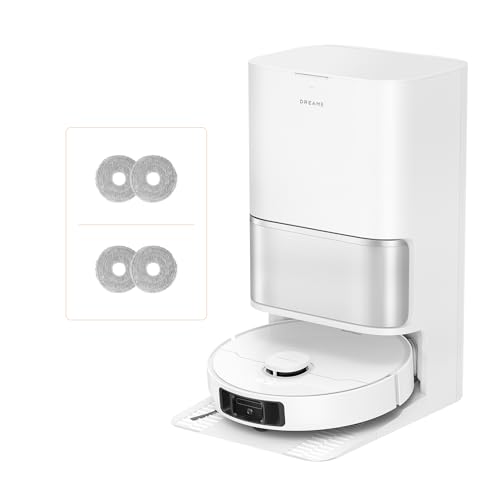
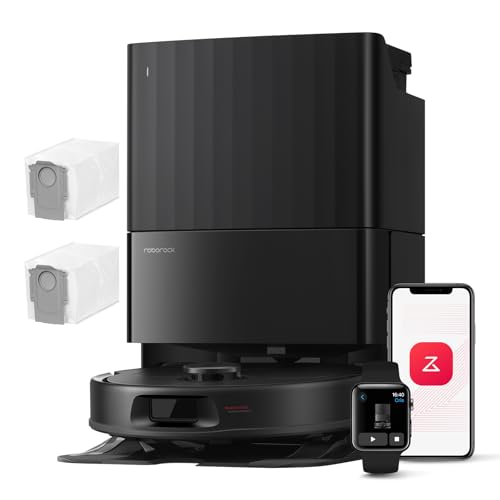
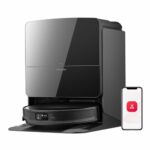
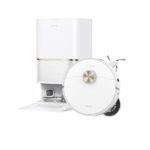
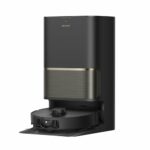
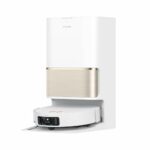
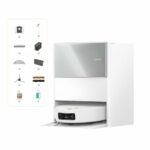
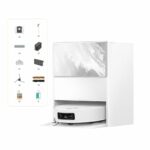
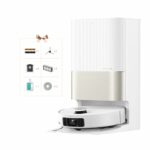
This comparison brings together three recent models from two leading manufacturers in the robot vacuum market. The Dreame L10s Ultra Gen 2 arrived in 2024, whilst its successor, the Dreame L10s Ultra Gen 3, launched in November 2025 with several refinements. The Roborock QV 35A completes this trio as a 2025 release from the brand that continues to dominate global sales.
All three feature multifunction bases that handle automatic dust emptying, mop washing with cold water, and hot air drying. They're designed for users who want minimal maintenance and expect consistent mopping results without manual intervention. The differences lie in suction power, smart features, and how thoroughly they clean edges and corners.
Power and Suction
Suction performance varies dramatically across these three. The Dreame L10s Ultra Gen 3 reaches 25,000 Pa, making it the most powerful by a considerable margin. The Gen 2 sits at 10,000 Pa, whilst the Roborock QV 35A delivers 8,000 Pa. In practice, this means the Gen 3 will handle embedded dirt in carpets and extract more dust from hard floors with less effort.
All three use a simplified main brush design—likely silicone-based or hybrid constructions that reduce hair tangles. None offer brush elevation during mopping, so the main roller remains in contact with the floor throughout cleaning cycles.
The side brush setup reveals interesting choices. The Dreame L10s Ultra Gen 3 adds an extendable side brush that reaches further into corners and along skirting boards. Neither the Gen 2 nor the Roborock include this feature. However, the Roborock QV 35A counters with an anti-tangle side brush, which helps prevent hair wrap-around—a detail neither Dreame model offers. None of the three elevate their side brushes during mopping.
Mopping
All three robots use dual rotating mops for scrubbing action. The Dreame models stand out with mop extension and Roboswing technology, allowing them to push the mopping pad slightly under furniture edges and move it closer to walls. This can make a noticeable difference in homes with lots of furniture or tight corners. The Roborock QV 35A lacks this extension capability.
Mop lift is similar across the board: 10.5 mm on both Dreame units, 10 mm on the Roborock. That's enough clearance to protect short-pile rugs and avoid dragging wet pads over carpets during mixed-floor cleaning. None of the robots heat the water inside the unit for floor mopping—all rely on cold water application.
The bases wash mops with cold water and dry them using hot air. This combination prevents odours and bacteria growth between cleaning sessions. The Dreame L10s Ultra Gen 3 introduces third-generation tray self-cleaning, which automates the maintenance of the washing area itself. The Gen 2 and Roborock require manual tray cleaning. None of the models automatically detach mops at the base for vacuum-only sessions, nor do they detect dirt levels on mops or floors to trigger re-cleaning.
Navigation System
Each robot uses a LiDAR turret for mapping and navigation, ensuring accurate room layouts and efficient path planning. All three include obstacle avoidance, but the implementation differs.
Both Dreame robots incorporate 3D laser sensors at the front, which improve detection of low-lying objects and furniture legs. The Roborock QV 35A does not feature this sensor type. The Dreame models also offer pet recognition, useful for avoiding bowls, toys, or resting animals. The Roborock lacks this specific capability.
None of the three include an AI camera, LED lighting for night vision, or remote camera access. Curtain detection is absent across the lineup. The Dreame units rely on CleanGenius AI for intelligent cleaning adjustments, whilst the Roborock uses SmartPlan technology. Both approaches adapt cleaning patterns based on room type and dirt levels, though the exact algorithms remain proprietary.
Battery and Autonomy
All three share the same 5,200 mAh battery capacity. Runtime differs slightly: the Dreame L10s Ultra Gen 2 offers 240 minutes, the Gen 3 runs for 231 minutes, and the Roborock QV 35A manages 180 minutes. The Gen 3's higher suction likely accounts for the marginal reduction compared to the Gen 2. The Roborock's shorter runtime may reflect less efficient power management or a more aggressive default suction mode.
For typical homes, even 180 minutes provides ample coverage. Larger properties or multi-level houses benefit from the longer runtimes of the Dreame models, especially if you prefer higher suction settings throughout the entire cleaning cycle.
Smart Functions
All three robots can climb obstacles up to 20 mm, which handles most door thresholds and transitions between flooring types without getting stuck. None feature a robotic arm or proprietary voice assistant. They do integrate with external voice assistants like Alexa and Google Home, allowing basic voice commands for starting, stopping, or docking.
Multifunction Base
Each base handles automatic dust emptying, mop washing with cold water, and hot air drying. The Dreame stations include a detergent dispenser, which adds cleaning solution during mop washing. The Roborock QV 35A does not offer this feature, relying solely on water.
The Dreame L10s Ultra Gen 3 introduces automatic tray cleaning, a third-generation feature that keeps the washing area hygienic without manual scrubbing. The Gen 2 and Roborock require periodic manual cleaning of the tray.
Dust bag capacity is 3.2 litres on both Dreame models, compared to 2.7 litres on the Roborock. Clean water tanks hold 4.5 litres on the Dreame units versus 4 litres on the Roborock, whilst dirty water tanks are 4 litres and 3.5 litres respectively. These differences matter in larger homes where you'd prefer less frequent refilling and emptying.
Both Dreame models support an optional plumbing connection kit, sold separately. This allows direct water supply and drainage, eliminating manual tank maintenance entirely. The Roborock does not offer this option. None of the three include UV disinfection or automatic mop replacement.
Dimensions
The robots are nearly identical in size. The Dreame models measure 350 mm in diameter and 97 mm tall, whilst the Roborock QV 35A is 353 mm wide and 96.5 mm high. The half-millimetre height advantage on the Roborock is negligible in practice—all three should fit under most furniture with similar clearance.
Base dimensions vary more noticeably. The Dreame stations stand 590 mm tall (590.5 mm on the Gen 2, 590 mm on the Gen 3) with a depth of 457 mm and width of 340 mm. The Roborock base is shorter at 521 mm but deeper at 487 mm, with the same 340 mm width. If you have limited vertical space, the Roborock base fits better; if depth is your constraint, the Dreame stations work better.
Real-World Use
For homes with pets, the Dreame models offer advantages: higher suction (especially the Gen 3), pet recognition, and larger dust bags reduce the frequency of emptying. The Roborock's anti-tangle side brush helps with hair management, but lower suction and smaller capacity may require more frequent maintenance.
In larger properties, the Dreame L10s Ultra Gen 2 and Gen 3 provide longer runtimes and bigger water tanks, reducing interruptions. The optional plumbing kit on Dreame models suits those who want truly hands-off operation over weeks or months.
Households with lots of furniture and tight corners benefit from the Gen 3's extendable side brush and both Dreame models' mop extension. The Roborock cleans well in open spaces but won't reach as close to edges.
The Dreame L10s Ultra Gen 3's third-generation tray cleaning appeals to anyone who dislikes maintenance tasks. The Gen 2 and Roborock require occasional manual scrubbing of the washing area.
Conclusion: Which to Choose?
Choose the Dreame L10s Ultra Gen 2 if you want solid performance at a lower price point than the Gen 3. It offers mop extension, 3D sensors, pet recognition, and a detergent dispenser. The 240-minute runtime and 10,000 Pa suction handle most homes comfortably. It's a sensible pick for anyone who doesn't need the absolute highest suction or automatic tray cleaning.
Choose the Dreame L10s Ultra Gen 3 if you want the most powerful suction available here, an extendable side brush for better corner coverage, and third-generation tray self-cleaning. The 25,000 Pa suction excels with embedded dirt and thick carpets. If you have pets, large spaces, or simply want the most advanced Dreame model, this is the one. The optional plumbing kit adds long-term convenience.
Choose the Roborock QV 35A if you prefer a more compact base, trust Roborock's reputation for reliability, and don't need mop extension or a detergent dispenser. The anti-tangle side brush helps with hair, and the SmartPlan AI delivers intelligent cleaning. It's a dependable choice for smaller to medium homes without complex layouts or heavy pet hair challenges.