✨ VS Analyses · VacuumSpain comparison technology. Explanation created with AI from verified technical data.
Introduction
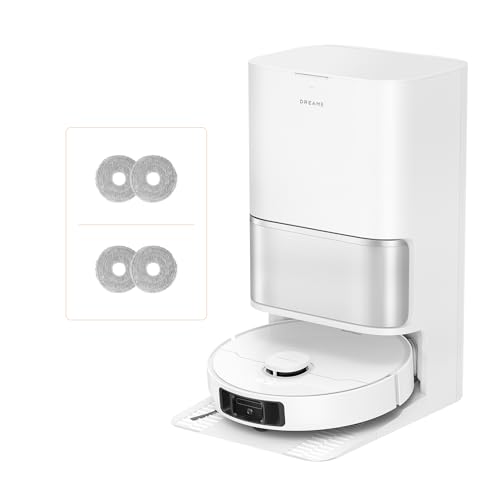
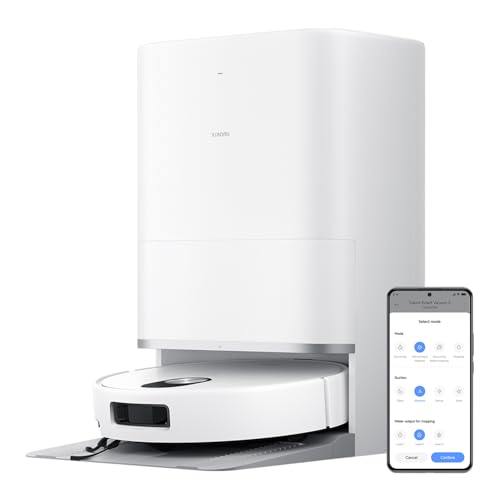
The Dreame L10s Ultra Gen 3 and the Xiaomi Robot Vacuum 5 represent two compelling options in the premium robot vacuum segment for 2025. The Dreame model, launched in November 2025, brings the latest iteration of the L10s Ultra series with enhanced features and improved performance. Xiaomi's entry, also from 2025, continues the brand's tradition of delivering competitive specifications at accessible price points.
Both devices feature multifunctional cleaning stations that handle automatic emptying, mop washing, and drying—essential capabilities for anyone seeking genuinely hands-free floor maintenance. They're designed for medium to large homes where automated cleaning needs to work reliably without constant intervention. The real question becomes which configuration better suits your specific living situation.
Power and Vacuuming Performance
The Dreame L10s Ultra Gen 3 delivers 25,000 Pa suction power, which provides a noticeable advantage over the Xiaomi Robot Vacuum 5's 20,000 Pa. This difference becomes particularly relevant when dealing with embedded dirt in carpets or stubborn debris in grout lines on tiled floors.
Where things get interesting is the brush configuration. The Dreame uses a simple brush design, whilst the Xiaomi employs the TriCut 3.0 system—a combination of bristles and cutting blades specifically engineered to slice through tangled hair. For households with long-haired residents or pets, this represents a significant practical advantage that reduces maintenance frequency.
The Xiaomi also includes anti-tangle technology on its side brush, something absent on the Dreame. In practice, this means less time spent clearing wrapped hair from the edges of the robot. Both models feature extensible side brushes that reach further into corners, and neither offers brush elevation during mopping or main brush lift functionality.
Mopping Capabilities
Both systems use dual rotating mops, but their approaches differ in meaningful ways. The Dreame L10s Ultra Gen 3 incorporates RoboSwing—a hip-swaying motion that pushes the mop slightly under furniture edges and skirting boards. The Xiaomi simply extends its mops without this additional movement pattern.
Mop elevation tells another story. The Xiaomi lifts its pads 15 mm when encountering carpets or returning to the station, compared to 10.5 mm on the Dreame. That extra height clearance can make the difference between lightly brushing carpet fibres and fully clearing them, especially with thicker rugs.
The base stations handle mop maintenance differently. Xiaomi washes mops with hot water, which improves cleaning effectiveness and helps dissolve grease or sticky residues more efficiently than the Dreame's cold water system. Both dry mops using heated air, which prevents odours and bacterial growth—a crucial feature often overlooked until you've experienced the alternative.
Only the Dreame includes a detergent dispenser in its base station. This automatically adds cleaning solution during the mop washing cycle, enhancing hygiene without requiring manual intervention. The Xiaomi lacks this feature entirely. Neither model offers automatic mop removal for vacuum-only sessions, nor do they detect dirt levels on mops or floors for adaptive cleaning.
Navigation Systems
The Dreame L10s Ultra Gen 3 uses a third-generation 3D LiDAR tower for mapping and navigation. This protrudes from the robot's top surface, adding to the overall height. The Xiaomi employs retractable LiDAR technology—the sensor lowers when not needed, contributing to the model's slimmer 88 mm profile.
Both incorporate 3D laser sensors at the front for obstacle detection and avoidance. The Dreame adds CleanGenius AI for intelligent cleaning decisions, whilst the Xiaomi also features AI-driven cleaning logic, though the specific implementation differs between manufacturers. Neither includes a front-facing camera, LED illumination for night operation, or remote camera access functionality.
Pet recognition appears only on the Dreame model. This allows the robot to identify animals and adjust behaviour accordingly—useful for avoiding food bowls or sleeping pets. The Xiaomi lacks this specific capability. Neither system detects curtains or other hanging obstacles.
Battery Life and Coverage
Battery capacity matches at 5,200 mAh for both models, but runtime differs dramatically. The Dreame achieves 231 minutes on a single charge compared to the Xiaomi's 140 minutes. That's over an hour and a half of additional cleaning time, which translates directly to larger coverage areas or the ability to complete intensive cleaning sessions without recharging mid-cycle.
For homes exceeding 150 square metres, this extended runtime becomes genuinely valuable. The Dreame can tackle entire floors in one go, whilst the Xiaomi may need to return to base partway through, extending total cleaning duration.
Smart Features
Both robots handle 20 mm obstacles—standard kerbs, thick door thresholds, or transition strips between flooring types. Neither includes a robotic arm for additional functionality, nor do they feature proprietary voice assistants. Both integrate with external voice control systems like Alexa and Google Home for basic command functions.
Cleaning Station Capabilities
The Dreame's base station holds a 3.2-litre dust bag, providing roughly 28% more capacity than the Xiaomi's 2.5-litre bag. This means less frequent bag replacement—perhaps every 60-75 days instead of 45-60 days in typical households.
Clean water capacity favours the Dreame at 4.5 litres versus 4 litres, whilst dirty water collection is 4 litres compared to 3.8 litres. These differences seem minor but accumulate over multiple mopping sessions, potentially reducing refill frequency from twice weekly to weekly in average-sized homes.
The Dreame offers an optional plumbing connection kit, purchased separately, that allows permanent water supply and drainage connections. This eliminates manual tank filling and emptying entirely. The Xiaomi provides no such option. Neither model includes integrated plumbing connections as standard, nor UV disinfection systems.
Both stations feature automatic tray cleaning—the Dreame specifically mentions third-generation technology, suggesting refinements over previous iterations. This self-maintenance reduces the unpleasant task of manually scrubbing the mop washing area.
Physical Dimensions
Diameter matches at 350 mm for both robots, but height differs meaningfully. The Xiaomi measures 88 mm tall compared to the Dreame's 97 mm. That 9 mm difference determines whether the robot fits under certain furniture. Sofas, beds, and cabinets with 90-95 mm clearance become accessible only to the Xiaomi.
The Dreame robot includes a 300 ml dust bin and 80 ml water reservoir. The Xiaomi confirms a water tank but doesn't specify dust bin capacity in the available data.
Base station footprints vary slightly. The Dreame measures 340 mm wide, 590 mm tall, and 457 mm deep. The Xiaomi is 360 mm wide, 572 mm tall, and 470 mm deep—marginally wider and deeper but slightly shorter. In practical terms, both require similar floor space, though the Dreame's narrower width might suit tighter alcoves.
Real-World Usage Scenarios
The Dreame L10s Ultra Gen 3 suits larger homes where extended runtime prevents mid-clean recharging. The higher suction power tackles embedded dirt more aggressively, whilst the detergent dispenser maintains mop hygiene automatically. The optional plumbing kit appeals to anyone wanting truly zero-maintenance operation, though it requires upfront installation and additional cost.
Households with pets or long hair will find the Xiaomi's TriCut 3.0 brush and anti-tangle side brush reduce frustrating maintenance sessions. The hot water mop washing removes stubborn grime more effectively, and the slimmer profile accesses under more furniture. The shorter runtime matters less in compact flats or homes under 100 square metres.
The Dreame's RoboSwing motion improves edge mopping, particularly valuable in homes with extensive skirting boards or furniture edges. Pet owners benefit from the recognition system that helps avoid bowls and resting animals. The larger base station tanks mean less frequent intervention—important for busy households or those who travel regularly.
Conclusion: Which Should You Choose?
Choose the Dreame L10s Ultra Gen 3 if: you have a large home exceeding 150 square metres where the extended 231-minute runtime prevents interruptions; you want the detergent dispenser for enhanced mop hygiene; you're considering the optional plumbing kit for permanent installation; the RoboSwing edge mopping suits your layout; or pet recognition adds genuine value to your household.
Choose the Xiaomi Robot Vacuum 5 if: you live with pets or long hair and the TriCut 3.0 anti-tangle system reduces maintenance burden; hot water mop washing matters for your floor types or cleaning standards; you need the slimmer 88 mm height to access under existing furniture; your home is under 120 square metres where the 140-minute runtime suffices; or you prefer the retractable LiDAR design aesthetic.
The Dreame emphasises capacity, runtime, and convenience features like detergent dispensing. The Xiaomi prioritises practical maintenance reduction through superior brush technology and more effective mop washing. Both represent competent solutions—the right choice depends on whether you value extended coverage and automation, or reduced hair tangles and better mopping temperatures.