✨ VS Analyses · VacuumSpain comparison technology. Explanation created with AI from verified technical data.
Introduction
Choosing between mid-range robot vacuum cleaners can be tricky when the options appear similar at first glance. The Dreame D10 Plus Gen 2 arrived on the market in 2024 as a proposal focused on auto-emptying automation, whilst the Dreame D20 and the Roborock Q7 L5 or BF, both from 2025, opt for more compact configurations without an auto-empty station. We're looking at three models that share laser navigation philosophy but differ substantially in power, dustbin capacity and, above all, in the type of base they incorporate.
The D10 Plus Gen 2 is designed for those seeking to forget about daily maintenance thanks to its auto-empty station. The D20 stands out for notably superior suction power and more generous internal dustbins. The Roborock Q7 L5 or BF positions itself as the alternative from a brand recognised for its reliability, with a more compact construction that may prove advantageous in certain spaces.
Power and Suction
The most striking difference between these three models lies in suction power. The Dreame D20 reaches 13,000 Pa, a figure that practically doubles the D10 Plus Gen 2's 6,000 Pa and widely exceeds the Roborock Q7 L5 or BF's 8,000 Pa. In practice, this translates into greater capacity to extract ingrained dirt from carpets or to pick up heavier particles such as sand or food debris.
All three units mount traditional-type main brushes: the D10 Plus Gen 2 has a single brush, the D20 incorporates a dual brush system, and the Roborock uses a bristle brush. None of the models offers main brush lift during mopping nor extendable or liftable systems on the side brush. We also don't find specific anti-tangle technologies on the side brushes, something worth bearing in mind if there are pets at home with long hair.
For homes with animals or people with long hair, the absence of anti-tangle systems means that the brushes will need to be checked and cleaned with some frequency. The D20's greater power can partially compensate for this limitation by suctioning hair more forcefully before it becomes tangled.
Mopping
All three robots share a basic mopping system using a static mop, without advanced functions that mark significant differences between them. None has mop extension to better reach edges, nor automatic lifting of the mops when detecting carpets. The water used is cold in all cases.
The absence of automatic mop removal at the base means that if we want to carry out a vacuuming-only session after mopping, we'll have to manually remove the mops. There's also no dirt detection either on the mops or on the floor, so they don't make additional passes in dirtier areas.
In this section, the only relevant difference comes from water tank size: the D20 offers 350 ml, the Roborock 270 ml and the D10 Plus Gen 2 stays at 150 ml. A larger tank allows mopping larger surfaces without intermediate refills, although none of these models is designed for intensive mopping.
Navigation System
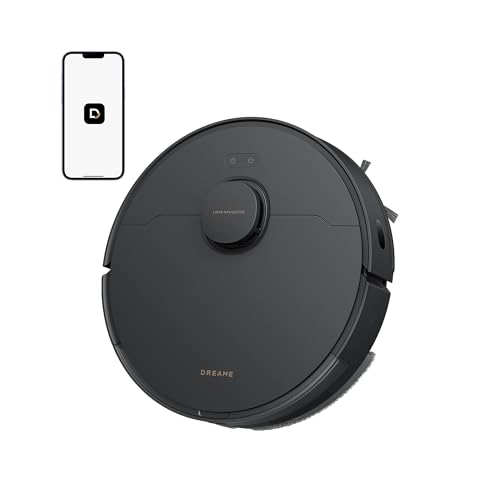
All three models use a LiDAR turret to map the home and plan efficient routes. However, the Dreame D20 incorporates a front 3D laser sensor that allows it to detect and avoid obstacles with greater precision. This function is absent in both the D10 Plus Gen 2 and the Roborock Q7 L5 or BF.
In practice, the D20's 3D sensor reduces the likelihood of collisions with small or low-height objects that the upper LiDAR might not detect: cables, slippers, toys or chair legs. This can make the difference in homes with young children or with many objects on the floor.
None of the three has a camera with artificial intelligence, specific pet recognition, curtain detection or LED for night vision. Nor do they allow remote camera access from the mobile app. They are effective navigation systems but without the additional layers of artificial intelligence found in higher ranges.
Autonomy and Battery
Battery capacity places the Dreame D10 Plus Gen 2 and the D20 at 5,200 mAh, whilst the Roborock Q7 L5 or BF stays at 3,200 mAh. This difference of almost 40% in capacity is significant for large homes or with complex layouts that require prolonged cleaning sessions.
The D10 Plus Gen 2 declares an autonomy of 285 minutes in standard mode, data that is not available for the other two models. With those 5,200 mAh, the D20 should offer similar autonomy, although consumption will be higher due to its higher suction power. The Roborock, with lower battery capacity, will probably need intermediate recharges in large homes.
For surfaces of up to 100-120 square metres, any of the three should complete cleaning without problems. In larger homes, the Dreame models start with an advantage thanks to their higher capacity batteries.
Smart Functions
All three robots can overcome obstacles up to 20 mm in height, which allows them to navigate small level changes such as transition joints between rooms or medium-thickness carpets. This capability is identical across all three models.
All are compatible with external voice assistants such as Alexa or Google Home, allowing cleaning to be started or stopped using voice commands. They do not incorporate their own voice assistant nor other advanced functions such as robotic arms to manipulate objects.
Multifunctional Cleaning Base
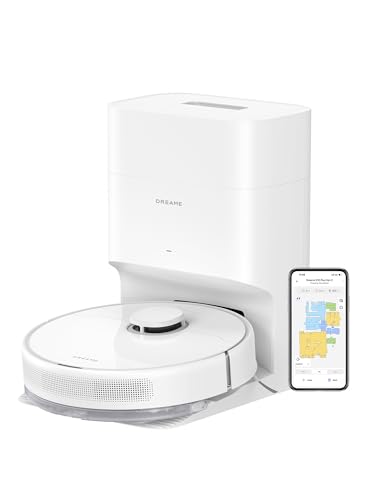
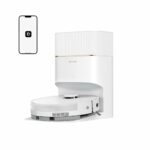
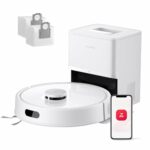
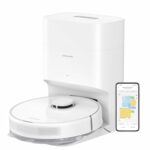
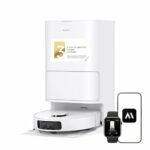
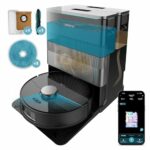
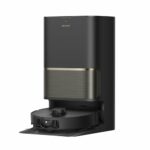
Here we find the most determining difference between these models. The Dreame D10 Plus Gen 2 includes an auto-empty station with a 4-litre capacity bag, whilst the D20 and the Roborock Q7 L5 or BF come only with a standard charging base.
The D10 Plus Gen 2's station automatically vacuums the contents of the robot's dustbin after each clean, accumulating dirt in a bag that can last weeks or even months depending on frequency of use. This drastically reduces maintenance: you only need to change the bag when it fills up, instead of emptying the robot's dustbin after each session.
With the D20 and the Roborock you'll have to manually empty the internal dustbin after each clean or every few cleans, depending on the size of the home and the level of dirt. The D20 has a 700 ml dustbin that holds more than the D10 Plus Gen 2's and the Roborock's 400 ml, but still requires manual intervention.
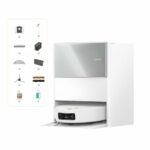
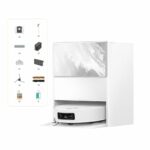
None of the three has a mop washing or drying system, tray self-cleaning, UV disinfection, detergent tank or plumbing connection. They are bases focused exclusively on dust management or, in the case of the D20 and the Roborock, simply on recharging.
Dimensions
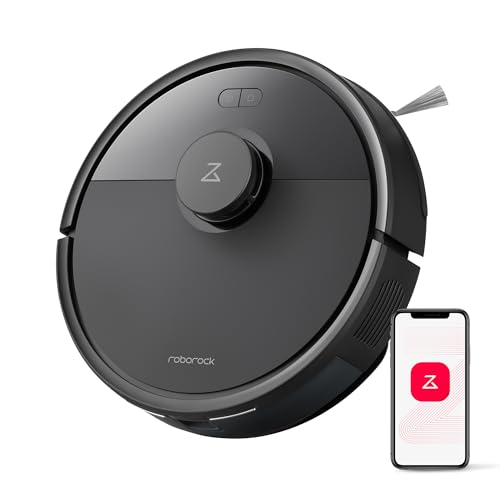
The robot's diameter is practically identical on both Dreame models, at 350 mm, whilst the Roborock Q7 L5 or BF measures 325 mm. Those 25 mm of difference can make it easier for the Roborock to slip under furniture or between tight spaces where the Dreames can't reach.
In height, the D10 Plus Gen 2 reaches 96.3 mm, the D20 rises to 96.8 mm and the Roborock sits at 99 mm. The differences are minimal and in practice all three should pass under most sofas and beds with standard-height legs.
Base dimensions change radically. The D10 Plus Gen 2's station measures 298 mm wide, 427 mm high and 406 mm deep: a bulky base that requires dedicated space. The charging bases of the D20 (126 x 92.6 x 130 mm) and the Roborock (160 x 101 x 70 mm) are much more compact and discreet, ideal for small corners or spaces where we don't want the base to be prominent.
Real-world user experience
For medium or large-sized homes, the Dreame D10 Plus Gen 2 offers the most convenient experience thanks to auto-emptying. Forgetting about emptying the robot for weeks is especially practical for people with little time or who travel frequently. The 285-minute autonomy ensures it covers large surfaces without interruptions.
The Dreame D20 stands out in homes where suction power is a priority: homes with carpets, pets that shed a lot of hair or families with children where crumbs and food debris accumulate. Its 700 ml dust tank and 350 ml water tank give it greater autonomy between manual emptying. The front 3D sensor adds safety in environments with many obstacles.
The Roborock Q7 L5 or BF is interesting for more compact spaces or for those who prioritise the reduced size of the robot and base. Its 325 mm diameter allows it to slip under more furniture, although the lower battery capacity may limit its use in very large homes. The Roborock brand provides proven reliability and a mobile app recognised for its stability.
None of the three is ideal for intensive mopping, as they share a static mop system without automatic washing. They are valid solutions for light maintenance on hard floors, but don't replace a traditional mop for deep cleaning.
Conclusion: Which one to choose?
Choose the Dreame D10 Plus Gen 2 if you're looking for absolute convenience and don't want to worry about emptying for weeks. It's the best option for those who value automation over raw power, especially in medium-large homes where the 285-minute autonomy and 4-litre bag make the difference. Ideal if you travel frequently or simply prefer to minimise maintenance.
Choose the Dreame D20 if you need maximum suction power and don't mind manually emptying the dustbin. Its 13,000 Pa is unbeatable amongst these three models, perfect for carpets, pets or accumulation of heavy dirt. The internal dustbins of 700 ml and 350 ml reduce the frequency of emptying and water refilling. The front 3D sensor provides an extra layer of safety in homes with many objects on the floor. A wise choice if you prioritise performance over automation.
Choose the Roborock Q7 L5 or BF if you value the compactness of the unit and the reliability of an established brand. Its reduced diameter allows it to access spaces where the Dreames can't reach, and the charging base takes up very little space. Suitable for small or medium-sized flats where the lower battery capacity isn't a problem. Roborock's app is a benchmark in the sector, guaranteeing a polished user experience and regular updates.