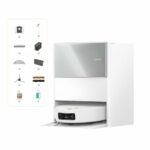
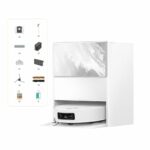
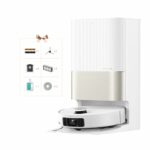
✨ VS Analyze · VacuumSpain comparison technology. AI-generated explanation based on verified technical data.
Introduction
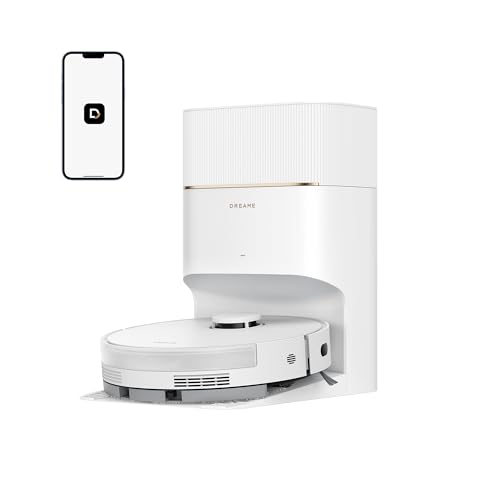
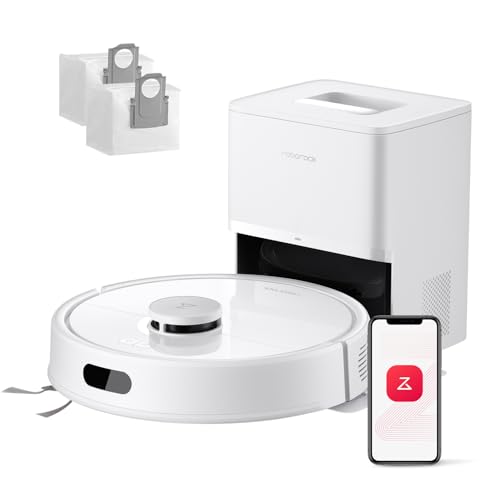
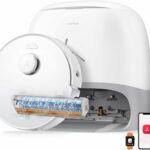
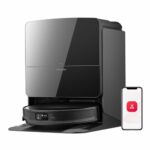
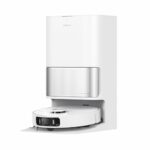
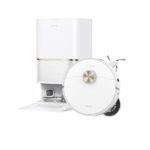
The Dreame D20 Pro Plus and Roborock Q7 L5+ or BF+ Plus represent two distinct approaches to automated home cleaning in 2025. Both feature self-emptying bases that handle the disposal of collected dust, but they differ significantly in their technical specifications and capabilities. The Dreame model positions itself as a more powerful option with enhanced navigation features, whilst the Roborock brings the reliability of a globally recognised brand with a more compact footprint.
These are mid-range models designed for users seeking automated maintenance without the complexity of full multifunction bases. They're suited to homes where mopping is a secondary consideration, but where effective vacuuming and minimal manual intervention matter most.
Power and Vacuuming Performance
The difference in suction power is substantial. The Dreame D20 Pro Plus delivers 13,000 Pa, which gives it a clear edge over the Roborock Q7 L5+ or BF+ Plus at 8,000 Pa. In practice, this translates to better performance on carpets and rugs, and more effective pickup of embedded dirt and pet hair from textured surfaces.
Where the brushing systems diverge is in design philosophy. The Dreame employs dual HyperStream brushes, a configuration that minimises hair tangles by using two brushes anchored at one end. This makes maintenance simpler, particularly for households with long-haired occupants or pets. The Roborock relies on a conventional bristle brush, which tends to require more frequent cleaning to prevent hair wrapping around the roller.
Another practical advantage for the Dreame is its extensible side brush, which reaches further into corners and along skirting boards. It's also designed to resist tangles. The Roborock's side brush is fixed and lacks anti-tangle features, meaning it may need more attention over time. Neither model offers elevating brushes during mopping, which is typical at this price point.
Mopping Capabilities
Both models use static mop pads and cold water for floor cleaning. There's no mop extension for edge cleaning, no automatic mop removal at the base, and no detection of dirt on either the mops or the floor itself. Neither offers mop elevation, so you'll need to remove the pads manually if you want to vacuum carpets without wetting them.
The Dreame's water tank holds 350 ml, slightly more than the Roborock's 280 ml. This modest difference may allow for a bit more coverage before needing a refill, but it's unlikely to be a decisive factor for most users. Since neither base washes or dries the mops, expect to handle that yourself after each cleaning session. These are fundamentally vacuuming robots with basic mopping as an add-on, not dedicated floor washers.
Navigation System
Both robots navigate using a 3D LiDAR turret, which maps your home with precision and allows for efficient route planning. The key difference lies in obstacle avoidance. The Dreame D20 Pro Plus includes a frontal 3D laser sensor that actively detects and avoids objects in its path. The Roborock Q7 L5+ or BF+ Plus lacks this feature, relying solely on its LiDAR for navigation without real-time obstacle detection.
This can matter in homes with clutter, charging cables, or small items left on the floor. The Dreame is more likely to navigate around them without intervention. Neither model includes a front-facing camera, AI-based object recognition, or remote camera access. There's no LED lighting for night vision, and no specific recognition of pets or curtains. They're straightforward navigators rather than intelligent observers.
Battery Life and Autonomy
The Dreame's 5,200 mAh battery significantly outpaces the Roborock's 3,200 mAh capacity. Dreame claims 285 minutes of runtime, which should comfortably handle larger homes or multiple rooms in a single session. The Roborock doesn't specify its autonomy, but given the smaller battery, expect shorter cleaning cycles before it returns to recharge.
For homes exceeding 100 square metres, the Dreame's extended battery life becomes a practical advantage, reducing the need for mid-clean recharging. Both robots will resume cleaning after charging if needed, but fewer interruptions mean quicker overall completion.
Smart Features
Both models can climb obstacles up to 20 mm, which allows them to transition between hard floors and low-pile rugs or navigate slight thresholds without getting stuck. Neither includes a robotic arm or proprietary voice assistant. They do support external voice control through Alexa and Google Home, making them compatible with most smart home setups.
Self-Emptying Base
Each robot comes with a self-emptying base that transfers collected dust into a disposable bag, reducing the frequency of manual emptying. The Dreame's base holds a 5-litre bag, nearly double the Roborock's 2.7-litre capacity. This means fewer bag changes over time, which reduces ongoing maintenance and consumable costs.
Neither base offers mop washing, mop drying, UV disinfection, or a detergent dispenser. There's no self-cleaning tray, and no option to connect to household plumbing. These are purely auto-emptying stations, not full multifunction docks. If you're looking for automated mop maintenance, you'll need to consider higher-end models with those capabilities.
Dimensions and Fit
The Dreame D20 Pro Plus measures 350 mm in diameter and stands 96.8 mm tall. The Roborock Q7 L5+ or BF+ Plus is slightly more compact at 325 mm wide and 99 mm high. The Roborock's lower profile might seem advantageous for slipping under furniture, but the Dreame is actually marginally shorter. In practice, both should navigate beneath most sofas and beds without difficulty.
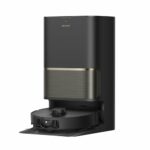
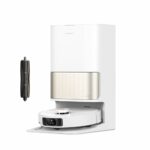
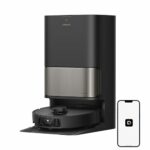
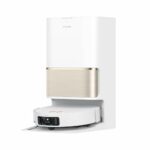
Where dimensions matter more is with the base. The Dreame's dock measures 298 mm wide, 452 mm tall, and 440 mm deep—a substantial footprint. The Roborock base is considerably more discreet at 212 mm wide, 259 mm tall, and just 178 mm deep. If floor space is limited, the Roborock's smaller base may be easier to accommodate in a corner or utility area.
Real-World Use
For larger homes, the Dreame D20 Pro Plus offers clear advantages: greater suction, longer battery life, and a bigger dust bag. The dual HyperStream brushes and anti-tangle side brush make it particularly suitable for households with pets or long hair. The obstacle avoidance feature adds a layer of convenience if you have children's toys, shoes, or cables on the floor.
The Roborock Q7 L5+ or BF+ Plus suits smaller flats or homes where compactness matters. Its smaller base takes up less room, and the brand's reputation for reliability and app quality remains a strong selling point. With 8,000 Pa of suction, it's still capable on hard floors and low-pile carpets, though it may struggle more with deep-pile rugs or heavily embedded dirt.
Neither model excels at mopping, so if that's a priority, you'd be better served by a robot with a multifunction base that washes and dries mops automatically. For vacuuming-focused cleaning with minimal manual bin emptying, both deliver, but the Dreame offers more power and endurance whilst the Roborock provides a tidier, more space-efficient solution.
Conclusion: Which One to Choose?
Choose the Dreame D20 Pro Plus if you have a larger home, need maximum suction power, or live with pets that shed heavily. The extended battery life and larger dust bag mean less frequent intervention, and the obstacle avoidance adds practical convenience. It's the better option for homes with varied flooring, including medium-pile carpets.
Choose the Roborock Q7 L5+ or BF+ Plus if you value a compact base and reliable performance in a smaller space. It's ideal for flats or homes under 80 square metres, where its smaller battery and dust bag capacity won't be limiting factors. If you prefer the established reputation of Roborock and a less intrusive dock, this model fits the bill.