✨ VS Analyses · VacuumSpain comparison technology. Explanation created with AI from verified technical data.
```html
Introduction
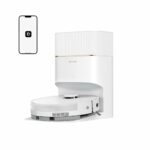
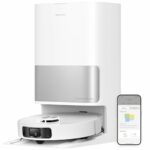
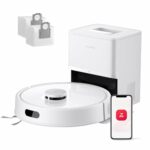
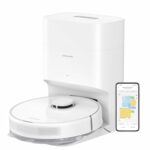
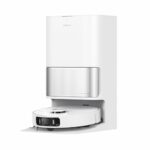
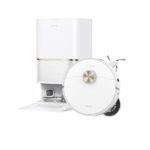
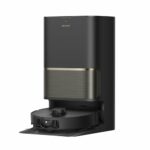
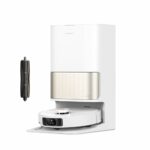
Dreame's D range includes three models that represent different approaches within the mid-market segment. The Dreame D10 Plus Gen 2 arrived in 2024 as an option with a self-emptying base, whilst the Dreame D20 and Dreame D20 Pro Plus were launched in 2025 with significant improvements in power and navigation. The most striking difference between them isn't just in suction power, but in how they're designed for different types of homes and needs.
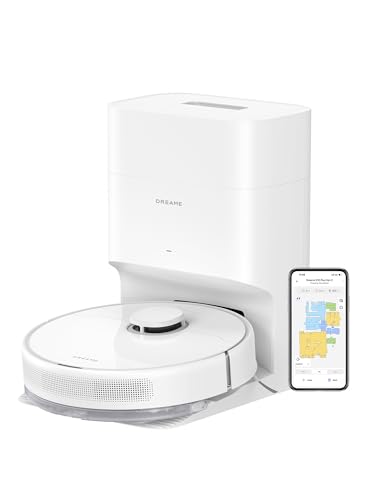
The D10 Plus Gen 2 is aimed at users seeking autonomy in maintenance thanks to its self-emptying base. The D20, without this base, is more compact and straightforward. The D20 Pro Plus combines the best of both worlds: the power of the D20 with the convenience of the self-emptying base and improvements in side brushing.
Power and Suction
The power difference is considerable. The Dreame D10 Plus Gen 2 offers 6,000 Pa, a decent figure for homes without thick carpets or long-haired pets. The D20 and D20 Pro Plus models double this figure with 13,000 Pa, which marks a clear advantage on carpets and floors with more ingrained dirt.
The brushing system also evolves. The D10 Plus Gen 2 features a simple brush, whilst the two 2025 models incorporate a double brush. This configuration improves dirt collection in a single pass, especially on uneven surfaces.
Where the D20 Pro Plus stands out is in the side brush. It includes an extension to better reach corners and anti-tangle technology, something the other two models don't offer. In practice, this reduces manual maintenance and improves cleaning at the edges of rooms. None of the three raises the main brush or side brush during mopping, which is common in this price range.
Mopping
All three models share the same system: static mop with cold water. There's no mop lifting, no edge extension, and no automatic removal at the base. They also don't detect dirt on the floor or on the mops to adjust cleaning.
The robot's water tank does vary. The D10 Plus Gen 2 has 150 ml, whilst the D20 and D20 Pro Plus models increase to 350 ml. This difference is noticeable in medium or large homes: with more capacity, the robot can mop larger surfaces without needing to manually refill the tank.
Without a multifunction base, none of them automatically washes or dries the mops. The mopping is basic, suitable for daily maintenance on hard floors, but not for persistent stains or for those seeking a deep mop.
Navigation System
All three robots use a LiDAR turret to map the home and plan efficient routes. The difference lies in obstacle avoidance. The D10 Plus Gen 2 doesn't include this function, which means it relies solely on laser mapping without the ability to identify small objects on the floor.
The Dreame D20 and D20 Pro Plus incorporate a front 3D laser sensor and obstacle avoidance, allowing them to detect and dodge cables, slippers or toys without needing to tidy up before cleaning. This can make a difference in homes with children or pets.
None of the three includes an AI camera, pet recognition, remote camera access or LED for night vision. The navigation is effective but without the more advanced features of high-end models.
Autonomy and Battery
The battery capacity is identical in all three: 5,200 mAh. The D10 Plus Gen 2 and D20 Pro Plus offer 285 minutes of autonomy, sufficient for homes of up to 200-250 m² on a single charge. The D20 doesn't specify autonomy, although sharing the same battery, performance should be similar.
The difference in the robot's dustbin can influence maintenance frequency. The D10 Plus Gen 2 has 400 ml, the D20 reaches 700 ml and the D20 Pro Plus stays at 500 ml. In practice, the D20 requires fewer manual emptyings as it doesn't have a self-emptying base, whilst the other two delegate this task to the station.
Smart Features
All three models can overcome thresholds of up to 20 mm, allowing them to move between rooms with small level changes or climb onto medium-thickness carpets. None includes a robotic arm or its own voice assistant, but all are compatible with Alexa and Google Home for external voice control.
Multifunction Cleaning Base
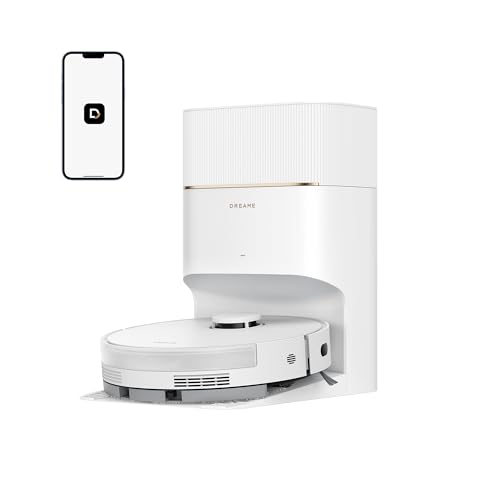
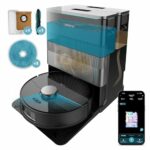
Here's one of the most practical differences. The Dreame D10 Plus Gen 2 and D20 Pro Plus have a self-emptying dustbin base. The D10 Plus Gen 2's bag has a 4-litre capacity, whilst the D20 Pro Plus reaches 5 litres. This translates to several weeks without needing to change the bag, depending on usage and home size.
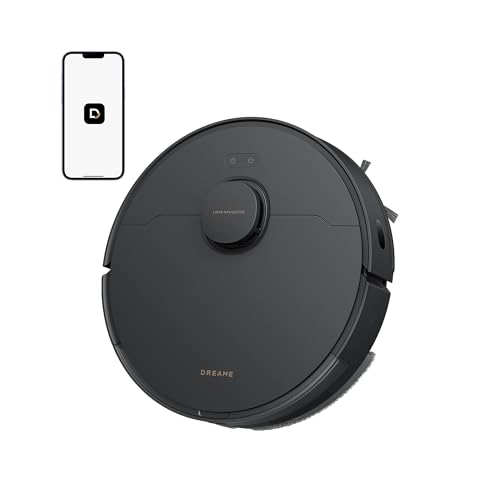
The D20, without a self-emptying base, requires manually emptying the robot's dustbin after each session or every few days. Its base is much more compact: 126 mm wide, 92.6 mm high and 130 mm deep, compared to the 298x427x406 mm of the D10 Plus Gen 2 or the 298x452x440 mm of the D20 Pro Plus. If space is limited, this difference can be decisive.
None of the three washes or dries mops, nor includes tray self-cleaning, UV disinfection, detergent tank or plumbing connection. They're functional bases but without the features of higher-end models.
Dimensions
The diameter of all three robots is 350 mm. The height varies slightly: 96.3 mm in the D10 Plus Gen 2 and 96.8 mm in the D20 and D20 Pro Plus models. Half a millimetre is barely noticeable, but can matter with very low furniture. Generally, all three pass under sofas and beds with standard clearance.
The most relevant difference is in the bases. The D20, by doing without self-emptying, occupies a fraction of the space required by the other two. If the robot is stored in a visible corner of the living room or in a reduced space, the D20 is much more discreet.
Real-World Experience
For small homes or flats of up to 80-100 m², the D20 may be sufficient if you don't mind emptying the dustbin manually. Its 13,000 Pa power and 700 ml dustbin compensate for the absence of a self-emptying base. Additionally, its compact size facilitates storage.
In medium or large houses, the D10 Plus Gen 2 offers convenience thanks to the self-emptying base, although its lower power may be noticeable on carpets or if there are pets. The mopping with a 150 ml tank limits the area it can cover without intervention.
The D20 Pro Plus is the most complete of the three. It combines 13,000 Pa power, a self-emptying base with a 5-litre bag, extendable and anti-tangle side brush, and larger tanks for both dust and water. For homes with pets, carpets and minimal maintenance needs, this model notably reduces manual tasks.
The 3D laser sensor on the D20 and D20 Pro Plus models improves the experience in homes with scattered objects, although it doesn't reach the recognition level of AI cameras. It's advisable to pick up thick cables or small toys before cleaning.
Conclusion: Which to Choose?
Choose the Dreame D10 Plus Gen 2 if you're looking for a balanced option with a self-emptying base and your home doesn't exceed 100-120 m². It's suitable for hard floors without thick carpets and for users who value the convenience of not emptying the dustbin manually every few days. Its 6,000 Pa power is sufficient for daily maintenance without extreme demands.
Choose the Dreame D20 if you live in a small flat, have limited space for the base and don't mind emptying the robot's dustbin manually. Its 13,000 Pa power and 700 ml dustbin make it a capable unit for homes of up to 80-100 m², especially if there are carpets or greater dirt accumulation. The compact base is ideal for reduced spaces.
Choose the Dreame D20 Pro Plus if you're looking for the best performance in this comparison. Its combination of 13,000 Pa, 5-litre self-emptying base, extendable and anti-tangle side brush, and enlarged tanks makes it ideal for large houses, homes with pets and users who prioritise total autonomy. The 3D laser sensor improves navigation in environments with obstacles, and maintenance is reduced to a minimum. It's the most complete option for those seeking a Dreame robot vacuum without sacrificing key features.
```