✨ VS Analyses · VacuumSpain comparison technology. Explanation created with AI from verified technical data.
Introduction
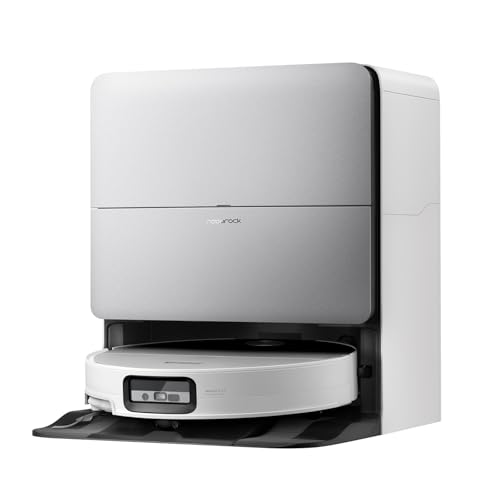
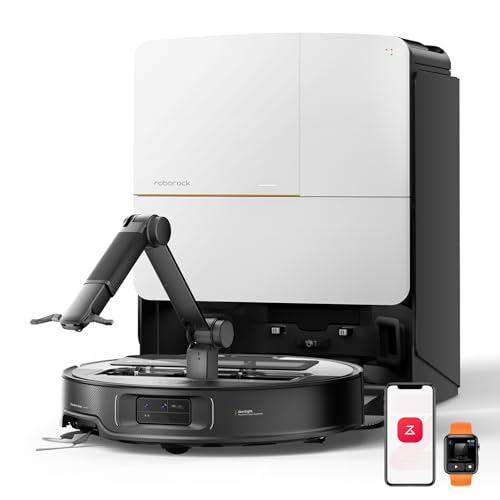
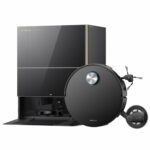
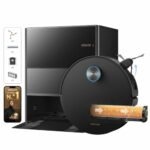
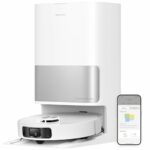
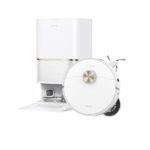
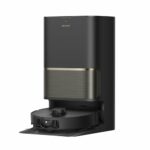
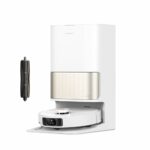
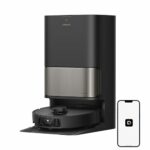
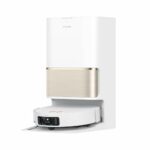
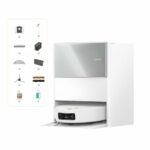
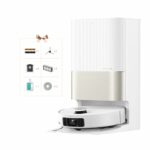
The Saros family from Roborock presents two high-end proposals that share design philosophy but target different needs. The Saros 20 Sonic, launched in 2026, focuses on raw suction power and a renewed navigation system. The Saros Z70, from the previous year, incorporates a robotic arm that clearly differentiates it in functionality.
We're looking at Roborock robot vacuum cleaners designed for homes seeking complete automation. Both include a multifunction base with hot water mop washing and drying, which guarantees efficient mopping without manual intervention. The choice between one and the other will depend on whether you prioritise suction capacity or innovative functions such as object manipulation.
Power and Suction
The most notable difference in this robot vacuum cleaner comparison is found in suction power. The Roborock Saros 20 Sonic reaches 36,000 Pa, a figure that far exceeds the 22,000 Pa of the Saros Z70. This difference isn't merely numerical: in homes with medium or long pile carpets, or in households with pets that shed a lot of hair, the extra suction capacity can make the difference between correct cleaning and exceptional cleaning.
The brushing system also shows variations. The Saros 20 Sonic features the DuoDivide Antienredos brush, a specific Roborock design that pushes hairs towards the central gap to facilitate suction and minimise tangles. The Saros Z70 is equipped with a conventional anti-tangle brush, which also reduces tangles but with a less specialised design.
Both robots lift the main brush during mopping and feature an extendable and liftable side brush, as well as anti-tangle technology in the side brush. These shared features ensure effective corner cleaning and prevent the brushes from interfering with mopping. For homes with pets, either model offers clear advantages, although the Saros 20 Sonic has the edge due to its greater power and DuoDivide brush.
Mopping
The mopping approach is radically different between these two models. The Roborock Saros 20 Sonic uses a Sonic vibrating mop, a system that generates high-frequency vibrations to remove stuck-on dirt. The Saros Z70 opts for two rotating mops, a more conventional but equally effective design that covers more surface area with each pass.
Mop lift shows technical differences: the Saros 20 Sonic lifts between 8 and 18 mm, whilst the Saros Z70 reaches between 12 and 22 mm. This greater lift in the Z70 is useful in homes with thick carpets or pronounced floor transitions, as it prevents wet mops from touching carpets during navigation.
Both models extend the mops to reach edges and skirting boards, automatically remove the mops at the base when you only need to vacuum, and detect dirt both on the mops and on the floor to adjust mopping. Both include warm water for mopping, a feature that improves the dissolution of grease and dirt compared to cold water. In practice, either of these systems offers superior results to robots with basic mopping.
Navigation System
The Saros 20 Sonic debuts a navigation system with retractable LiDAR, whilst the Saros Z70 uses StarSight 2.0. Although both systems guarantee precise mapping and efficient navigation, retractable LiDAR may offer advantages in terms of low profile in certain situations, although both robots share the same height of 79.8 mm.
Object recognition capacity is significantly superior in the Saros 20 Sonic: it identifies up to 300 different obstacles compared to the 108 of the Saros Z70. This difference translates into greater precision for avoiding small objects, cables, toys or socks scattered on the floor. Additionally, the Saros 20 Sonic incorporates specific curtain detection, a function absent in the Z70 that prevents the robot from getting tangled in long curtains or tablecloths.
Both are equipped with dual camera with artificial intelligence, front 3D laser sensor, pet recognition, remote camera access and LED for night vision. The Saros 20 Sonic integrates SmartPlan 3.0, the latest version of Roborock's cleaning intelligence, whilst the Z70 features SmartPlan 2.0. This evolution implies improvements in route planning and adaptation to different types of dirt.
Autonomy and Battery
Both robots feature a 6,400 mAh battery, a generous capacity that allows coverage of large homes in a single cleaning session. Although autonomy data in minutes is not available, this battery capacity usually translates into extended sessions even with maximum suction power.
Energy management in both models allows them to automatically return to the base when they detect low battery, recharge as necessary and continue cleaning where they left off. This feature is especially useful in large homes where a single charge is not sufficient to complete the entire surface area.
Smart Functions
Both robots overcome simple steps, a capability that facilitates transition between rooms with small level changes or raised door frames. Both include their own voice assistant and compatibility with external assistants such as Alexa or Google Home, which allows voice control integrated into home automation ecosystems.
The most spectacular difference is found in the OmniGrip Arm robotic arm, exclusive to the Roborock Saros Z70. This arm allows the robot to manipulate light objects, pick up small items from the floor or move minor obstacles. It's an innovative function that goes beyond simple cleaning and can be useful in homes with young children where toys are often left scattered. The Saros 20 Sonic does not incorporate this technology.
Multifunction Cleaning Base
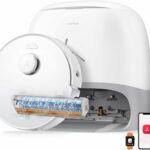
The bases of both models offer complete functionality: auto-emptying of the dust container into a 2.5-litre bag, mop washing with hot water and drying with hot air. This combination guarantees that the mops are thoroughly cleaned during mopping sessions and completely dried when finished, preventing bad odours and bacterial growth.
The Saros 20 Sonic includes self-cleaning of the washing tray with hot water, whilst the Saros Z70 features a 2.0 self-cleaning system. Both integrate a detergent tank for automatic dosing during mop washing. The water tanks are identical: 4 litres of clean water and 3 litres of dirty water, sufficient capacity for several mopping sessions without intervention.
Neither offers integrated connection to plumbing nor an optional kit for it, which means you'll need to refill and empty the tanks manually periodically. Neither includes UV disinfection in the base.
Dimensions
The robots share identical dimensions: 353 mm in diameter and 79.8 mm in height. This profile allows both to access under most standard furniture, beds and sofas without problems. The contained height is especially useful in homes with low furniture where taller robots would become trapped.
The bases show slight dimensional variations. The Saros 20 Sonic's measures 409 mm wide, 470 mm high and 440 mm deep. The Saros Z70's is 381 mm wide, 488 mm high and 475 mm deep. In practice, these differences are minimal and both require similar space, although it's advisable to measure them if you plan to place the base in a tight space.
Real-World Experience
For large homes, both robots offer sufficient autonomy thanks to their 6,400 mAh batteries. The Saros 20 Sonic stands out in homes with carpets or fitted carpets due to its 36,000 Pa power and its DuoDivide brush, which extracts more embedded dirt. The Saros Z70, with its greater mop lift, navigates better over thick carpets during mopping.
In homes with pets, the Saros 20 Sonic has the edge due to its superior power and more specialised brush system for avoiding hair tangles. The extended recognition of 300 objects also helps avoid pet toys, feeding bowls or any other scattered items.
The Saros Z70 is especially interesting in homes with young children where the robotic arm can pick up small toys or move light objects that obstruct cleaning. This function provides a level of automation that goes beyond what's usual in a Roborock robot vacuum cleaner.
Maintenance is similar in both: the multifunction bases with automatic mop washing and drying drastically reduce manual intervention. You'll only need to empty the dirty water tank and refill the clean water tank every few days, as well as change the dust bag every month or month and a half depending on use.
Conclusion: Which to Choose?
Choose the Roborock Saros 20 Sonic if: You're looking for the maximum suction power available in the Saros range, you have carpets or fitted carpets at home, you live with pets that shed a lot of hair, or you value a navigation system with extended recognition of up to 300 objects and specific curtain detection. Its DuoDivide brush and Sonic vibration in mopping make it a solid option for those who prioritise cleaning results over experimental functions.
Choose the Roborock Saros Z70 if: You're attracted by the innovation of the OmniGrip Arm robotic arm and want a robot that goes beyond vacuuming and mopping, you need greater mop lift for thick carpets or pronounced transitions, or you prefer the two rotating mops system over Sonic vibration. It's ideal for homes with children where the arm can help pick up small objects, and for those seeking differential technology even though suction power is lower.
Both are high-end robot vacuum cleaners with complete multifunction base, intelligent navigation and advanced functions. The choice depends on whether you prioritise raw power and recognition capacity (Saros 20 Sonic) or functional innovation with the robotic arm (Saros Z70). For large homes with pets and carpets, the Saros 20 Sonic offers clear advantages. For those looking to experiment with the latest technology in home automation, the Saros Z70 marks a different path in this comparison between Roborock robot vacuum cleaners.