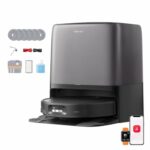
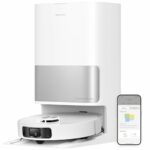
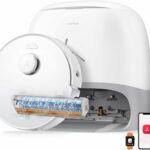
✨ VS Analyze · VacuumSpain comparison technology. AI-generated explanation based on verified technical data.
```html
Introduction
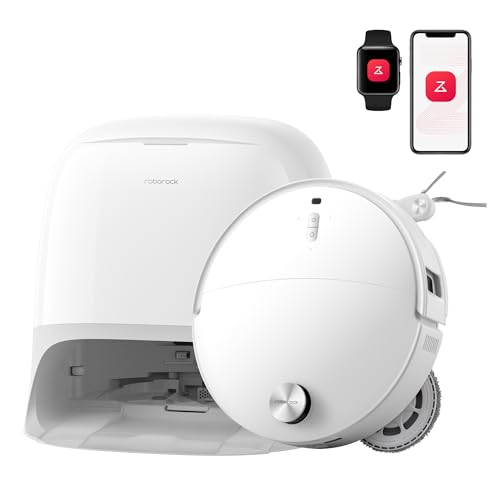
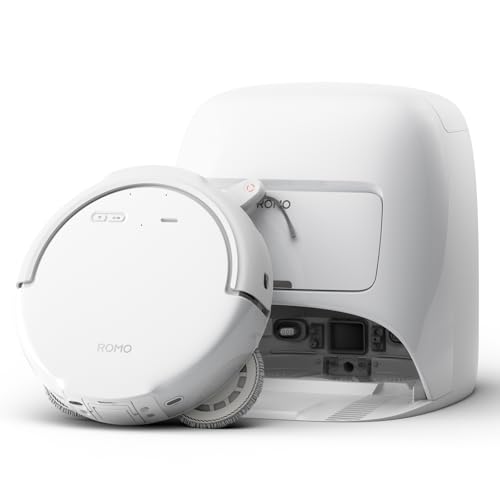
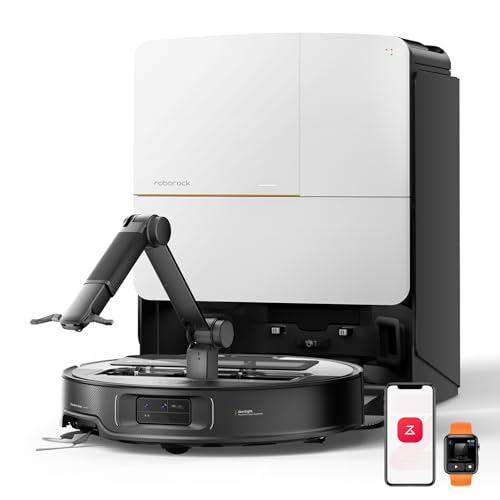
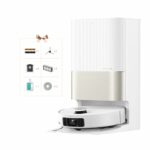
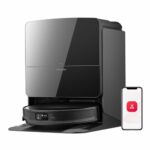
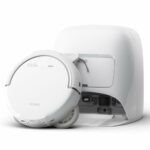
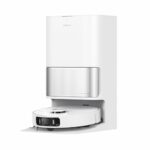
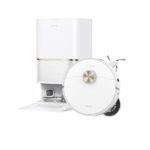
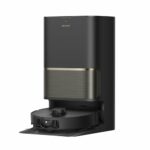
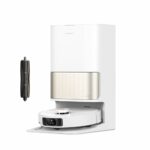
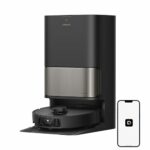
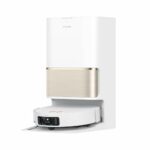
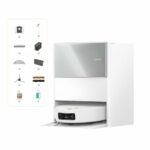
The high-end robot vacuum market has become tremendously competitive in 2025. DJI, known for its drones, has made the leap into the smart home sector with the Romo S, a model that arrives with 25,000 Pa of suction power and a solid-state LiDAR navigation system. Facing it, Roborock presents two established proposals: the Qrevo Curv 2 Pro, also equipped with 25,000 Pa and a 6,400 mAh battery that promises up to 290 minutes of autonomy, and the Saros Z70, which stands out for incorporating an OmniGrip robotic arm capable of manipulating small objects.
We are looking at three robots designed for demanding users seeking maximum automation in medium or large homes. All three feature multifunctional bases that wash and dry the mops, advanced navigation systems with AI camera and the ability to overcome obstacles. The differences, however, are notable in aspects such as autonomy, main brush design or the special functions that each manufacturer has decided to prioritise.
Power and Suction
The DJI Romo S and the Roborock Qrevo Curv 2 Pro share the same suction power of 25,000 Pa, a figure higher than the 22,000 Pa of the Saros Z70. In practice, this difference can be noticeable when working on thick carpets or in homes with pets that shed a lot of hair.
The main brush design marks interesting differences. The Romo S mounts a Divid system, whilst the Qrevo Curv 2 Pro opts for Roborock's DuoDivide Antienredos, a solution that pushes hairs towards the central gap to prevent tangles. The Saros Z70 uses an anti-tangle brush without specifying concrete technology. All three models can raise the main brush during mopping, preventing it from getting unnecessarily wet.
As for the side brush, all incorporate extension to improve cleaning in corners and anti-tangle technology. The Romo S stands out for mounting a double side brush. The big difference is that only the Saros Z70 can raise the side brush during mopping, which reduces the risk of dispersing wet dirt across already clean areas.
Mopping
All three robots mop using two rotating mops that can extend to better reach edges. Mop elevation is also present in all, although with different ranges: the Qrevo Curv 2 Pro raises them between 7 and 17 mm, whilst the Saros Z70 reaches between 12 and 22 mm. The Romo S simply confirms that it raises the mops, without specifying millimetres.
The Saros Z70 differentiates itself by mopping with warm water, which improves the dissolution of grease and adhered stains. The Romo S and the Qrevo Curv 2 Pro work with cold water. All wash the mops in the base, although the Qrevo Curv 2 Pro and the Saros Z70 do so with hot water, whilst the Romo S uses hot air only for drying.
Mop drying is carried out with hot air in all three models, essential to prevent bad odours. The Qrevo Curv 2 Pro and the Saros Z70 can automatically remove the mops at the base when only vacuuming is desired, a function for which there is no confirmation on the Romo S. All three integrate dirt detection both on the mops and on the floor, allowing automatic re-cleaning of dirtier areas.
Navigation System
The DJI Romo S uses a solid-state LiDAR, advanced technology that eliminates moving parts. The Qrevo Curv 2 Pro mounts a retractable LiDAR, whilst the Saros Z70 uses Roborock's StarSight 2.0 system. All three incorporate an AI camera, although the Qrevo Curv 2 Pro and the Saros Z70 mount dual cameras compared to the single one on the Romo S.
Obstacle recognition capacity varies considerably. The Qrevo Curv 2 Pro can identify up to 200 different objects, the Saros Z70 recognises 108, and for the Romo S this figure is not specified. Both the Qrevo Curv 2 Pro and the Saros Z70 confirm specific pet recognition, something not detailed in the DJI model.
All offer remote camera access and LED for night vision. The Saros Z70 specifies that it works with the RR Mason 12.0 algorithm, whilst the other two do not detail their CPU or processing software. All three integrate intelligent cleaning via AI and stain recognition.
Autonomy and Battery
Here we find one of the most significant differences. The Roborock Qrevo Curv 2 Pro leads with 6,400 mAh capacity and 290 minutes of declared autonomy, figures that make it the most suitable option for large homes. The DJI Romo S remains at 5,000 mAh with 180 minutes of continuous operation. The Saros Z70 mounts the same 6,400 mAh battery as the Qrevo Curv 2 Pro, although it does not specify minutes of autonomy.
This difference can be decisive in houses of more than 150 square metres or in multi-storey homes where the robot needs to complete long cycles without returning to charge. The Romo S, with less autonomy, will be more suitable for flats or medium-sized houses.
Intelligent Functions
All three robots can overcome obstacles, although with different capabilities. The DJI Romo S reaches 20 mm in height, whilst the Qrevo Curv 2 Pro and the Saros Z70 overcome simple steps without specifying exact millimetres.
The big difference lies in the Saros Z70's OmniGrip robotic arm, absent in the other two models. This arm allows the robot to pick up small objects such as socks or light toys before cleaning, a function that can be useful in homes with children or pets, although it is advisable not to overestimate its practical usefulness in day-to-day life.
The Qrevo Curv 2 Pro and the Saros Z70 integrate Roborock's own voice assistant, in addition to compatibility with Alexa and Google Home. For the Romo S, only compatibility with external assistants is confirmed.
Multifunctional Cleaning Base
All three bases perform auto-emptying of the dust container, washing and drying of mops with hot air. The dust bag capacity is similar: 2.4 litres in the Romo S compared to 2.5 litres in the two Roborock models. The clean water tank is identical in all three (4 litres), whilst the dirty water tank varies slightly: 3.2 litres in the Romo S and 3 litres in the other two.
The washing tray self-cleaning system differs in each model. The Romo S uses a rotating nozzle, the Qrevo Curv 2 Pro mounts Roborock's version 3.0, and the Saros Z70 version 2.0. This suggests that the Qrevo Curv 2 Pro has the most advanced cleaning system for the base itself.
An important difference: the DJI Romo S and the Saros Z70 include a detergent tank in the base, something the Qrevo Curv 2 Pro does not offer. None of the three allows connection to water pipes nor offers an optional kit for this.
Dimensions
The DJI Romo S measures 98 mm in height, considerably more than the 79.8 mm of the Qrevo Curv 2 Pro and the Saros Z70. This may limit its ability to enter under low furniture, sofas or beds with little clearance from the floor. The diameter is practically identical: 351 mm in the Romo S, 352 mm in the Qrevo Curv 2 Pro and 353 mm in the Saros Z70.
The bases also present differences. The Romo S occupies 453 x 440 x 425 mm, the Qrevo Curv 2 Pro forms an almost perfect cube of 450 mm per side, and the Saros Z70 is narrower but taller: 381 x 488 x 475 mm. In tight spaces, it is advisable to measure the available space carefully before deciding.
The robot's dust container also varies: 260 ml in the Romo S, 245 ml in the Qrevo Curv 2 Pro and 180 ml in the Saros Z70. The water tank of the Qrevo Curv 2 Pro reaches 67 ml, that of the Saros Z70 69 ml, and for the Romo S capacity is not specified.
Real-World User Experience
For large homes, the Roborock Qrevo Curv 2 Pro offers the best combination of autonomy (290 minutes) and 6,400 mAh battery. Its ability to recognise up to 200 obstacles and the tray self-cleaning system 3.0 make it a very complete option for those seeking maximum automation without manual intervention.
The DJI Romo S is more suitable for flats or medium-sized houses where the autonomy of 180 minutes is sufficient. Its greater height can be a problem under low furniture, although its power of 25,000 Pa and the detergent tank in the base compensate in other aspects. The double side brush can improve cleaning in corners.
The Saros Z70 positions itself as the most innovative option thanks to the OmniGrip robotic arm and mopping with warm water. Its ability to raise the side brush during mopping and the 6,400 mAh battery make it attractive for homes with children or pets where small objects may hinder cleaning. The lower height (79.8 mm) facilitates access under furniture.
In homes with pets, all three models incorporate anti-tangle brushes, although only the Qrevo Curv 2 Pro and the Saros Z70 confirm specific animal recognition. The suction power of the Romo S and the Qrevo Curv 2 Pro (25,000 Pa) can make a difference on carpets with a lot of accumulated hair.
Conclusion: Which One to Choose?
Choose the DJI Romo S if you are looking for a powerful robot for a medium-sized home, you value the detergent tank in the base and you do not need maximum autonomy. It is a good option if you do not have very low furniture and you prefer to try DJI's venture into this sector with solid-state LiDAR technology.
Choose the Roborock Qrevo Curv 2 Pro if you live in a large house where the autonomy of 290 minutes is essential, you want the most advanced obstacle recognition system (200 objects) and you prefer Roborock's reliability with its tray self-cleaning version 3.0. It is the most balanced option for those seeking maximum automation without experimental functions.
Choose the Roborock Saros Z70 if you are interested in the robotic arm to pick up small objects, you value mopping with warm water and you need a robot that can raise the side brush during mopping. Its 6,400 mAh battery and lower height make it ideal for homes with children, pets and low furniture, although its power of 22,000 Pa is
```