✨ VS Analyze · VacuumSpain comparison technology. AI-generated explanation based on verified technical data.
Introduction
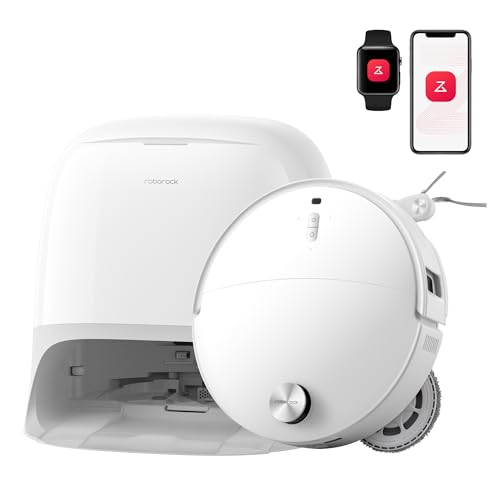
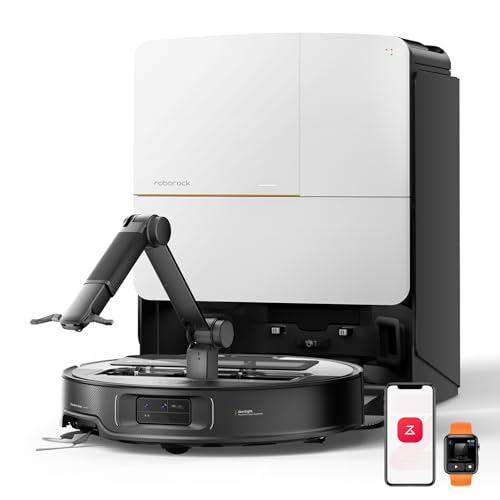
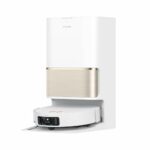
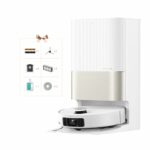
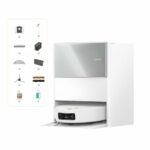
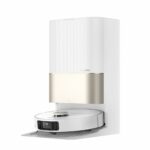
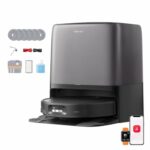
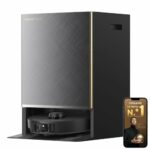
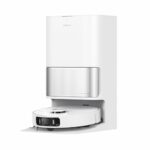
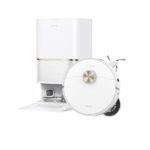
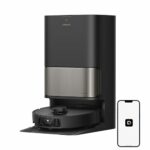
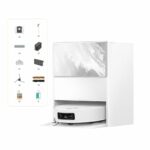
The Roborock Qrevo Curv 2 Pro and the Roborock Saros Z70 represent two high-end propositions within the 2025 catalogue of the world's leading robot vacuum brand. Both units integrate a complete multifunction base with mop washing and drying, advanced navigation systems with dual AI camera and features designed for demanding users seeking total automation in home cleaning.
The differences between these models are not evident at first glance, but they directly affect vacuuming, mopping and smart function performance. Whilst the Qrevo Curv 2 Pro focuses on maximum suction power and an improved self-cleaning system, the Saros Z70 incorporates a robotic arm that extends its capabilities beyond conventional cleaning.
Power and Suction
Suction power marks a notable difference: 25,000 Pa in the Qrevo Curv 2 Pro against 22,000 Pa in the Saros Z70. This 3,000 Pa advantage translates into greater capacity to extract ingrained dirt from carpets and tile joints, especially relevant in homes with pets or long-pile carpets.
Regarding the main brush, the Qrevo Curv 2 Pro incorporates the DuoDivide anti-tangle system, designed to push hair and strands towards the central suction gap avoiding tangles. The Saros Z70 uses a conventional anti-tangle brush, also effective, albeit with a different approach. Both models lift the main brush during mopping to avoid dragging dry dirt over the wet floor.
The most significant difference appears in the side brush. The Saros Z70 can lift this brush during mopping, which prevents it from interfering with the mops and improves washing efficiency at edges. The Qrevo Curv 2 Pro does not have this side lift. Both units feature an extendable side brush to reach corners and edges, as well as anti-tangle design.
Mopping
Both robots integrate a two rotating mop system with edge extension, allowing them to reach skirting boards. Mop lifting works differently: the Qrevo Curv 2 Pro reaches between 7 and 17 mm, whilst the Saros Z70 reaches up to 12-22 mm. This greater lift makes it easier to overcome obstacles and transitions between floors without wetting carpets.
The Saros Z70 mops with warm water, which helps to better dissolve grease and adhered dirt. The Qrevo Curv 2 Pro uses cold water. In practice, this difference is especially noticeable in kitchens or areas with greasy stains.
Both models wash the mops with hot water in the base and dry them with hot air, guaranteeing clean mops on each outing and avoiding bad odours. Both can automatically detach the mops at the base when only vacuuming is needed, and detect dirt both on the mops and on the floor to reinforce mopping where necessary.
Navigation System
The Qrevo Curv 2 Pro features a retractable LiDAR system that hides when not in use, reducing the robot's effective height to pass under low furniture. The Saros Z70 uses StarSight 2.0, an advanced navigation system that combines multiple sensors.
Both units integrate dual AI camera and front 3D laser sensor to avoid obstacles. Recognition capacity differs substantially: the Qrevo Curv 2 Pro identifies up to 200 types of obstacles, almost double the Saros Z70's 108. This translates into better adaptation capacity to complex environments with diverse objects.
Both models recognise pets, allow remote camera access and feature LED for night vision. The Qrevo Curv 2 Pro implements SmartPlan 3.0, whilst the Saros Z70 works with SmartPlan 2.0. The Saros Z70 specifies the RR Mason 12.0 algorithm as the system's brain.
Autonomy and Battery
Battery capacity is identical: 6,400 mAh in both robots. The Qrevo Curv 2 Pro specifies an autonomy of 290 minutes, sufficient to cover large homes in a single charge. The Saros Z70 does not detail this data, although with the same battery similar performance is expected.
This autonomy allows cleaning extensive surfaces without interruptions, something especially useful in houses of more than 150 square metres or with multiple floors requiring prolonged cleaning sessions.
Smart Functions
Both robots can overcome simple steps, facilitating passage between rooms with small level changes or floor transitions.
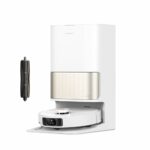
The most striking difference lies in the OmniGrip Arm robotic arm, exclusive to the Saros Z70. This arm extends the robot's capabilities beyond vacuuming and mopping, allowing it to interact with household objects. The Qrevo Curv 2 Pro does not include this function.
Both models incorporate their own voice assistant in addition to compatibility with Alexa and Google Home, allowing voice command control without needing to use the mobile.
Multifunction Cleaning Base
The multifunction bases of both robots include auto-emptying of the dust bin, mop washing with hot water and drying with hot air. The dust bag has a capacity of 2.5 litres in both cases, whilst the clean water tanks reach 4 litres and the dirty water ones 3 litres.
The Qrevo Curv 2 Pro integrates 3.0 tray self-cleaning, an improved version compared to the Saros Z70's 2.0. This system keeps the tray where the mops are washed free from accumulated dirt, reducing manual maintenance.
Only the Saros Z70 incorporates a detergent tank in the base, dispensing product during mop washing to improve cleaning. The Qrevo Curv 2 Pro does not have this feature. Neither includes UV disinfection nor plumbing connection, although they do not offer an optional kit for this either.
Dimensions
The diameter of both robots is practically identical: 352 mm in the Qrevo Curv 2 Pro and 353 mm in the Saros Z70. The height also matches at 79.8 mm, allowing both to pass under low furniture with the same ease.
The bases present more evident differences. The Qrevo Curv 2 Pro has a square base of 450 mm width, height and depth, being more compact horizontally. The Saros Z70's base measures 381 mm wide, 488 mm high and 475 mm deep, being narrower but also taller and deeper. It is advisable to measure the available space before deciding, especially if planning to locate the base in cupboards or tight spaces.
Real-World Experience
The Qrevo Curv 2 Pro is especially suitable for homes with thick carpets or pets that shed a lot of hair, thanks to its 25,000 Pa of suction and the DuoDivide brush. Its greater obstacle recognition capacity (200 types) makes it more adaptable to homes with many objects on the floor or complex layouts. The 290-minute autonomy allows covering large houses without intermediate recharges.
The Saros Z70 excels in mopping thanks to warm water and the detergent tank, achieving better results on hard floors with difficult stains. The side brush lift during mopping optimises edge washing. The robotic arm adds versatility beyond conventional cleaning, although its usefulness will depend on the use each user wishes to give it.
Both robots offer reduced maintenance thanks to the complete multifunction bases. Automatic mop detachment allows programming vacuum-only days without manual intervention. Dirt detection on mops and floor guarantees that both reinforce cleaning where it is really needed.
Conclusion: Which to Choose?
Choose the Roborock Qrevo Curv 2 Pro if... you seek maximum suction power for carpets and pet hair, value extended obstacle recognition in complex environments, prefer a more horizontally compact base or need specified 290-minute autonomy to cover extensive surfaces. Its 3.0 tray self-cleaning system also reduces maintenance.
Choose the Roborock Saros Z70 if... you prioritise mopping with warm water and detergent for better results on hard floors, are interested in the robotic arm for additional functions, need the side brush to lift during mopping to optimise edge washing or have greater vertical space for the base. The mop lift up to 22 mm also makes it easier to overcome taller obstacles.
For large houses with carpets and pets, the Qrevo Curv 2 Pro offers clear advantages in power and autonomy. If your home has mainly hard floors and you seek the best possible mopping, the Saros Z70 with warm water and detergent makes the difference. Both represent reliable high-end options within the Roborock catalogue, with features that justify their positioning amongst the best robot vacuums on the market.