✨ VS Analyze · VacuumSpain comparison technology. AI-generated explanation based on verified technical data.
```html
Introduction
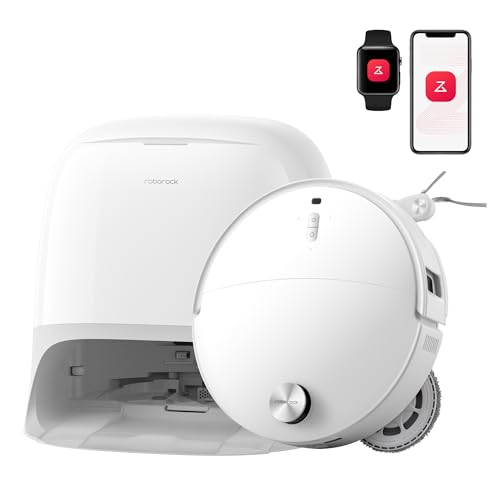
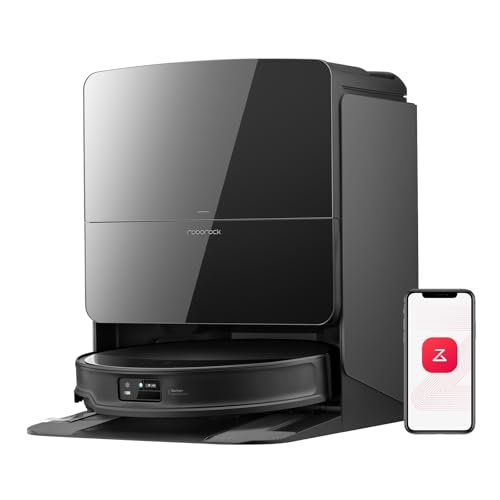
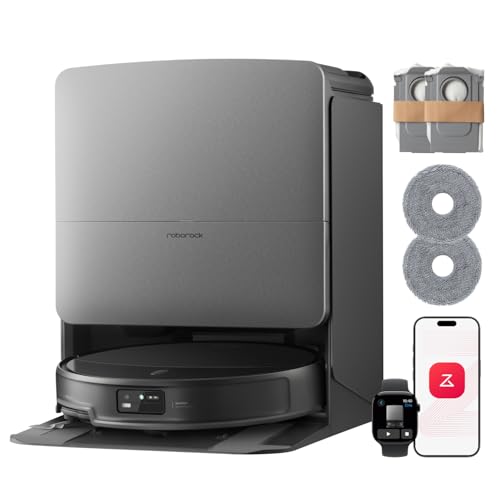
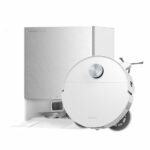
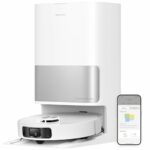
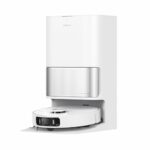
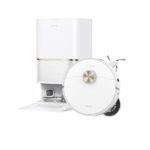
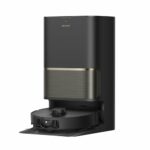
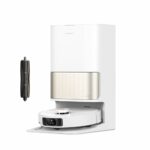
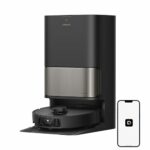
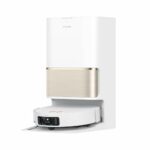
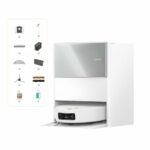
Roborock presents for 2025 and early 2026 three advanced options within its premium catalogue: the Roborock Qrevo Curv 2 Pro, the Roborock Saros 10R and the Roborock Saros 20. All three units integrate a complete multifunctional base with mop washing and drying, intelligent navigation with dual-lens cameras and mopping capabilities with extendable rotating mops. These are models designed for users seeking maximum autonomy and professional results without constant manual intervention.
The Qrevo Curv 2 Pro arrived on the market in 2025, whilst the Saros 10R was also launched that same year. The Saros 20, however, is scheduled for February 2026, making it the brand's most recent offering. Although they share similar base technology, there are important technical differences worth analysing to identify which best suits each type of home.
Power and Suction
Suction power marks a notable difference between these three Roborock robot vacuum cleaners. The Saros 20 leads with 36,000 Pa, a figure that places it amongst the most powerful on the market and especially useful for medium or long pile carpets. The Qrevo Curv 2 Pro sits at 25,000 Pa, sufficient for most domestic situations, whilst the Saros 10R offers 18,500 Pa, a more moderate power but still capable of handling hard floors and thin carpets well.
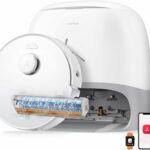
All three models are equipped with the DuoDivide Anti-Tangle main brush system, specifically designed to prevent long hair from tangling in the roller. This brush automatically lifts during mopping on all three units, allowing alternation between vacuuming and mopping without dragging dry dirt over wet surfaces.
Regarding the side brush, all feature an extendable, anti-tangle design. However, the Qrevo Curv 2 Pro does not incorporate side brush lifting, something that both the Saros 10R and Saros 20 do have. This can be particularly noticeable when mopping: when the side brush doesn't lift, it can slightly hinder the passage of the mops at the edges. For homes where mopping is prioritised over corner sweeping, this difference is relevant.
Mopping
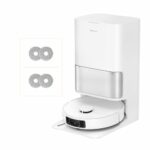
All three robots use a dual rotating mop system, which offers better results than traditional drag mops. All include mop extension to better reach edges and skirting boards, a function that makes a difference in perimeter cleaning.
Mop lifting varies: the Qrevo Curv 2 Pro lifts between 7 and 17 mm, whilst the Saros 10R and Saros 20 reach between 12 and 22 mm. This means the Saros models can climb better onto carpets without wetting them, which is practical in homes with medium-thickness carpets.
An important difference appears in the floor mopping water temperature. The Qrevo Curv 2 Pro mops with cold water, whilst the Saros 10R and Saros 20 use warm water. Although it's not hot water, warm water helps dissolve certain types of dirt better, especially light grease in kitchens.
All three units automatically remove the mops at the base when only vacuuming is needed, avoiding dragging dry mops unnecessarily. They also detect dirt both on the mops and on the floor, activating rewashing or rescrubbing cycles when necessary. In practice, this means the robot returns to the base to wash the mops if it detects they're too dirty, and goes over floor areas it identifies as particularly stained.
Navigation System
Here we find a clear technical difference. The Qrevo Curv 2 Pro uses retractable LiDAR navigation, a laser system that maps the environment with precision and retracts when the robot passes under low furniture. The Saros 10R and Saros 20 models, however, incorporate StarSight 2.0, a system that combines cameras and sensors without a visible laser tower, which can facilitate access under certain furniture.
All robots include dual cameras with artificial intelligence, front 3D laser sensor for obstacle detection and night vision LED. Remote camera access is available on all three, allowing home monitoring from the app.
The number of recognised obstacles varies considerably. The Saros 20 identifies up to 300 different objects, the Qrevo Curv 2 Pro recognises 200 and the Saros 10R stops at 108. This directly influences the robot's ability to avoid cables, toys, slippers or any small objects on the floor. For homes with children or pets where objects are usually scattered about, this difference can be noticed day to day.
Only the Saros 20 incorporates specific curtain detection, which prevents the robot from getting tangled or dragging them during cleaning. All three recognise pets and adjust their behaviour accordingly, avoiding areas where they detect resting animals.
Autonomy and Battery
Battery capacity is identical across all three models: 6,400 mAh. However, the declared battery life differs notably between the Qrevo Curv 2 Pro and the Saros 10R. The former achieves 290 minutes of continuous operation, whilst the Saros 10R offers 180 minutes. For the Saros 20, battery life data in minutes is not available.
This difference can be explained by energy consumption: the Saros 10R, with lower suction power, should theoretically consume less, but its battery life is shorter. This may be due to differences in StarSight 2.0 system management or image processing. In any case, 180 minutes is still sufficient for homes of up to 150-180 m² in a single run.
The Qrevo Curv 2 Pro, with its 290 minutes, can cover much larger surfaces without the need for intermediate recharging, making it especially suitable for large houses or complete floors without fragmenting the cleaning.
Smart Functions
All three robots can overcome simple steps, a useful capability for navigating small level changes between rooms or when accessing terraces. All include an integrated voice assistant in the robot, as well as compatibility with Alexa and Google Home for control via external commands.
AI-powered intelligent cleaning is present on all three models under the SmartPlan system, which analyses the home's layout, identifies floor types and automatically adjusts suction power, water flow and number of passes according to the area. AI stain recognition also works on all three, activating automatic rescrubbing when it detects concentrated dirt.
Multifunctional Cleaning Base
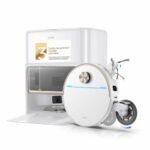
All models include a complete multifunctional base: automatic dust bin emptying, mop washing and drying. All three bases dry with hot air, which speeds up the process and reduces the risk of bad odours. Mop washing is also carried out with hot water on all three units, ensuring better hygiene.
Washing tray self-cleaning presents differences. The Qrevo Curv 2 Pro incorporates version 3.0, the Saros 10R version 2.0 and the Saros 20 self-cleaning with hot water. Although the technical differences between versions are not detailed, in practice this translates to less manual maintenance of the tray where the mops are washed.
The detergent tank in the base is absent on the Qrevo Curv 2 Pro, but is present on the Saros 10R and Saros 20. This allows the base to automatically dispense cleaning product during mop washing, improving sanitisation without manual intervention.
Tank capacities are identical: 2.5-litre dust bag, 4-litre clean water tank and 3-litre dirty water tank. None of the three includes plumbing connection or an optional kit for it, so they require periodic manual refilling and emptying.
Dimensions
The robots have practically identical dimensions. The Qrevo Curv 2 Pro measures 352 mm in diameter, whilst the Saros 10R and Saros 20 reach 353 mm. The height is the same on all three: 79.8 mm, allowing them to pass under most standard furniture.
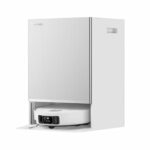
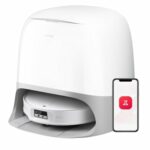
The bases, however, differ notably. The Qrevo Curv 2 Pro base is wider and square, with measurements of 450x450x450 mm. The Saros 10R and Saros 20 bases are narrower (381 mm wide) but taller (488 mm) and deeper (475 mm). This can influence placement: the Qrevo Curv 2 Pro base occupies more floor surface but is less tall, whilst the Saros bases have a smaller footprint but require more clearance height.
Real-World Usage Experience
For large homes, the Qrevo Curv 2 Pro offers a clear advantage with its 290-minute battery life, capable of covering large surfaces without interruptions. Its 25,000 Pa power is sufficient for most situations, although in houses with thick carpets the Saros 20 stands out with its 36,000 Pa.
In homes with pets, all three models work well thanks to the DuoDivide Anti-Tangle brush. Pet recognition is present on all, but the Saros 20, with the ability to identify 300 objects, offers greater precision for avoiding toys, feeding bowls or any pet-related items.
For users who prioritise mopping, the Saros models have an advantage: warm water for floor mopping, greater mop lifting (12-22 mm versus 7-17 mm) and detergent tank in the base. The liftable side brush also helps the mops work better at the edges without interference.
In terms of maintenance, the Saros 10R and Saros 20 require less intervention thanks to the automatic detergent tank. The Qrevo Curv 2 Pro, with its 3.0 tray self-cleaning system, also minimises manual tasks, although it requires manual detergent addition if desired.
The StarSight 2.0 navigation of the Saros models can facilitate passage under furniture by not having a visible laser tower, although the Qrevo Curv 2 Pro's retractable LiDAR also handles this situation well. The real difference lies in object recognition capability, where the Saros 20 clearly surpasses the other two.
Conclusion: Which to Choose?
Choose the Roborock Qrevo Curv 2 Pro if you have a large home requiring extended battery life without intermediate recharges, you prioritise vacuuming over mopping and you're looking for a robot with balanced power (25,000 Pa) and Li
```