✨ VS Analyze · VacuumSpain comparison technology. AI-generated explanation based on verified technical data.
Introduction
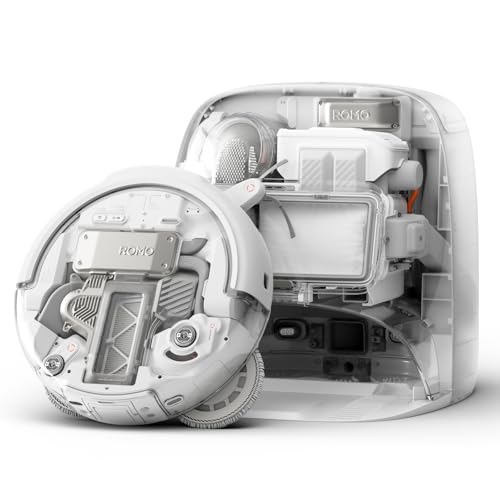
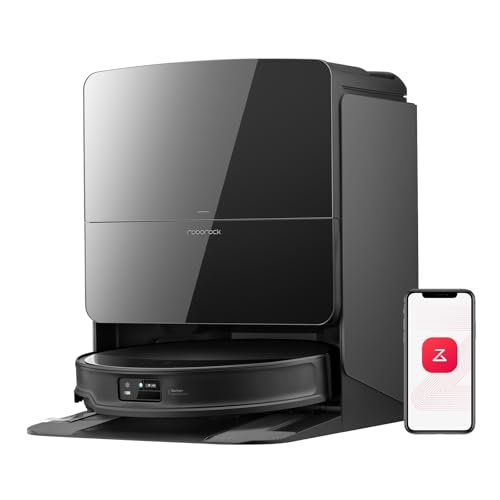
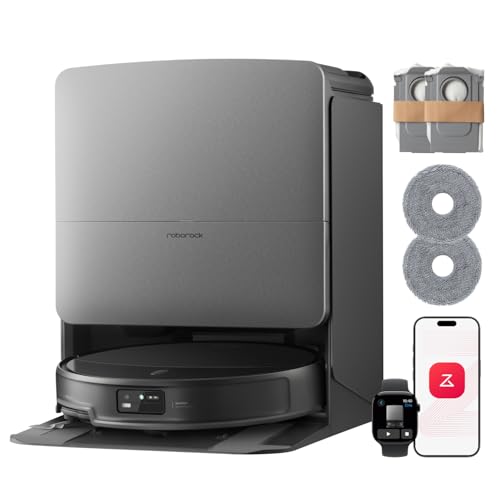
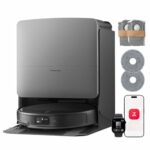
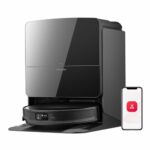
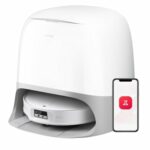
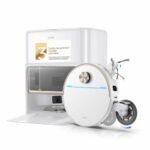
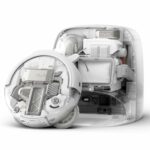
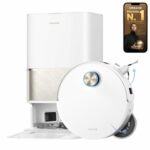
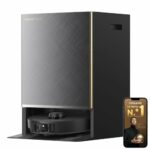
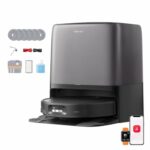
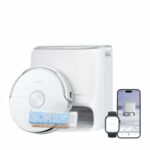
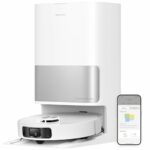
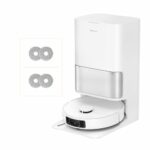
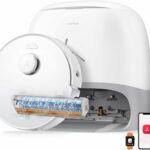
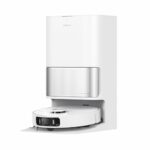
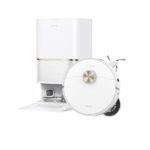
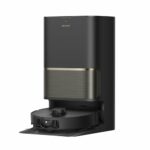
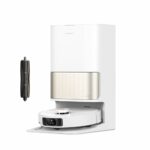
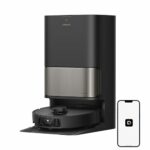
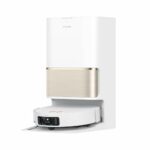
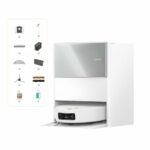
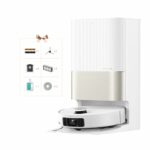
This robot vacuum comparison pits three high-end models launched between 2025 and early 2026. The DJI Romo P (Robot y Base Transparente) represents DJI's entry into the domestic cleaning market, whilst the Roborock Saros 10R and Roborock Saros 20 consolidate Roborock's position as a global benchmark in this sector. All three units integrate a multifunction base with mop washing and drying, advanced navigation systems with AI camera and mopping capabilities with extendable mops.
The DJI model stands out for its greater height and suction power, whilst the two Roborock units opt for a more compact design and superior autonomy thanks to higher capacity batteries. The Saros 20, launched in February 2026, raises performance with 36,000 Pa of power and recognition of up to 300 obstacles.
Power and Suction
Suction power marks notable differences between these three models. The DJI Romo P reaches 25,000 Pa, a solid figure for 2025 that guarantees good results on carpets and floors with ingrained dirt. The Roborock Saros 10R stays at 18,500 Pa, which may seem inferior but in practice proves sufficient for most homes thanks to its efficient DuoDivide brushing system. The Saros 20 makes a considerable leap to 36,000 Pa, positioning itself as one of the most powerful robots on the market.
All three units mount main brushes with anti-tangle technology. The DJI incorporates a Divide system, whilst the two Roborock models use the DuoDivide Antienredos, designed specifically to push hair towards the central suction channel. All lift the main brush during mopping to avoid dirtying the mops.
Regarding the side brush, all three feature extension to better reach corners and anti-tangle design. The difference is that the DJI Romo P features dual anti-tangle side brush but doesn't lift it during mopping, whilst the Roborock Saros 10R and Saros 20 do lift the side brush when mopping. This prevents the brush from dragging dirty water towards already clean areas, improving mopping efficiency.
Mopping
All three Roborock robot vacuums and the DJI model use a system of two rotating mops with edge extension, allowing mopping right up to the wall limit. All lift the mops when they detect carpets, although the height varies: the DJI Romo P lifts without specifying exact measurement, whilst the Saros 10R and Saros 20 raise between 12 and 22 mm depending on surface type.
Water temperature marks an important difference. The DJI mops with cold water, both on the floor and in mop washing at the base. The two Roborock models use warm water to mop the floor and hot water to wash the mops at the base. Hot water dissolves grease better and disinfects the mops more effectively, resulting in more hygienic mopping.
Mop drying is carried out with hot air in all three cases, speeding up the process and preventing bad odours. The Roborock Saros 10R and Saros 20 can automatically remove the mops at the base when only vacuuming is needed, a practical function that isn't confirmed on the DJI Romo P.
All three units detect dirt both on the mops and on the floor, activating rewashing or remopping cycles when necessary. This ensures that the dirtiest areas receive more intensive cleaning without manual intervention.
Navigation System
The DJI Romo P mounts a solid-state LiDAR system combined with AI camera and front 3D laser sensor. The Roborock Saros 10R and Saros 20 use StarSight 2.0, which integrates dual AI camera with 3D laser sensor. Both approaches allow precise mapping and intelligent navigation, although Roborock's dual camera system offers greater field of vision.
Obstacle recognition capacity varies significantly. The Saros 10R identifies 108 different objects, an already high figure that covers most domestic situations. The Saros 20 multiplies this capacity to 300 recognisable obstacles, including specific curtain detection to avoid tangles. The DJI Romo P doesn't specify exact number of recognised objects.
All three models incorporate LED for night vision and allow remote access to the camera from the mobile, useful for home surveillance. Pet recognition is confirmed on both Roborock units, but isn't specified on the DJI. The Saros 10R and Saros 20 use the RR Mason 11.0 processor with SmartPlan for intelligent cleaning route optimisation.
Autonomy and Battery
The DJI Romo P battery reaches 5,000 mAh, providing 180 minutes of autonomy. The Roborock Saros 10R and Saros 20 feature 6,400 mAh batteries, 28% more capacity. The Saros 10R also offers 180 minutes of autonomy despite having greater capacity, suggesting slightly higher consumption offset by the larger battery. The Saros 20 doesn't specify autonomy, probably because its greater power of 36,000 Pa consumes more energy.
In practice, 180 minutes allow cleaning homes of up to 250-300 m² in a single cycle, depending on power configuration and whether mopping or only vacuuming. The Roborock units' greater battery capacity provides additional margin for long sessions or less frequent recharges.
Smart Functions
All three robots overcome obstacles, although with different capabilities. The DJI Romo P crosses thresholds up to 20 mm in height. The Roborock Saros 10R and Saros 20 include simple threshold system without specifying exact height, but Roborock's technology in similar models usually ranges around 20-22 mm.
Built-in voice assistant is confirmed on both Roborock models, allowing commands to be given directly to the robot. The DJI Romo P doesn't specify whether it includes this function. All three units are compatible with external assistants such as Alexa and Google Home for integration into home automation ecosystems.
Multifunction Cleaning Base
All three bases perform auto-emptying of the dust bin, mop washing and drying. Self-cleaning of the washing tray is present on all: the DJI via self-cleaning nozzle, the Saros 10R with 2.0 system, and the Saros 20 with hot water for greater hygiene.
The DJI Romo P incorporates UV disinfection in the base, an exclusive feature that adds an extra level of sanitisation both for the mops and for the interior of the station. The Roborock units don't include this function.
Regarding detergent tanks, the DJI features dual tank, allowing use of two different products depending on floor type or dirt level. The Roborock Saros 10R and Saros 20 have a single detergent tank.
Dust bag capacity is similar: 2.4 litres on the DJI compared to 2.5 litres on the Roborock units. The clean water tank is identical with 4 litres on all three models. The DJI has 3.2 litres of dirty water tank, slightly larger than the Roborock units' 3 litres. These capacities allow several weeks without maintenance in medium-sized homes.
None of the three models includes integrated plumbing connection nor optional kit for it, so they require manual refilling of clean water and emptying of dirty water.
Dimensions
The DJI Romo P measures 351 mm in diameter and 98 mm in height. The Roborock Saros 10R and Saros 20 have 353 mm in diameter and 79.8 mm in height. The 18.2 mm difference in height can be decisive in homes with low furniture. The Roborock models pass under most sofas and beds with legs of 8 cm or more, whilst the DJI requires at least 10 cm of clearance.
The bases also differ in size. The DJI's measures 453 mm wide, 440 mm high and 425 mm deep. The Roborock bases are narrower at 381 mm wide, but taller (488 mm) and deeper (475 mm). The DJI base occupies less depth but more width, which can facilitate its placement in narrow spaces but requires more lateral space.
Real-world usage experience
For homes with low furniture, the Roborock Saros 10R and Saros 20 prove more versatile thanks to their 79.8 mm height. They'll pass under more spaces without getting stuck. The DJI Romo P, at 98 mm, needs greater clearance but compensates with its 25,000 Pa power and UV disinfection.
In homes with pets, all three units feature anti-tangle brushes that reduce maintenance. The Saros 20's greater power (36,000 Pa) makes it especially effective for animal hair embedded in carpets. Hot water in mop washing on the Roborock units removes organic residue better than the DJI's cold water.
For large houses, the Roborock units' 6,400 mAh battery provides greater peace of mind than the DJI's 5,000 mAh, although the latter's 180 minutes of autonomy are sufficient for most homes. The DJI's dual detergent tank allows adapting the product to different areas without manual changing.
The side brush lifting system present only on the Roborock units improves mopping quality by avoiding dragging dirt. The Saros 20's curtain detection prevents problems in homes with long curtains. Remote camera access on all three models adds video surveillance functionality.
Conclusion: Which to choose?
Choose the DJI Romo P (Robot y Base Transparente) if you're looking for a DJI robot vacuum with UV disinfection in the base, you value having dual detergent tank for different cleaning products, and you don't have very low furniture at home. Its 25,000 Pa power and cold water system prove adequate for regular maintenance without extreme sanitisation needs.
Choose the Roborock Saros 10R if you need a robot that passes under low furniture thanks to its 79.8 mm height, you prefer hot water both for mopping and for washing mops, and you value Roborock's reliability as a world-leading brand. Its side brush lifting system and 6,400 mAh battery make it versatile for medium to large homes.
Choose the Roborock Saros 20 if you want the best robot vacuum 2025 in terms of power with 36,000 Pa, you need the most advanced recognition with 300 identifiable obstacles including curtains, and you're looking for Roborock's latest technology launched in February 2026. It's the most complete option for homes with pets, thick carpets and maximum cleaning demands, especially if you have low furniture requiring the robot's 79.8 mm height.