✨ VS Analyze · VacuumSpain comparison technology. AI-generated explanation based on verified technical data.
Introduction
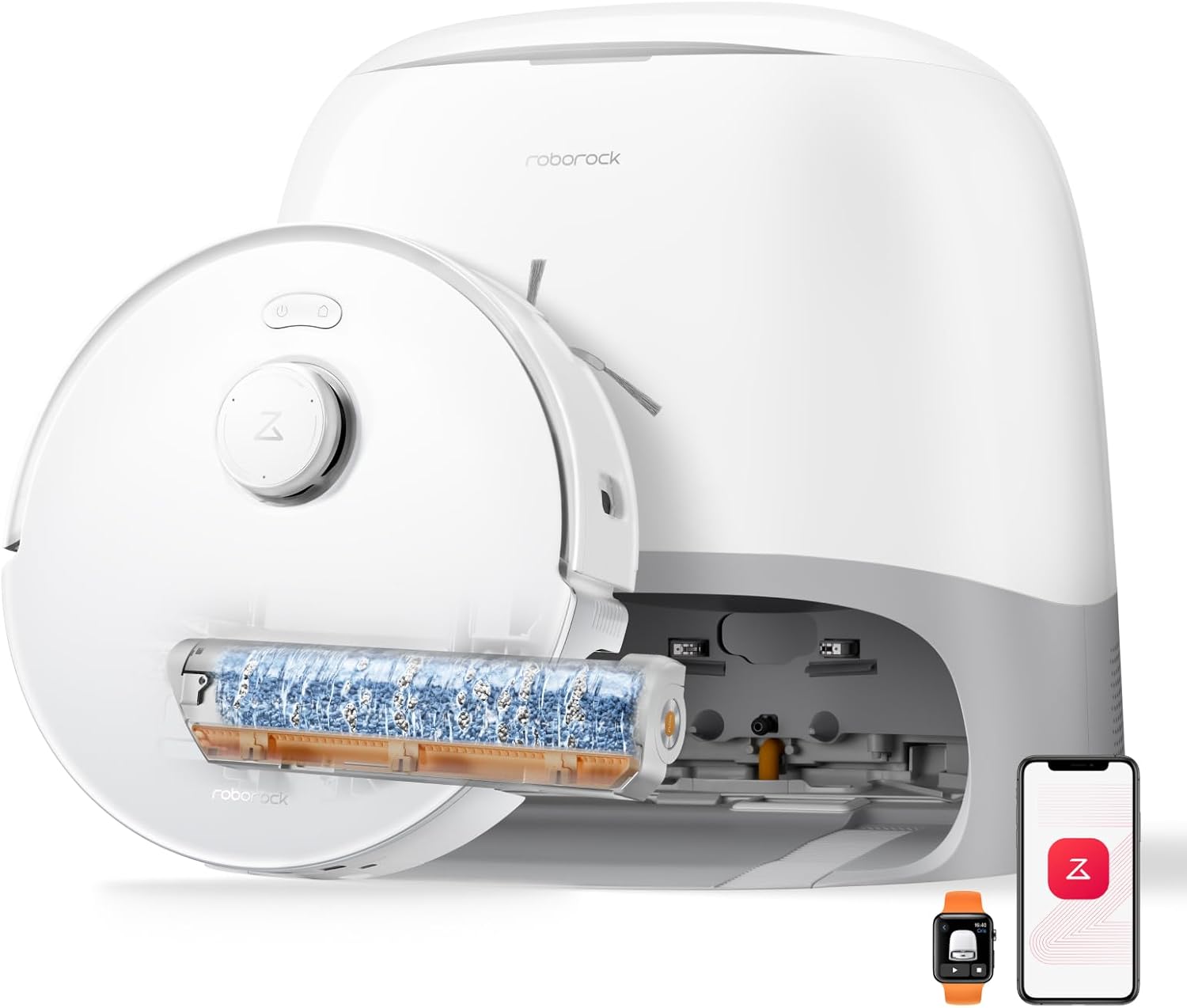
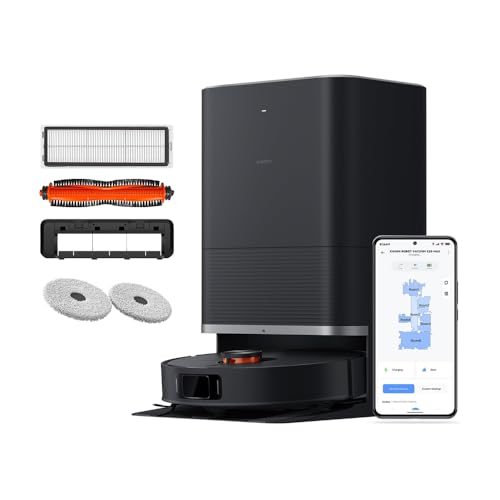
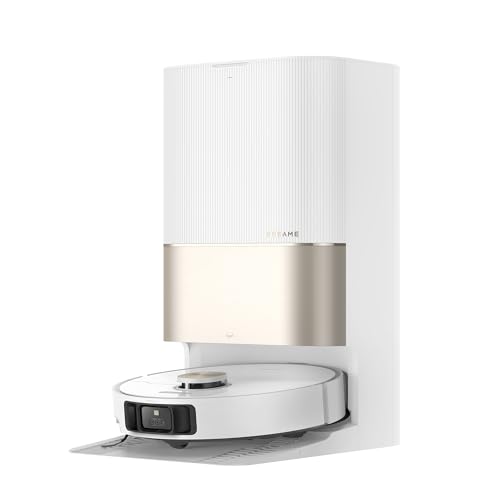
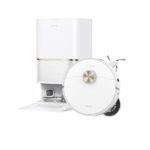
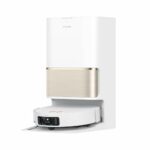
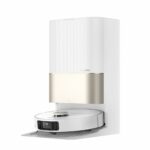
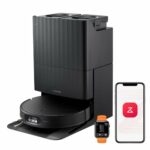
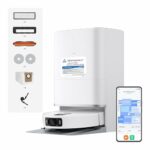
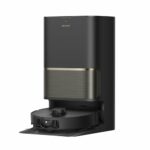
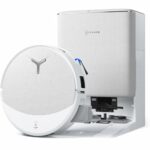
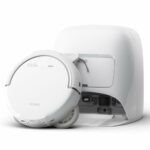
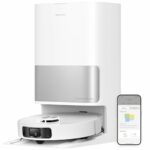
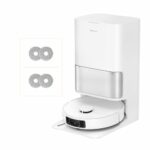
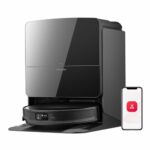
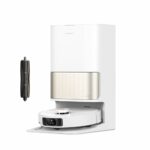
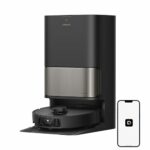
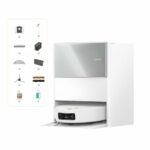
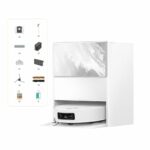
The Roborock Qrevo Curv 2 Flow, the Xiaomi X20 Max and the Dreame X40 Ultra represent three distinct approaches within the high-end range of robot vacuum cleaners. The Roborock model arrives in 2026 with a roller-based mopping system and suction power reaching 20,000 Pa, whilst the Xiaomi X20 Max from 2024 opts for 8,000 Pa with rotating mops. The Dreame X40 Ultra, also from 2024, sits at a midpoint with 12,000 Pa and advanced functions such as RoboSwing movement.
These devices are designed for users seeking complete automation in home cleaning. The Roborock stands out for its autonomy of 242 minutes thanks to a 5,200 mAh battery, the Xiaomi shares that capacity but offers 120 minutes of use, and the Dreame increases to 6,400 mAh with 194 minutes of autonomy. The differences in navigation, mopping and maintenance define clearly differentiated usage profiles.
Power and Suction
The difference in suction power is notable. The Roborock Qrevo Curv 2 Flow reaches 20,000 Pa, a figure that more than doubles the 8,000 Pa of the Xiaomi X20 Max. The Dreame X40 Ultra positions itself at 12,000 Pa. In practice, this translates to greater capacity to extract embedded dirt from carpets or tile joints.
The brushing system varies significantly amongst the three. Roborock incorporates the DuoDivide anti-tangle hair brush, designed to push hairs towards the central gap and prevent tangles. Xiaomi uses the TriCut 3.0, which combines bristles with blades to cut tangled hairs. Dreame opts for a simple silicone brush, which reduces tangles but with a more traditional approach.
Only the Roborock and the Dreame can lift the main brush during mopping. This function prevents the brush from wetting carpets or getting unnecessarily dirty when passing only through areas to be mopped. The side brush also lifts on these two models, whilst the Xiaomi keeps both brushes fixed.
The Dreame X40 Ultra is the only one with an extendable side brush, which improves cleaning in corners. All three models feature an anti-tangle side brush, although Roborock incorporates a dual brush that reinforces this characteristic. For homes with pets or long hair, it's worth considering these differences in brush design.
Mopping
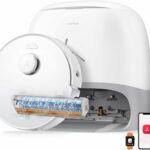
The Roborock Qrevo Curv 2 Flow sets itself apart with its 270 mm mopping roller that rotates at 200 RPM. This system differs radically from the two rotating mops fitted on the Xiaomi X20 Max and the Dreame X40 Ultra, the latter at 180 RPM. The roller covers more contact surface and maintains constant pressure, whilst the rotating mops offer greater versatility on edges.
All three devices extend their mops to reach edges, but the Dreame adds RoboSwing movement, which allows the robot to make a slight turn to get the mop under furniture or overhangs. Mop lifting reaches 15 mm on the Roborock (with the option to cover the roller), 10 mm on the Xiaomi and 10.5 mm on the Dreame. This capability is useful when passing over carpets without wetting them.
Mop washing in the base is carried out with hot water in all three cases, although at different temperatures: 75°C on Roborock, 55°C on Xiaomi and 70°C on Dreame. Drying also uses hot air: 55°C on Roborock, temperature not specified on Xiaomi and 45°C on Dreame. Higher temperatures accelerate drying and reduce bacterial proliferation.
Only the Dreame X40 Ultra can automatically remove the mops at the base to perform vacuum-only sessions without dragging dry mops. Both Roborock and Dreame detect dirt on the mops to rewash when necessary, and also on the floor to re-mop dirtier areas. The Xiaomi lacks these detection functions.
Navigation System
All three models feature a 360° LiDAR turret and front 3D laser sensor, which guarantees precise mapping and obstacle avoidance. The difference lies in the AI camera: the Dreame X40 Ultra incorporates a dual camera, the Roborock a single one, and the Xiaomi X20 Max doesn't include a camera.
The Roborock recognises up to 200 different obstacles, whilst the Dreame identifies 120. Data for the Xiaomi is not available, although its obstacle avoidance works via the 3D laser sensor. In homes with many objects on the floor, a greater number of recognised obstacles improves the robot's precision in avoiding them.
Only Roborock and Dreame recognise pets, which allows the robot to adapt its behaviour or send notifications. The Dreame adds curtain detection, avoiding tangles. Remote camera access is available on Roborock and Dreame, allowing home surveillance from the app.
All three feature night vision LEDs. Roborock incorporates SmartPlan 3.0 for intelligent cleaning with AI, Dreame uses CleanGenius 2.0 with AI Sage 11.0 Quad-core processor, and Xiaomi also offers intelligent cleaning without specifying an algorithm. AI-based stain recognition is present on Roborock and Dreame, absent on Xiaomi.
Autonomy and Battery
The Roborock Qrevo Curv 2 Flow leads in autonomy with 242 minutes thanks to its 5,200 mAh battery. The Xiaomi X20 Max shares that battery capacity but only achieves 120 minutes of continuous use. The Dreame X40 Ultra increases to 6,400 mAh and offers 194 minutes of autonomy.
This difference in performance suggests that the Roborock optimises energy consumption better despite its greater suction power. The Xiaomi, with lower power, consumes its battery more quickly. For large homes, the Roborock's autonomy allows covering more surface area without interruptions for recharging.
Smart Functions
All three robots overcome obstacles of similar height: 20 mm on Roborock and Xiaomi, 22 mm on Dreame. This allows crossing small level changes or thick carpets without getting stuck.
The Roborock Qrevo Curv 2 Flow incorporates a built-in voice assistant, in addition to compatibility with Alexa and Google Home. Xiaomi and Dreame only offer integration with external assistants. This function allows controlling the robot through voice commands without depending on third parties.
Multifunction Cleaning Base
All three bases perform auto-emptying of the dust container, mop washing with hot water and drying with hot air. Self-cleaning of the washing tray is present on Roborock and second-generation Dreame, but not on Xiaomi. This reduces manual maintenance of the base.
The Dreame X40 Ultra is the only one with a detergent tank, which allows adding cleaning product during mop washing. It also offers an optional plumbing connection kit that is purchased separately, although none of the three includes integrated connection.
In storage capacities, the Dreame leads with 3.2 litres dust bag, 4.5 litres clean water and 4 litres dirty water. Roborock offers 2.7 litres bag, 4 litres clean water and 3.5 litres dirty water. Xiaomi sits at 2.5 litres bag, 4 litres clean water and 3.8 litres dirty water. Greater capacity means fewer manual emptyings and refills.
Dimensions
The Roborock Qrevo Curv 2 Flow measures 353 mm in diameter and 119 mm in height. Xiaomi and Dreame share 350 mm diameter but only 97 mm height. Those additional 22 mm on the Roborock may limit its access under low furniture, although its greater power compensates in other areas.
The robot's internal dust container reaches 324 ml on Roborock and 300 ml on Dreame. Data for the Xiaomi is not available. The water tank is 80 ml on Dreame, whilst Roborock and Xiaomi confirm having one without specifying exact capacity.
The Roborock base is more compact: 450 x 450 x 450 mm. Xiaomi measures 340 x 563 x 420 mm and Dreame 340 x 590.5 x 456.7 mm. The Roborock takes up more width but less height, whilst the Xiaomi and Dreame bases are narrower but considerably taller.
Real-World Usage Experience
For large homes, the Roborock Qrevo Curv 2 Flow offers the greatest autonomy with 242 minutes, sufficient to cover extensive surfaces without intermediate recharges. Its 20,000 Pa power guarantees deep cleaning on carpets and hard floors. The roller mopping system maintains constant pressure, suitable for large areas without frequent changes in floor type.
The Dreame X40 Ultra balances autonomy (194 minutes) with advanced functions such as dual AI camera, RoboSwing and detergent tank. Its ability to automatically remove mops proves practical in homes that alternate vacuuming and mopping according to zones. The larger dust bag capacity (3.2 litres) reduces maintenance.
The Xiaomi X20 Max, with 120 minutes of autonomy, suits small to medium-sized homes better. Its lower height (97 mm) facilitates access under furniture. The absence of AI camera and dirt detection simplifies the system but limits automatic adaptation to different cleaning situations.
In homes with pets, the Roborock's DuoDivide anti-tangle brush and the Dreame's silicone brush minimise hair tangles. The Xiaomi with TriCut 3.0 cuts hairs but may require more manual maintenance. Pet detection on Roborock and Dreame adds value for living with animals.
Conclusion: Which to Choose?
Choose the Roborock Qrevo Curv 2 Flow if you're seeking maximum suction power (20,000 Pa) and leading autonomy (242 minutes) for large homes. Its roller mopping system, DuoDivide anti-tangle brush and built-in voice assistant make it the most complete option. Self-cleaning tray and 75°C washing reduce maintenance. Ideal for users who prioritise total performance and don't mind the robot measuring 119 mm in height.
Choose the Xiaomi X20 Max if you have a small or medium-sized home and value being able to pass under low furniture thanks to its 97 mm height. With 8,000 Pa power and 120 minutes of autonomy, it covers basic cleaning needs without advanced functions. Its base with 55°C washing and hot air drying offers the essentials in automatic maintenance. A straightforward option for those seeking effectiveness without complications.
Choose the Dreame X40 Ultra if you want balance between power (12,000 Pa), autonomy (194 minutes) and smart functions. The dual AI camera, RoboSwing, extendable side brush and automatic mop removal provide versatility. The detergent tank and