✨ VS Analyze · VacuumSpain comparison technology. AI-generated explanation based on verified technical data.
Introduction
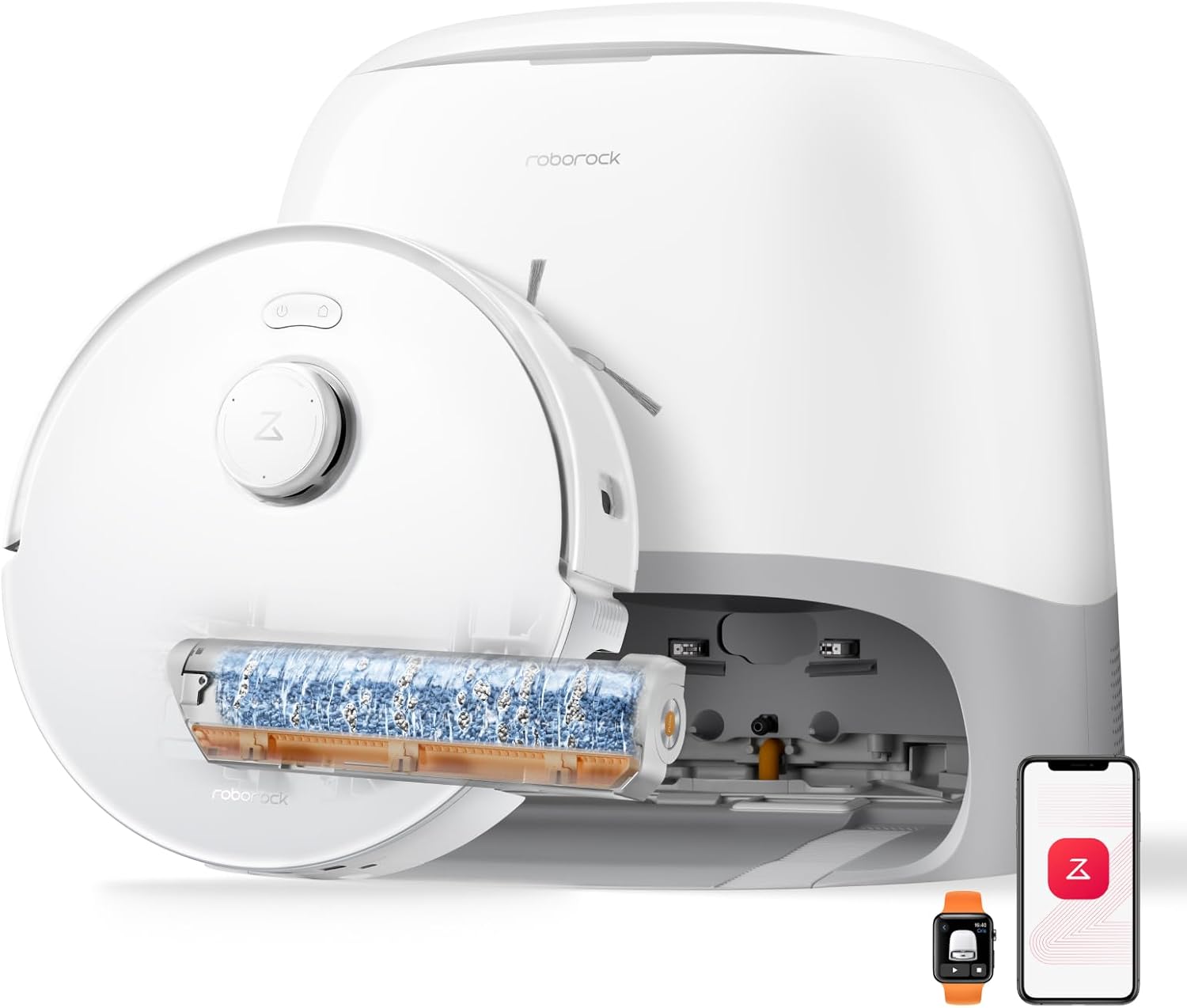
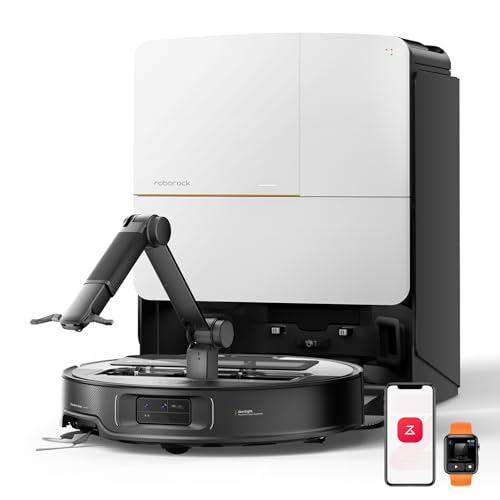
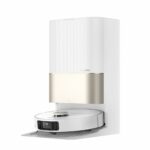
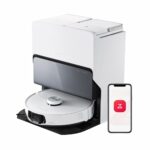
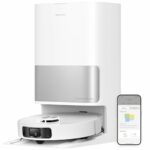
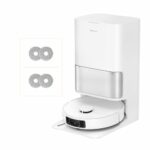
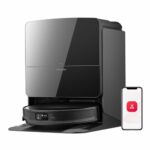
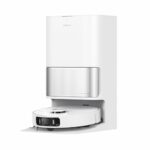
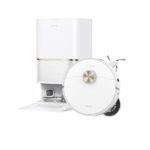
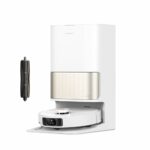
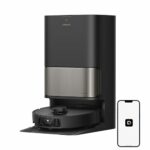
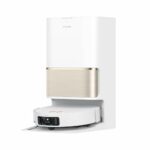
The Roborock Qrevo Curv 2 Flow and the Roborock Saros Z70 represent two advanced offerings within the catalogue of the world's leading robot vacuum brand. Both units feature a complete multifunction base, laser navigation and extendable mopping systems, although their approaches differ in important aspects that determine their final performance.
The Qrevo Curv 2 Flow, launched in 2026, features a 270 mm mopping roller and a 5,200 mAh battery that offers 242 minutes of autonomy. The Saros Z70, from 2025, incorporates an OmniGrip Arm robotic arm and dual AI camera, as well as a more generous 6,400 mAh battery. The differences between these models go beyond suction power or design: they affect the way they clean, navigate and adapt to different types of homes.
Power and Suction
Suction power marks a first difference: the Saros Z70 offers 22,000 Pa, whilst the Qrevo Curv 2 Flow remains at 20,000 Pa. In practice, those additional 2,000 Pa can be noticeable on medium-pile carpets or when vacuuming heavier debris embedded in the fibres.
Both models feature anti-tangle brushes and systems that lift the main brush during mopping. The Qrevo Curv 2 Flow mounts the DuoDivide Antienredos brush, designed to push hairs towards the central suction gap. The Saros Z70 uses an anti-tangle brush without specifying a particular model, but equally effective at reducing tangles.
The most significant difference in sweeping appears in the side brush: the Saros Z70 has an extendable side brush, which improves cleaning in corners and edges. The Qrevo Curv 2 Flow does not incorporate this function, although it does feature a dual liftable anti-tangle side brush. Both lift the side brush during mopping to prevent it from getting wet or dragging already collected dirt.
Mopping
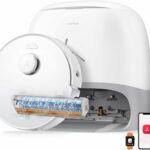
The mopping system is where the differences become most evident. The Qrevo Curv 2 Flow opts for a 270 mm roller, whilst the Saros Z70 uses two rotating mops. Both extend the mops to reach edges, but the behaviour of the roller versus rotating mops changes the way they clean: the roller covers more surface in one pass, whilst rotating mops exert greater point pressure.
Lifting also varies: the Qrevo Curv 2 Flow lifts the mops 15 mm and features adaptive curvature, useful for overcoming small slopes or transitions between floors. The Saros Z70 offers variable lifting between 12-22 mm, which allows better adjustment to different carpet heights.
The Saros Z70 mops with warm water, compared to the cold water of the Qrevo Curv 2 Flow. This can make a difference on grease stains or adhered dirt. Both wash the mops with hot water in the base and dry them with hot air, but only the Saros Z70 allows automatic removal of the mops at the base to perform pure vacuuming sessions without dragging dry mops across the floor.
Both models detect dirt on both the mops and the floor, activating re-mopping or re-washing cycles when necessary. The Saros Z70 base incorporates a detergent tank, absent in the Qrevo Curv 2 Flow, which adds an extra level of hygiene to mop washing.
Navigation System
The Qrevo Curv 2 Flow mounts a LiDAR 3D turret, whilst the Saros Z70 uses the StarSight 2.0 system. Both include an AI camera and front 3D laser sensor, as well as LED for night vision and remote camera access.
The difference lies in the number of cameras and recognition capability: the Saros Z70 integrates dual AI camera and recognises 108 obstacles, whilst the Qrevo Curv 2 Flow uses one camera and recognises up to 200 obstacles. More recognised obstacles doesn't always mean better navigation, but it does mean greater precision when identifying specific objects and adapting cleaning.
The Qrevo Curv 2 Flow operates with SmartPlan 3.0; the Saros Z70, with SmartPlan 2.0 and RR Mason 12.0 processor. Both recognise pets and stains using AI, although neither detects curtains. In homes with many objects on the floor or pets, it's worth considering the balance between obstacle recognition and processing speed.
Autonomy and Battery
The Qrevo Curv 2 Flow features a 5,200 mAh battery that offers 242 minutes of autonomy, a specific figure that allows calculation of the surface it can cover on a single charge. The Saros Z70 has 6,400 mAh, a higher capacity that should translate into greater autonomy, although the manufacturer doesn't specify the exact minutes.
For large homes or those with multiple floors, the Saros Z70's battery provides an additional margin. The Qrevo Curv 2 Flow, with its 242 minutes, covers large surfaces without problem, especially if the base is well positioned and the robot can recharge and continue automatically.
Smart Functions
The Qrevo Curv 2 Flow overcomes obstacles up to 20 mm, a fixed height that allows it to navigate thick cables, rugs or small slopes. The Saros Z70 handles simple steps with variable height between 12-22 mm, adapting to different situations.
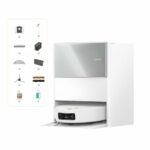
The most notable feature of the Saros Z70 is the OmniGrip Arm robotic arm, completely absent in the Qrevo Curv 2 Flow. This arm allows the robot to interact with small objects or perform tasks that go beyond conventional vacuuming and mopping. Both models integrate their own voice assistant and compatibility with Alexa and Google Home.
Multifunction Cleaning Base
Both bases perform auto-emptying of the dust bin, mop washing with hot water and drying with hot air. The difference lies in the details: the Saros Z70 incorporates tray self-cleaning 2.0 and detergent tank, whilst the Qrevo Curv 2 Flow features standard tray self-cleaning and doesn't include a detergent tank.
The dust bag capacity is slightly higher in the Qrevo Curv 2 Flow: 2.7 litres compared to 2.5 litres. Both models have a 4-litre clean water tank, but the Qrevo Curv 2 Flow offers 3.5 litres of dirty water compared to the Saros Z70's 3 litres. Neither includes a plumbing connection kit nor integrated connection.
The robot's dust bin also differs: 324 ml in the Qrevo Curv 2 Flow and 180 ml in the Saros Z70. A larger bin in the robot reduces the frequency of emptying at the base, although with automatic auto-emptying this difference loses relevance.
Dimensions
The diameter is identical in both: 353 mm. The height changes dramatically: the Qrevo Curv 2 Flow measures 119 mm, whilst the Saros Z70 reaches only 79.8 mm. Those nearly 40 mm of difference allow the Saros Z70 to slip under furniture, beds or sofas where the Qrevo Curv 2 Flow wouldn't reach.
The bases also vary: the Qrevo Curv 2 Flow is 450 mm wide, tall and deep, forming a compact cube. The Saros Z70 measures 381 mm wide, 488 mm tall and 475 mm deep, occupying less horizontal space but more vertically. Depending on the home's layout, one configuration or the other may fit better.
Real-World User Experience
The Saros Z70 adapts better to homes with low furniture thanks to its 79.8 mm height. Its extendable side brush and robotic arm expand cleaning possibilities in corners and specific tasks. Warm water for mopping and the detergent tank in the base reinforce hygiene, whilst the option to automatically remove the mops allows alternating between vacuuming and mopping without manual intervention.
The Qrevo Curv 2 Flow stands out for its 270 mm mopping roller, which covers more surface in one pass, and for its larger robot dust bin (324 ml). Its ability to recognise 200 obstacles and its SmartPlan 3.0 system make it a solid choice for homes with many objects or pets. The 5,200 mAh battery with 242 minutes of autonomy allows precise calculation of performance on large surfaces.
In homes with pets, both models feature anti-tangle brushes and pet recognition using AI. The greater power of the Saros Z70 (22,000 Pa) can make a difference on carpets with embedded animal hair. For hard floors and parquet, the Qrevo Curv 2 Flow's roller offers more uniform mopping, whilst the Saros Z70's rotating mops exert greater pressure on specific stains.
Conclusion: Which to Choose?
Choose the Roborock Qrevo Curv 2 Flow if you're looking for a robot with a wide mopping roller, greater obstacle recognition capability (200) and known autonomy (242 minutes). It's ideal for homes with many objects on the floor, pets and hard floors requiring uniform mopping. Its 324 ml dust bin and base with 2.7-litre bag reduce maintenance. It works well in medium-to-large homes where the 119 mm height doesn't pose a problem for accessing under furniture.
Choose the Roborock Saros Z70 if you need to access under low furniture thanks to its 79.8 mm height, value the OmniGrip Arm robotic arm for additional tasks and prefer mopping with warm water. Its extendable side brush improves corner cleaning, and the ability to automatically remove the mops at the base provides versatility. The 6,400 mAh battery and 22,000 Pa power make it suitable for large homes, with carpets and requiring maximum autonomy. The detergent tank in the base adds an extra level of hygiene to mop washing.