✨ VS Analyses · VacuumSpain comparison technology. Explanation created with AI from verified technical data.
Introduction
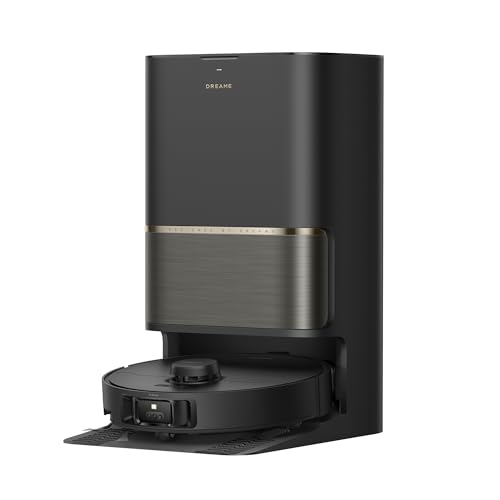
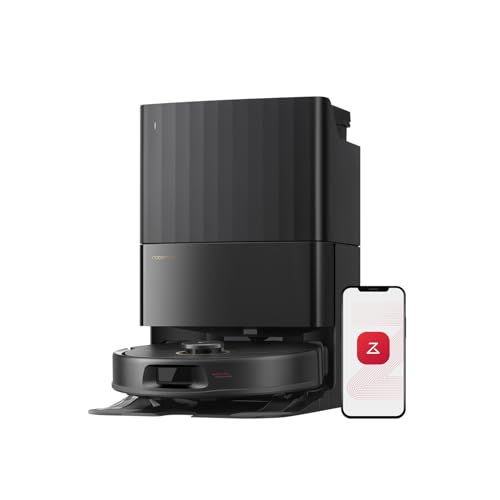
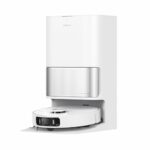
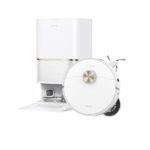
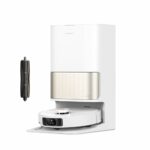
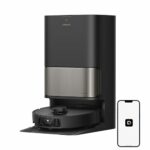
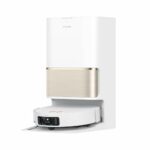
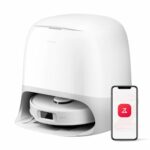
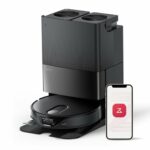
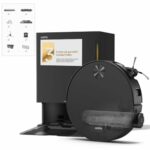
The Dreame L50s Pro Ultra and the Roborock Qrevo S5V represent two distinct approaches to automated home cleaning, each arriving from manufacturers with solid reputations in the sector. The Dreame model, launched in 2026, positions itself as a high-specification option packed with advanced features, whilst the Roborock Qrevo S5V from 2025 takes a more streamlined approach without sacrificing core cleaning capabilities.
These aren't entry-level machines. Both feature multi-function bases that handle automatic emptying, mop washing, and drying—essential components for genuinely hands-off operation. The Dreame pushes the envelope with cutting-edge navigation technology and impressive suction power, whereas the Roborock focuses on proven reliability and practical functionality. For homes seeking thorough cleaning with minimal intervention, either could prove suitable, though the specifics reveal important distinctions worth examining closely.
Power and Suction
The gulf in suction power here is substantial. The Dreame L50s Pro Ultra delivers 30,000 Pa, more than double the Roborock Qrevo S5V's 12,000 Pa. In practical terms, this translates to noticeably stronger performance on carpets and rugs, particularly when dealing with embedded dirt or pet hair.
Brush design differs meaningfully between the two. The Dreame employs a Doble Cepillo HyperStream system—dual brushes anchored at one end that actively prevent hair tangles. The Roborock counters with its DuoDivide anti-tangle brush, which channels hair towards the central suction point. Both approaches reduce maintenance, though the execution varies.
Where the Dreame pulls ahead is in brush elevation. Both the main and side brushes lift during mopping, preventing wet brush contact with floors and reducing cross-contamination. The Roborock lacks this feature entirely—its brushes remain in place regardless of cleaning mode. For homes mixing hard floors and carpets, this becomes relevant.
The Dreame's side brush also extends outward to reach corners more effectively, something the Roborock cannot match. Both models include anti-tangle technology on their side brushes, at least offering parity in reducing hair wrap on this component.
Mopping
Both machines use dual rotating mops, a design that applies consistent pressure and scrubbing action. The Dreame extends its mops outward and incorporates RoboSwing—a movement pattern that angles the mop slightly under furniture edges and skirting boards. The Roborock offers mop extension but without the additional articulation.
Mop lift height sits at 10.5 mm for the Dreame and 10 mm for the Roborock. The half-millimetre difference is marginal, though both clear low-pile rugs adequately. What matters more is what happens when mopping finishes. The Dreame automatically removes its mops at the base when switching to vacuum-only mode, eliminating the need for manual intervention. The Roborock requires you to handle this yourself if you want to avoid dragging damp mops across carpets during subsequent cleans.
Dirt detection separates these models significantly. The Dreame monitors both mop cleanliness and floor dirtiness, triggering additional passes or mop washes when needed. The Roborock operates without this feedback loop, following pre-set routines regardless of actual conditions. For kitchens or high-traffic areas, adaptive cleaning proves valuable.
Cleaning Base Capabilities
Base functionality reveals another layer of differentiation. The Dreame washes its mops with hot water, which loosens grime more effectively than cold water alone. The Roborock uses cold water throughout its mop-cleaning cycle. Both dry mops with hot air, at least ensuring thorough drying to prevent odours.
The Dreame includes third-generation self-cleaning for its wash tray, automatically maintaining the base's hygiene without manual scrubbing. The Roborock lacks this, meaning periodic manual cleaning of the base tray becomes necessary. Given that mop washing happens multiple times per cleaning session, this maintenance difference accumulates quickly.
A detergent dispenser is integrated into the Dreame's base, automatically adding cleaning solution during mop washing. The Roborock has no such provision—you're limited to plain water unless you manually add detergent to the tank, which isn't the intended design. For those wanting genuinely automated floor washing, this matters.
Storage capacity favours the Dreame across the board: 3.2-litre dust bag versus 2.7 litres, 4.5-litre clean water tank versus 4 litres, and 4-litre dirty water capacity versus 3.5 litres. These aren't dramatic differences, but they extend the intervals between maintenance tasks. The Dreame also offers an optional plumbing connection kit, though this requires separate purchase and installation.
Navigation System
Both robots navigate using LiDAR 3.0 with obstacle avoidance, ensuring reliable room mapping and efficient cleaning paths. The Dreame enhances this with dual AI cameras and a front-mounted 3D laser sensor, creating a comprehensive detection system that identifies 220 different obstacle types. The Roborock relies solely on its LiDAR and basic sensors, without camera-based recognition.
Pet owners will notice the difference. The Dreame specifically recognises animals and adjusts behaviour accordingly, whilst also detecting curtains to avoid tangling. The Roborock treats all obstacles generically. LED lighting on the Dreame enables night vision, maintaining obstacle detection in dark rooms—something the Roborock cannot offer.
Remote camera access is exclusive to the Dreame, allowing you to check on your home through the robot's cameras via the app. This doubles as a security feature, though it's secondary to cleaning functionality. The Roborock has no camera whatsoever, so this capability simply doesn't exist.
AI-driven cleaning intelligence appears on both models, though implementation differs. The Dreame uses CleanGenius AI to analyse room conditions and adapt cleaning strategies. The Roborock employs SmartPlan 1.0, which optimises routes but without the Dreame's dirt-recognition capabilities. In daily use, the Dreame's system responds more dynamically to actual conditions rather than following predetermined patterns.
Battery and Autonomy
Battery capacity matches at 5,200 mAh for both machines. The Roborock specifies 180 minutes of runtime, whilst the Dreame provides no stated duration. Given identical battery size, expect similar operational times under comparable conditions, though the Dreame's higher suction may draw more power when running at maximum settings.
Neither manufacturer provides detailed charging times, though both return automatically to their bases when power runs low and resume cleaning once recharged. For typical homes under 200 square metres, a single charge handles complete cleaning cycles comfortably on either model.
Smart Features
Obstacle-climbing ability differs noticeably. The Dreame manages single-level thresholds up to 22 mm, whilst the Roborock clears 20 mm obstacles. The 2 mm advantage is modest but can determine whether the robot transitions smoothly between rooms or gets stuck on slightly higher door thresholds.
Voice control works differently between the two. The Dreame incorporates its own voice assistant directly into the robot, allowing commands without external smart speakers. The Roborock supports Alexa and Google Home but lacks any built-in assistant. If you prefer speaking directly to the robot rather than routing commands through other devices, the Dreame accommodates this; the Roborock requires the smart home ecosystem approach.
Physical Dimensions
Height proves critical for under-furniture access. The Roborock measures 96.5 mm tall, slipping beneath most sofas and bed frames with ease. The Dreame stands at 103.8 mm—still relatively low, but that extra 7.3 mm can prevent access under lower furniture. Before choosing, measure your sofa and bed clearances.
Diameter is nearly identical: 350 mm for the Dreame versus 353 mm for the Roborock. Neither enjoys any meaningful advantage in tight spaces or narrow corridors.
Base dimensions tell a different story. The Roborock's base sits lower at 521 mm versus 590 mm for the Dreame, though it extends deeper at 487 mm compared to 457 mm. Width matches at 340 mm. Depending on your available floor space, one profile may suit better than the other—the Dreame needs more vertical clearance, whilst the Roborock demands additional depth.
Real-World Use
For larger homes, the Dreame's superior suction and larger tank capacities reduce the frequency of intervention. The 3.2-litre dust bag holds more debris between changes, and the 4.5-litre water tank supports extended mopping sessions without refills. The Roborock's slightly smaller capacities still handle substantial areas but require marginally more frequent attention.
Pet owners benefit substantially from the Dreame's anti-tangle brush system, elevated brushes during mopping, and specific pet recognition. The Roborock handles pet hair adequately with its DuoDivide brush, but lacks the adaptive behaviour and brush elevation that prevent damp brushes from spreading fur across floors during mopping.
Maintenance effort tilts towards the Dreame for hands-off operation. Automatic mop removal, self-cleaning base tray, hot water mop washing, and dirt detection all reduce manual tasks. The Roborock requires more regular base tray cleaning and manual mop handling when switching between vacuum and mop modes.
If your home includes low-clearance furniture, the Roborock's lower profile grants access where the Dreame cannot reach. This single factor could outweigh other considerations if you've got beds or sofas with minimal ground clearance.
Conclusion: Which to Choose?
Choose the Dreame L50s Pro Ultra if: you want maximum automation with minimal intervention, have pets that shed heavily, need powerful suction for deep-pile carpets, value AI-driven dirt detection and adaptive cleaning, prefer hot water mop washing for better hygiene, or want remote camera access for home monitoring. It suits larger homes where tank capacity and suction power justify the investment, and where furniture clearance exceeds 104 mm.
Choose the Roborock Qrevo S5V if: you need a lower profile to access under furniture, prefer a more compact base footprint, want proven reliability from an established manufacturer, don't require camera-based features or advanced AI recognition, and seek capable cleaning without the premium features that drive up cost. It's well-suited to homes with standard cleaning needs where the fundamentals matter more than cutting-edge technology.
The Dreame pushes boundaries with features that genuinely reduce manual tasks, particularly around mopping and dirt management. The Roborock delivers dependable performance with a lower profile and straightforward operation. Your choice depends on whether you prioritise advanced automation and power, or proven simplicity and furniture access.