✨ VS Analyze · VacuumSpain comparison technology. AI-generated explanation based on verified technical data.
Introduction
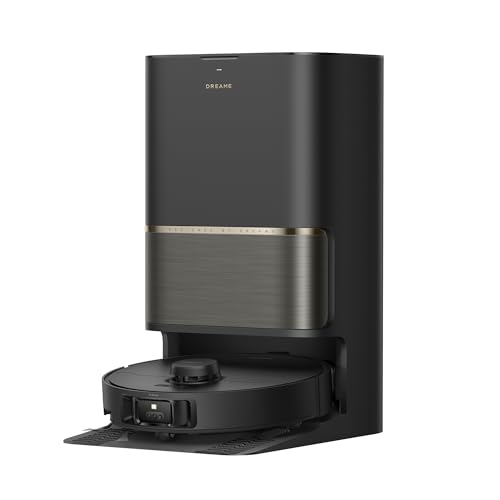
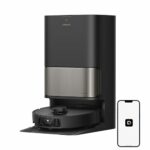
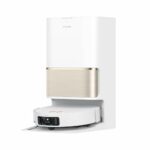
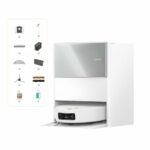
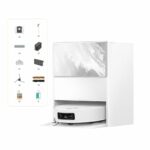
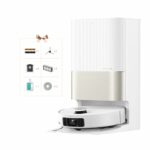
The Dreame L50s Pro Ultra and the Roborock Saros Z70 represent two distinct visions of what a high-end robot should be in 2025 and 2026. The Dreame model arrives as a newly launched proposition this year, whilst Roborock presents its Saros Z70 as a 2025 device with functionalities that break the mould in the sector.
We're talking about two robots with complete multifunction bases, designed for users seeking total automation in medium or large-sized homes. Both include mop washing with hot water, hot air drying and advanced navigation systems with dual cameras. However, the differences in power, height, tank capacity and exclusive functions mark very distinct territories.
Power and Suction
The power difference is notable. The Dreame L50s Pro Ultra offers 30,000 Pa, a figure that widely surpasses the Roborock Saros Z70's 22,000 Pa. This translates into greater capacity for dense carpets or floors with ingrained dirt.
The main brushing system also differs. The Dreame mounts a dual HyperStream brush, specifically designed to prevent hair tangles. The Roborock equips an anti-tangle brush of different conception. Both systems seek to reduce maintenance, albeit with different technical approaches.
Both models lift the main brush during mopping and feature an extendable and liftable side brush. The side brush is also anti-tangle in both cases. In practice, this means that both the Dreame and the Roborock clean corners well and avoid dragging hair during mopping.
Mopping
Both robots mop with two rotating mops and extend them to reach the edges. The Dreame additionally incorporates the Roboswing system, that swinging movement that helps get the mop under furniture or protrusions. The Roborock doesn't specify this function.
Mop lifting marks an important difference. The Roborock Saros Z70 raises them between 12 and 22 mm, exceeding the Dreame's 10.5 mm. This can be decisive in homes with thick carpets or level transitions.
The Dreame mops with cold water, whilst the Roborock uses warm water to clean the floor. This difference can be especially noticeable on grease stains or adhered dirt. Both models automatically detach the mops at the base when you only want to vacuum, and both detect dirt on both the mops and the floor to go over problematic areas again.
Navigation System
The Dreame L50s Pro Ultra mounts a 3D LiDAR turret, whilst the Roborock Saros Z70 uses the StarSight 2.0 system. Both equip dual cameras with artificial intelligence and a front 3D laser sensor.
The Dreame's recognition capacity is superior: it identifies 220 different obstacles compared to the Roborock's 108. This includes curtain detection, a function only the Dreame has and which prevents the robot from getting tangled in hanging fabrics.
Both recognise pets, allow remote camera access and have LEDs for night vision. The Dreame uses the CleanGenius system for intelligent cleaning, whilst the Roborock opts for SmartPlan 2.0. The Roborock's algorithm is the RR Mason 12.0, data that the Dreame doesn't specify in the table.
Autonomy and Battery
The Roborock Saros Z70 equips a 6,400 mAh battery, clearly superior to the Dreame L50s Pro Ultra's 5,200 mAh. This difference can translate into greater autonomy for very large homes, although neither specifies the exact minutes of operation nor the charging time.
It's worth considering that the Dreame's greater suction power can partially compensate for its smaller battery, allowing faster and more efficient cleaning on each pass.
Smart Functions
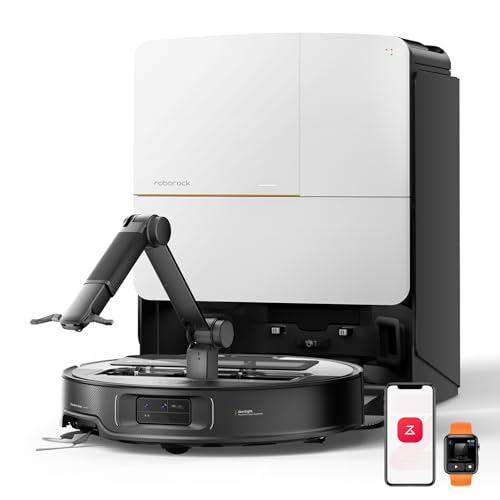
Here appears one of the most striking differences. The Roborock Saros Z70 integrates the OmniGrip Arm robotic arm, a function the Dreame L50s Pro Ultra doesn't have. This arm allows the robot to interact with small objects, move them or even pick them up during cleaning.
Both models overcome simple steps, facilitating passage between rooms with small level differences. Both include their own voice assistant and compatibility with Alexa and Google Home.
Multifunction Cleaning Base
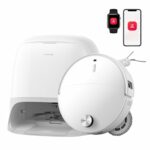
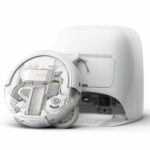
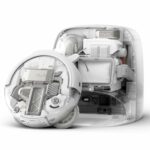
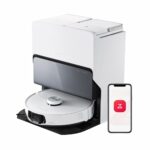
The bases of these two robots are completely multifunction. Both empty the dust bin, wash the mops with hot water and dry them with hot air. The Dreame boasts third-generation tray self-cleaning, whilst the Roborock mounts the 2.0 system.
The dust bag capacity is larger in the Dreame: 3.2 litres compared to the Roborock's 2.5. The clean water tank is also more generous in the Dreame (4.5 litres versus 4 litres), as is the dirty water tank (4 litres compared to 3 litres).
The Dreame offers an optional plumbing connection kit that's purchased separately, avoiding manually refilling the tanks. The Roborock doesn't have this option. Both have a detergent tank, but neither includes UV disinfection.
Dimensions
Height is the most relevant dimensional difference. The Roborock Saros Z70 measures only 79.8 mm, allowing it to slip under low furniture with ease. The Dreame L50s Pro Ultra reaches 103.8 mm, more than two additional centimetres that can limit its access under low-height beds or sofas.
The diameter is practically identical: 350 mm on the Dreame compared to 353 mm on the Roborock. As for the bases, the Dreame is taller (590 mm versus 488 mm) but narrower (340 mm compared to 381 mm). The depth also varies: 457 mm on the Dreame and 475 mm on the Roborock.
For homes with low furniture, the Roborock's lower height marks a real difference in day-to-day use.
Real-World User Experience
The Dreame L50s Pro Ultra excels in homes with thick carpets or demanding dirt thanks to its 30,000 Pa of power. Its greater base tank capacity reduces maintenance frequency, something useful in large homes. The dual HyperStream brush and detection of 220 obstacles make it especially suitable for homes with pets and complex environments.
The Roborock Saros Z70 shines in homes with low furniture, where its 79.8 mm height allows it to access areas forbidden to the Dreame. The OmniGrip Arm robotic arm adds a unique layer of versatility, ideal for users seeking maximum automation. Its larger battery and mop lifting of up to 22 mm make it a solid option for large surfaces with medium-pile carpets.
Both wash with hot water and dry with hot air, guaranteeing clean mops without bad odours. The difference between cold and warm water in floor mopping can be noticeable on difficult stains, where the Roborock has the advantage.
Conclusion: Which to Choose?
Choose the Dreame L50s Pro Ultra if you need maximum suction power for dense carpets, you value larger capacity tanks in the base to reduce maintenance, you have pets and you're interested in extended obstacle recognition, or you consider the future possibility of connecting the robot to plumbing via the optional kit useful. Also if your furniture has sufficient height and you're not concerned about the robot measuring more than 10 centimetres.
Choose the Roborock Saros Z70 if your home has low furniture and you need a robot that can slip under them without problems, you're attracted by the idea of the robotic arm to interact with small objects, you prefer greater autonomy thanks to its 6,400 mAh battery, or you have thick carpets that require mop lifting above 12 mm. Mopping with warm water can also make a difference if you frequently deal with grease stains.
In the end, the Dreame opts for raw power and capacity, whilst the Roborock focuses on dimensional versatility and exclusive functions like the robotic arm. Both are high-end options with complete multifunction bases, but they respond to different priorities depending on the type of home and user expectations.