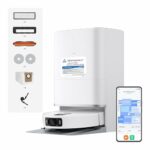
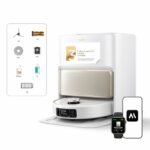
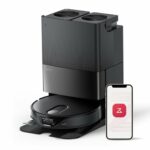
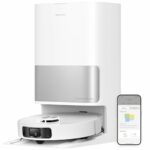
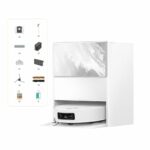
✨ VS Analyses · VacuumSpain comparison technology. Explanation created with AI from verified technical data.
Introduction
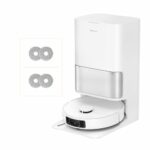
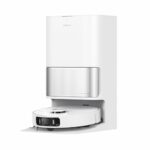
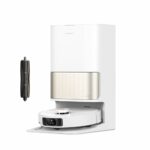
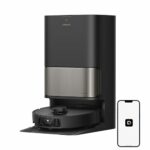
The Dreame L50s Pro Ultra and the Roborock Qrevo Edge 2 represent two high-end propositions launched in 2026 that compete directly in the premium market segment. Both units incorporate a complete multifunctional base with mop washing and drying, advanced navigation systems with artificial intelligence and rotary mopping capabilities. These are solutions designed for users seeking to fully automate home cleaning without manual intervention.
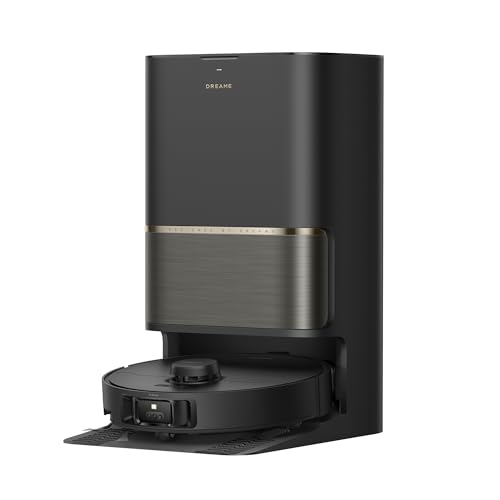
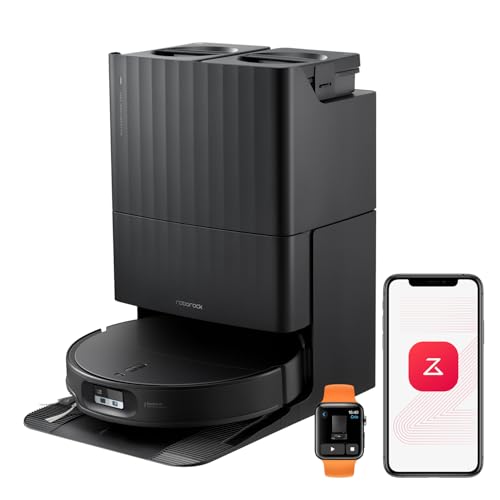
The Dreame model stands out for its suction power of 30,000 Pa and a design that prioritises the capacity of the base's tanks. The Roborock unit opts for an ultra-slim profile of just 79.8 mm in height and a navigation system with retractable LiDAR. Two different philosophies for solving the same cleaning needs.
Power and Suction
The difference in suction power is significant: the Dreame L50s Pro Ultra delivers 30,000 Pa, exceeding the Roborock Qrevo Edge 2 by 5,000 Pa. This advantage translates into better performance on carpets and the ability to extract ingrained dirt from fabrics. For homes with long-pile carpets or pets that shed a lot of hair, this difference can make a real impact on the daily cleaning experience.
Regarding brushing systems, the Dreame features a dual HyperStream brush specifically designed to prevent hair tangles, whilst the Roborock is equipped with its DuoDivide Anti-Tangle brush that pushes hairs towards the central gap for direct suction. Both technologies address the same problem with different engineering solutions, and in practice both prove effective.
Both models lift the main brush during mopping to prevent it from getting wet and spreading dirt. They also feature an extendable, anti-tangle side brush. The Dreame's advantage here lies in the fact that its side brush also lifts during mopping, preventing water droplets from splashing onto walls or skirting boards. The Roborock does not incorporate this side lifting, which may result in occasional marks on vertical surfaces close to the floor.
Mopping
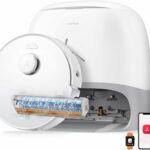
Both robots mop using two rotating mops that apply constant pressure to the floor. The Dreame incorporates the RoboSwing system, which performs a swinging movement allowing the mop to reach slightly under furniture and overhangs. The Roborock also extends its mops to reach edges, although without that additional movement.
Mop lifting presents slight differences: the Roborock lifts up to 12 mm, whilst the Dreame reaches 10.5 mm. Those extra 1.5 mm can prove useful when traversing medium-pile carpets, although in most homes the difference is imperceptible.
Where there is a notable distinction is in the mopping water temperature. The Roborock Qrevo Edge 2 mops with warm water, which improves the dissolution of grease and adhered stains. The Dreame L50s Pro Ultra uses cold water, less effective against greasy dirt but sufficient for daily maintenance. Both bases wash the mops with hot water and dry them with hot air, ensuring hygiene and preventing bad odours.
Both units automatically remove the mops at the base when a vacuum-only session is programmed. They also detect dirt both on the mops and on the floor, activating additional washing or scrubbing cycles when necessary. This allows the robot to adapt its behaviour without user intervention.
Navigation System
The Dreame L50s Pro Ultra uses a traditional 3D LiDAR turret that protrudes from the top of the robot. The Roborock Qrevo Edge 2 opts for a retractable LiDAR that hides when not in use, contributing to that ultra-slim profile of less than 8 centimetres. Both technologies offer millimetre precision in mapping, although the retractable system adds mechanical complexity.
Both models integrate dual cameras with artificial intelligence. The Roborock recognises up to 280 different types of obstacles, whilst the Dreame identifies 220. This difference may be noticeable in homes with many small objects on the floor or scattered children's toys. Both recognise pets, detect curtains and allow remote camera access for home surveillance.
Night vision LED is present on both units, allowing precise navigation even with lights off. The Dreame incorporates CleanGenius AI as its intelligent cleaning system, whilst the Roborock uses SmartPlan 3.0. Both systems analyse the type of dirt and automatically adjust power, passes and mop moisture.
Autonomy and Battery
Battery capacity is identical: 5,200 mAh in both cases. The Roborock declares an autonomy of 188 minutes in standard mode, a figure that the Dreame manufacturer does not specify in its technical specifications. In practice, with equal battery capacities, performance should be similar unless the consumption of the Dreame's more powerful motor slightly shortens running times.
For homes of up to 200 square metres, either unit completes cleaning in a single charge. On larger surfaces, the robot automatically returns to the base to recharge and continues where it left off. Battery management in both cases is transparent to the user.
Smart Functions
The Roborock Qrevo Edge 2 overcomes thresholds up to 20 mm in height. The Dreame L50s Pro Ultra can handle simple thresholds, although the manufacturer does not specify the exact height. This capability proves especially useful in homes with small level changes between rooms, door thresholds or transitions between different floor types.
Both robots incorporate their own voice assistant that responds to direct commands without needing to use a mobile phone. They are also compatible with Alexa and Google Home for integration into home automation ecosystems. The voice control experience works smoothly in both cases.
Multifunctional Cleaning Base
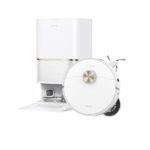
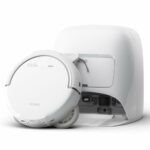
Both bases include auto-emptying of the dust bin, mop washing with hot water and drying with hot air. The Dreame L50s Pro Ultra adds a detergent tank that automatically dispenses product during mop washing, a function the Roborock does not offer. This means less frequent maintenance and better hygiene in the Dreame's case.
Self-cleaning of the washing tray is present in both models. The Dreame boasts a third generation of this system, whilst Roborock calls its version 2.0. Both solutions keep the tray free of residue and prevent blockages.
In terms of capacities, the Dreame exceeds the Roborock in all tanks: dust bag of 3.2 litres compared to 2.7 litres, clean water tank of 4.5 litres compared to 4 litres, and dirty water tank of 4 litres compared to 3.5 litres. These differences translate into greater autonomy between manual emptying and refilling, especially relevant in large houses or those with pets.
The Dreame offers an optional plumbing connection kit that is purchased separately, allowing the base to self-supply with water and evacuate dirty water without human intervention. The Roborock does not have this option even as an accessory.
Dimensions
The robot's height marks the most striking difference: the Roborock Qrevo Edge 2 measures only 79.8 mm, allowing it to access under low furniture, beds with little clearance from the floor or sofas with short legs. The Dreame L50s Pro Ultra reaches 103.8 mm, being excluded from tight spaces where the Roborock can enter. For homes with low furniture, this difference of more than 2 centimetres proves decisive.
The diameter is practically identical: 350 mm on the Dreame and 352 mm on the Roborock. Both navigate with similar agility between chair legs and narrow spaces.
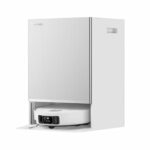
The bases present similar dimensions in width (340 mm both), but the Dreame is taller (590 mm compared to 521 mm) and less deep (457 mm compared to 487 mm). It's advisable to measure the available space before deciding, especially if planning to place the base under furniture or in a cupboard.
Real-World User Experience
In large homes, the Dreame L50s Pro Ultra offers clear advantages: greater capacity in all the base's tanks, which reduces maintenance frequency, and a detergent tank that fully automates the mopping process. The greater suction power is also noticeable in houses with carpets or pets that shed a lot of hair.
For homes with low furniture, the Roborock Qrevo Edge 2 accesses areas that the Dreame cannot reach. Its ultra-slim profile represents a real advantage in spaces where every millimetre counts. Warm water mopping also makes a difference in kitchens with greasy dirt or houses with young children where stains are frequent.
Both robots handle hard floors, parquet and carpets with competence. The anti-tangle systems work effectively with pet hair. Mop lifting allows traversing carpets without wetting them. Dirt detection adapts cleaning automatically, eliminating the need to programme specific modes.
Conclusion: Which to Choose?
Choose the Dreame L50s Pro Ultra if: You have a large house where tank capacity makes a difference in autonomy. You value maximum suction power for carpets or pet hair. You prefer to fully automate mopping with the integrated detergent tank. You're interested in the future option of connecting the base to plumbing. You don't have particularly low furniture that the robot must pass under.
Choose the Roborock Qrevo Edge 2 if: Robot height is critical because you have beds, sofas or furniture with little clearance from the floor. You prefer mopping with warm water for better grease dissolution. You're looking for the navigation system that recognises the greatest number of obstacles. You value the design with retractable LiDAR and minimalist profile. The relationship between performance and compactness is your priority.
For homes with pets and carpets, the Dreame's extra power proves more useful. In flats with limited spaces under furniture, the Roborock's profile becomes a decisive advantage. Both offer a premium user experience with minimal maintenance and maximum automation.