✨ VS Analyze · VacuumSpain comparison technology. AI-generated explanation based on verified technical data.
Introduction
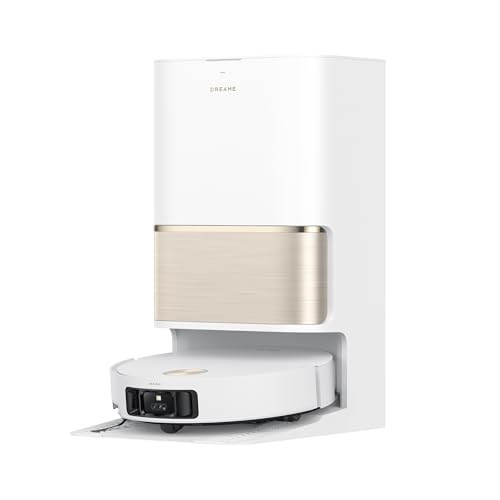
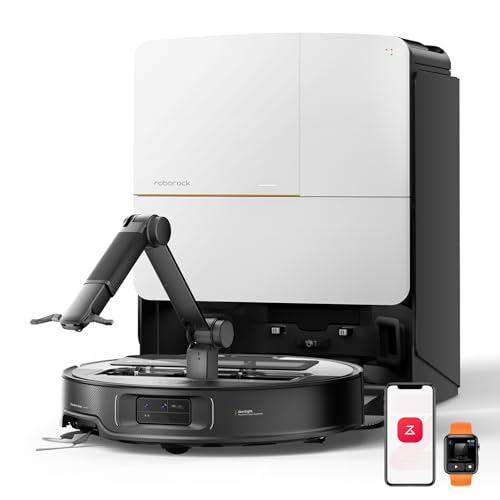
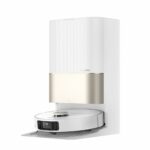
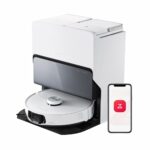
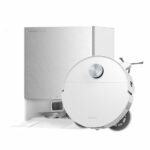
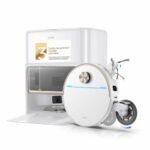
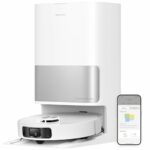
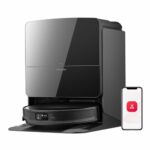
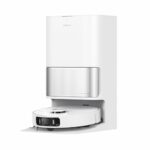
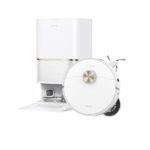
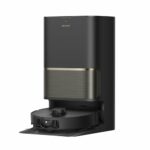
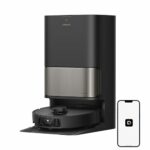
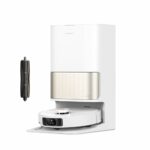
The Dreame L50 Pro Ultra and the Roborock Saros Z70 represent two high-end propositions launched in 2025 that compete directly in the premium segment of robot vacuum cleaners with multifunctional base stations. Both units integrate advanced navigation systems with dual AI cameras, bases that wash and dry the mops with water and hot air, and mopping capabilities with extendable rotating mops.
The Dreame model opts for a more generous dustbin in the robot and a base with greater storage capacity, whilst the Roborock unit incorporates an OmniGrip robotic arm that marks a notable difference in functionality. We are looking at two solutions designed for homes seeking total automation in cleaning, with special attention to deep mopping and minimal maintenance.
Power and Suction
The difference in suction power tilts towards the Roborock Saros Z70, which offers 22,000 Pa versus the 19,500 Pa of the Dreame L50 Pro Ultra. This advantage of 2,500 Pa can be particularly noticeable on long-pile carpets or when picking up dirt embedded in tile joints.
As for the brushing system, the Dreame mounts a dual HyperStream brush specifically designed to reduce hair tangles, whilst the Roborock uses a different type of anti-tangle brush. Both models raise the main brush during mopping and also lift the side brush, which prevents dragging dry dirt whilst passing the mop.
The extendable side brush is present on both units, improving cleaning in corners and edges. This feature is especially useful in rooms with many corners or furniture with legs.
Mopping
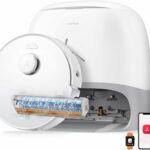
Both robots employ a two rotating mop system, but there are important differences in their implementation. The Dreame L50 Pro Ultra incorporates RoboSwing movement, which adds a swaying motion to the robot to introduce the mop under furniture and overhangs. The Roborock also extends its mops to reach edges, although without that additional chassis movement.
The mop lift marks a relevant technical difference: the Roborock achieves between 12 and 22 mm of elevation, whilst the Dreame stays at 10.5 mm. This means that the Roborock model can navigate thicker carpets without wetting them.
An important distinction appears in the water temperature for mopping the floor. The Roborock Saros Z70 uses warm water, which improves the dissolution of grease and adhered dirt. The Dreame uses cold water for this task. However, both bases wash the mops with hot water and dry them with hot air, guaranteeing hygienic maintenance.
Both systems will automatically remove the mops at the base when only vacuuming is needed, and both incorporate dirt detection on both the mops and the floor to reinforce cleaning in areas that require it.
Navigation System
The Dreame L50 Pro Ultra integrates a retractable LiDAR that hides when not necessary, reducing the effective height of the robot. It employs the AI Sage 13.0 Octa-Core processor and its CleanGenius system for intelligent cleaning. The Roborock mounts the StarSight 2.0 system with RR Mason 12.0 processor and SmartPlan 2.0 algorithm.
The obstacle recognition capability clearly favours the Dreame, which identifies up to 180 different objects versus the 108 of the Roborock. This larger recognition library can translate into more precise navigation in homes with many objects on the floor.
A specific difference: the Dreame detects curtains and avoids them during cleaning, something the Roborock does not incorporate. This can prevent the robot from getting tangled or dragging light fabrics.
Both units feature dual AI cameras, front 3D laser sensor, night vision LED and remote camera access. They also recognise pets and stains through artificial intelligence.
Autonomy and Battery
Both robots mount a 6,400 mAh battery, a generous capacity for this type of equipment. The Dreame declares an autonomy of 200 minutes, whilst the Roborock does not specify this data in the available information.
In practice, with that battery capacity, either of the two can cover homes of more than 200 square metres in a single complete cleaning cycle, including vacuuming and mopping with returns to the base to wash the mops.
Smart Functions
Both models can overcome simple thresholds of up to approximately 2 cm, which allows them to move between rooms with small level differences or climb onto thick carpets without getting stuck.
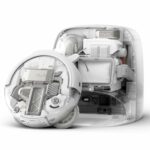
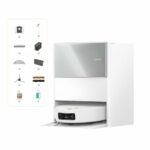
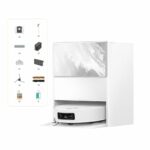
The most striking difference in this section is the OmniGrip robotic arm that is exclusively integrated in the Roborock Saros Z70. This arm allows the robot to manipulate small objects, such as socks or light toys, moving them away from the cleaning area. The Dreame L50 Pro Ultra does not include this functionality.
Both units incorporate their own voice assistant in addition to compatibility with Alexa and Google Home, allowing control by voice commands both through their own systems and through the most popular external assistants.
Multifunctional Cleaning Base
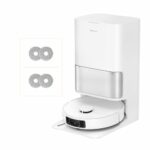
Both bases perform auto-emptying of the dustbin, washing of mops with hot water and drying with hot air. They will also automatically remove the mops when the robot is only going to vacuum, and both have a detergent tank.
The Dreame stands out in storage capacities. Its dust bag reaches 3.2 litres versus the 2.5 of the Roborock. The water tanks are also more generous: 4.5 litres of clean water and 4 of dirty water, whilst the Roborock offers 4 and 3 litres respectively. This translates into fewer water refills and base emptyings.
An exclusive feature of the Dreame is the availability of an optional kit to connect the base directly to water pipes, although it must be purchased separately. The Roborock does not offer this possibility.
As for the self-cleaning of the washing tray, the Dreame incorporates a third-generation system, whilst the Roborock mounts version 2.0. Both systems guarantee that the tray where the mops are washed remains clean automatically.
Dimensions
The Roborock Saros Z70 measures 79.8 mm in height, which allows it to slip under lower furniture than the Dreame L50 Pro Ultra, which reaches 89 mm. This difference of almost one centimetre can be decisive for cleaning under low beds, sofas or kitchen furniture with little distance from the floor.
In diameter they are practically identical: 350 mm for the Dreame versus 353 mm for the Roborock, an irrelevant difference in practice.
The bases present different configurations. The Dreame's is taller (590.5 mm versus 488 mm) but narrower (340 mm versus 381 mm). The depth also varies: 456.7 mm in the Dreame and 475 mm in the Roborock. It is advisable to measure the available space before deciding, especially if the base will go in a tight space.
Real-World Experience
For large homes, the Dreame L50 Pro Ultra offers practical advantages thanks to its greater storage capacity. The robot's 395 ml dustbin more than doubles the 180 ml of the Roborock, which means fewer returns to the base during intensive cleaning sessions in houses with large surface areas. The larger water tanks of the base also reduce the frequency of maintenance.
In homes with pets, the greater suction power of the Roborock (22,000 Pa) can make a difference when picking up hair embedded in carpets. However, the Dreame's dual HyperStream brush is specifically designed to prevent hair tangles, which can compensate for that power difference with less brush maintenance.
If the home has many low pieces of furniture, the Roborock clearly wins with its 79.8 mm height. Those 9 millimetres less than the Dreame allow it to access areas that the other model would not reach.
For those who prioritise deep mopping, the Roborock's warm water and its greater mop elevation (up to 22 mm) offer technical advantages. The Dreame counters with the RoboSwing system to get under furniture and its ability to recognise curtains.
The Roborock's robotic arm is especially useful in houses with young children where there are usually toys or objects on the floor. The Dreame compensates with broader obstacle recognition (180 versus 108), which can translate into fewer manual interventions in homes heavily loaded with objects.
Conclusion: Which to Choose?
Choose the Dreame L50 Pro Ultra if: You have a large home where you value autonomy between maintenance. Its more generous tanks both in the robot and in the base mean fewer water refills and emptyings. It is also interesting if you have long-haired pets and prefer a brush system specifically designed to reduce tangles. The option of a plumbing connection kit may be attractive if you are planning a more permanent installation. Its greater obstacle recognition (180) and curtain detection make it suitable for homes with many decorative elements or fabrics.
Choose the Roborock Saros Z70 if: The height of your furniture is limited and you need a robot that can slip under low sofas or beds, as its 79.8 mm gives it access to areas forbidden to taller models. Its superior power of 22,000 Pa makes a difference on dense carpets or floors with deep joints. The OmniGrip robotic arm provides unique functionality if you usually have small objects on the floor that you prefer the robot to move aside by itself. The warm water for mopping improves grease removal in kitchens, and its greater mop elevation range (up to 22 mm) better protects thick carpets during mopping.