✨ VS Analyze · VacuumSpain comparison technology. AI-generated explanation based on verified technical data.
Introduction
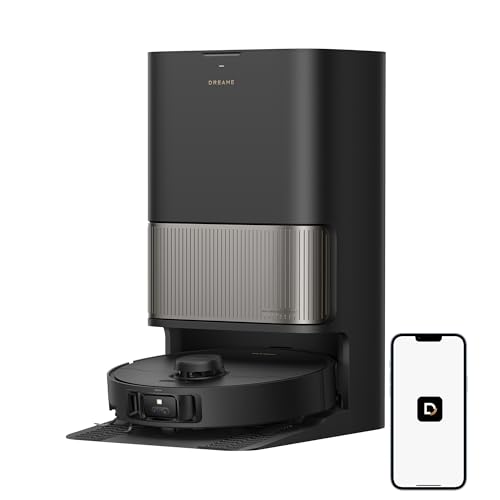
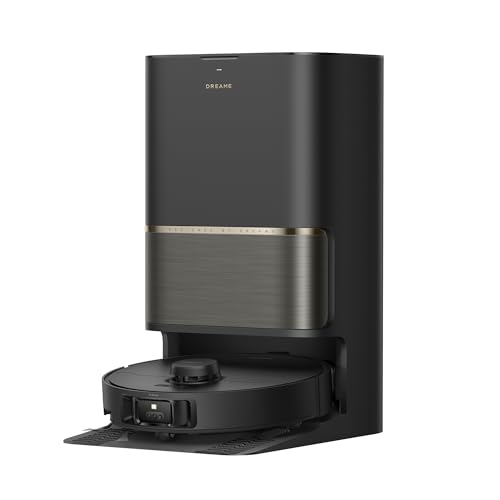
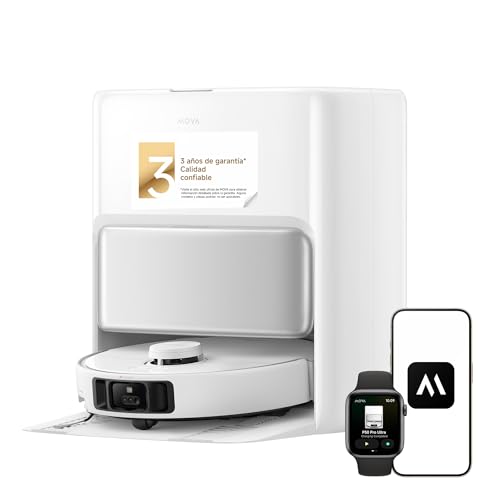
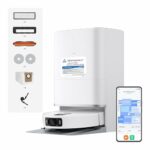
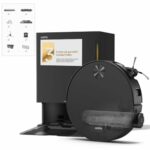
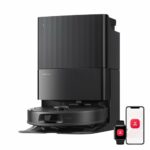
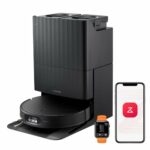
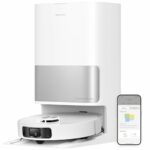
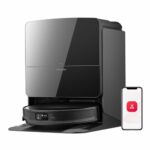
The Dreame L40s Pro Ultra, the Dreame L50s Pro Ultra and the Mova P50 Pro Ultra represent three high-end alternatives with a complete multifunction base. The first two belong to Dreame, whilst Mova is the second brand from the same manufacturer, which explains many technical similarities between the three models. The L40s Pro Ultra and the P50 Pro Ultra arrived in 2025, whilst the L50s Pro Ultra was launched in 2026.
These units are designed for users seeking total automation in cleaning, with bases that wash and dry the mops automatically. The main difference lies in the suction power and some configuration details that may influence the choice depending on each household's needs.
Power and Suction
The most evident difference in this robot vacuum comparison lies in the suction power. The Dreame L50s Pro Ultra delivers 30,000 Pa, a figure that far exceeds the 19,000 Pa of both the L40s Pro Ultra and the Mova P50 Pro Ultra. This advantage translates into better performance on thick carpets and the ability to pick up more ingrained dirt.
The brushing system shows a relevant difference. The two Dreame models feature a dual HyperStream brush, specifically designed to prevent hair tangles thanks to its single-end anchoring. The Mova P50 Pro Ultra is equipped with a TriCut 3.0 brush, which combines bristles with blades to cut tangled hair. Both solutions are effective, although the HyperStream has a more preventive approach.
All three robots lift the main brush during mopping and feature an extendable, liftable and anti-tangle side brush. This facilitates corner cleaning without interfering with the mops when mopping.
Mopping
The mopping system is practically identical across all three models. All use two rotating mops with side extension and Roboswing movement, which allows the robot to make an oscillating movement to get the mops under furniture or overhangs. The mop lift reaches 10.5 mm in all three cases, sufficient to pass over thin carpets without wetting them.
The bases wash the mops with hot water, an important detail to improve washing efficiency during cleaning sessions. Drying is carried out with hot air in all cases, which speeds up the process and reduces the appearance of bad odours. The self-cleaning of the washing tray is third generation in all three models.
All three robots automatically remove the mops at the base when they only need to vacuum, and detect both dirt on the mops and on the floor to adjust the cleaning process. In practice, this means they return to the base to wash the mops when they detect they are dirty, and re-mop particularly stained areas.
Navigation System
Navigation is based on a LiDAR turret with dual AI camera and front 3D laser sensor in all three units. All incorporate LED for night vision and allow remote access to the camera from the app, useful for home surveillance.
The obstacle recognition capability varies notably. The Dreame L50s Pro Ultra identifies up to 220 different objects, the L40s Pro Ultra recognises 180 and the Mova P50 Pro Ultra remains at 160. This difference can be especially noticeable in homes with many objects on the floor or with young children, where precision in obstacle avoidance makes the difference between a robot that moves smoothly and one that stops constantly.
All three detect pets and curtains, and use the CleanGenius system for intelligent AI-based cleaning, which adapts the power and mopping mode according to the type of dirt detected.
Battery Life and Battery
The battery is 5,200 mAh in all three models. The Dreame L40s Pro Ultra offers 220 minutes of battery life, whilst the Mova P50 Pro Ultra reaches 210 minutes. This data is not specified in the table for the L50s Pro Ultra.
With these figures, both the L40s Pro Ultra and the P50 Pro Ultra can cover large homes in a single session. The 10-minute difference between them is minimal in practice.
Smart Features
The Mova P50 Pro Ultra overcomes thresholds of up to 22 mm, whilst the two Dreame models specify a single step of 4 cm. This capability is useful in homes with small level changes or transitions between rooms.
All three units integrate their own voice assistant and compatibility with Alexa and Google Home, which facilitates control by voice commands without needing to open the app.
Multifunction Cleaning Base
All three bases are complete multifunction: they auto-empty the dustbin, wash the mops with hot water, dry them with hot air and feature third-generation self-cleaning of the washing tray. The dust bag has 3.2 litres capacity in all cases.
The clean and dirty water tanks differ slightly. The two Dreame models feature 4.5 litres of clean water and 4 litres of dirty water. The Mova P50 Pro Ultra reduces these figures to 4 litres of clean water and 3.5 litres of dirty. For large homes, this difference may mean some additional refilling during deep cleaning sessions.
The two Dreame models offer an optional plumbing connection kit, which is purchased separately. The Mova P50 Pro Ultra does not have this option. Although it is not an integrated feature, it may be of interest to those seeking total automation and avoiding manually refilling tanks.
All three include a detergent tank, which is dispensed during mop washing at the base. None feature UV disinfection.
Dimensions
The robots measure exactly the same: 350 mm in diameter and 103.8 mm in height. This measurement allows them to pass under most low furniture without problems.
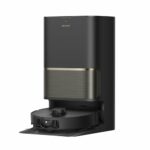
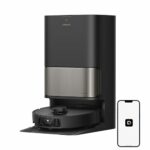
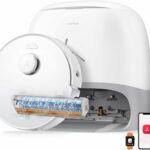
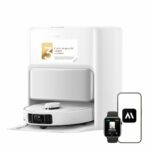
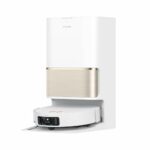
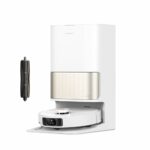
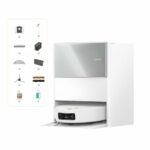
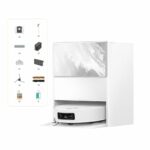
The bases show differences. The two Dreame models are 340 mm wide, 590 mm tall (590.5 in the L40s Pro Ultra) and 457 mm deep (456.7 in the L40s Pro Ultra). The Mova P50 Pro Ultra is wider (420 mm) but less tall (470 mm), with a depth of 458 mm. This can influence the base's location depending on available space: the Mova occupies more floor surface but fits better under shelves or low furniture.
Real-World Usage Experience
For homes with thick carpets or long-haired pets, the Dreame L50s Pro Ultra offers a clear advantage with its 30,000 Pa of suction and greater obstacle recognition capability. The dual HyperStream brush significantly reduces hair tangles.
The Dreame L40s Pro Ultra and the Mova P50 Pro Ultra share suction power, but the former offers greater battery life (220 minutes compared to 210), greater obstacle recognition capability (180 compared to 160) and larger water tanks in the base. The Mova, however, generally has a more competitive price as it is Dreame's second brand.
In large homes, the 4.5 and 4 litre water tanks of the Dreame models allow cleaning more surface area without interruptions. The Mova P50 Pro Ultra, with 4 and 3.5 litres, is still sufficient for most households, but may require some additional refilling on very large surfaces.
The threshold-crossing capability of the Mova P50 Pro Ultra (22 mm) is useful in houses with small level changes between rooms, although the two Dreame models also overcome single steps of 4 cm.
Conclusion: Which One to Choose?
Choose the Dreame L50s Pro Ultra if you're looking for maximum suction power and have thick carpets or pets that shed a lot of hair. Its 220-obstacle recognition capability makes it the best robot vacuum of the three for complex homes with many objects on the floor. The dual HyperStream brush minimises maintenance related to tangles.
Choose the Dreame L40s Pro Ultra if you need greater battery life (220 minutes) and prefer larger water tanks in the base. It's a balanced option for large homes where 19,000 Pa of power is sufficient. The optional plumbing connection kit may interest you if you're seeking total automation.
Choose the Mova P50 Pro Ultra if you value quality-price ratio and don't need the extreme power of the L50s Pro Ultra. It offers very similar features to the L40s Pro Ultra at a generally lower price, being a smart alternative for those seeking a complete robot without paying the Dreame brand premium. Its wider but less tall base may fit better in certain spaces.