✨ VS Analyses · VacuumSpain comparison technology. Explanation created with AI from verified technical data.
Introduction
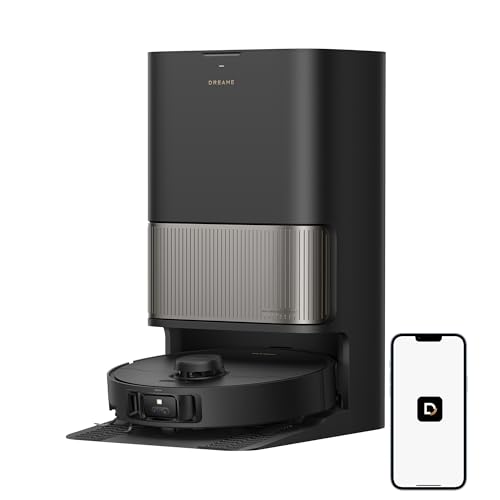
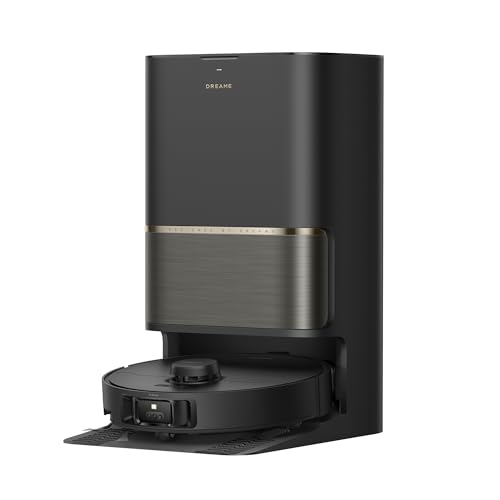
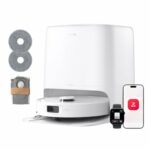
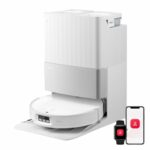
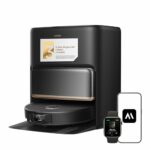
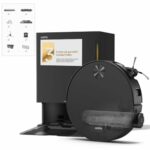
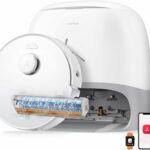
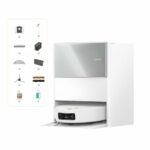
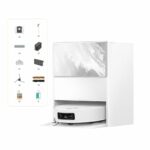
The Dreame L40s Pro Ultra and Dreame L50s Pro Ultra represent two consecutive generations in Dreame's premium robot vacuum range. The L40s Pro Ultra arrived in 2025, whilst the L50s Pro Ultra launched in 2026 as its successor. Both models sit firmly in the high-end segment, featuring multifunctional bases that handle everything from self-emptying to mop washing and drying with hot air.
These aren't entry-level machines. They're designed for households wanting comprehensive automation without constant intervention. The dual rotating mops, hot water mop washing, and advanced AI navigation make them suitable for larger homes with mixed flooring and pets.
Suction power and cleaning performance
The most significant upgrade between these models lies in raw suction strength. The Dreame L50s Pro Ultra generates 30,000 Pa of suction power, a substantial leap from the L40s Pro Ultra's 19,000 Pa. In practical terms, this translates to better performance on carpets and rugs, more effective deep cleaning, and improved pickup of embedded debris.
Both models feature Dreame's dual HyperStream brush system. This design uses two brushes anchored at one end, which actively prevents hair from wrapping around the roller. For homes with pets or long-haired occupants, this matters considerably. The brushes lift automatically during mopping to avoid dragging wet debris across floors.
The side brush configuration remains identical across both models. Each has an extendable side brush that reaches into corners more effectively, and it elevates during mopping to prevent flicking water onto carpets or rugs. The anti-tangle design applies here too.
Mopping capabilities
Mopping specifications are virtually identical between the L40s Pro Ultra and L50s Pro Ultra. Both use dual rotating mops that extend outwards to reach skirting boards and edges. The extension includes Roboswing functionality, where the robot performs a slight swaying motion to push the mop slightly under furniture overhangs and cabinet toe kicks.
Mop elevation reaches 10.5 mm on both models, sufficient to clear most low-pile rugs without dragging wet pads across them. When the robot returns to the base, it automatically removes the mop pads for pure vacuuming runs, which prevents unnecessary wear on the mopping system when it isn't needed.
The base stations wash mops with hot water and dry them using heated air. This combination prevents bacterial growth and eliminates musty odours that plague robots with cold-air drying or no drying at all. The third-generation automatic tray cleaning system handles maintenance of the washing area itself, reducing how often you need to manually clean the base.
Both models detect dirt on the mops and on the floor surface. When heavy soiling is detected, the robot increases cleaning intensity or makes additional passes. This adaptive behaviour means less manual intervention for stubborn marks.
Navigation and obstacle avoidance
Navigation hardware is nearly identical. Both models use a 3D LiDAR turret for room mapping combined with dual AI cameras and a front-mounted 3D laser sensor. This layered approach provides reliable navigation even in challenging lighting conditions.
The L50s Pro Ultra recognises 220 different object types, compared to 180 on the L40s Pro Ultra. Whilst both handle common obstacles like shoes, cables, and pet waste effectively, the expanded recognition database in the newer model should theoretically improve avoidance accuracy in cluttered environments.
Pet detection works on both machines, as does curtain recognition to prevent the robot from becoming entangled in floor-length drapes. LED illumination enables the cameras to function in darkness, and you can access the camera feed remotely through the app for home monitoring when you're away.
CleanGenius AI operates on both models, automatically adjusting suction power, water flow, and cleaning patterns based on room type, floor surface, and detected dirt levels. This removes much of the manual configuration that earlier robot generations required.
Battery life and coverage
Battery capacity is identical at 5,200 mAh. The L40s Pro Ultra provides 220 minutes of runtime, though Dreame hasn't published a specific runtime figure for the L50s Pro Ultra. Given the higher suction power of the newer model, runtime at maximum power settings will likely be somewhat reduced, though in auto mode the difference may be negligible.
For most homes under 250 square metres, either model should complete a full clean on a single charge. Larger properties benefit from the robots' ability to automatically return to base for recharging mid-clean, then resume where they left off.
Smart features
Both the L40s Pro Ultra and L50s Pro Ultra can climb obstacles up to 20 mm high. This handles door thresholds, thick carpet edges, and minor floor transitions without getting stuck. Neither model includes a robotic arm, so they won't pick up objects or move obstacles aside.
Each robot has its own built-in voice assistant and supports external assistants like Alexa and Google Home. You can issue voice commands directly to the robot or through your smart home ecosystem.
Multifunctional base station
The base stations are functionally identical. Both feature a 3.2-litre dust bag, 4.5-litre clean water tank, and 4-litre dirty water reservoir. These capacities support several weeks of operation before requiring attention, depending on home size and cleaning frequency.
Hot water mop washing and hot air drying come standard. A detergent dispenser automatically doses cleaning solution during mop washing. The third-generation automatic tray cleaning keeps the washing area hygienic without manual scrubbing.
Neither base includes integrated plumbing connections, though both support an optional plumbing kit purchased separately. This kit allows automatic water refilling and wastewater drainage, eliminating tank maintenance entirely. It's worth noting this is an add-on purchase rather than a standard feature.
UV disinfection isn't present on either model. The combination of hot water washing, hot air drying, and automatic tray cleaning appears to be Dreame's approach to hygiene management instead.
Physical dimensions
The robots themselves are identical in size. Both measure 350 mm in diameter and 103.8 mm in height. This relatively low profile allows them to navigate under most sofas, beds, and cabinets without difficulty.
Base station dimensions are nearly the same, with minor variations. The L40s Pro Ultra base measures 340 mm wide, 590.5 mm tall, and 456.7 mm deep. The L50s Pro Ultra base is 340 mm wide, 590 mm tall, and 457 mm deep. These fractional differences won't affect placement in any meaningful way.
Real-world usage considerations
For homes with multiple pets or significant shedding, the increased suction of the L50s Pro Ultra offers tangible benefits. The 30,000 Pa power tackles embedded fur in carpets more effectively than the L40s Pro Ultra's 19,000 Pa, though the dual HyperStream brushes on both models prevent hair tangles equally well.
The expanded object recognition database on the L50s Pro Ultra may prove valuable in households with children, where toys and small items frequently appear on floors. The additional 40 recognised objects could reduce instances where the robot requests assistance.
Interestingly, the L40s Pro Ultra includes a larger 300 ml dust bin in the robot itself, compared to 250 ml on the L50s Pro Ultra. This seems counterintuitive given the newer model's higher suction. In practice, it matters little since both robots automatically empty into the 3.2-litre base station bag. The onboard capacity only affects how much debris the robot can hold during a single cleaning run before returning to empty.
Both models handle hard floors, sealed wood, and carpets effectively. The 10.5 mm mop lift clears low-pile rugs, and the automatic mop removal feature ensures you can run vacuum-only sessions without removing pads manually. For homes with thick carpets, the L50s Pro Ultra's stronger suction provides deeper cleaning.
Conclusion: which should you choose?
Choose the Dreame L40s Pro Ultra if: You're looking for premium cleaning automation at a potentially lower price point as the L50s Pro Ultra establishes itself in the market. The 19,000 Pa suction handles most homes effectively, particularly those with primarily hard flooring and low-pile carpets. The larger 300 ml dust bin offers marginal benefits for extended cleaning sessions. If the newer model commands a significant premium, the L40s Pro Ultra delivers nearly identical functionality.
Choose the Dreame L50s Pro Ultra if: Maximum suction power matters for your situation. Homes with thick carpets, multiple pets, or heavy traffic benefit from the 30,000 Pa performance. The expanded object recognition database suits households with frequent floor clutter. As the latest generation, it should receive software support and updates for a longer period. If pricing is similar between the models, the performance upgrade justifies choosing the newer release.
For most users, the decision hinges on pricing and carpet depth. The L50s Pro Ultra represents a clear performance upgrade, but the L40s Pro Ultra remains a highly capable machine that won't disappoint in typical household conditions.