✨ VS Analyses · VacuumSpain comparison technology. Explanation created with AI from verified technical data.
Introduction
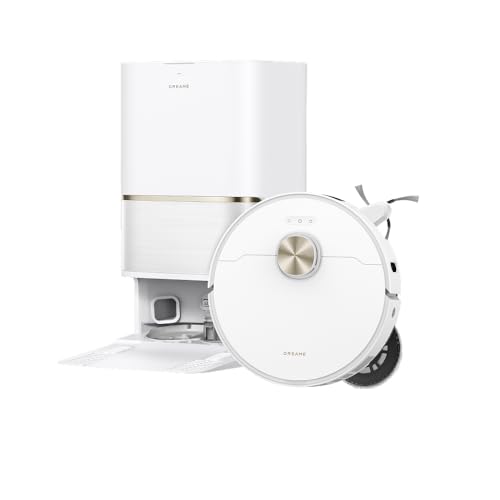
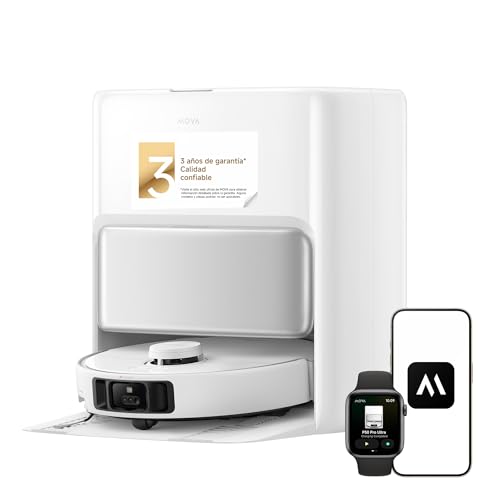
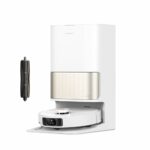
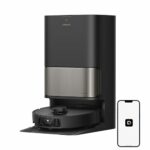
The Dreame L50 Ultra AE and the Mova P50 Pro Ultra represent two compelling options in the world of premium robot vacuum cleaners, both featuring comprehensive multifunctional bases that handle everything from self-emptying to mop washing and drying. The Dreame model arrives in March 2026, whilst the Mova P50 Pro Ultra has been available since 2025. Both brands share a connection—Mova operates as Dreame's second brand—which explains certain similarities in their technical approach, though these models differ substantially in several key areas that could influence your purchasing decision.
These aren't entry-level devices. Both incorporate advanced navigation systems, rotating dual mops with edge extension capabilities, and bases that wash mops with hot water and dry them with heated air. However, the differences in suction power, artificial intelligence features, and physical dimensions reveal distinct philosophies that suit different household needs.
Power and Suction
The suction power gap between these models is substantial. The Dreame L50 Ultra AE generates 28,000 Pa, which positions it amongst the most powerful robot vacuum cleaners currently available. The Mova P50 Pro Ultra produces 19,000 Pa—still respectable, but nearly 50% less raw power. In practice, this difference becomes noticeable on carpets and when dealing with embedded dirt or pet hair ground into fibres.
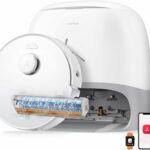
Both models employ the TriCut 3.0 main brush, which combines bristles with integrated blades designed to slice through tangled hair before it becomes problematic. This system reduces maintenance considerably compared to traditional bristle-only designs. The main brush lifts during mopping on both robots, preventing wet debris from contaminating the brush roller.
The side brush configuration reveals an interesting distinction. Whilst both feature extensible side brushes that swing outward to reach into corners more effectively, only the Mova P50 Pro Ultra elevates its side brush during mopping. This prevents the brush from flicking dirty water across clean floors—a thoughtful detail that improves mopping results. Both include anti-tangle technology on their side brushes.
Mopping Performance
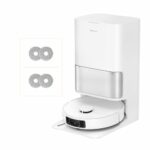
The mopping systems share fundamental similarities: dual rotating mops that extend outward to reach edges and skirting boards, combined with a movement system that allows better coverage along walls. Both lift their mops 10.5 mm when encountering carpets or returning to the base, and both automatically detach the mop pads at the base when you want the robot to vacuum only.
Water temperature for floor mopping remains cold on both models, though their bases wash the mop pads using hot water and dry them with heated air. This combination helps prevent odours and bacterial growth between cleaning sessions.
The critical difference emerges in intelligence. The Mova P50 Pro Ultra incorporates dirt detection sensors that monitor both the floor surface and the mop pads themselves. When it detects particularly soiled areas, it can automatically reclean those zones or return to the base for mop washing mid-session. The Dreame L50 Ultra AE lacks this capability entirely, following predetermined cleaning patterns without adapting to actual dirt levels. For households dealing with muddy paw prints or frequent spills, this adaptive behaviour makes a tangible difference.
Navigation System
Both robots navigate using third-generation LiDAR turrets combined with frontal 3D laser sensors for obstacle detection. This dual-sensor approach maps your home accurately whilst avoiding collisions with furniture and unexpected objects.
The Mova P50 Pro Ultra extends this foundation considerably with dual AI cameras that enable visual recognition of specific objects. It identifies 160 different obstacles, including pets, curtains, and various household items, adjusting its behaviour accordingly. The cameras include LED illumination for night vision, and you can access them remotely through the app—useful for checking on pets or simply seeing what the robot encounters during cleaning.
The Dreame L50 Ultra AE operates without cameras, relying purely on its LiDAR and 3D sensors. This approach still delivers reliable navigation and obstacle avoidance, but lacks the nuanced object recognition and remote viewing capabilities. It won't specifically identify your cat or adjust its approach to curtains, though it will detect them as obstacles to avoid.
The Mova's CleanGenius AI system processes visual data to optimise cleaning patterns based on room type and dirt levels—functionality entirely absent from the Dreame model. This represents one of the most significant capability gaps between these robots.
Battery and Autonomy
Both models house identical 5,200 mAh batteries, but only the Mova provides specific autonomy data: 210 minutes of runtime. The Dreame's runtime isn't specified, though with the same battery capacity, you'd expect similar performance under comparable conditions. Actual runtime always varies based on suction power settings, floor types, and whether the robot is vacuuming, mopping, or doing both simultaneously.
The higher suction power of the Dreame L50 Ultra AE will drain its battery more quickly when operating at maximum settings, whilst the Mova's more moderate power consumption might edge ahead slightly in total coverage per charge. For most homes, either battery capacity proves sufficient, as both robots automatically return to their bases for recharging and resume cleaning where they left off.
Smart Features
The Mova P50 Pro Ultra can climb obstacles up to 22 mm high, whilst the Dreame L50 Ultra AE manages 20 mm. This 2 mm difference might seem trivial, but it can determine whether a robot successfully navigates certain door thresholds or thick carpet transitions without assistance.
Voice control capabilities differ notably. The Mova includes its own integrated voice assistant alongside compatibility with external systems like Alexa and Google Home. The Dreame L50 Ultra AE works with external voice assistants but lacks a built-in assistant. In practice, most users rely on external assistants anyway, making this distinction less critical than the camera and AI differences.
Neither model features a robotic arm—a technology still limited to a handful of ultra-premium robots that can pick up small objects.
Multifunctional Base Station
Both bases handle the complete cleaning cycle: self-emptying the robot's dustbin into 3.2L bags, washing mop pads with hot water, and drying them with heated air. Third-generation automatic cleaning of the washing tray itself prevents bacterial buildup in the base—a feature that dramatically reduces maintenance demands.
The Dreame L50 Ultra AE provides slightly larger water tanks: 4.5 litres for clean water and 4 litres for dirty water, compared to the Mova's 4 litre and 3.5 litre capacities respectively. This translates to fewer refills and emptying cycles, particularly beneficial in larger homes or when mopping frequently.
Both bases include detergent dispensers that automatically add cleaning solution during mop washing. Neither features UV disinfection or the ability to automatically swap mop pads mid-clean.
The Dreame offers an optional plumbing connection kit (purchased separately) that allows the base to connect directly to your home's water supply and drainage. This eliminates manual tank refilling and emptying entirely, though it requires installation and isn't included as standard. The Mova doesn't offer this option at all, even as an accessory.
Dimensions
Height becomes crucial when you need a robot that can clean beneath low-clearance furniture. The Dreame L50 Ultra AE measures 97 mm tall—low enough to access most sofas, beds, and cabinets. The Mova P50 Pro Ultra stands 103.8 mm high, which might prevent it from reaching certain spaces the Dreame can navigate. That 6.8 mm difference can determine whether you're manually vacuuming under your sofa or letting the robot handle it.
Both robots share a 350 mm diameter, standard for premium models and small enough to navigate typical doorways and furniture arrangements without difficulty.
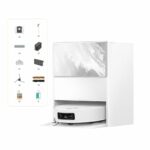
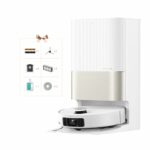
Base station dimensions reveal different design philosophies. The Dreame's base measures 340 mm wide, 590 mm tall, and 457 mm deep—a taller, narrower footprint. The Mova's base spans 420 mm wide, 470 mm tall, and 458 mm deep—shorter but considerably wider. Consider your available floor space when choosing; the Dreame fits better in narrow alcoves, whilst the Mova requires more width but less vertical clearance.
Real-World Usage Experience
The Dreame L50 Ultra AE suits households prioritising raw cleaning power and the ability to fit under low furniture. Its 28,000 Pa suction tackles deep carpet cleaning and heavy debris more aggressively, whilst its 97 mm height accesses spaces the Mova cannot reach. The larger water tanks reduce maintenance frequency, and the optional plumbing kit (though requiring separate purchase) offers a path to truly hands-free operation for those willing to invest in installation.
The Mova P50 Pro Ultra appeals to users valuing intelligence over brute force. Its AI cameras and CleanGenius system adapt cleaning behaviour based on actual conditions rather than following blind patterns. Dirt detection ensures heavily soiled areas receive extra attention automatically, whilst pet recognition and remote camera access add convenience for animal owners. The integrated voice assistant and ability to identify 160 different obstacles create a more interactive, responsive cleaning experience.
For homes with pets, the Mova's specific pet recognition and camera monitoring capabilities provide tangible benefits, though the Dreame's superior suction power might better handle embedded pet hair in carpets. Both TriCut 3.0 brushes resist tangling effectively.
In larger homes, the Dreame's bigger water tanks and higher suction power maintain performance across extended cleaning sessions. The Mova's 210-minute battery life (similar capacity suggests comparable runtime for the Dreame) proves adequate for most properties, with both robots resuming automatically after recharging if needed.
Conclusion: Which Should You Choose?
Choose the Dreame L50 Ultra AE if: you need maximum suction power for deep carpet cleaning, have low-clearance furniture requiring a 97 mm profile, want larger water tanks for reduced maintenance, or plan to eventually install the plumbing connection kit for completely automated water management. This robot delivers superior raw cleaning performance without the AI sophistication.
Choose the Mova P50 Pro Ultra if: you value adaptive intelligence over maximum power, want cameras for pet monitoring and remote viewing, need automatic dirt detection to ensure thorough cleaning of problem areas, or prefer a robot that recognises specific obstacles like curtains and pets. The integrated voice assistant and CleanGenius AI system create a more responsive, interactive cleaning experience, though you'll sacrifice some suction power and the ability to clean under the lowest furniture.
Both represent capable premium robot vacuum cleaners with comprehensive multifunctional bases. Your choice ultimately depends on whether you prioritise the Dreame's physical performance advantages—power, height, tank capacity—or the Mova's intelligent features that adapt cleaning behaviour to real-world conditions.