✨ VS Analyze · VacuumSpain comparison technology. AI-generated explanation based on verified technical data.
Introduction
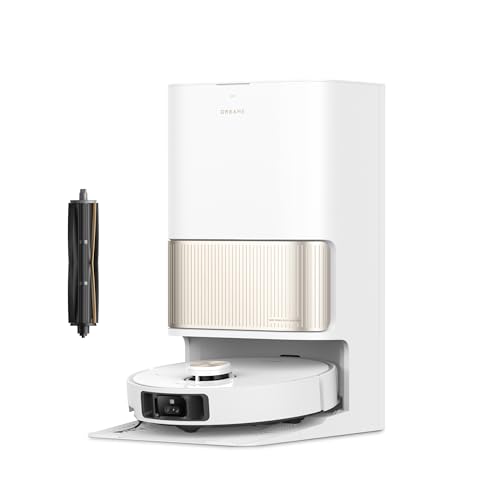
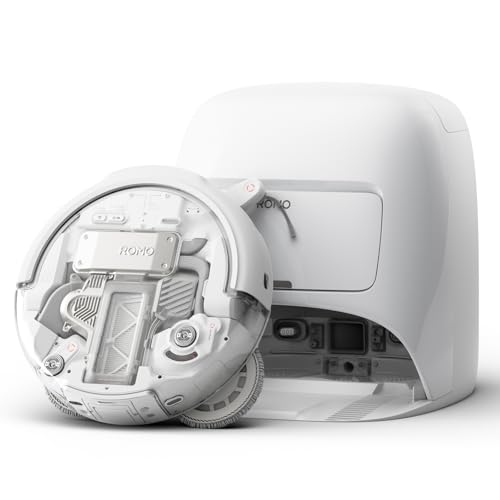
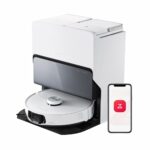
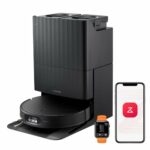
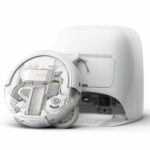
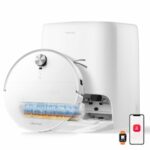
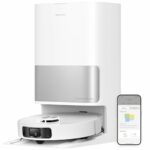
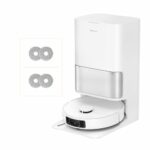
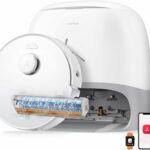
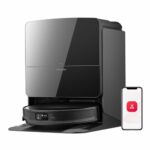
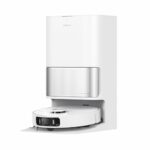
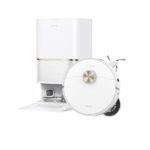
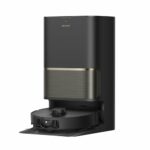
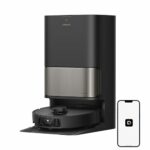
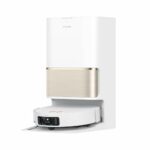
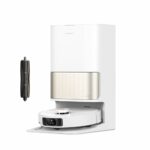
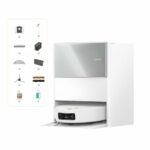
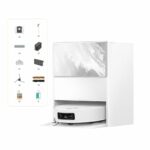
The robot vacuum market welcomes DJI in 2025 with its Romo A (Robot Transparente), a model that arrives with impressive technical credentials to compete directly with industry veterans. Against it, we have the Dreame L40 Ultra, launched in 2024, which represents the consolidated offering of a brand that has successfully positioned itself by providing advanced technology at competitive prices.
We're talking about two robots with complete multifunctional bases, designed for users seeking total automation in home cleaning. Both integrate navigation systems with LiDAR, artificial intelligence and advanced mopping capabilities. However, differences in power, brush design and some navigation details mark distinct paths worth analysing.
Power and Suction
The most striking difference between these models lies in suction power. The DJI Romo A reaches 25,000 Pa, a figure that far exceeds the Dreame L40 Ultra's 11,000 Pa. This advantage of DJI's robot will translate into greater capacity to extract embedded dirt from carpets or vacuum heavy particles in a single pass.
Regarding the main brush, the DJI features a Divided system whilst the Dreame opts for its TriCut 3.0. Both designs are aimed at reducing hair tangles, albeit with different approaches. Both models lift the main brush during mopping to avoid dragging dry dirt whilst passing the mop.
A practical difference appears in the side brush. Both the DJI and the Dreame incorporate an extendable side brush to improve corner cleaning, and both have anti-tangle systems. However, the Dreame L40 Ultra adds side brush lifting during mopping, something the DJI Romo A doesn't include. This allows the Dreame to prevent the side brush from interfering with mopping or splashing dirty water.
Mopping
Both robots feature a mopping system with two rotating mops, which offer better results than static dragging mops. Both extend the mops to better reach edges and skirting boards, and the Dreame L40 Ultra adds Roboswing movement, which helps get the mop under furniture overhangs with a lateral robot movement.
Mop lifting is present in both models. The Dreame specifies 10.5 mm height, sufficient to travel over thin carpets without wetting them. The DJI also lifts its mops although it doesn't detail the exact height in the available data.
In the bases, both wash the mops with hot water and dry them with hot air, fundamental features for keeping mops clean during mopping and avoiding bad odours when finished. Both integrate dirt detection on both the mops and the floor, allowing automatic re-mopping in areas that need it. The Dreame L40 Ultra can automatically remove the mops at the base when you only want to vacuum, a function not confirmed in the technical data for the DJI Romo A.
Navigation System
The DJI Romo A incorporates solid-state LiDAR, a more advanced technology than traditional systems with moving parts. The Dreame L40 Ultra uses LiDAR 3.0 turret, a proven and effective system. Both guarantee precise mapping and orderly room-by-room navigation.
Both models integrate a camera with artificial intelligence and front 3D laser sensor for obstacle detection. The DJI and Dreame allow remote camera access and feature LEDs for night vision, useful functions for home surveillance or locating pets.
The Dreame L40 Ultra specifies recognition of up to 100 different types of obstacles, identifies pets and detects curtains to avoid getting tangled. The DJI Romo A doesn't detail this specific data in the available technical information. The Dreame also mentions its AI Sage 11.0 processor with CleanGenius algorithm, whilst the DJI doesn't specify the CPU used.
Autonomy and Battery
Battery capacities are very similar: 5,000 mAh in the DJI Romo A compared to 5,200 mAh in the Dreame L40 Ultra. This small advantage of the Dreame is reflected in the declared autonomy: 194 minutes compared to the DJI's 180. In practice, we're talking about minor differences that won't affect use in medium-sized homes, as both automatically return to the base to recharge and continue.
The DJI's higher suction power could consume more battery in maximum mode, although this will depend on real-use settings. Neither specifies maximum recommended surface area in the technical data.
Smart Functions
Both robots can overcome obstacles of considerable height, important for crossing thresholds or level changes between rooms. The DJI Romo A reaches 20 mm whilst the Dreame L40 Ultra reaches 22 mm, a minimal difference that in practice won't make a real distinction.
The Dreame L40 Ultra integrates its own voice assistant in addition to compatibility with Alexa and Google Home. The DJI Romo A confirms compatibility with external assistants, but doesn't specify whether it includes its own integrated assistant.
Multifunctional Cleaning Base
Both bases offer complete functions: auto-emptying of the dust bin, mop washing with hot water and drying with hot air. Both incorporate self-cleaning of the washing tray, a feature that reduces manual maintenance. The DJI uses an automatic nozzle whilst the Dreame specifies a second-generation system.
Both models include a detergent tank, which is automatically dispensed during mop washing. They don't integrate UV disinfection or automatic mop changing.
In terms of capacities, the Dreame L40 Ultra offers superior figures: 3.2-litre dust bag compared to the DJI's 2.4 litres, 4.5-litre clean water tank compared to 4 litres, and 4-litre dirty water tank compared to 3.2 litres. These differences mean greater autonomy between emptying and refilling in the Dreame, something to consider in large homes.
The Dreame offers an optional plumbing connection kit that is purchased separately, an option the DJI Romo A doesn't contemplate.
Dimensions
The DJI Romo A measures 98 mm in height compared to the Dreame L40 Ultra's 103.8 mm. Those nearly 6 millimetres of difference can be decisive for passing under low furniture or beds with little space. The diameter is practically identical: 351 mm in the DJI and 350 mm in the Dreame.
The bases have different proportions. The DJI's is wider (453 mm vs 340 mm) and less tall (440 mm vs 590.5 mm), occupying more horizontal surface but less vertical. The depth is similar: 425 mm in the DJI and 456.7 mm in the Dreame. It's worth measuring the available space before deciding, especially if the base will be located in a tight space.
Real-World Usage Experience
For homes with pets that shed a lot of hair, the DJI Romo A's 25,000 Pa power makes a clear difference. Its superior suction capacity will facilitate the collection of hair embedded in carpets and upholstery. The Divided brush system is also designed to minimise tangles.
If the home has lots of low furniture, the DJI's lower height (98 mm) allows it to access spaces where the Dreame might not fit. For large houses with multiple rooms, the Dreame's larger tanks reduce the frequency of base maintenance.
The Dreame L40 Ultra provides navigation advantages with its recognition of 100 obstacles and specific curtain detection, useful in homes with complex décor. Side brush lifting during mopping also improves the final result by avoiding interference.
Both models offer remote camera access, an interesting function for surveillance or locating pets when you're not at home. Both allow voice control via external assistants.
Conclusion: Which to Choose?
Choose the DJI Romo A (Robot Transparente) if you're looking for the maximum available suction power, especially useful in homes with pets that shed a lot of hair or thick carpets. Also if you need the robot to pass under very low furniture thanks to its 98 mm height. It's the option for those who prioritise suction capacity above all else and don't mind forgoing some specific navigation details.
Choose the Dreame L40 Ultra if you prefer a more detailed navigation system with recognition of up to 100 obstacles and curtain detection. Its larger base tanks are practical in large homes where cleaning is frequent. Side brush lifting during mopping and the possibility of adding a plumbing connection kit are additional advantages. It represents a consolidated option with proven technology and balance between features and maintenance autonomy.