✨ VS Analyses · VacuumSpain comparison technology. Explanation created with AI from verified technical data.
Introduction
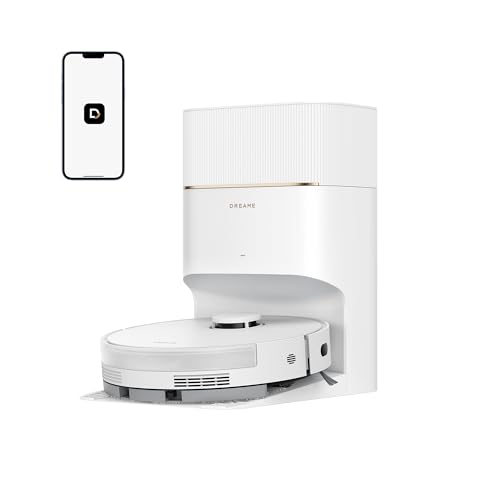
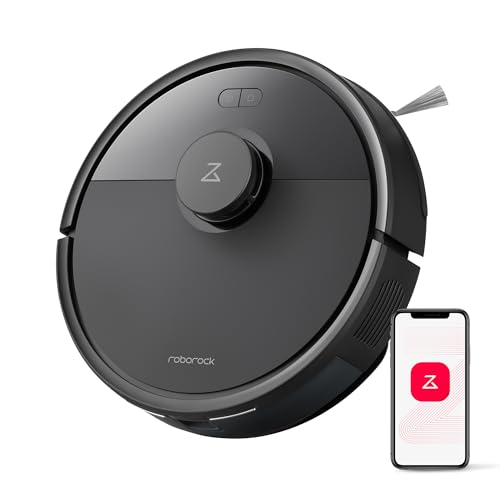
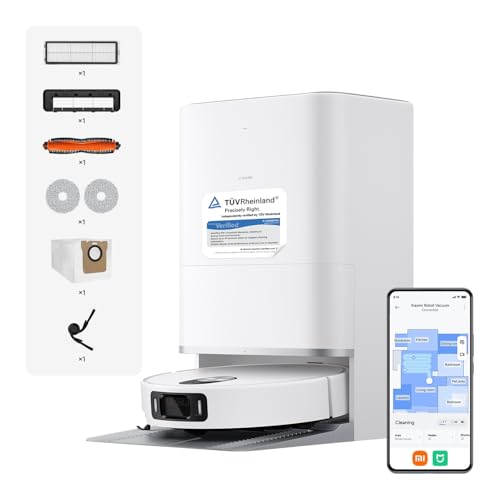
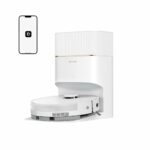
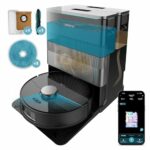
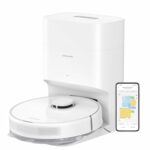
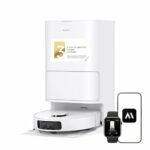
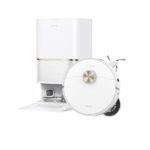
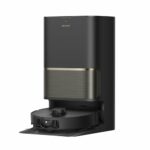
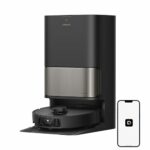
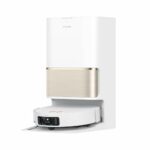
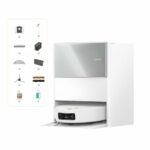
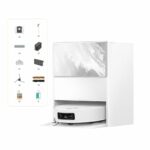
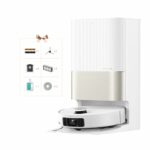
Choosing between the Dreame D20 Pro Plus, the Roborock Q7 L5 or BF and the Xiaomi Robot Vacuum 5 Pro requires understanding what type of robot you actually need. These three 2025 models represent very different approaches within the robot vacuum market. The Dreame focuses on exceptional autonomy with a self-emptying base, the Roborock offers a more basic solution without a multifunction station, whilst the Xiaomi concentrates advanced mopping technology and intelligent AI navigation.
The differences aren't just about price or brand. We're talking about robots designed for different needs: from those seeking total autonomy with minimal maintenance, to those requiring professional mopping with rotating mops and automatic washing in a multifunction base. Suction power varies enormously between them, and the presence or absence of an AI camera marks completely different user experiences.
Power and Suction
The difference in suction power is decisive. The Xiaomi Robot Vacuum 5 Pro leads with 20,000 Pa, a figure that doubles the Roborock Q7 L5 or BF's 8,000 Pa. The Dreame D20 Pro Plus sits at an intermediate point with 13,000 Pa. In practice, this translates to greater capacity for extracting ingrained dirt from carpets or tile joints.
The brushing system also marks notable differences. The Xiaomi is equipped with the TriCut 3.0 brush, which combines bristles with blades to reduce tangling of long hair. The Dreame opts for a double brush that improves cleaning coverage. The Roborock maintains a traditional bristle brush, more prone to accumulating hair and strands.
Only the Xiaomi incorporates main brush lift during mopping, preventing vacuumed dirt from being dragged across already clean areas. This function is especially useful in homes where intensive vacuuming is combined with frequent mopping.
Regarding the side brush, both the Dreame and the Xiaomi include an extendable version to improve corner cleaning. Additionally, these two models feature anti-tangle design on the side brush, a characteristic absent in the Roborock. For households with pets or people with long hair, this should be seriously considered.
Mopping
Here the differences are enormous. The Xiaomi Robot Vacuum 5 Pro is the only one that integrates a two rotating mop system, capable of extending to reach edges and skirting boards. This extendable mop marks the difference between superficial mopping and one that actually reaches the most complicated areas.
The Xiaomi's mop lift reaches 15 mm, sufficient to climb over thin carpets without wetting them. Neither the Dreame nor the Roborock offer mop lift, which forces you to remove them manually if you have carpets or to define no-mop zones in the app.
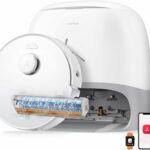
But the Xiaomi's great advantage lies in its multifunction base. Whilst the Dreame D20 Pro Plus and the Roborock Q7 L5 or BF don't wash the mops automatically, the Xiaomi returns periodically to the base during mopping to wash the mops with hot water. This guarantees that it always mops with clean mops, not dragging dirt from one room to another.
Additionally, the Xiaomi dries the mops with hot air after finishing, preventing bad odours and bacterial proliferation. Self-cleaning of the washing tray completes a system designed to function with minimal human intervention. The 4-litre clean water and 3.8-litre dirty water tanks allow cleaning of large surfaces without constant refilling.
The Xiaomi also detects dirt on the mops and on the floor, automatically adjusting mopping intensity or going over especially dirty areas. This intelligence applied to mopping isn't present in the other two models.
Navigation System
All three robots use LiDAR navigation, but with important nuances. The Dreame D20 Pro Plus and the Roborock Q7 L5 or BF mount a traditional LiDAR turret, whilst the Xiaomi incorporates retractable LiDAR that reduces the robot's total height to 88 mm.
The big difference is in the artificial intelligence camera. Only the Xiaomi Robot Vacuum 5 Pro integrates an AI camera capable of recognising up to 200 different types of obstacles. This allows it to identify cables, slippers, toys or any object and avoid it with millimetre precision. The Dreame has a front 3D laser sensor to avoid obstacles, but without a camera or intelligent recognition. The Roborock lacks both advanced systems.
Remote access to the Xiaomi's camera allows you to supervise cleaning from your mobile, verify that everything is working correctly or even use it as a basic surveillance camera. The night vision LED facilitates navigation in low light conditions, something the other two models don't offer.
The Xiaomi's intelligent AI cleaning automatically adjusts power and passes according to the type of floor detected and the level of dirt. This dynamic adaptation optimises results without manual intervention.
Autonomy and Battery
The Dreame D20 Pro Plus stands out with a 5,200 mAh battery that provides up to 285 minutes of continuous operation. This exceptional autonomy allows cleaning of large homes without interruptions for recharging.
The Xiaomi Robot Vacuum 5 Pro mounts the same battery capacity (5,200 mAh), but its greater suction power and advanced mopping system reduce autonomy to 140 minutes. It's still sufficient for most homes, although in very large dwellings it may require intermediate recharging.
The Roborock Q7 L5 or BF is equipped with a more modest 3,200 mAh battery and doesn't specify autonomy in minutes. This lower capacity suggests it's designed for flats or medium-small sized homes.
Intelligent Functions
All three robots overcome obstacles up to 20 mm in height, sufficient capacity to clear most thresholds between rooms or transitions between floors of different levels.
All are compatible with external voice assistants such as Alexa or Google Home, allowing cleaning to be initiated via voice commands. None incorporates a robotic arm or its own voice assistant.
Multifunction Cleaning Base
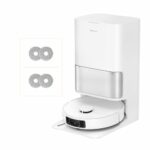
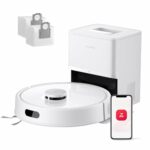
The Dreame D20 Pro Plus includes a self-emptying base with a 5-litre bag, the most generous of the three. This means fewer bag changes and greater autonomy between maintenance. However, this base doesn't wash or dry mops.
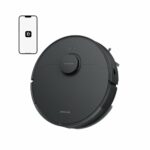
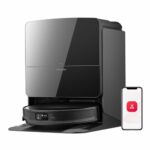
The Roborock Q7 L5 or BF lacks a self-emptying base, requiring manual emptying of the robot's dust container after each clean or every few uses. It also doesn't offer mop washing functions.
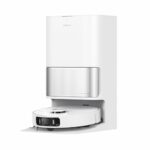
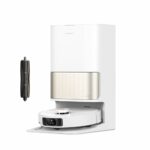
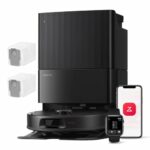
The Xiaomi Robot Vacuum 5 Pro integrates a complete multifunction base: self-emptying with a 2.5-litre bag, mop washing with hot water, drying with hot air and self-cleaning of the washing tray. This base completely transforms the user experience, especially in mopping.
The dimensions of the bases reflect these differences. The Xiaomi's base measures 360 x 572 x 470 mm, taking up more space but integrating all functions. The Dreame's reaches 298 x 452 x 440 mm, whilst the Roborock's is minimal at 160 x 101 x 70 mm, being only a charging base.
Dimensions
The Xiaomi Robot Vacuum 5 Pro, at 88 mm in height, accesses under furniture where the other two can't reach. The Dreame measures 96.8 mm and the Roborock 99 mm. Those few millimetres can mark the difference between cleaning under beds or sofas or having to move the furniture.
In diameter, the Dreame and the Xiaomi share 350 mm, whilst the Roborock is slightly more compact at 325 mm. This smaller circumference can facilitate navigation in very tight spaces.
Real-world user experience
For large homes, the Dreame D20 Pro Plus offers the greatest autonomy with its 285 minutes and a 5-litre self-emptying bag. It's ideal if you prioritise not having to intervene for weeks. However, mopping with a static mop without automatic washing limits its effectiveness in this task.
The Roborock Q7 L5 or BF fits better in small or medium flats where the lower suction power and absence of a self-emptying base aren't an inconvenience. It requires more manual maintenance, both emptying the dust container and cleaning the mops after each use.
The Xiaomi Robot Vacuum 5 Pro stands out in homes seeking professional mopping without effort. The multifunction base with mop washing and drying, combined with the highest suction power on the market, make it the most complete option. The AI camera is especially useful in houses with young children or pets, where there are usually toys or objects scattered on the floor.
For households with pets, both the Dreame and the Xiaomi offer anti-tangle brushes that reduce maintenance. The Xiaomi's greater power helps extract hair embedded in carpets or upholstery. The Roborock, with its traditional bristle brush, requires more frequent cleaning if you live with animals.
The Xiaomi's reduced height especially benefits those who have low furniture. Being able to clean under beds, sofas or wardrobes without moving them represents a considerable saving of time and effort.
Conclusion: Which to choose?
Choose the Dreame D20 Pro Plus if you're looking for maximum autonomy and minimum maintenance in vacuuming. Its 285-minute battery and 5-litre bag allow you to forget about the robot for weeks. Ideal for large homes where mopping isn't a priority or you prefer to mop manually. The relationship between autonomy and self-emptying capacity is its greatest strength.
Choose the Roborock Q7 L5 or BF if you have a small or medium flat and don't mind manually emptying the dust container and cleaning the mops after each use. Its compact size and absence of a bulky base save space. It works well as a basic daily maintenance robot without great demands for power or autonomy.
Choose the Xiaomi Robot Vacuum 5 Pro if you need the most complete solution on the market. Its 20,000 Pa power, extendable rotating mops, multifunction base with automatic washing and drying, AI camera and reduced height make it the most advanced robot in this robot vacuum comparison. Perfect for large homes with pets, children, multiple floor types and where professional mopping without manual intervention is valued. The initial investment is higher, but the user experience and results justify the difference.