✨ VS Analyses · VacuumSpain comparison technology. Explanation created with AI from verified technical data.
Introduction
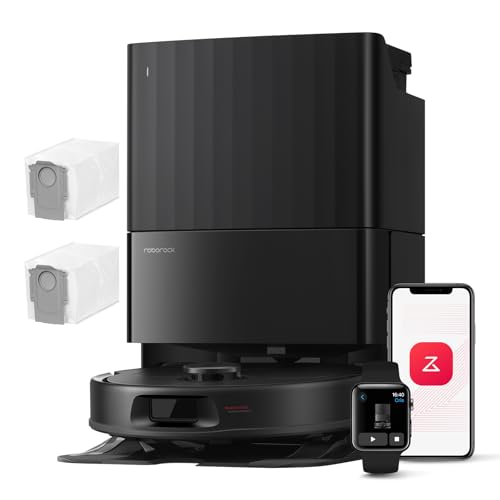
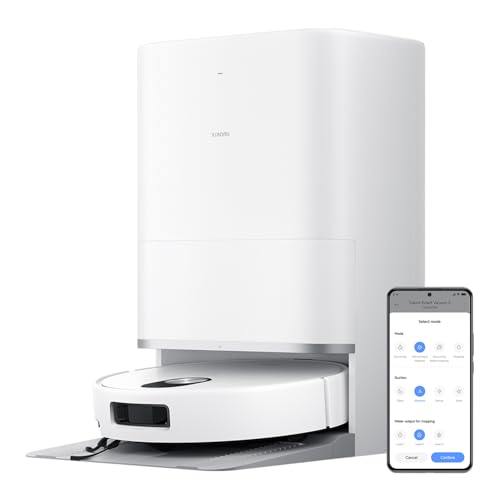
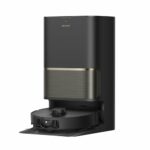
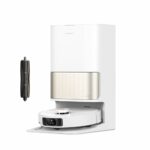
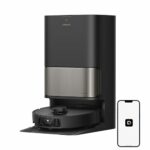
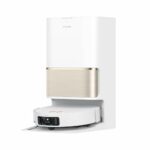
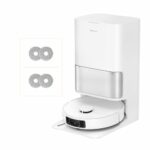
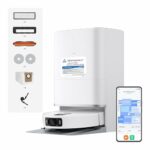
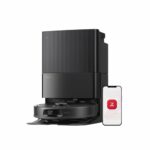
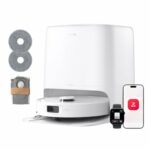
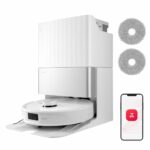
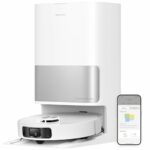
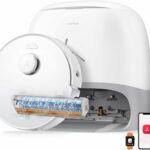
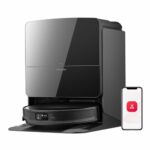
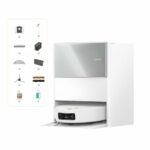
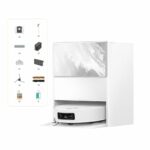
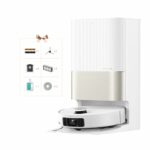
The Roborock QV 35A and the Xiaomi Robot Vacuum 5 are two recently launched propositions in the 2025 market that share the same base manufacturer —Dreame produces many of Xiaomi's devices— but target different segments. The former represents Roborock's entry-level line, with simple and effective solutions. The latter opts for more advanced features, with greater suction power and additional functions that set it apart on paper.
We're talking about two robots with a multifunction base that wash and dry the mops automatically, which guarantees more effective mopping than basic models. Both use laser navigation and feature obstacle avoidance systems, albeit with different approaches. The choice between one or the other will depend on your home's real needs: whether you're looking for extended autonomy or maximum power, if you need to reach corners better, or if you prefer a lower robot that can slip under furniture.
Power and Suction
The most striking difference lies in suction power. The Xiaomi Robot Vacuum 5 reaches 20000 Pa, a figure that places it in the current high-end range. The Roborock QV 35A stays at 8000 Pa, sufficient for daily use in homes without thick carpets but noticeably lower. In practice, this means the Xiaomi can better tackle long-pile carpets, ingrained dirt, or heavier debris.
The type of brush also varies. The Roborock mounts a simple brush, whilst the Xiaomi is equipped with the TriCut 3.0 system with anti-tangle technology already installed. This design combines bristles with blades that cut hair and fibres, reducing tangles and facilitating maintenance. If you live with pets or long hair, the TriCut makes a real difference.
The side brush also plays a different role in each model. The Xiaomi incorporates an extendable side brush, which deploys to better sweep corners and edges. The Roborock doesn't have this function. Both feature an anti-tangle side brush, but neither offers side brush lifting during mopping.
Mopping
Both robots mop with two rotating mops, an effective system that allows actively scrubbing the floor rather than simply dragging it. The multifunction base in both cases washes the mops during the cleaning process and dries them upon completion, preventing bad odours.
The difference lies in temperature. The Xiaomi Robot Vacuum 5 washes the mops with hot water at 80°C and dries them with hot air, which improves the removal of grease and bacteria, as well as speeding up drying. The Roborock QV 35A uses cold water for washing and cold air for drying. This can be particularly noticeable in kitchens or areas with stickier dirt.
The Xiaomi adds two more advantages: extendable mop for edges and mop lifting up to 15 mm. The Roborock lifts the mops 10 mm. Those extra 5 mm allow the Xiaomi to climb medium-pile carpets without wetting them. The Xiaomi's extendable mop allows it to better reach skirting boards and corners, something the Roborock cannot do.
Neither of them automatically removes the mops at the base nor detects dirt on the floor to go over particularly dirty areas again.
Navigation System
The Roborock QV 35A uses a traditional lidar 3.0 turret, visible on the top of the robot. The Xiaomi Robot Vacuum 5 opts for a retractable lidar, which hides when not in use and contributes to reducing the robot's overall height.
The Xiaomi also incorporates a front 3D laser sensor that improves detection of obstacles at floor level. The Roborock doesn't have this additional sensor. Both feature obstacle avoidance systems, but the Xiaomi adds an extra layer of precision.
Both models offer intelligent cleaning with AI. Roborock calls it SmartPlan, although the implementation details aren't specified. Neither includes a front camera with AI, pet recognition, curtain detection, nor remote camera access. They don't have LEDs for night vision either.
Autonomy and Battery
Here the Roborock QV 35A takes the lead. With 180 minutes of autonomy compared to the Xiaomi's 140, it can cover larger surfaces in a single run. Both mount 5200 mAh batteries, so the difference comes from energy consumption: the Xiaomi uses more energy due to its greater suction power.
For homes over 150 m², those extra 40 minutes can prevent the robot from having to return to the base to recharge mid-clean. In smaller flats, the Xiaomi's autonomy is more than sufficient.
Smart Functions
Both robots can overcome obstacles up to 20 mm in height, which allows them to pass standard thresholds and small level changes without problems. Neither includes a robotic arm nor its own integrated voice assistant.
Multifunction Cleaning Base
Both bases are multifunction: they auto-empty dust, wash and dry the mops. The Roborock QV 35A has a 2.7-litre dust bag, slightly larger than the Xiaomi's 2.5 litres. In clean water tanks they're tied at 4 litres, but the Xiaomi has a 3.8-litre dirty water tank compared to the Roborock's 3.5 litres.
The important difference lies in the washing tray self-cleaning. The Xiaomi Robot Vacuum 5 includes it as standard: the base cleans itself automatically to prevent dirt accumulation and bad odours. The Roborock QV 35A doesn't have this function, which requires manually cleaning the tray with some frequency.
Neither offers UV disinfection, detergent tank, nor integrated plumbing connection or via optional kit.
Dimensions
The Xiaomi Robot Vacuum 5 measures 88 mm in height, compared to the Roborock QV 35A's 96.5 mm. That 8.5 mm difference can be decisive if you have low furniture, sofas, or beds with little clearance. The diameter is practically identical: 350 mm for the Xiaomi, 353 mm for the Roborock.
As for the bases, the Roborock's is more compact in width (340 mm compared to 360 mm) and depth (487 mm compared to 470 mm), but also lower (521 mm compared to 572 mm). The Xiaomi's takes up slightly more space in height, although the difference isn't usually critical.
Real-World User Experience
The Xiaomi Robot Vacuum 5 is designed for those seeking complete features: high power, extendable brushes for corners, hot water for mop washing, and tray self-cleaning. It's especially interesting in homes with pets thanks to the TriCut anti-tangle brush, and its lower height allows it to slip under more furniture. The 3D laser sensor improves navigation in complex environments.
The Roborock QV 35A stands out for its superior autonomy, ideal for large homes where the robot needs to cover more metres without recharging. Its base is somewhat more compact and the dust bag slightly larger. However, the lower suction power and absence of extendable side brush or extendable mop make it less versatile in corners and edges.
On hard floors and parquet, both work well. On medium or long-pile carpets, the Xiaomi has the advantage due to power and mop lifting. For simple maintenance, the Xiaomi also wins thanks to tray self-cleaning and the standard anti-tangle brush.
Conclusion: Which One to Choose?
Choose the Roborock QV 35A if: you live in a large house where the 180-minute autonomy is key, you prefer a somewhat more compact base, and you don't need extreme power or advanced features such as extendable brushes. It's a solid option for daily maintenance in homes without thick carpets or pets that shed a lot of hair.
Choose the Xiaomi Robot Vacuum 5 if: you're looking for the best robot vacuum 2025 in terms of features-to-price ratio, you need high suction power for carpets or difficult dirt, you have pets and value the TriCut anti-tangle brush, you want to better reach corners and edges with extendable brush and mop, you prefer hot water for mop washing and tray self-cleaning to reduce maintenance, or you need the robot to pass under low furniture thanks to its 88 mm height.