✨ VS Analyses · VacuumSpain comparison technology. Explanation created with AI from verified technical data.
Introduction
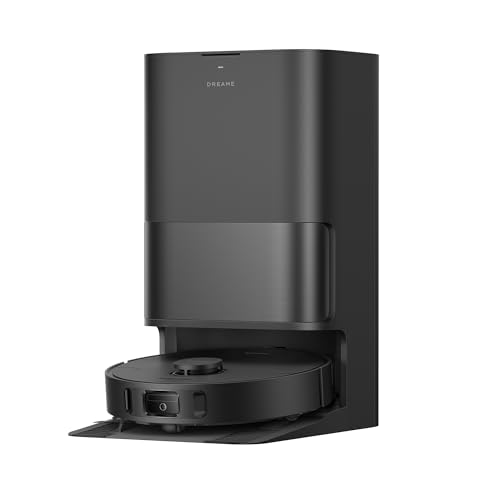
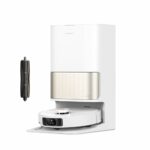
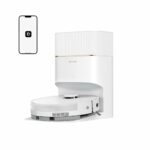
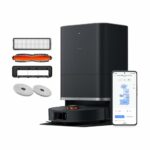
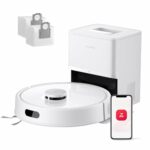
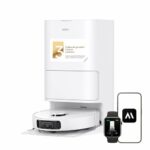
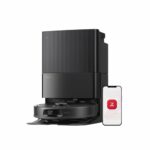
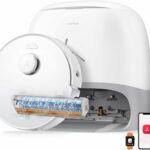
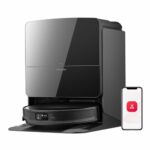
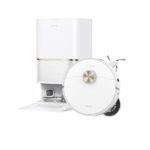
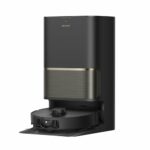
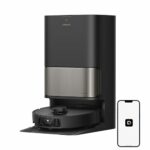
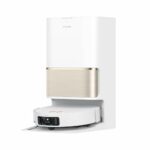
The Dreame L10s Ultra Gen 2 and the Dreame L40 Ultra A represent two distinct generations within Dreame's high-end range of robot vacuum cleaners. The former arrived in 2024 as a complete proposition with a multifunctional base, whilst the latter, launched in 2026, incorporates substantial improvements in power and intelligent cleaning system. Both are designed for homes seeking to fully automate both vacuuming and mopping, with bases that wash and dry the mops automatically.
The differences between these models go beyond the years that separate them. Whilst the L10s Ultra Gen 2 positions itself as a balanced unit for homes with pets, the L40 Ultra A makes a leap in suction power and adds features that improve base maintenance.
Power and Suction
Suction power marks a notable difference between both models. The Dreame L10s Ultra Gen 2 offers 10,000 Pa, a competent figure for most surfaces and everyday dirt. However, the Dreame L40 Ultra A multiplies that capacity up to 24,000 Pa, which translates into superior performance on carpets, tile joints and in picking up heavier or embedded particles.
The brushing system also evolves. The L10s Ultra Gen 2 mounts a simple silicone brush, effective at reducing hair tangles but without additional elements to cut them. The L40 Ultra A incorporates the TriCut 3.0 system, which combines bristles with blades designed to cut long hairs before they wrap around. In homes with long-haired pets, this difference can be noticed in the weekly brush maintenance.
Additionally, the side brush of the L40 Ultra A includes anti-tangle technology, something the previous model doesn't have. This helps keep the side free from hairs and fibres, especially in corners where they tend to accumulate. Neither has an extendable nor liftable side brush, but both maintain the same basic perimeter sweeping configuration.
Mopping
Both robots use a system of two rotating mops that spin at 180 RPM, with extension via RoboSwing movement to better reach edges and slightly insert the mops under furniture overhangs. Mop lifting is identical in both: 10.5 mm, sufficient to pass over thin carpets without wetting them.
Mopping is carried out with cold water in both cases. There are no differences in water temperature during the floor cleaning process. Neither automatically removes the mops at the base when you only want to vacuum, something some users value to avoid dragging them unnecessarily.
Regarding mop washing, both bases do it with cold water and dry with hot air at 45°C, which speeds up the process and reduces bad odours. The important difference appears in the wash tray self-cleaning: the L40 Ultra A incorporates a third-generation system that automatically cleans the tray where the mops are washed, whilst the L10s Ultra Gen 2 doesn't have this function. In practice, this means less manual intervention in base maintenance with the more recent model.
Navigation System
Both units share a 360° LiDAR turret for precise mapping and navigation, along with a front 3D laser sensor that detects obstacles in real time. They don't incorporate a front camera with artificial intelligence nor LED for night vision, but they do have obstacle avoidance capability.
The relevant difference lies in specific pet recognition. The Dreame L10s Ultra Gen 2 includes this function, which allows it to identify domestic animals and adjust its behaviour to avoid disturbing them or dodge them more carefully. The L40 Ultra A, curiously, doesn't have this feature despite being the more modern model.
Intelligent cleaning also varies: the L10s Ultra Gen 2 uses CleanGenius 2.0, whilst the L40 Ultra A incorporates CleanGenius 3.0. This evolution of the algorithm improves route planning and adaptation to different types of dirt, although both systems work without requiring user intervention.
Autonomy and Battery
Battery capacity is identical in both: 5,200 mAh. The declared autonomy is practically the same, with 240 minutes in the L10s Ultra Gen 2 and 230 in the L40 Ultra A. That small difference of 10 minutes may be due to the higher energy consumption of the more powerful motor in the recent model, but in practice it's irrelevant for most homes.
With these figures, either can cover large surfaces in a single charge, and both return automatically to the base if they need to recharge before finishing.
Smart Features
The ability to overcome obstacles is 20 mm in both robots, which allows them to navigate thick cables, door thresholds or small level changes without problems. Neither includes a robotic arm nor its own voice assistant, but both are compatible with external assistants such as Alexa or Google Home for voice control.
Multifunctional Cleaning Base
The multifunctional bases of these robots share many characteristics: auto-emptying of the dust container, mop washing with cold water, drying with hot air at 45°C, 3.2-litre dust bag and clean water tanks of 4.5 litres and dirty water of 4 litres. Both can be connected to plumbing via a kit purchased separately, but neither comes with the connection integrated as standard.
The big difference lies in the wash tray self-cleaning, present only in the L40 Ultra A. This third-generation system automatically cleans the area where the mops are washed, preventing dirt accumulation and reducing manual maintenance. This is worth considering if you're looking for the greatest possible autonomy without intervention.
The detergent tank also changes: the L10s Ultra Gen 2 includes it as standard, whilst in the L40 Ultra A it's optional and must be purchased separately. For those wanting to use cleaning product during mop washing, the 2024 model has it easier from day one.
Dimensions
The robot size is identical: 350 mm in diameter and 97 mm in height. This height measurement allows them to slip under most sofas and beds without problems. The bases are also practically the same, with 340 mm width, around 590 mm height and about 457 mm depth. The small variations of millimetres don't affect the space they occupy in practice.
Real-World Usage Experience
For homes with pets, the Dreame L10s Ultra Gen 2 has an advantage thanks to specific animal recognition and the silicone brush that reduces tangles. However, the L40 Ultra A compensates with its TriCut 3.0 brush and anti-tangle side brush, more effective at cutting long hairs before they wrap around. The extra power of the L40 Ultra A also helps pick up more embedded hair in carpets.
In large homes, both have sufficient autonomy and bases with generous tanks. The L40 Ultra A requires less base maintenance thanks to the tray self-cleaning, something noticeable when the robot mops frequently. If you use cleaning product regularly, the L10s Ultra Gen 2 has it integrated, whilst with the other model you'll have to purchase it separately.
The 24,000 Pa power of the L40 Ultra A makes a difference on floors with deep joints, medium-pile carpets or when there's sand and heavier dirt. The 2024 model, with its 10,000 Pa, works well for daily maintenance but may fall somewhat short in more demanding cleans.
Conclusion: Which to Choose?
Choose the Dreame L10s Ultra Gen 2 if you have pets and value specific recognition to avoid disturbing them, want the detergent tank integrated from the start, or are looking for a balanced Dreame robot vacuum cleaner for daily maintenance without needing maximum power. It's a solid option for medium-sized homes where 10,000 Pa power covers usual needs.
Choose the Dreame L40 Ultra A if you need maximum suction power for carpets, floors with joints or more embedded dirt, value the lower maintenance offered by third-generation tray self-cleaning, or are looking for the best robot vacuum cleaner within the Dreame range with the latest improvements in brushing and intelligent cleaning. The TriCut 3.0 system and anti-tangle side brush make it especially suitable for homes with long-haired pets, although it doesn't have specific animal recognition. If you already have cleaning product or don't use it regularly, the absence of the integrated tank won't be a problem.