✨ VS Analyze · VacuumSpain comparison technology. AI-generated explanation based on verified technical data.
Introduction
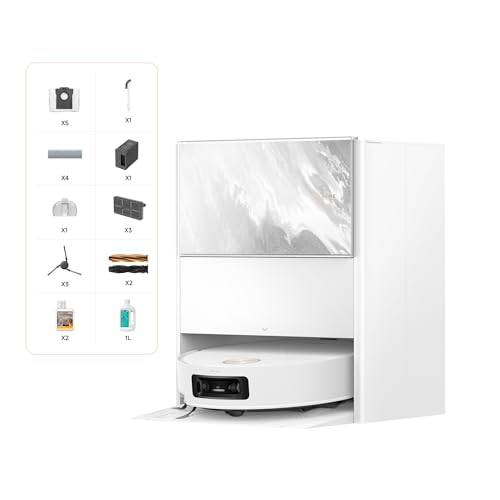
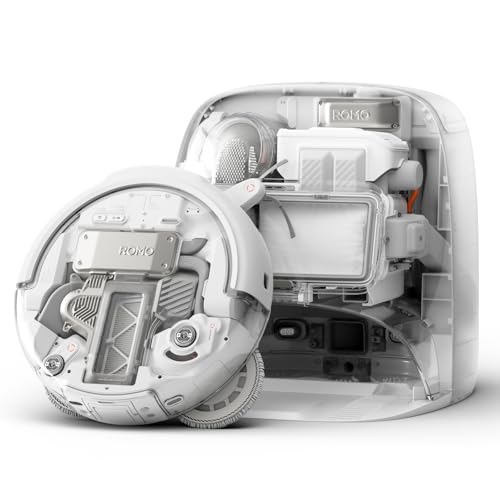
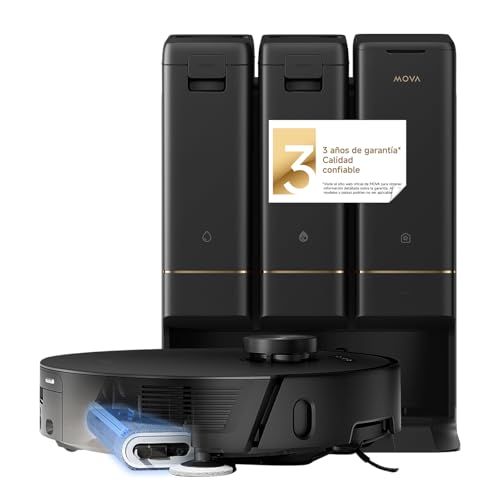
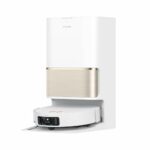
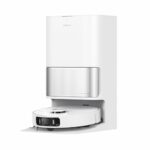
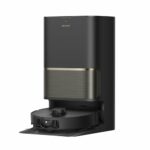
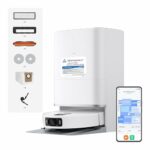
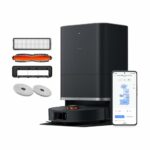
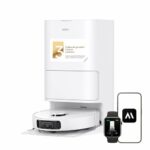
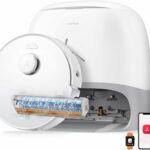
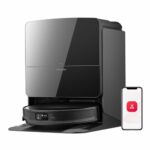
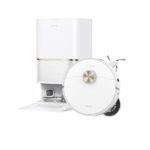
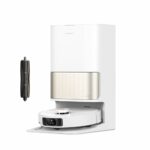
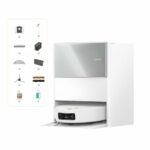
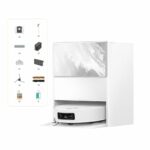
The Dreame Aqua10 Ultra Track Complete, DJI Romo P (Robot y Base Transparente), and Mova Z50 Ultra represent three distinct approaches to premium robot vacuum cleaning released in 2025. Each model brings substantial suction power and comprehensive mopping capabilities, though they differ significantly in their technical implementation and feature sets.
The Dreame and DJI models share identical 25,000 Pa suction power, whilst the Mova Z50 Ultra operates at 19,000 Pa. All three incorporate multifunctional bases with automatic emptying, mop washing, and drying systems. These are designed for households seeking minimal intervention cleaning, particularly those with mixed flooring types and pets. The variations in brush design, mopping systems, and navigation technology make each suited to slightly different priorities.
Suction Power and Brushing
The Dreame Aqua10 Ultra Track Complete and DJI Romo P match each other with 25,000 Pa suction, whilst the Mova Z50 Ultra delivers 19,000 Pa. This difference becomes noticeable when dealing with deeply embedded dirt in carpets or textured flooring, where the higher suction provides more thorough extraction.
Brush configurations reveal distinct philosophies. The Dreame employs a dual brush system designed to maximise debris collection, the DJI features a Divide brush that channels hair towards the central suction point, and the Mova incorporates TriCut 3.0 technology combining bristles with cutting blades to slice through tangled hair. All three systems elevate the main brush during mopping to prevent cross-contamination between wet and dry cleaning.
Side brush implementation shows more variation. The Dreame and Mova both elevate their side brushes when mopping, preventing them from scattering water or creating streaks. The DJI Romo P lacks this elevation feature, though it compensates with dual side brushes that work in tandem. All three models extend their side brushes to reach into corners more effectively, and incorporate anti-tangle designs to reduce hair wrap.
Mopping Systems
The mopping approaches diverge significantly. The Dreame Aqua10 Ultra Track Complete and Mova Z50 Ultra both use wide roller systems that provide consistent contact across larger surface areas. The DJI Romo P takes a different route with dual rotating mops that apply targeted pressure and can navigate uneven surfaces more adaptively.
Edge coverage benefits from extension mechanisms in all three. The Dreame and DJI extend their mopping components to reach skirting boards, whilst the Mova deploys a mini side mop for border cleaning. Mop elevation capabilities ensure carpets remain dry: the Dreame lifts between 7-17 mm, the Mova raises 7 mm, and the DJI also elevates though specific measurements weren't detailed.
Water temperature makes a substantial difference to cleaning effectiveness. The Dreame and Mova heat the mopping water, which helps dissolve grease and stubborn marks more efficiently. The DJI Romo P uses cold water throughout, relying instead on mechanical action and detergent. For mop maintenance, the Dreame washes mops with hot water and dries them at 50°C, the Mova washes with hot water and dries with warm air, whilst the DJI washes with cold water and dries with warm air.
All three detect dirt on both mops and floors, triggering additional passes or mop cleaning cycles when necessary. This ensures consistently clean results without manual intervention.
Navigation Systems
Navigation technology shows sophistication across the range. The Dreame features retractable LiDAR, the DJI uses solid-state LiDAR, and the Mova incorporates a traditional LiDAR turret. These systems map environments accurately, though the retractable design on the Dreame contributes to its lower profile.
Camera-based AI enhances obstacle recognition substantially. The Dreame and Mova both employ dual RGB cameras for comprehensive visual processing, whilst the DJI also includes camera-based intelligence. The Dreame recognises 280 different obstacle types, the Mova identifies 160, and the DJI's specific count wasn't disclosed. All three incorporate 3D laser sensors frontally for precise proximity detection.
Pet owners benefit from specific recognition capabilities in the Dreame and Mova, which can identify animals and adjust cleaning patterns accordingly. The Dreame also detects curtains to avoid entanglement. All three provide remote camera access through their apps and include LED illumination for low-light navigation.
Processing power differs notably. The Dreame runs AI Sage 15.0 with an 8-core processor, enabling its CleanGenius AI cleaning intelligence. The Mova also incorporates CleanGenius AI, whilst the DJI's specific processor details weren't specified though it clearly supports advanced AI functions.
Battery and Autonomy
Battery capacity favours extended operation in the Dreame and Mova, both equipped with 6,400 mAh cells. The DJI Romo P contains a 5,000 mAh battery, which delivers 180 minutes of runtime. This translates to practical differences in larger homes where the DJI may require mid-clean recharging more frequently than its competitors.
The larger batteries in the Dreame and Mova provide headroom for intensive cleaning sessions, particularly useful when combining maximum suction with active mopping across substantial floor areas.
Smart Features
Obstacle climbing varies across the models. The Dreame handles simple steps, the DJI manages 20 mm obstacles, and the Mova clears 22 mm. For homes with raised door thresholds or transitions between different flooring levels, the Mova's superior climbing ability proves advantageous.
Voice assistance integration differs. The Dreame and Mova include their own proprietary voice assistants alongside external compatibility with Alexa and Google Home. The DJI supports external voice assistants, though whether it includes its own wasn't specified. All three connect to standard smart home ecosystems.
Multifunctional Base Station
All three bases handle automatic dust emptying, mop washing, and drying, but implementation details matter. The DJI Romo P distinguishes itself with automatic tray cleaning using spray nozzles, maintaining the washing area without manual intervention. The Dreame and Mova require periodic manual tray cleaning.
UV disinfection features in the Dreame and DJI bases, sanitising the dust collection area to reduce bacterial growth. The Mova omits this feature. Detergent dispensing comes standard across all three, with the Dreame and DJI offering dual detergent tanks for different cleaning solutions or floor types, whilst the Mova provides a single tank.
Water capacity shows variation. The Mova leads with a 4.5-litre clean water tank and 4-litre dirty water tank. The Dreame and DJI both hold 4 litres of clean water, with the Dreame storing 3.5 litres of dirty water and the DJI 3.2 litres. For larger properties, the Mova's extra capacity means fewer refills during extended cleaning sessions.
Dust storage differs substantially. The Mova's 4-litre bag requires emptying less frequently than the Dreame's 3.2-litre or DJI's 2.4-litre capacity. In practice, this means the DJI needs bag changes roughly twice as often as the Mova in similar usage conditions.
The Dreame offers an optional plumbing connection kit for permanent water supply and drainage, eliminating tank refilling and emptying entirely. Neither the DJI nor Mova provide this option.
Physical Dimensions
Robot height determines clearance under furniture. The Dreame measures 97.5 mm tall, the DJI 98 mm, and the Mova 111 mm. The Dreame and DJI slip beneath most standard sofas and bed frames, whilst the Mova's additional height may restrict access to lower-clearance spaces. Diameter remains virtually identical across all three at approximately 350 mm.
Base station footprints vary. The Dreame occupies 420 mm width, 500 mm height, and 440 mm depth. The DJI measures 453 mm wide, 440 mm tall, and 425 mm deep. The Mova requires 390 mm width, 545 mm height, and 463.3 mm depth. The Mova's narrower width but greater height suits different alcove configurations than the DJI's wider, lower profile.
Real-World Performance
For homes with multiple pets, the Dreame and Mova's heated water mopping and specific pet recognition provide advantages in managing hair and maintaining hygiene. The Dreame's dual brush system and higher suction prove particularly effective on carpeted areas where pet hair embeds deeply.
Larger properties benefit from the extended battery capacity in the Dreame and Mova, reducing interruptions during whole-home cleaning cycles. The Mova's superior obstacle climbing handles varied flooring transitions more confidently, whilst its lower profile on the Dreame and DJI enables more comprehensive cleaning beneath furniture.
Maintenance requirements differ practically. The DJI's automatic tray cleaning reduces hands-on upkeep, though its smaller dust bag requires more frequent changes. The Dreame's optional plumbing connection eliminates the most repetitive maintenance tasks entirely for those willing to install it. The Mova's larger tanks and dust bag reduce servicing frequency, appealing to those seeking maximum autonomy between interventions.
Mopping performance varies with water temperature. The Dreame and Mova's heated systems tackle kitchen grease and dried spills more effectively than the DJI's cold water approach, though the DJI's dual rotating mops provide excellent agitation on textured tiles.
Conclusion: Which to Choose?
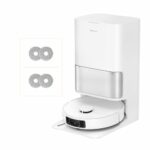
Choose the Dreame Aqua10 Ultra Track Complete if maximum suction power matters, you want the option to connect to plumbing for completely hands-free operation, and you need the lowest profile to clean beneath extensive low-clearance furniture. The dual brush system and hot water mopping make it particularly suitable for homes with pets and mixed flooring including carpets.
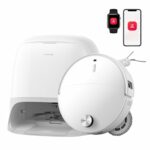
Choose the DJI Romo P (Robot y Base Transparente) if you value the self-cleaning base tray feature and prefer the dual rotating mop system. The solid-state LiDAR and transparent base design appeal to those interested in DJI's engineering approach. It suits medium-sized homes where the smaller battery and dust capacity remain adequate, and where furniture clearance exceeds 98 mm.
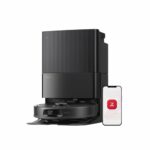
Choose the Mova Z50 Ultra if superior obstacle climbing capability matters for your flooring transitions, you prefer the largest water and dust capacities to minimise refilling, and you don't require UV disinfection. The TriCut 3.0 brush excels with tangled hair, making it excellent for pet owners willing to accept the taller profile in exchange for extended autonomy and substantial tank capacity.