✨ VS Analyses · VacuumSpain comparison technology. Explanation created with AI from verified technical data.
Introduction
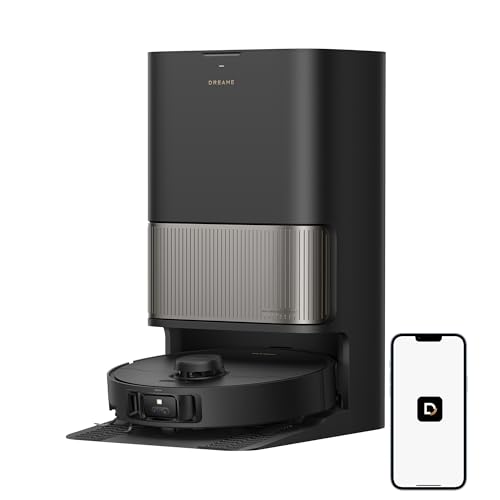
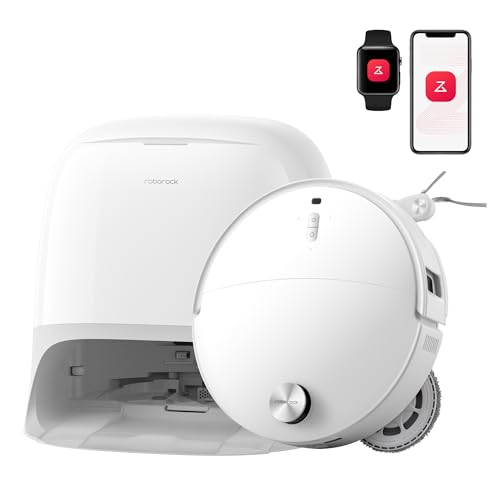
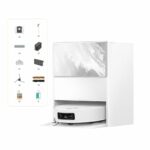
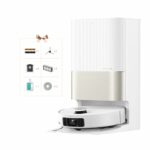
The Dreame L40s Pro Ultra and the Roborock Qrevo Curv 2 Pro represent two of the most advanced robot vacuum cleaners launched in 2025. These are premium models equipped with multifunctional bases that handle everything from self-emptying to mop washing and drying, making them suitable for users who want minimal intervention in their cleaning routine.
The Dreame model focuses on advanced features like hot water mop washing and a detergent dispenser, whilst Roborock prioritises raw power and extended battery life. Both are designed for medium to large homes with mixed flooring, though they take slightly different approaches to achieving thorough cleaning results.
Power and Suction
Suction power shows a clear advantage for the Roborock Qrevo Curv 2 Pro at 25,000 Pa, significantly outpacing the Dreame L40s Pro Ultra's 19,000 Pa. In practice, this difference becomes noticeable on carpets and when dealing with embedded dirt or pet hair in textile fibres.
The brush systems differ in design philosophy. Dreame employs its HyperStream dual-brush configuration, which anchors two brushes at one end to minimise hair tangles. Roborock counters with the DuoDivide anti-tangle system that channels hair towards the central suction point. Both approaches effectively reduce maintenance time, though the mechanisms work differently.
When mopping begins, the Dreame L40s Pro Ultra elevates its side brush to prevent interference with wet floors. The Roborock doesn't offer this feature, though it does extend its side brush to reach corners more effectively—a capability the Dreame also shares. The main brush lifts on both models during mopping to avoid dragging dirt across damp surfaces.
Mopping
Both models use dual rotating mops that spin to scrub floors rather than simply dragging a damp cloth behind them. The Dreame extends its mops with a swinging motion that pushes them slightly under furniture edges and skirting boards. Roborock also extends its mops for edge cleaning but without the additional swinging movement.
Mop elevation differs between the two. The Dreame lifts its mops 10.5 mm when transitioning to carpets or returning to the base. The Roborock offers a variable range from 7 to 17 mm, providing more clearance when needed. This matters particularly in homes with thicker rugs.
The bases wash mops with hot water on both models, maintaining hygiene throughout the cleaning cycle. Hot air drying follows, preventing odours and bacterial growth. The Dreame's base includes a third-generation self-cleaning tray system, matched by Roborock's 3.0 version of the same technology.
A notable difference emerges with the detergent dispenser. The Dreame L40s Pro Ultra incorporates a dedicated tank for cleaning solution, automatically dispensing it during mop washing. The Roborock lacks this feature entirely. For households wanting automated detergent use, this becomes a deciding factor.
Both robots detect dirty mops and soiled floors, triggering additional cleaning passes when necessary. They also automatically remove their mops at the base when vacuuming-only tasks are scheduled.
Navigation System
Navigation technology relies on LiDAR in both cases, though implementation varies. The Dreame uses a third-generation LiDAR turret, whilst Roborock employs a retractable LiDAR system that lowers the robot's overall height. This retractable design contributes directly to the Qrevo Curv 2 Pro's remarkably low 79.8 mm profile.
Dual AI cameras feature on both models, working alongside 3D laser sensors to identify and avoid obstacles. The Roborock recognises up to 200 different objects compared to 180 on the Dreame. In real-world terms, this means slightly better identification of unusual items left on floors.
Pet recognition works on both robots, as does LED lighting for night-time navigation and remote camera access through the mobile app. The Dreame adds curtain detection to prevent tangling with hanging fabrics—something the Roborock doesn't specifically address.
AI-driven cleaning strategies differ in name but serve similar purposes. Dreame's CleanGenius system and Roborock's SmartPlan 3.0 both analyse room layouts and adjust cleaning patterns accordingly, including spot detection for targeted scrubbing.
Battery and Autonomy
The Roborock Qrevo Curv 2 Pro houses a 6,400 mAh battery delivering up to 290 minutes of runtime. The Dreame L40s Pro Ultra contains a smaller 5,200 mAh cell with 220 minutes of autonomy. For larger properties, this 70-minute difference can mean the distinction between completing a full clean in one session or requiring a mid-clean recharge.
Neither manufacturer specifies charging times in the available data, though larger batteries typically require longer charging periods. The extended runtime on the Roborock makes it better suited to homes exceeding 200 square metres where continuous operation matters.
Smart Functions
Obstacle climbing capabilities reach 4 cm on the Dreame and a slightly lower threshold on the Roborock, though both handle standard door thresholds and low-pile carpet transitions without issue. This becomes relevant in homes with uneven flooring or raised room dividers.
Both models include their own voice assistants in addition to compatibility with Alexa and Google Home. This allows for direct voice commands without requiring third-party integrations, though the effectiveness of proprietary assistants varies by language and region.
Multifunctional Base
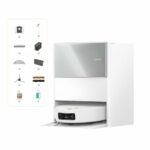
Base functionality covers self-emptying, mop washing with hot water, and hot air drying on both models. The third-generation self-cleaning tray systems maintain the bases themselves with minimal user intervention.
Tank capacities favour the Dreame in several areas. Its dust bag holds 3.2 litres against 2.5 litres in the Roborock base. Clean water capacity reaches 4.5 litres on the Dreame versus 4 litres on the Qrevo Curv 2 Pro. Dirty water storage measures 4 litres and 3 litres respectively. These differences mean less frequent emptying and refilling with the Dreame, particularly beneficial in larger homes.
The Dreame offers an optional plumbing connection kit available for separate purchase, allowing permanent water supply and drainage connections. The Roborock doesn't provide this option at all. Whilst this remains an add-on rather than a standard feature, it appeals to users wanting a completely hands-free setup.
Neither base includes UV disinfection or automatic mop pad replacement systems.
Dimensions
Height becomes the most striking dimensional difference. The Roborock Qrevo Curv 2 Pro measures just 79.8 mm tall, enabling it to slip under furniture that the 103.8 mm Dreame L40s Pro Ultra cannot access. This 24 mm difference determines whether a robot can clean beneath low-clearance beds, sofas, and cabinets.
Diameter measurements are nearly identical at 350 mm and 352 mm, so both navigate similar spaces with equal ease. The robot dust bins differ slightly—300 ml in the Dreame versus 245 ml in the Roborock—though this matters less given the self-emptying bases. Water tanks in the robots themselves hold 80 ml and 67 ml respectively.
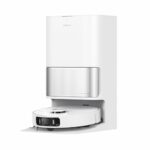
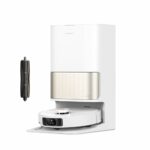
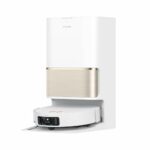
Base footprints diverge considerably. The Dreame base measures 340 mm wide, 590.5 mm tall, and 456.7 mm deep. The Roborock base forms a more compact cube at 450 mm in all dimensions. The Dreame's taller, narrower profile may fit better in certain spaces, whilst the Roborock's square footprint suits corner placement.
Real-World Experience
For homes with low-clearance furniture, the Roborock's 79.8 mm height provides access to spaces the Dreame simply cannot reach. This becomes particularly relevant with modern platform beds and minimalist furniture designs that often sit 8-10 cm off the floor.
Pet owners benefit from the anti-tangle brush systems on both models, though the Roborock's higher suction power extracts more embedded hair from carpets and rugs. The Dreame's side brush elevation during mopping prevents wet hair from being dragged across floors—a small but useful detail.
Larger properties favour the Roborock's extended battery life and higher suction, ensuring complete coverage without mid-clean charging stops. The Dreame's larger base tanks reduce maintenance frequency, which may offset the battery difference for some users.
The detergent dispenser on the Dreame automates one more aspect of the cleaning process, appealing to those who want absolute minimum intervention. Conversely, users who prefer manual control over cleaning solutions won't miss this feature on the Roborock.
Conclusion: Which to Choose?
Choose the Dreame L40s Pro Ultra if you want larger base tanks for less frequent maintenance, value the automated detergent dispenser, or plan to add the optional plumbing kit for permanent water connections. The side brush elevation during mopping and curtain detection add useful refinements. This model suits users prioritising convenience features and tank capacity over raw power.
Choose the Roborock Qrevo Curv 2 Pro if you need maximum suction power for deep carpet cleaning, require extended battery life for larger homes, or must access low-clearance furniture. The 79.8 mm height opens cleaning areas the Dreame cannot reach, whilst the 25,000 Pa suction handles demanding cleaning tasks more effectively. This model appeals to users with substantial floor areas, thick carpets, or furniture that sits close to the ground.