✨ VS Analyses · VacuumSpain comparison technology. Explanation created with AI from verified technical data.
Introduction
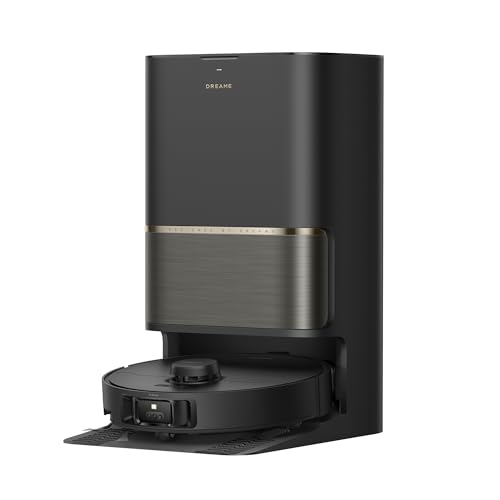
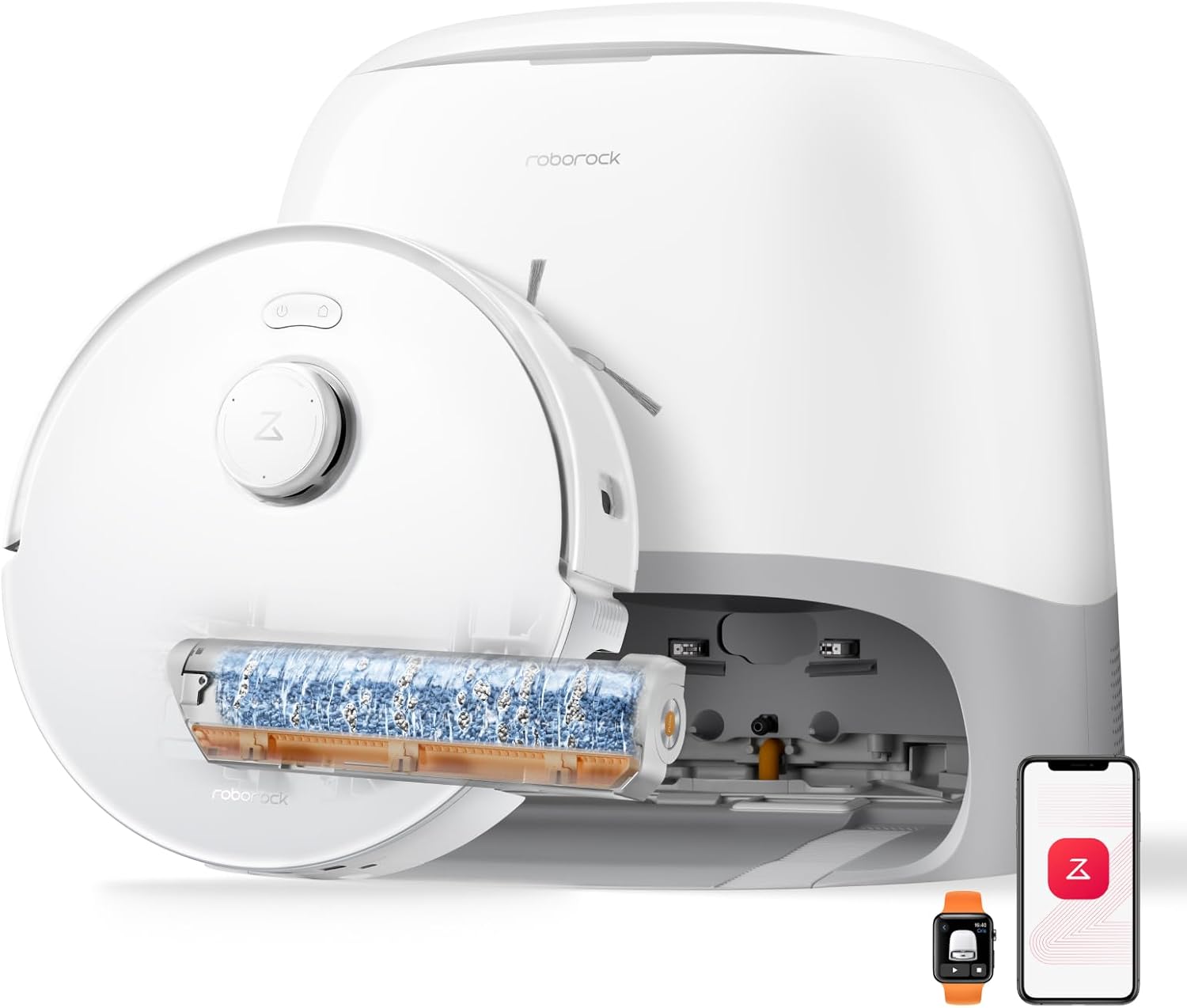
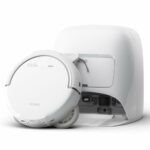
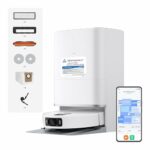
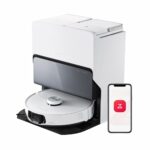
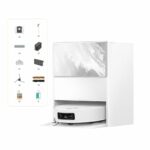
We're looking at three high-end robots launched between 2025 and 2026 that represent the best from two leading manufacturers. The Dreame Aqua 10 Ultra Roller and the Dreame L50s Pro Ultra share the same brand but different cleaning philosophies, whilst the Roborock Qrevo Curv 2 Flow arrives in February 2026 as a proposal from the world's leading brand. All three integrate a complete multifunctional base with auto-emptying, mop washing and drying, as well as advanced navigation systems with artificial intelligence.
The Aqua 10 Ultra Roller opts for a roller system for mopping with 12N of pressure, the L50s Pro Ultra uses traditional rotating mops with automatic detachment capability, and the Qrevo Curv 2 Flow features a 270 rpm roller. These units are designed for homes seeking total maintenance automation, with the capacity to manage large surfaces and multiple floor types.
Power and Suction
Both Dreame robots share the same suction power of 30,000 Pa, whilst the Roborock Qrevo Curv 2 Flow remains at 20,000 Pa. This 10,000 Pa difference can be particularly noticeable on medium or long pile carpets, where the capacity to extract embedded dirt is crucial.
Regarding the brushing system, we find three different approaches. The Aqua 10 Ultra Roller and the L50s Pro Ultra feature a dual HyperStream brush, Dreame's characteristic design that minimises hair tangles thanks to its single-end anchoring. The Roborock opts for its DuoDivide anti-tangle brush, which pushes hairs towards the central gap for direct suction. In practice, both systems work well with pets, although the DuoDivide has a reputation for requiring less manual maintenance.
All three units lift the main brush during mopping to avoid dragging wet dirt. The side brush also lifts on all three models, and additionally both Dreame units extend it to sweep corners better. This detail makes a difference in rooms with many corners or furniture against walls.
Mopping
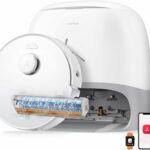
Here we find the most notable difference between the three robots. The Dreame Aqua 10 Ultra Roller uses a roller with 12N of pressure, the L50s Pro Ultra features two rotating mops, and the Roborock Qrevo Curv 2 Flow is equipped with a 270 rpm roller. Roller systems tend to be more effective on stuck-on stains because they maintain continuous contact with the floor, whilst rotating mops cover more lateral surface area.
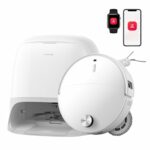
All three models extend the mops to reach edges, although the Dreame units add the Roboswing system that performs a lateral movement to get the mop under furniture overhangs. Mop lifting varies: 14 mm on the Aqua 10 Ultra Roller with additional roller retraction, 10.5 mm on the L50s Pro Ultra, and 15 mm on the Roborock with roller retraction. For short pile carpets, any of the three options works correctly.
An exclusive function of the L50s Pro Ultra is the automatic detachment of mops at the base when only vacuuming is needed. This avoids dragging dry mops across the floor and improves pure vacuuming efficiency. The other two models lift the mops but don't remove them completely.
All three robots detect dirt both on the mops and on the floor, adjusting passes and washes as needed. All wash the mops with hot water at the base, although none mops the floor with hot water from the robot's internal tank.
Navigation System
The Dreame Aqua 10 Ultra Roller features retractable LiDAR, whilst the L50s Pro Ultra and the Roborock Qrevo Curv 2 Flow use a traditional LiDAR turret. The retractable system reduces the robot's total height to 97.5 mm, a clear advantage for passing under low furniture. The L50s Pro Ultra measures 103.8 mm and the Roborock reaches 119 mm, the tallest of the three.
All three integrate dual RGB cameras with artificial intelligence for object recognition. The Aqua 10 Ultra Roller identifies up to 240 different obstacles, the L50s Pro Ultra recognises 220, and the Roborock 200. These numerical differences have relative impact in day-to-day use, as common household objects are covered by all three systems.
All include a front 3D laser sensor, LED for night vision and remote camera access from the mobile. Both Dreame models add specific curtain detection to avoid tangles, a function the Roborock doesn't specify. For homes with long curtains or nets reaching the floor, this is worth considering.
Battery Life and Battery
The Roborock Qrevo Curv 2 Flow stands out with 242 minutes of battery life thanks to its 5,200 mAh battery, sufficient for large surfaces in a single run. The Dreame Aqua 10 Ultra Roller offers 160 minutes with a 6,400 mAh battery, a figure that seems contradictory but is explained by the higher consumption of its pressure roller system and superior suction power.
The L50s Pro Ultra features a 5,200 mAh battery the same as the Roborock, although its battery life in minutes isn't specified. In homes of up to 150-180 square metres, any of the three completes cleaning without needing an intermediate recharge. For larger surfaces, the Roborock has a clear advantage.
Smart Functions
The ability to overcome obstacles shows important differences. The Roborock Qrevo Curv 2 Flow climbs steps of up to 20 mm directly. Both Dreame units overcome simple steps but without specifying exact height, which suggests similar or slightly lower capabilities. For homes with level changes between rooms or thick carpets, the Roborock offers greater assurance.
All three robots integrate their own voice assistant as well as compatibility with Alexa and Google Home. None features a robotic arm, a function that remains exclusive to very specific models on the market.
Multifunctional Cleaning Base
All three bases perform auto-emptying of the dust bin, mop washing with hot water and drying with hot air. The dust bag capacity is 3.2 litres on both Dreame units compared to 2.7 litres on the Roborock. This means emptying the bag every 60-70 days approximately on the Dreame units and every 50-55 days on the Roborock, assuming use in standard homes.
The clean water tanks are 4 litres on the Aqua 10 Ultra Roller, 4.5 litres on the L50s Pro Ultra and 4 litres on the Roborock. Dirty water is stored in 3.5-litre tanks on the Aqua 10 and the Roborock, and 4 litres on the L50s Pro Ultra. Minor differences that in practice mean refilling or emptying every 7-10 days depending on mopping frequency.
The Dreame Aqua 10 Ultra Roller incorporates a dual detergent tank, allowing the use of two different products depending on floor type or dirt level. The L50s Pro Ultra includes a single tank, and the Roborock Qrevo Curv 2 Flow doesn't integrate a detergent tank at all. For those who value this complete automation, the Dreame units have an advantage.
Only the L50s Pro Ultra specifies third-generation tray self-cleaning, a system that reduces the accumulation of residue and bad odours. Both Dreame models offer an optional plumbing connection kit that's purchased separately, an option not available for the Roborock.
Dimensions
The Dreame Aqua 10 Ultra Roller is the lowest at 97.5 mm in height, followed by the L50s Pro Ultra at 103.8 mm and the Roborock Qrevo Curv 2 Flow at 119 mm. For furniture with less than 10 cm of clearance, only the Aqua 10 accesses without problems. The diameter is around 350 mm on all three models, market standard.
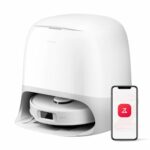
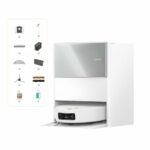
The bases have different sizes. The L50s Pro Ultra has the most compact base in width (340 mm) but the tallest (590 mm). The Aqua 10 Ultra Roller measures 420 mm wide by 500 mm high, and the Roborock forms an almost perfect cube of 450 mm in all three dimensions. It's advisable to measure the available space before deciding, especially if you're planning to place the base in cupboards or under worktops.
Real-World User Experience
For large homes of over 200 square metres, the Roborock Qrevo Curv 2 Flow offers the most generous battery life with 242 minutes. Its ability to overcome 20 mm of level change is useful in houses with multiple heights or thick carpets. The DuoDivide brush requires little maintenance, although its 20,000 Pa power may fall short on very dense carpets.
The Dreame Aqua 10 Ultra Roller stands out for its reduced height of 97.5 mm, ideal for cleaning under low beds, sofas or TV units. Its roller system with 12N of pressure and dual detergent tank make it the most complete option for intensive mopping. The 30,000 Pa power ensures good performance on all types of surfaces.
The L50s Pro Ultra provides automatic mop detachment, a practical function for those who alternate days of vacuuming only with days of complete mopping. Its base with third-generation tray self-cleaning minimises manual maintenance. The rotating mops cover large surfaces well, although on very stuck-on stains roller systems tend to be more effective.
With pets at home, all three robots work correctly thanks to their anti-tangle brushes. The higher power of the Dreame units helps extract embedded hair from carpets, whilst the Roborock's DuoDivide simplifies brush cleaning after each use.
Conclusion: Which One to Choose?
Choose the Dreame Aqua 10 Ultra Roller if you have low furniture and need a robot that accesses underneath them without problems. Its height of 97.5 mm is the lowest of the three. The roller system with 12N of pressure and dual detergent tank makes it ideal for those who prioritise intensive mopping and want to completely automate the use of cleaning products. The 30,000 Pa power ensures good performance on carpets.
Choose the Dreame L50s Pro Ultra if you value the possibility of automatically detaching the mops for vacuuming-only sessions. Its base with third-generation tray self-cleaning reduces maintenance, and the rotating mops efficiently cover large surfaces. A good option for medium-sized homes where maximum battery life isn't needed but versatility between cleaning modes is.
Choose the Roborock Qrevo Curv 2 Flow if you have a large home of over 200 square metres where the 242 minutes of battery life makes a real difference. Its certified ability to overcome 20 mm of level change makes it suitable for houses with multiple levels or thick carpets. Roborock's DuoDivide anti-tangle brush requires less manual maintenance, and the brand's reliability provides long-term peace of mind, although the 20,000 Pa power is lower than the Dreame units.