✨ VS Analyses · VacuumSpain comparison technology. Explanation created with AI from verified technical data.
Introduction
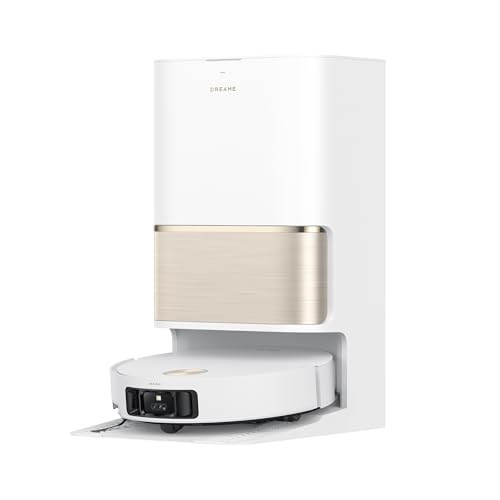
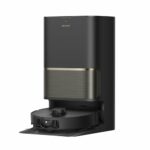
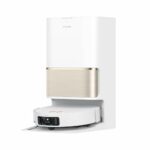
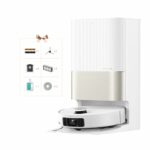
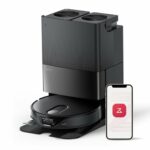
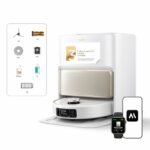
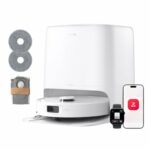
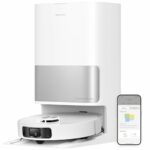
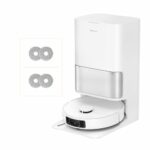
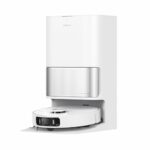
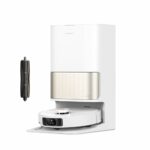
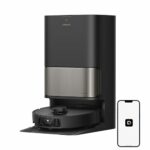
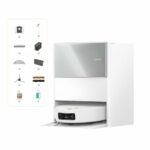
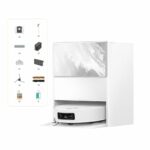
Choosing the right robot vacuum within the same brand can be tricky when dealing with models launched in the same year. The Dreame Aqua 10 Ultra Roller and the Dreame L50 Pro Ultra are two 2025 offerings that share the same manufacturer but differ in important technical aspects. Both feature a complete multifunction base, although each opts for a different mopping system and presents characteristics designed for different user profiles.
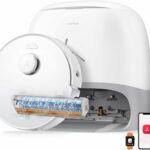
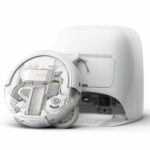
The Aqua 10 Ultra Roller incorporates a rotating roller for mopping, whilst the L50 Pro Ultra uses traditional rotating mops. These differences in the wet cleaning system affect the final performance and user experience on different types of flooring and homes.
Power and Suction
The difference in suction is notable. The Dreame Aqua 10 Ultra Roller reaches 30,000 Pa, a figure that far exceeds the 19,500 Pa of the L50 Pro Ultra. This advantage can make a difference in homes with medium or long pile carpets, where greater force is needed to extract embedded dirt.
Both models integrate the HyperStream dual brush system, designed to reduce hair tangles. This type of brush is especially useful if you live with pets, as it minimises manual maintenance. Additionally, both include an extendable and liftable side brush, which allows effective corner sweeping and lifting during mopping to prevent it getting wet.
The main brush also lifts in mopping mode on both units, a practical function when cleaning solely with water and you want to avoid dragging dry dust across the wet floor.
Mopping
Here we find the most significant difference between both models. The Dreame Aqua 10 Ultra Roller uses a rotating roller with 12N pressure, a system that mimics manual mopping with greater intensity. The L50 Pro Ultra, on the other hand, features two traditional rotating mops. Both systems have advantages: the roller can be more effective on stubborn stains, whilst the rotating mops offer gentler mopping on sensitive floors.
Both robots extend their mops to reach edges, and the L50 Pro Ultra also incorporates specific movement to improve access to corners. Mop lift also differs: the Aqua 10 Ultra Roller raises up to 14 mm and adds a protective cover, whilst the L50 Pro Ultra reaches 10.5 mm. In practice, this can be particularly noticeable when passing over thick carpets or high thresholds.
The L50 Pro Ultra has the ability to automatically remove the mops at the base when only vacuuming is needed, something the Aqua 10 Ultra Roller doesn't offer. This function provides convenience if you frequently alternate between vacuuming and mopping cycles.
Both detect dirt on both the mops and the floor to adjust washing or scrubbing. The Aqua 10 Ultra Roller base washes the mops with hot water, just like the L50 Pro Ultra. However, only the L50 Pro Ultra confirms drying with hot air, which speeds up the process and reduces the risk of bad odours. The Aqua 10 Ultra Roller has a dual detergent tank, useful if you want to use different products depending on the type of floor or area of the home.
Navigation System
Both models feature retractable LiDAR, dual RGB camera, front 3D laser sensor and LED for night vision. The difference lies in processing power and recognition capability. The Aqua 10 Ultra Roller uses the AI Sage 15.0 Octa-core processor and recognises up to 240 obstacles, whilst the L50 Pro Ultra operates with AI Sage 13.0 Octa-core and detects 180 objects.
This greater recognition capability can translate into more precise navigation in homes with lots of furniture, toys or cables. Both identify pets and curtains, as well as allowing remote camera access for surveillance or visual monitoring of cleaning in progress.
Both integrate CleanGenius AI for intelligent cleaning and stain recognition, automatically adjusting power or mopping mode according to detected dirt.
Runtime and Battery
Although they share a 6,400 mAh battery, runtime varies. The L50 Pro Ultra achieves 200 minutes, compared to 160 for the Aqua 10 Ultra Roller. This difference can be explained by the higher suction power of the Aqua 10, which consumes more energy during operation.
For large homes, the L50 Pro Ultra's runtime may prove more convenient, allowing coverage of extensive areas without the need for intermediate recharges. The Aqua 10 Ultra Roller, with its greater power, compensates with more intensive cleaning cycles in less time.
Smart Features
Both robots can overcome simple steps, facilitating passage between rooms with small level changes or thresholds. Both include their own voice assistant and are compatible with Alexa and Google Home, allowing voice control without needing to open the app.
Multifunction Cleaning Base
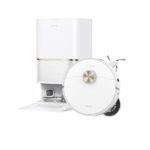
The bases of both models include auto-emptying of the dustbin, mop washing with hot water and detergent tank. The dust bag has a capacity of 3.2 litres in both cases.
The L50 Pro Ultra incorporates third-generation tray self-cleaning, a function the Aqua 10 Ultra Roller doesn't have. This reduces manual base maintenance and improves long-term hygiene. Hot air drying is also confirmed on the L50 Pro Ultra, whilst on the Aqua 10 Ultra Roller the drying air temperature is not specified.
The Aqua 10 Ultra Roller features a dual detergent tank, allowing the use of two different products according to need. The clean and dirty water tanks differ slightly: 4 litres of clean water and 3.5 of dirty water on the Aqua 10 versus 4.5 litres of clean water and 4 of dirty water on the L50 Pro. These differences are minimal in daily use.
Both models offer an optional plumbing connection kit, which is purchased separately and allows automatic refilling and emptying of tanks. It doesn't come integrated from the factory, so it's worth bearing in mind if you value this option.
Dimensions
The diameter of both robots is identical: 350 mm. The height does vary. The L50 Pro Ultra measures 89 mm, whilst the Aqua 10 Ultra Roller reaches 97.5 mm. This difference of almost a centimetre can be decisive if you need the robot to pass under low furniture, such as sofas or beds with little clearance from the floor.
The bases have different dimensions. The Aqua 10 Ultra Roller measures 420 mm wide, 500 mm high and 440 mm deep. The L50 Pro Ultra is narrower (340 mm wide) but taller (590.5 mm) and slightly deeper (456.7 mm). Depending on the available space at home, one or the other may fit better.
Real-World User Experience
The Dreame Aqua 10 Ultra Roller stands out for its superior suction power, ideal for homes with carpets or pets that shed a lot of hair. Its rotating roller system can be more effective on difficult stains, although it requires greater roller maintenance. The dual detergent tank provides versatility if you want to treat different types of flooring with specific products.
The L50 Pro Ultra offers greater runtime, making it more suitable for large homes. Its lower height facilitates access under low furniture, and the automatic mop removal at the base simplifies daily use when only vacuuming is needed. The third-generation tray self-cleaning and hot air drying reduce maintenance and improve base hygiene.
Both models are capable of recognising pets and obstacles, navigating precisely and adjusting cleaning according to detected dirt. The difference in processor and number of recognised obstacles can be noticeable in environments very cluttered with objects, where the Aqua 10 Ultra Roller has an advantage.
Conclusion: Which to Choose?
Choose the Dreame Aqua 10 Ultra Roller if: You're looking for maximum suction power, you have medium or long pile carpets, you live with pets that shed a lot of hair or you need more intensive mopping with a rotating roller. Also if you value the dual detergent tank for using specific products according to the area of the home and prefer a more powerful processor with greater obstacle recognition capability.
Choose the Dreame L50 Pro Ultra if: You have a large home where the 200-minute runtime makes a difference, you need the robot to pass under low furniture thanks to its lower height, you value automatic mop removal at the base for conveniently alternating between vacuuming and mopping, or you prefer a base with third-generation tray self-cleaning and confirmed hot air drying to reduce maintenance. Its robot dustbin is also larger, which can prove practical between emptyings.