✨ VS Analyze · VacuumSpain comparison technology. AI-generated explanation based on verified technical data.
Introduction
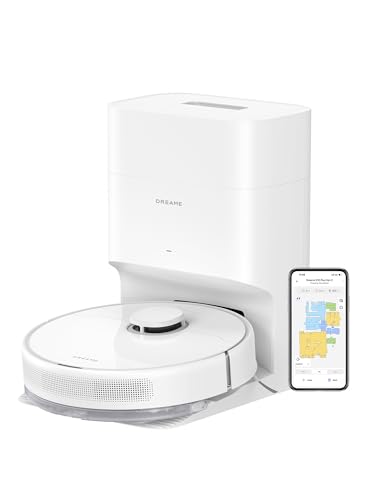
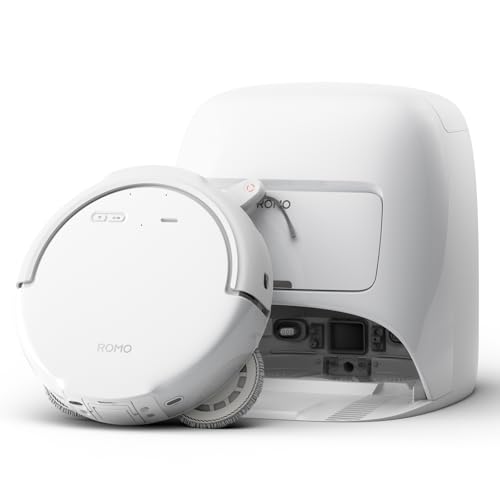
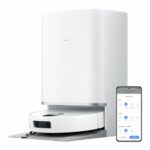
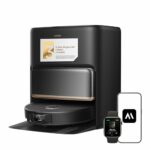
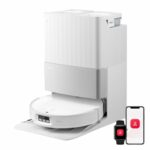
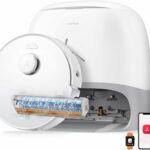
The Dreame Aqua 10 Ultra Roller represents the brand's 2025 flagship, whilst the Dreame D10 Plus Gen 2 arrived in 2024 as a more accessible option. DJI enters the robot vacuum market this year with the Romo S, bringing fresh competition to established players. These three models span different price brackets and capabilities, from the D10 Plus Gen 2's straightforward vacuuming with auto-empty to the sophisticated mopping systems found in the Aqua 10 Ultra Roller and Romo S.
The Aqua 10 Ultra Roller targets users wanting comprehensive floor care with minimal intervention, particularly in larger homes where regular mopping matters. The D10 Plus Gen 2 suits those prioritising vacuuming performance without the complexity of wet cleaning. DJI's Romo S positions itself between these extremes, offering advanced navigation and mopping at a competitive specification.
Suction Power and Brushwork
Suction figures tell an immediate story. The Dreame Aqua 10 Ultra Roller's 30,000 Pa places it firmly in premium territory, whilst the Romo S delivers a respectable 25,000 Pa. The D10 Plus Gen 2's 6,000 Pa sits several generations behind—adequate for daily maintenance but lacking the raw power to tackle embedded dirt in carpets or stubborn debris.
Brush configurations reveal different design philosophies. The Aqua 10 Ultra Roller employs a dual brush system that lifts during mopping, preventing wet contact with carpets. DJI opts for a divided brush design that similarly elevates when needed. The D10 Plus Gen 2 uses a simpler single brush without lifting capability, which makes sense given its vacuum-only remit.
Side brush technology separates these models further. The Aqua 10 Ultra Roller's side brush extends, lifts, and includes anti-tangle features—useful when transitioning between hard floors and rugs or reaching into corners. The Romo S matches the extensible and anti-tangle elements with its dual side brush setup but doesn't lift. The D10 Plus Gen 2 offers none of these refinements, sticking with a fixed side brush.
For homes with long-haired occupants or shedding pets, these anti-tangle systems reduce maintenance frequency noticeably.
Mopping Systems
This category highlights the starkest division. The Dreame D10 Plus Gen 2 doesn't mop at all—it's purely a vacuuming robot with auto-empty functionality.
The Aqua 10 Ultra Roller uses a rotating roller mop applying 12 Newtons of downward pressure, a method that scrubs rather than merely drags across floors. The roller extends to reach edges and lifts 14 mm when encountering carpets or rugs. Dirt detection triggers additional passes, and the base washes the roller with hot water between cleaning cycles.
DJI's Romo S employs dual spinning mops that also extend for edge coverage and lift when necessary. Like the Dreame flagship, it washes mops at the base and detects dirty areas requiring extra attention. The Romo S adds hot air drying to prevent odours—a feature the Aqua 10 Ultra Roller's specification doesn't explicitly confirm.
Both mopping-capable models maintain 4-litre clean water tanks and roughly 3.5-litre dirty water capacity. The Aqua 10 Ultra Roller includes dual detergent reservoirs, allowing different cleaning solutions for varied floor types. The Romo S offers a single detergent compartment. A kit for plumbing connection exists for the Aqua 10 Ultra Roller as an optional purchase, though this requires separate investment and installation effort.
Navigation Intelligence
All three models use LiDAR mapping, but implementation differs. The Aqua 10 Ultra Roller features a retractable LiDAR turret—presumably allowing it to squeeze under lower furniture—paired with dual RGB cameras and 3D laser sensors. This combination enables recognition of 240 different obstacles, including pets and curtains, with remote camera access through the app.
The DJI Romo S similarly combines LiDAR with AI camera and 3D sensors, offering obstacle avoidance and remote viewing with LED illumination for darker spaces. Specific obstacle recognition numbers aren't provided, but the system handles real-world clutter competently based on its sensor array.
The D10 Plus Gen 2 relies solely on LiDAR without AI cameras or 3D sensors. It maps efficiently and navigates systematically but won't identify specific objects or adapt behaviour based on what it encounters. In practice, this means manually clearing cables and small items before cleaning, whereas the other two models navigate around them.
The Aqua 10 Ultra Roller runs Dreame's AI Sage 15.0 processing, enabling its CleanGenius intelligent cleaning mode that adjusts suction and mopping intensity based on detected dirt levels. The Romo S incorporates similar adaptive cleaning without specifying the underlying processor.
Battery Life and Coverage
Battery capacity doesn't directly translate to runtime due to efficiency variations. The Aqua 10 Ultra Roller's 6,400 mAh cell provides 160 minutes of operation. The D10 Plus Gen 2's smaller 5,200 mAh battery surprisingly delivers 285 minutes—the longest runtime here, reflecting its simpler vacuum-only operation without mopping systems draining power. The Romo S sits between them with 5,000 mAh supplying 180 minutes.
For typical homes, these figures matter less than you'd expect. All three models return to base when needed, recharge, and resume cleaning. The practical difference emerges in very large properties where longer single-session runtime reduces total cleaning time.
Smart Features
Each model manages 20 mm obstacles, except the Aqua 10 Ultra Roller which handles simple steps—though the exact height isn't specified, this suggests slightly better climbing ability.
The Aqua 10 Ultra Roller includes an onboard voice assistant alongside standard Alexa and Google Home compatibility. The others support external voice assistants without their own built-in voice interaction. Whether you'll use this feature depends on personal preference, but it adds another control method without reaching for your phone.
None of these robots feature robotic arms for object manipulation—that technology remains limited to select premium models from other manufacturers.
Base Station Capabilities
All three automatically empty dust into base station bags, but capacities vary. The D10 Plus Gen 2 offers the largest at 4 litres, followed by the Aqua 10 Ultra Roller at 3.2 litres and the Romo S at 2.4 litres. Larger bags mean less frequent replacement, though all should manage weeks between changes in typical households.
The mopping-equipped models naturally feature more complex bases. The Aqua 10 Ultra Roller washes its roller with hot water during cleaning sessions, keeping it fresh for the next room. The Romo S washes its dual mops and includes a self-cleaning nozzle that rinses the wash tray itself—reducing manual maintenance. Hot air drying in the Romo S actively prevents bacterial growth and odours, whilst the Aqua 10 Ultra Roller's drying method isn't detailed in available specifications.
The D10 Plus Gen 2's simpler base just handles dust collection without water systems, making it more compact and straightforward to maintain.
Physical Dimensions
Robot height matters when cleaning under furniture. The D10 Plus Gen 2 measures 96.3 mm tall, the Aqua 10 Ultra Roller 97.5 mm, and the Romo S 98 mm. These millimetre differences rarely affect real-world access, though the D10 Plus Gen 2 might squeeze under the occasional low cabinet the others can't reach. All three share essentially identical 350 mm diameters.
Base stations occupy considerably different footprints. The D10 Plus Gen 2's compact base measures 298 mm wide, 427 mm tall, and 406 mm deep—the smallest here and easiest to tuck away. The Aqua 10 Ultra Roller's base spans 420 mm wide, 500 mm tall, and 440 mm deep, reflecting its water tanks and washing systems. The Romo S sits between at 453 mm wide, 440 mm tall, and 425 mm deep.
Before purchasing, measure your intended base location. The multifunctional stations require permanent water access nearby for tank refills, though the optional plumbing kit for the Aqua 10 Ultra Roller automates this at additional cost.
Real-World Performance Expectations
The Dreame D10 Plus Gen 2 suits smaller homes or flats where vacuuming matters more than mopping. Its extended battery life and simple operation appeal to those wanting effective dust collection without complexity. The 6,000 Pa suction handles hard floors and low-pile carpets adequately, though thick carpets might challenge it. Without AI obstacle avoidance, you'll need to prepare rooms before cleaning.
The Aqua 10 Ultra Roller targets larger homes with mixed flooring where regular mopping maintains hygiene. Its 30,000 Pa suction tackles carpets effectively, whilst the roller mop system genuinely scrubs hard floors rather than just wiping them. The dual detergent tanks let you use different solutions for kitchen tiles versus wood floors. Homes with pets benefit from the anti-tangle brushes and powerful suction. The 160-minute runtime suffices for most properties, with automatic recharge and resumption handling larger spaces.
DJI's Romo S offers a compelling middle option. The 25,000 Pa suction manages most floor types well, and the dual spinning mops with hot air drying provide thorough wet cleaning. Its AI navigation handles cluttered homes competently, and the self-cleaning wash tray reduces maintenance. The slightly smaller base fits tighter spaces than the Dreame flagship whilst delivering similar core functionality.
For households with shedding pets, both the Aqua 10 Ultra Roller and Romo S include anti-tangle brush systems that notably reduce hair wrap. The D10 Plus Gen 2 requires more frequent brush cleaning in such environments.
Conclusion: Which Robot Suits You?
Choose the Dreame Aqua 10 Ultra Roller if you want the most powerful suction available here, need comprehensive mopping with hot water washing, value extensive obstacle recognition including pets and curtains, or have large homes with varied flooring requiring different cleaning solutions. The dual detergent system and roller mop make it ideal for families prioritising floor hygiene.
Choose the Dreame D10 Plus Gen 2 if mopping doesn't matter to you, you prefer straightforward vacuum-only operation, need the longest single-session runtime, or want the most compact base station. It's the practical choice for smaller properties, rental accommodation, or anyone finding multifunctional bases unnecessarily complex. The lower price reflects its simpler feature set.
Choose the DJI Romo S if you want advanced mopping with hot air drying, value the self-cleaning wash tray for reduced maintenance, need strong suction without paying for the absolute highest specification, or prefer DJI's approach to AI navigation. It balances sophisticated cleaning capabilities with a slightly smaller footprint than the Dreame flagship, making it suitable for medium to large homes where both vacuuming and mopping matter equally.