✨ VS Analyses · VacuumSpain comparison technology. Explanation created with AI from verified technical data.
Introduction
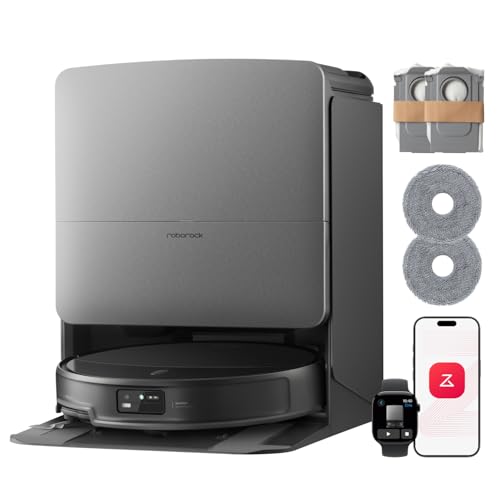
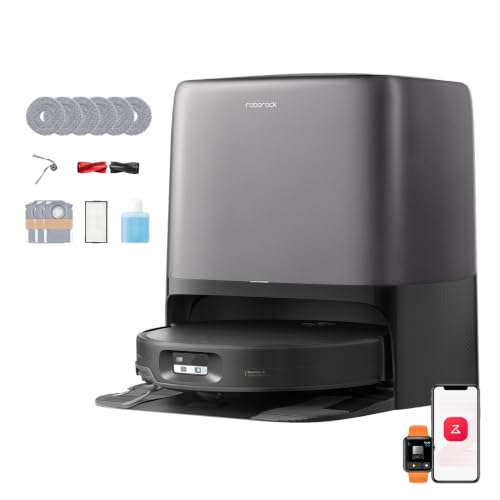
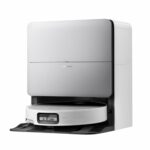
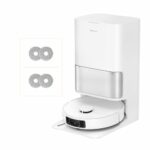
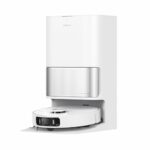
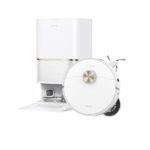
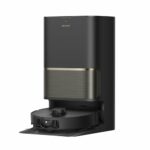
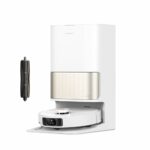
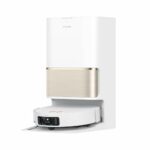
The Roborock Saros 20 and Roborock Saros 20 Neo are two high-end options within Roborock’s product range, both launched in 2026 just a few months apart. The first arrived on the market in February, while the Neo was introduced in September of the same year. Both share a very similar technological foundation, with 36,000 Pa of suction power, a 6,400 mAh battery and advanced mopping systems with rotating mop pads. However, there are differences in navigation, tank capacities and dimensions that may prove decisive depending on the type of home or each user’s specific needs.
These robots are designed for users seeking almost complete automation of household cleaning, with multifunctional docks that wash and dry the mop pads using hot water and air, in addition to automatically emptying the dustbin. Their ability to cross single steps of up to 45 mm and double steps of up to 88 mm makes them versatile options for homes with uneven transitions or thick carpets.
Suction power and vacuuming
Both models share the same suction power of 36,000 Pa, a highly competitive figure that ensures good results on both hard floors and carpets. The DuoDivide anti-tangle main brush is the same on both robots and is specifically designed to guide hair towards the central suction inlet, thereby reducing tangles. This feature is particularly useful in homes with pets.
The main brush can be lifted while mopping, allowing the robot to alternate between vacuuming and mopping without compromising either function. The side brush also has identical features on both models: it extends to improve cleaning in corners and includes anti-tangle technology. However, neither model offers a liftable side brush or a dedicated skirting-board brush.
In practice, this brush configuration is well balanced for most household situations, particularly in homes with long hair or pets.
Mopping
The mopping system is one of the strengths of both robots. They use two rotating mop pads at 200 RPM, with an extension mechanism to reach edges more effectively. The main difference lies in the applied pressure: the Saros 20 delivers 13 N, while the Neo increases this slightly to 14 N. Although subtle, this difference may result in slightly deeper cleaning of stubborn stains with the Neo.
The mop pads lift between 15 and 22 mm when the robot detects rugs or carpets, preventing them from becoming wet during mopping. Both robots also mop with warm water, which helps dissolve dirt more effectively. Dirt detection works on both the mop pads and the floor, allowing the robot to automatically clean particularly dirty areas again.
An important advantage is that the mop pads can be automatically removed at the dock when only vacuuming is required, with no manual intervention. This provides additional everyday convenience, especially when switching between cleaning modes depending on current needs.
Navigation system
This is where we find one of the most important differences. The Saros 20 features the StarSight 2.0 system with dual AI cameras, while the Neo uses retractable LiDAR combined with an RGB camera and a 3D structured-light laser sensor. Both systems are advanced, but their approaches differ: StarSight 2.0 prioritises stereoscopic vision to interpret the surroundings, while the Neo’s LiDAR provides more traditional laser-based mapping complemented by computer vision.
Both models recognise up to 300 different types of obstacles, including pets and curtains. They also feature an LED for night vision and allow remote access to the camera through the app. SmartPlan 3.0 is available on both, providing intelligent cleaning with AI stain recognition.
In complex homes with numerous obstacles or changing lighting conditions, both technologies perform well, although the Saros 20’s dual-camera system may provide a more precise interpretation of three-dimensional space.
Runtime and battery
Battery capacity is identical at 6,400 mAh in both cases. However, only the Saros 20 Neo specifies a runtime of 256 minutes, equivalent to more than four hours of continuous operation. This figure is more than sufficient for medium-sized and large homes, allowing complete cleaning cycles to be finished without intermediate charging.
Although the available specifications do not state the Saros 20’s runtime, it uses the same battery, so similar performance can be expected. In practice, actual runtime will depend on the selected cleaning mode, the suction power being used and whether simultaneous mopping is enabled.
Smart features
Both robots stand out for their obstacle-crossing ability: they can negotiate single steps of up to 45 mm and double steps of up to 88 mm. This makes them highly versatile options for homes with high-pile carpets, small differences in floor level between rooms or difficult transitions between different types of flooring.
Both models have their own built-in voice assistant and are also compatible with external assistants such as Alexa and Google Home. This simplifies voice control and integration into existing smart-home ecosystems. However, neither includes a robotic arm, a feature available on some competing models designed for more specific tasks.
Multifunctional cleaning dock
The multifunctional docks supplied with both robots offer practically identical features. They automatically empty the onboard dustbin, wash the mop pads with hot water at 100°C and dry them with hot air at 55°C. This high-temperature washing and drying system ensures hygiene and prevents unpleasant odours, which is essential when floors are mopped regularly.
The washing tray also cleans itself using hot water at 100°C, reducing manual maintenance. Both docks include a detergent tank to improve the effectiveness of mop washing. Their clean-water and dirty-water tanks are identical, with capacities of 4 litres and 3 litres respectively.
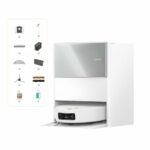
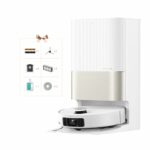
The only difference in the dock concerns the dust bag capacity: 2.5 litres on the Saros 20 compared with 2.7 litres on the Neo. Although the difference is minimal, the Neo offers slightly longer intervals between bag changes. The dimensions of the docks also vary slightly: the Saros 20 measures 381x488x475 mm, while the Neo measures 402x494x450 mm. The Neo is wider and taller but less deep.
Dimensions
The Saros 20 has a diameter of 353 mm, just 1 mm more than the Neo’s 352 mm. Both have an identical height of 79.8 mm. These dimensions allow the robots to move underneath most standard furniture, although it is advisable to check the specific clearance beneath sofas or beds if you want the robot to access those areas.
As mentioned above, the docks have dimensional differences that may influence their final placement. The Saros 20 requires less width but more depth, while the Neo needs more lateral space but projects less towards the front. This may be relevant depending on the layout of the home and the space available for installing the dock.
Real-world user experience
For large homes, both models offer sufficient runtime thanks to their 6,400 mAh batteries. The Saros 20 Neo specifies 256 minutes of operation, allowing it to cover large areas without difficulty. Its ability to cross double-level obstacles measuring up to 88 mm is particularly useful in homes with different floor levels or thick carpets.
In homes with pets, the DuoDivide anti-tangle brush fitted to both models makes a noticeable difference. The 36,000 Pa suction power ensures effective hair collection on hard floors and carpets alike. The mopping system with extendable mop pads and dirt detection complements vacuuming effectively, keeping floors clean with minimal intervention.
The multifunctional dock with high-temperature washing and drying drastically reduces maintenance. Users only need to refill the clean-water tank and empty the dirty-water tank periodically, as well as replace the dust bag when it is full. Automatic mop removal when only vacuuming is required adds further everyday convenience.
Remote camera access and pet recognition may appeal to users who want to monitor their animals or home while the robot cleans. The 300 types of obstacles recognised by AI ensure safe navigation even in complex environments with numerous objects on the floor.
Conclusion: which should you choose?
Choose the Roborock Saros 20 if... you value the StarSight 2.0 navigation system with dual AI cameras for a more advanced interpretation of three-dimensional space, prefer a slightly larger onboard dustbin (270 ml compared with 240 ml) or need a slightly larger onboard water tank (69 ml compared with 66 ml). It may also be the better option if the dock needs to occupy less width at 381 mm, even though it requires more depth.
Choose the Roborock Saros 20 Neo if... you prefer a retractable LiDAR navigation system combined with an RGB camera and structured light, want slightly higher mopping pressure (14 N compared with 13 N) or value having a specific stated runtime of 256 minutes. The dock’s dust bag is slightly larger at 2.7 litres compared with 2.5 litres, which may extend maintenance intervals. If the dock needs to be less deep at 450 mm and you can accommodate its greater width of 402 mm, the Neo is a better fit.
For large homes with pets, both models perform very well thanks to their power, runtime and anti-tangle brush. If you are looking for almost complete automation with minimal maintenance, both offer a comprehensive multifunctional dock with high-temperature mop washing and drying. The choice will primarily depend on your preferred navigation system and the small differences in tank capacities or dock dimensions according to the space available in your home.