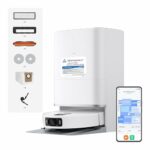
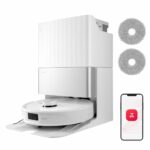
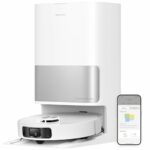
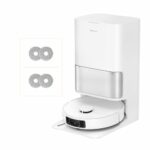
✨ VS Analyses · VacuumSpain comparison technology. Explanation created with AI from verified technical data.
Introduction
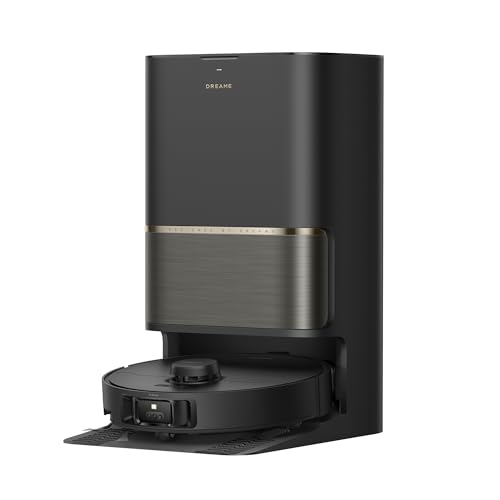
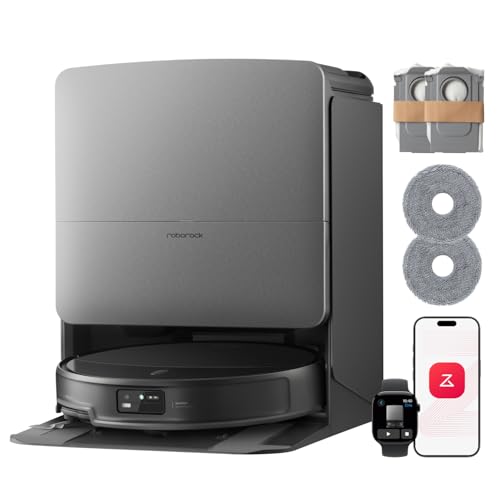
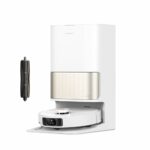
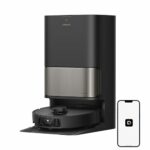
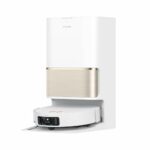
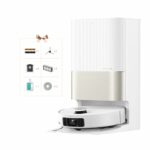
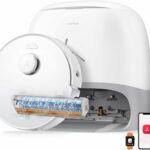
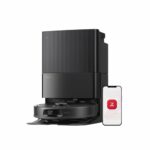
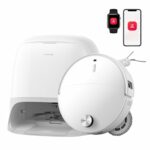
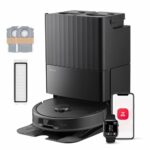
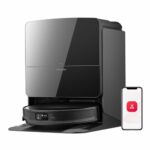
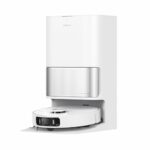
The Dreame L50s Pro Ultra and Roborock Saros 20 represent the cutting edge of robotic vacuum technology as we move through 2026. Both are premium models equipped with multifunctional bases that handle everything from self-emptying to mopping with hot water and hot air drying. These aren't entry-level machines—they're designed for users who want comprehensive automated cleaning without constant intervention.
The Dreame model brings its dual HyperStream brush system and CleanGenius AI, whilst Roborock counters with its StarSight 2.0 navigation and an impressive 36,000 Pa suction power. At first glance, they share many high-end features, but the differences in suction capacity, battery size, and mopping capabilities reveal distinct approaches to solving the same problem: keeping your floors spotless with minimal effort.
Power and suction
The Roborock Saros 20 takes a clear lead in raw suction power with 36,000 Pa compared to the Dreame L50s Pro Ultra's 30,000 Pa. That's a 20% difference on paper, which translates to more aggressive pickup on carpets and better performance with embedded dirt. For homes with thick rugs or pets that shed heavily, this extra muscle matters.
When it comes to brush design, the approaches differ significantly. Dreame equips its dual HyperStream brush system—two brushes anchored at one end that work together to prevent hair tangles. Roborock opts for its DuoDivide Anti-Tangle design, which pushes hair towards the central suction gap. Both systems aim to reduce maintenance, but the DuoDivide has proven itself across multiple Roborock generations.
Both models lift their main brushes when mopping and feature extendable, liftable side brushes with anti-tangle properties. In practice, this means they can tackle corners effectively whilst avoiding cross-contamination between vacuuming and mopping tasks.
Mopping
Each robot uses dual rotating mops, but the Dreame L50s Pro Ultra adds a Roboswing movement—essentially a wiggling motion that helps the mop reach slightly under furniture edges and baseboards. The Roborock Saros 20 relies on mop extension without the swinging action.
Mop lift height differs noticeably. The Dreame raises its mops 10.5 mm, whilst the Roborock achieves between 12 and 22 mm depending on the situation. This extra clearance helps when transitioning onto medium-pile carpets or crossing thicker thresholds without dragging damp mops across them.
The real separator comes with mopping water temperature. The Dreame uses cold water for floor mopping, whereas the Roborock Saros 20 employs warm water. Warm water loosens grease and sticky residues more effectively, particularly in kitchens. Both models wash their mops with hot water at the base and dry them with hot air, which prevents odours and bacterial growth. They also detect dirt on both the mops and the floor, triggering rewashes or additional passes when needed.
Each system can automatically remove mops at the base when you only want to vacuum, saving you from manual intervention.
Navigation system
The Dreame L50s Pro Ultra uses a third-generation LiDAR turret combined with dual AI cameras and frontal 3D laser sensors. This setup allows it to recognise up to 220 different objects. The Roborock Saros 20 counters with its StarSight 2.0 system, also featuring dual cameras and 3D sensors, but with recognition of up to 300 objects. That's 36% more objects catalogued, which means better decision-making around clutter.
Both recognise pets and curtains, provide remote camera access, and include LED lighting for navigation in the dark. The Dreame runs CleanGenius AI for intelligent cleaning routines, whilst Roborock offers SmartPlan 3.0. Each system learns your home layout and optimises cleaning patterns, though Roborock's larger object library gives it a slight edge in complex environments with lots of furniture or toys scattered about.
Battery and autonomy
Battery capacity favours the Roborock Saros 20 decisively: 6,400 mAh versus 5,200 mAh in the Dreame. That's roughly 23% more capacity, which translates directly into longer cleaning sessions before returning to the base. For larger homes—say, over 150 square metres—this difference becomes tangible, especially if you're running a full vacuum and mop cycle in one go.
Neither manufacturer has specified exact runtime in minutes, but the larger battery naturally extends operational time and reduces the frequency of mid-clean recharging stops.
Smart features
Both robots handle simple obstacles like low thresholds and can climb over standard door strips. Each includes its own voice assistant and integrates with external systems like Alexa and Google Home, so you can trigger cleaning routines with voice commands or schedule them remotely.
Neither model features a robotic arm, which remains a rarity even in 2026's premium segment.
Multifunctional cleaning base
Both bases self-empty the dust bin, wash mops with hot water, and dry them with hot air. The Dreame L50s Pro Ultra uses third-generation self-cleaning technology for its washing tray, whilst the Roborock cleans its tray with hot water. Each base includes a detergent dispenser to add cleaning solution during mop washing.
Dust bag capacity leans towards the Dreame: 3.2 litres compared to 2.5 litres. That's nearly 30% more, meaning fewer bag changes over time. The Dreame also holds 4.5 litres of clean water versus 4 litres in the Roborock, and 4 litres of dirty water compared to 3 litres. These differences add up if you're mopping large areas regularly.
The Dreame offers an optional plumbing connection kit, sold separately, which allows the base to refill clean water and drain dirty water automatically. The Roborock doesn't provide this option, even as an add-on. For those seeking absolute hands-off operation, the Dreame's kit is worth considering, though it requires installation and isn't included in the base price.
Neither base includes UV disinfection or automatic mop replacement.
Dimensions
The Roborock Saros 20 measures just 79.8 mm tall, making it one of the slimmest premium robots available. The Dreame L50s Pro Ultra stands at 103.8 mm—over 24 mm taller. This height difference determines whether the robot can slip under low-clearance furniture like sofas, beds, or cabinets. If your home has furniture with less than 10 cm clearance, the Roborock will access spaces the Dreame simply can't reach.
Diameter is nearly identical: 350 mm for the Dreame versus 353 mm for the Roborock. Both navigate tight corners and doorways without issue.
Base dimensions vary more. The Dreame's base measures 340 mm wide, 590 mm tall, and 457 mm deep. The Roborock base is wider at 381 mm, shorter at 488 mm, and slightly deeper at 475 mm. The Dreame's taller profile might suit corner placements better, whilst the Roborock's lower height fits under shelving more easily.
Real-world usage experience
For larger homes—say, 150 square metres or more—the Roborock Saros 20's bigger battery and stronger suction make it the more capable choice. It'll complete full cleaning cycles without multiple recharges, and the 36,000 Pa suction tackles embedded dirt in carpets more aggressively.
If you have furniture with tight clearances, the Roborock's 79.8 mm height becomes essential. It'll clean under beds and sofas the Dreame can't access, which matters if dust accumulates in those hidden zones.
The Dreame L50s Pro Ultra shines in homes where you want longer intervals between base maintenance. Its larger dust bag, water tanks, and optional plumbing kit reduce how often you need to intervene. The Roboswing feature also helps with edges and baseboards, though the difference is incremental rather than transformative.
For households with pets, both anti-tangle brush systems perform well, but the Roborock's higher suction and larger object recognition database give it a slight advantage when dealing with scattered kibble, litter, or fur.
Mopping performance tilts towards the Roborock thanks to warm water application on floors, which handles greasy kitchen spills and sticky residues more effectively than cold water. The higher mop lift also prevents damp mops from dragging across carpets during transitions.
Conclusion: which one to choose?
Choose the Dreame L50s Pro Ultra if: You want maximum autonomy between maintenance tasks, thanks to the larger dust bag and water tanks. You're interested in the optional plumbing kit for fully automated water management. You prefer the Roboswing feature for edge cleaning, and your furniture clearances exceed 11 cm. The Dreame offers excellent value if you don't need the absolute highest suction or the slimmest profile.
Choose the Roborock Saros 20 if: You need the strongest suction available, especially for thick carpets or heavy pet hair. Your home has low-clearance furniture under 10 cm, where the robot's 79.8 mm height becomes critical. You value warm water mopping for better grease removal, and you want the most advanced object recognition with 300 catalogued items. The larger battery suits bigger homes where extended runtime prevents mid-clean recharging. Roborock's reputation for reliability and app quality also weighs in its favour for those prioritising long-term dependability.