✨ VS Analyses · VacuumSpain comparison technology. Explanation created with AI from verified technical data.
Introduction
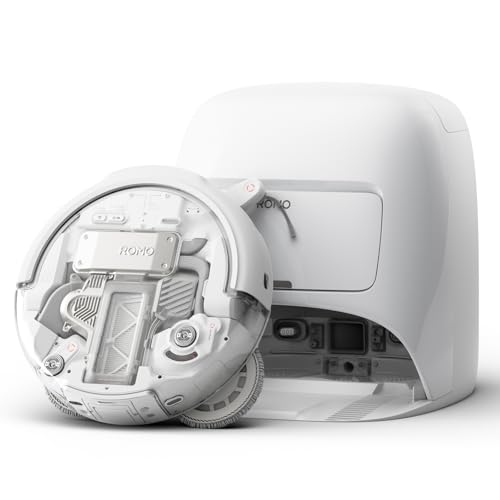
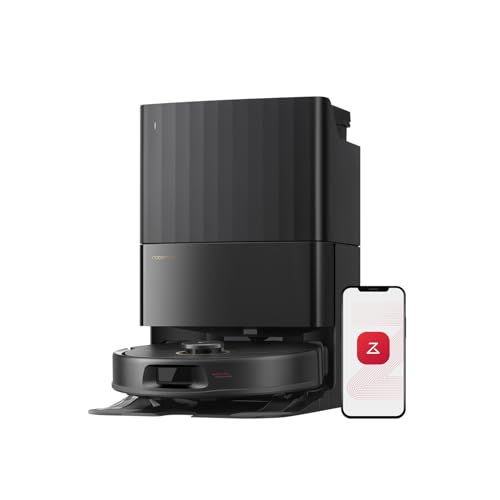
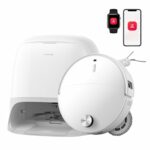
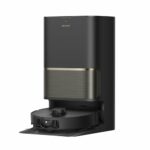
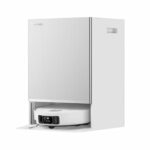
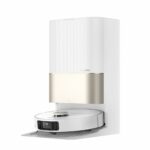
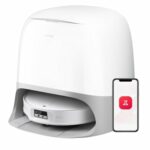
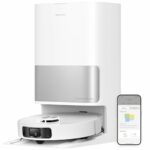
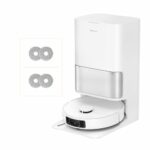
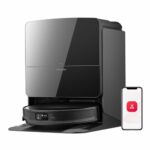
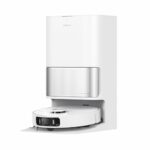
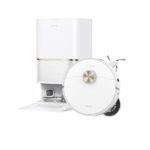
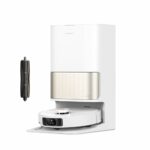
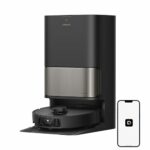
The robot vacuum market has received in 2025 two proposals that represent different visions of automated home cleaning. The DJI Romo A (Robot Transparente) marks DJI's debut in this sector, focusing on exceptional suction power and advanced technological equipment. Facing it, the Roborock Qrevo S5V arrives as an option from the world's leading brand in robot vacuums, with a more balanced approach between features and base station size.
Both units integrate a multifunction base with auto-emptying, mop washing and drying, which places them in the mid-to-high range of the market. However, differences in suction power, navigation systems and intelligent capabilities mark clearly differentiated territories.
Power and Suction
The most striking difference in this robot vacuum comparison appears in suction power. The DJI robot vacuum reaches 25,000 Pa, a figure that practically doubles the 12,000 Pa of the Roborock robot vacuum. This gap is not just numerical: in homes with thick carpets or pets that shed a lot of hair, that extra power can make the difference between correct cleaning and really deep cleaning.
Both models incorporate main brush systems designed to prevent hair tangles. The DJI Romo A (Robot Transparente) mounts a Divided brush, whilst the Roborock Qrevo S5V equips the DuoDivide Antienredos system, which pushes hairs towards the central gap to facilitate suction. In practice, these designs considerably reduce maintenance compared to traditional bristle brushes.
Where the DJI takes advantage is in the lifting of the main brush during mopping. This function allows the robot to raise the brush when switching to mopping mode, preventing it from getting wet or unnecessarily dirty. The Roborock does not have this capability.
The side brush also presents differences. The DJI has a double anti-tangle side brush and extendable function to better reach corners. The Roborock has an anti-tangle side brush, but without extension capability. Neither of them lifts the side brush during mopping.
Mopping
Both units use a two rotating mop system, a standard in this range that guarantees effective mopping. Both have mop extension to better reach edges and mop lifting. The Roborock specifies that it lifts the mops 10 mm, sufficient to pass over thin carpets without wetting them.
The mopping water temperature is cold in both cases, something usual in this price category. What does differentiate the DJI is its ability to detect dirt both on the mops and on the floor. When it identifies particularly dirty areas, it can automatically go over those areas again or return to the base to wash the mops if they are too stained. The Roborock lacks these dirt detection sensors.
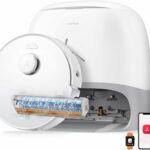
The bases of both robots wash the mops with cold water and dry them with hot air, which helps prevent bad odours and bacterial proliferation. This function is fundamental for maintaining hygienic mopping in the long term.
Navigation System
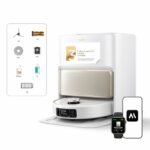
Here appears one of the biggest differences between the best robot vacuum for those seeking advanced technology and a more conventional option. The DJI Romo A (Robot Transparente) integrates solid-state LiDAR, AI camera, front 3D laser sensor and LED for night vision. This set allows not only precise mapping, but also object recognition and real-time cleaning adaptation.
Remote access to the DJI camera adds an extra functionality: being able to see what's happening at home from your mobile. For those who have pets or want additional surveillance, this can be useful beyond cleaning.
The Roborock Qrevo S5V mounts a 3D LiDAR turret and obstacle avoidance system, but without AI camera or front 3D laser sensor. Its navigation is reliable and precise, as is usual with Roborock, but it doesn't reach the level of intelligent recognition of the DJI.
Both models incorporate intelligent AI cleaning. The DJI adds stain recognition to intensify cleaning where it detects visible dirt. The Roborock uses SmartPlan 1.0 to optimise routes and cleaning times.
Autonomy and Battery
Battery capacities are practically identical: 5,000 mAh in the DJI versus 5,200 mAh in the Roborock. Both offer 180 minutes of autonomy, sufficient to clean homes of up to 150-180 m² in a single charge without needing to return to the base to recharge.
This equality in autonomy facilitates the choice, as neither presents limitations in this aspect. For large houses, both can complete cleaning without interruptions.
Intelligent Functions
Both robots overcome obstacles up to 20 mm in height, which allows them to navigate without problems over cables, carpets or small level differences between rooms. This capability is standard in robots of this category and works well in daily practice.
Both are compatible with external voice assistants such as Alexa or Google Home, allowing voice control of basic functions such as starting or pausing cleaning.
Multifunction Cleaning Base
Both stations perform auto-emptying of the dust bin, mop washing with cold water and drying with hot air. However, the DJI base incorporates two differentiating elements: detergent tank and automatic tray self-cleaning via automatic nozzle. This reduces manual maintenance and improves the hygiene of the mopping system.
In terms of capacities, the Roborock has a slight advantage in dust bag (2.7 L vs 2.4 L) and dirty water tank (3.5 L vs 3.2 L). The clean water tank is identical in both: 4 litres. These differences are minimal and in daily practice are barely noticeable, except in very large homes where greater autonomy between emptying is needed.
Neither offers connection to plumbing nor an optional kit for it, so they require manual refilling of clean water and emptying of dirty water periodically.
Dimensions
The robots have very similar sizes. The DJI measures 351 mm in diameter and 98 mm in height, whilst the Roborock reaches 353 mm in diameter and 96.5 mm in height. This 1.5 mm difference in height is practically irrelevant. Both can pass under most standard furniture.
The Roborock robot's dust bin is larger: 330 ml versus the DJI's 260 ml. This can translate into some extra cleaning session before the robot needs to return to the base to empty itself, although with automatic auto-emptying this difference loses importance.
The bases present different design philosophies. The DJI station measures 453 mm in width, 440 mm in height and 425 mm in depth. The Roborock's is narrower (340 mm) but taller (521 mm) and deeper (487 mm). Depending on available space, one may fit better than the other: the DJI's occupies more width but less height, ideal for placing under worktops; the Roborock's needs more height but less lateral space.
Real-World Usage Experience
For homes with pets that shed a lot of hair, the 25,000 Pa power of the DJI Romo A (Robot Transparente) offers a clear advantage. The Roborock Qrevo S5V's 12,000 Pa is sufficient for most situations, but on carpets with embedded hair or during intense shedding periods, the difference can be noticeable.
In homes where mopping hygiene is valued, the DJI provides interesting elements: dirt detection for automatic re-mopping, detergent tank in the base and tray self-cleaning. This reduces maintenance and improves results on heavily trafficked floors or with frequent stains.
For those seeking a compact and reliable solution without needing extra technology, the Roborock presents a simpler but effective proposal. Its narrower base facilitates placement in reduced spaces, and the greater dust bag and dirty water capacity can be useful in large homes.
The DJI camera with remote access adds a bonus functionality for occasional home surveillance or pet monitoring, something the Roborock doesn't offer.
Conclusion: Which to Choose?
Choose the DJI Romo A (Robot Transparente) if you're looking for the maximum suction power available in this comparison, you value advanced technology with camera and AI for intelligent obstacle and stain recognition, you need liftable/extendable main and side brushes for more complete cleaning in corners, you want automatic dirt detection for intensive re-mopping where necessary, you prefer a base with detergent tank and tray self-cleaning to reduce maintenance, or you're interested in remote camera access for home surveillance.
Choose the Roborock Qrevo S5V if you prefer the proven reliability of the world's leading brand in robot vacuums, you're looking for a more compact base station in width for reduced lateral spaces, you value greater capacity in dust bag and dirty water tank for fewer emptyings, you don't need advanced AI functions or camera and prefer a more straightforward solution, or you have a larger dust bin in the robot for greater autonomy between cleaning sessions. The Roborock offers a solid balance between features and practicality without unnecessary technological complications.