✨ VS Analyses · VacuumSpain comparison technology. Explanation created with AI from verified technical data.
Introduction
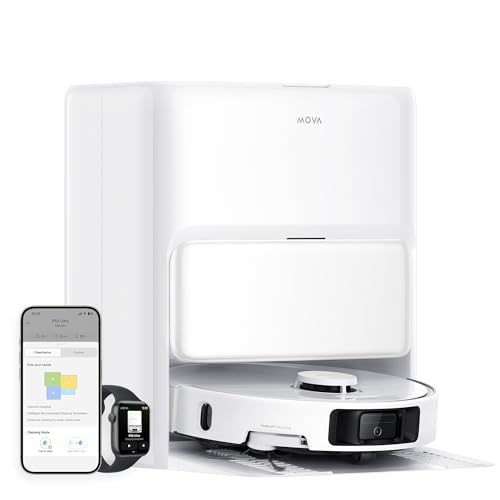
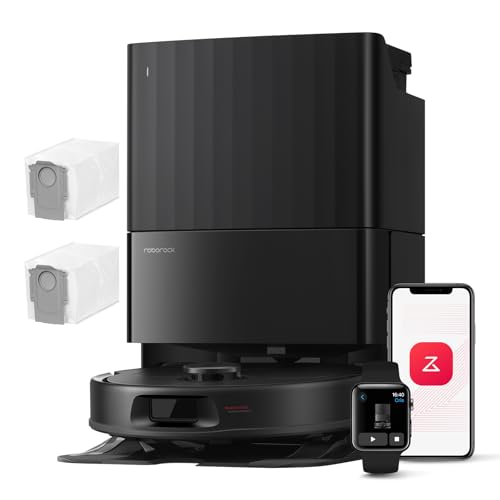
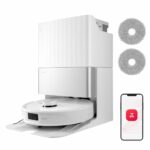
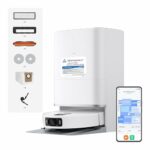
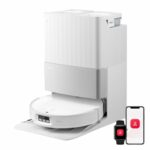
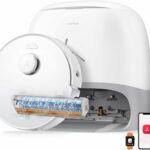
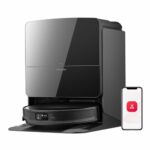
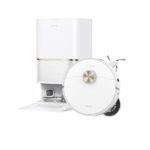
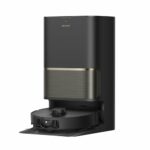
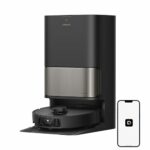
The Mova P50 Ultra and Roborock QV 35A represent two distinct approaches to premium robot vacuum cleaning in 2025. Both models feature multifunction bases with mop washing capabilities, making them suitable for homes requiring both vacuuming and mopping without constant manual intervention. The Mova P50 Ultra positions itself as a high-power option with 19,000 Pa suction, whilst the Roborock QV 35A offers 8,000 Pa with the reliability expected from the world's leading robot vacuum manufacturer.
These aren't budget models. They're designed for users who want comprehensive automated cleaning with minimal maintenance. The presence of multifunction bases in both means they can handle homes with mixed flooring, though their different specifications suggest they'll excel in different scenarios.
Power and Suction
The suction power difference is substantial. The Mova P50 Ultra delivers 19,000 Pa, more than double the Roborock QV 35A's 8,000 Pa. In practical terms, this means the Mova will handle deeply embedded dirt in carpets and rugs with greater ease, whilst the Roborock offers sufficient power for hard floors and low-pile carpets.
Both models use a simple brush design rather than anti-tangle configurations like DuoDivide or HyperStream, which means pet owners should expect some hair maintenance on the main roller. However, both include anti-tangle side brushes, reducing the frequency of manual cleaning.
The Mova P50 Ultra lifts its main brush during mopping, preventing the wet brush from dragging across cleaned areas. The Roborock doesn't offer this, meaning the main brush remains in contact with the floor throughout mopping sessions. This can affect mopping efficiency on hard floors where you want pure mop contact.
Side brush functionality differs noticeably. The P50 Ultra features both extension and lift capabilities, allowing it to sweep corners more thoroughly whilst also raising the brush during mopping to avoid flinging water. The Roborock QV 35A keeps its side brush at a fixed position and height throughout all cleaning modes.
Mopping
Both models use dual rotating mops, but the Mova P50 Ultra adds extension capability with Roboswing movement. This system pushes the mop slightly under furniture edges and skirting boards, improving edge coverage. The Roborock maintains standard mop positioning without edge extension.
Mop lift differs by just 0.5 mm—10.5 mm on the Mova versus 10 mm on the Roborock. Whilst minimal, this extra half millimetre can help when transitioning onto slightly thicker rugs or mats.
The base cleaning systems diverge significantly. The Mova P50 Ultra washes mops with hot water and dries them using hot air, which accelerates drying times and helps prevent bacterial growth and odours. The Roborock QV 35A uses cold water for washing and cold air for drying, which takes longer and may require more attention to prevent musty smells in humid environments.
The P50 Ultra includes third-generation base tray self-cleaning, automatically maintaining the washing area where mops are cleaned. The Roborock lacks this feature, requiring manual cleaning of the base tray periodically. For users who want truly hands-off maintenance, this matters.
An optional detergent tank can be added to the Mova system, dispensing cleaning solution during mop washing. The Roborock doesn't support detergent addition, relying solely on water for mop cleaning.
Navigation System
Both robots use 3D LiDAR turrets for mapping and navigation, providing accurate room layouts and efficient cleaning paths. They both include obstacle avoidance systems, though neither features an AI camera for visual object recognition.
The Mova P50 Ultra adds a frontal 3D laser sensor, enhancing its ability to detect obstacles in real-time before contact. The Roborock QV 35A relies on its LiDAR and standard sensors without this additional frontal laser.
Curtain detection appears on the P50 Ultra, allowing it to recognise hanging fabrics and adjust its approach to avoid tangling. This feature isn't present on the Roborock.
Both models integrate with external voice assistants like Alexa and Google Home, but neither includes a proprietary voice assistant. Remote camera access isn't available on either model.
AI cleaning intelligence differs in branding: the Mova uses CleanGenius whilst the Roborock employs SmartPlan 1.0. Both systems optimise cleaning routes and adapt to home layouts, though specific implementation details vary between manufacturers.
Battery and Autonomy
Battery capacity matches at 5,200 mAh for both models. The Roborock QV 35A specifies 180 minutes of runtime, whilst the Mova P50 Ultra doesn't list specific autonomy figures. Given the P50 Ultra's significantly higher suction power, actual runtime will likely be lower than the Roborock's when operating at maximum power, though this depends heavily on cleaning modes used.
Neither model provides charging time data, and maximum recommended surface area isn't specified for either robot. With 5,200 mAh batteries, both should comfortably handle homes up to 150-200 square metres on a single charge under normal cleaning conditions.
Smart Features
The Mova P50 Ultra can climb obstacles up to 22 mm high, whilst the Roborock QV 35A manages 20 mm. This 2 mm difference allows the Mova to handle slightly taller door thresholds and floor transitions, though both offer solid climbing capability for typical home obstacles.
Multifunction Base
Both bases handle auto-emptying of the dust bin, mop washing, and mop drying, but their specifications differ in important ways.
The Mova P50 Ultra's base uses a 3.2-litre dust bag versus the Roborock's 2.7-litre capacity. This translates to roughly 15-20% longer intervals between bag changes, reducing maintenance frequency slightly.
Water tank capacities match: 4 litres for clean water and 3.5 litres for dirty water on both models. This provides sufficient capacity for multiple mopping sessions across medium to large homes before refilling becomes necessary.
Neither base includes UV disinfection, automatic mop changing, or integrated plumbing connections. No optional plumbing kit is available for either model, meaning manual water tank management remains necessary.
Dimensions
The robots themselves measure very similarly. The Mova P50 Ultra has a 350 mm diameter and stands 97 mm tall, whilst the Roborock QV 35A measures 353 mm across and 96.5 mm high. The Roborock sits half a millimetre lower, though this difference is negligible for fitting under furniture. Both should slide beneath standard sofas and beds with typical clearances above 10 cm.
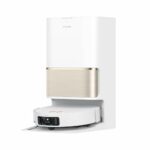
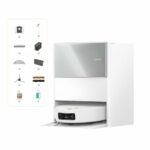
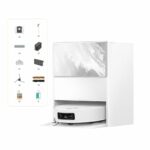
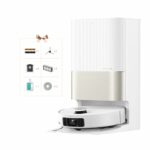
Base dimensions differ more noticeably. The Mova base measures 420 mm wide, 470 mm tall, and 458 mm deep. The Roborock base is narrower at 340 mm but taller at 521 mm, with a depth of 487 mm. The Mova occupies more horizontal space whilst the Roborock requires more vertical clearance. Consider your available floor space when choosing between these configurations.
The robot dust bins show minimal difference: 300 ml on the Mova versus 330 ml on the Roborock. Both water tanks hold 80 ml. These internal capacities matter less given both robots auto-empty and refill at their bases.
Real-World Usage
For homes with thick carpets or rugs, the Mova P50 Ultra's 19,000 Pa suction provides a clear advantage, extracting embedded dirt and pet hair more effectively. The Roborock QV 35A handles hard floors and thin carpets well but may struggle with deep-pile surfaces.
Pet owners will find both models require some brush maintenance given their simple brush designs. The Mova's higher suction helps compensate, pulling more hair into the bin rather than leaving it to wrap around the brush, but neither offers the advanced anti-tangle systems found in some competing models.
The Mova's edge-cleaning advantages—extendable side brush, mop extension with Roboswing, and main brush lift—make it better suited for homes with complex layouts, lots of furniture, and detailed skirting boards. The Roborock provides more straightforward cleaning without these refinements.
Hot water mop washing and hot air drying on the P50 Ultra benefit humid climates or homes where the base sits in poorly ventilated areas. Cold air drying on the Roborock works adequately but takes longer and requires better ventilation to prevent odours.
Base tray self-cleaning on the Mova reduces hands-on maintenance significantly. The Roborock requires periodic manual cleaning of the washing tray, adding a maintenance task every few weeks.
Conclusion: Which to Choose?
Choose the Mova P50 Ultra if: You need maximum suction power for carpets and rugs, want comprehensive edge cleaning with extendable brushes and mops, prefer hot water mop washing with hot air drying for faster results and better hygiene, value automatic base tray cleaning to minimise maintenance, need to clear 22 mm obstacles regularly, or want the option to add detergent to the base system.
Choose the Roborock QV 35A if: You primarily have hard floors or low-pile carpets where 8,000 Pa suffices, trust Roborock's established reliability and app ecosystem, prefer a narrower base footprint (340 mm versus 420 mm), have well-ventilated space for cold air mop drying, don't mind occasional manual base tray cleaning, or want the proven performance of the market-leading robot vacuum brand.
The Mova P50 Ultra suits larger homes with mixed flooring, pets, and users seeking minimal maintenance through automation. The Roborock QV 35A appeals to those prioritising brand reliability, adequate performance for typical homes, and a slightly more compact base design.