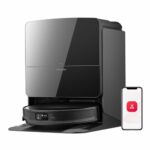
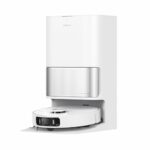
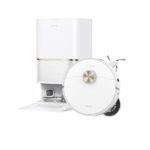
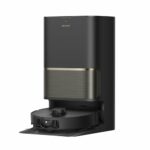
✨ VS Analyze · VacuumSpain comparison technology. AI-generated explanation based on verified technical data.
Introduction
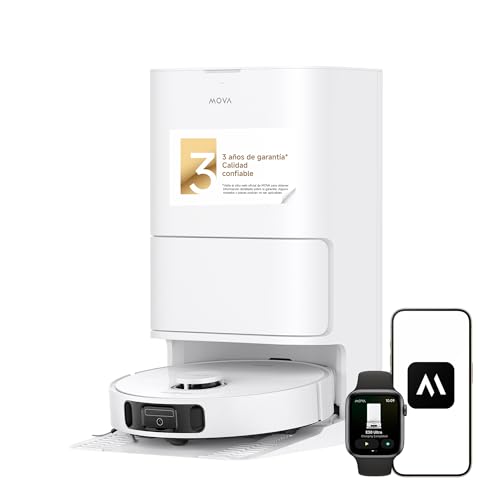
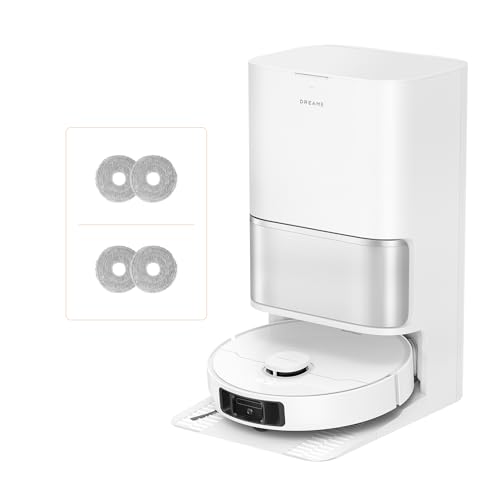
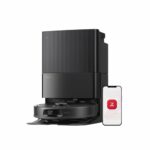
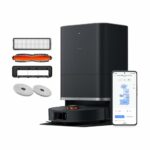
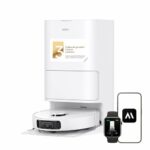
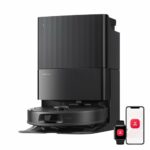
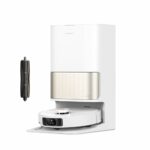
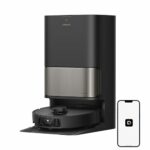
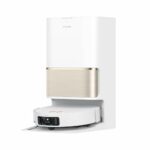
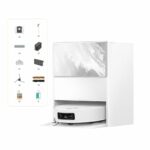
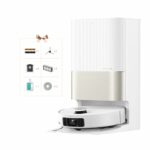
The Mova E30 Ultra and the Dreame L10s Ultra Gen 3 represent two closely related models in the robot vacuum market, sharing a common technological foundation that becomes evident when examining their specifications. The Mova E30 Ultra arrived in 2024, whilst the Dreame L10s Ultra Gen 3 launched in November 2025, bringing with it several meaningful upgrades to the established formula.
Both models feature multifunctional bases capable of auto-emptying, mop washing, and drying, positioning them firmly in the premium segment. They're designed for users seeking comprehensive automation in both vacuuming and mopping tasks, particularly suited to medium to large homes where the convenience of minimal intervention matters.
The differences between these two options, though subtle at first glance, reveal themselves in practical daily use. Understanding where these models diverge helps determine which better suits specific household needs.
Power and Suction
The most striking difference in this comparison concerns suction capability. The Mova E30 Ultra operates at 7,000 Pa, whilst the Dreame L10s Ultra Gen 3 delivers a substantial 25,000 Pa. This isn't merely a numbers game—the gap translates to noticeably different performance on carpets, rugs, and in homes with pets where embedded debris requires more aggressive extraction.
For hard floors and light daily maintenance, 7,000 Pa proves adequate. However, the higher figure on the Dreame model provides headroom for challenging scenarios: thick carpets, pet hair ground into fibres, or households where deep cleaning matters more than gentle operation.
Both models employ a simple main brush without anti-tangle features, meaning neither offers particular advantages for homes with long hair or shedding pets in terms of brush maintenance. The main brush on both units remains fixed during mopping, without elevation capability.
The side brush configuration reveals another distinction. The Dreame L10s Ultra Gen 3 incorporates an extendable side brush that reaches further into corners and along edges, improving coverage in those awkward zones where dust accumulates. The Mova E30 Ultra uses a standard side brush without extension. Neither model elevates the side brush during mopping, and neither features anti-tangle technology in this component.
Mopping
Both models utilise dual rotating mops, a configuration that provides consistent pressure and coverage across floor surfaces. They share identical mop elevation at 10.5 mm, sufficient to clear low-pile rugs and transition strips without dragging wet mops across inappropriate surfaces.
The Dreame L10s Ultra Gen 3 distinguishes itself with mop extension functionality, incorporating movement that allows the pads to reach closer to skirting boards and into tight spaces. This feature addresses one of the common limitations in robot mopping—the inability to clean right up to edges. The Mova E30 Ultra lacks this extension capability, leaving a small perimeter around rooms that requires manual attention.
Both systems rely on cold water for floor mopping, and neither automatically detaches the mops at the base when switching to vacuum-only mode. Dirt detection, whether on the mops themselves or on the floor during cleaning, isn't available on either model, so they follow programmed patterns rather than adapting to visible mess.
In practical terms, the mopping experience differs more in edge coverage than in central floor performance. The extension mechanism on the Dreame model reduces the need for supplementary cleaning around room perimeters.
Navigation System
Navigation technology remains consistent across both models. Each employs a 3D LiDAR turret for room mapping and route planning, combined with frontal 3D laser sensors for obstacle detection. This dual-sensor approach enables reliable navigation in varied lighting conditions and helps avoid common household objects.
Pet recognition features on both robots, allowing them to identify and navigate around animals during cleaning cycles. Neither model includes a camera for remote access or visual obstacle identification, relying instead on laser-based detection. LED lighting for night vision isn't present on either unit.
Both incorporate CleanGenius AI for intelligent cleaning routines, though neither offers AI-based stain recognition that would trigger localised intensive cleaning. The navigation experience should feel virtually identical between these two options, with consistent mapping accuracy and obstacle avoidance behaviour.
Battery and Autonomy
Battery capacity sits at 5,200 mAh for both models, providing the same energy reservoir. The Dreame L10s Ultra Gen 3 lists a runtime of 231 minutes, whilst specific autonomy data for the Mova E30 Ultra isn't available. Given the identical battery capacity but vastly different suction power, the Mova model would theoretically achieve longer runtime when operating at its lower 7,000 Pa setting, though this remains unconfirmed without official figures.
For most homes, the available runtime comfortably covers complete cleaning cycles with margin for returning to the base and resuming if necessary. Neither model struggles with battery limitations in typical residential settings.
Smart Features
Both robots manage 20 mm obstacle climbing, handling standard door thresholds and minor floor transitions without difficulty. This capability matters for homes with varied flooring levels or thick carpeting edges.
Neither model incorporates a robotic arm or proprietary voice assistant. Both support external voice control through Alexa and Google Home, allowing integration into existing smart home ecosystems without requiring additional hardware or subscriptions.
Multifunctional Cleaning Base
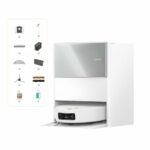
The base stations share fundamental capabilities—auto-emptying with 3.2-litre dust bags, mop washing with cold water, and identical water tank capacities of 4.5 litres for clean water and 4 litres for dirty water. These generous reservoirs reduce refilling frequency even in larger homes with extensive hard flooring.
Mop drying differs significantly. The Mova E30 Ultra uses cold air drying, which takes longer and may not fully eliminate moisture, potentially allowing odours to develop over time. The Dreame L10s Ultra Gen 3 employs hot air drying, accelerating the process and providing more thorough drying that better prevents bacterial growth and unpleasant smells.
The Dreame model features third-generation automatic base tray cleaning, maintaining the washing area without manual intervention. The Mova E30 Ultra requires periodic manual cleaning of the base tray, adding a maintenance task that the newer model eliminates.
A detergent tank appears only on the Dreame L10s Ultra Gen 3, dispensing cleaning solution during mop washing for enhanced cleaning performance. The Mova E30 Ultra washes mops with water alone, which suffices for light soiling but lacks the boosted cleaning power that detergent provides.
The Dreame model offers an optional plumbing connection kit, purchased separately, that allows direct water supply and drainage connections. This eliminates manual tank filling and emptying entirely for users willing to install the system. The Mova E30 Ultra doesn't support this option, requiring ongoing manual water management.
Neither base includes UV disinfection or automatic mop changing capabilities.
Dimensions
The robots themselves measure identically—350 mm diameter and 97 mm height. This compact profile allows both to navigate under most furniture and into tight spaces with equal facility. The 97 mm height clears standard bed frames and many sofas, though lower European-style furniture may still prove inaccessible.
Base dimensions nearly match, with 340 mm width shared by both. Height and depth differ marginally: the Mova base stands 590.5 mm tall versus 590 mm for the Dreame, whilst depth measures 456.7 mm versus 457 mm. These fractional differences hold no practical significance for placement or space requirements.
Real-World Usage Experience
The Mova E30 Ultra suits homes prioritising basic automated cleaning without demanding maximum performance. Its lower suction works adequately on hard floors and low-pile carpets, though pet owners with shedding animals may find it struggles with embedded hair. The absence of edge-cleaning features means accepting a cleaning perimeter that requires occasional manual attention.
Maintenance involves more hands-on tasks: manually cleaning the base tray periodically, and accepting slower mop drying that may require monitoring for odour development. The lack of a detergent tank simplifies operation but reduces cleaning effectiveness on stubborn marks.
The Dreame L10s Ultra Gen 3 delivers a more comprehensive automated experience. Higher suction tackles challenging debris and deep carpet cleaning, whilst the extendable side brush and extending mops reduce the uncleaned perimeter significantly. Hot air mop drying and automatic base tray cleaning minimise maintenance intervention, and the detergent tank enhances mopping results without additional effort.
For larger homes or those with multiple hard floor areas, the Dreame model's features reduce the frequency of supplementary manual cleaning. Pet owners benefit from the substantially higher suction, though both models share the same basic brush design without anti-tangle properties.
Conclusion: Which to Choose?
Choose the Mova E30 Ultra if: your home features primarily hard floors with minimal carpeting, you don't have heavy-shedding pets, and you're comfortable with some manual maintenance tasks. This model works well for smaller to medium-sized homes where edge cleaning can be supplemented occasionally by hand, and where budget considerations favour a more accessible entry point into multifunctional robot cleaning.
Choose the Dreame L10s Ultra Gen 3 if: you want maximum suction for carpets and pet hair, value comprehensive edge and corner coverage, prefer minimal maintenance intervention, or have larger homes where thorough automated cleaning justifies the investment. The hot air mop drying, automatic base cleaning, and detergent dispensing create a notably more hands-off experience. Homes with pets, thick carpets, or users seeking the most complete automation will find the performance gap meaningful in daily use.