Introduction
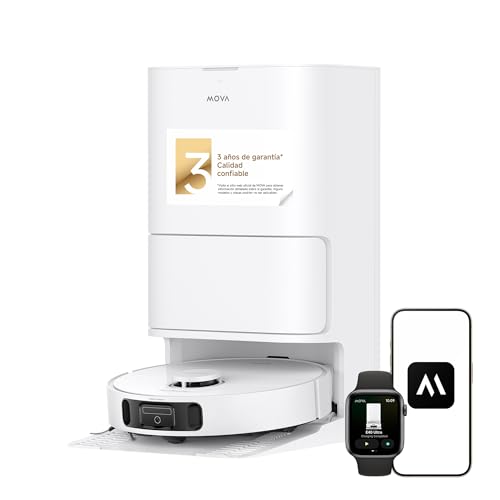
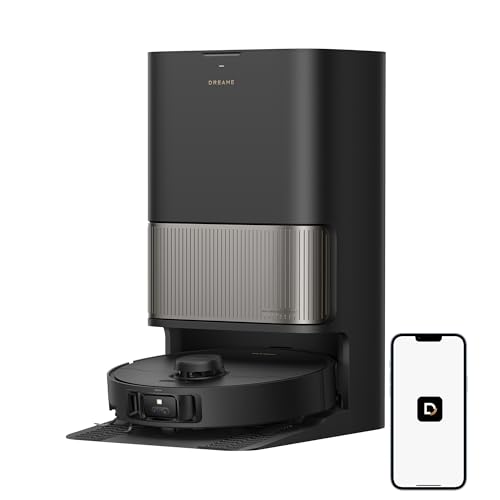
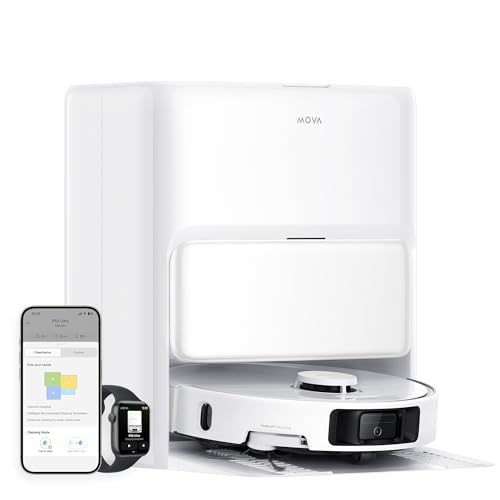
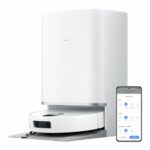
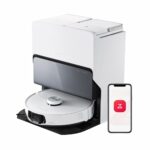
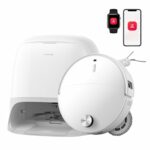
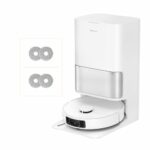
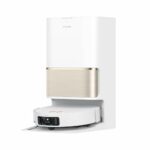
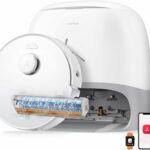
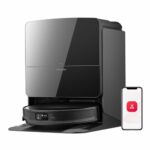
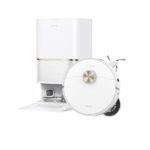
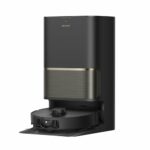
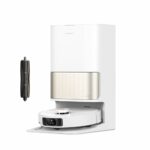
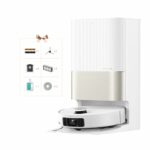
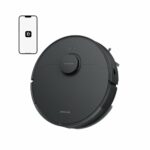
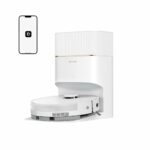
Dreame launched its second brand, Mova, in 2025, with two models that compete directly with its own high-end range: the Mova E40 Ultra and the Mova P50 Ultra versus the Dreame L40s Pro Ultra. All three units share 19,000 Pa suction power and 5,200 mAh batteries, but differences in navigation, mopping and smart features mark distinct territories.
The Dreame L40s Pro Ultra represents the complete technological proposition, whilst the Mova models seek to offer solid performance by trimming some advanced features. For homes with pets, total autonomy needs or users seeking the balance between price and performance, it's worth analysing what each one actually brings to the table.
Power and Suction
All three models offer 19,000 Pa suction power, sufficient for medium-pile carpets and hard floors with embedded dust. The difference appears in the main brush design: the Dreame L40s Pro Ultra features a dual HyperStream anti-tangle brush system, whilst the Mova E40 Ultra and P50 Ultra use a simple silicone brush.
The dual HyperStream brush anchors each roller at one end, which drastically reduces long hair tangles and facilitates cleaning in homes with pets. The silicone brush also minimises tangles, but with a more conventional design.
Where the Dreame sets itself apart is in main brush lift during mopping. Both the L40s Pro Ultra and the P50 Ultra lift the brush automatically to prevent it getting wet, something the E40 Ultra doesn't do. This allows alternating between vacuuming and mopping without manual intervention.
The side brush also presents differences. The Dreame L40s Pro Ultra and the Mova P50 Ultra incorporate extendable and liftable side brush, which improves corner cleaning and avoids dragging wet dirt during mopping. The E40 Ultra maintains a fixed side brush. All three include anti-tangle design on the side brush.
Mopping
The two rotating mops at 180 RPM are identical on all three robots, with 10.5 mm lift to pass over thin carpets without wetting them. They also share the RoboSwing system, which allows extending the mops towards edges and tucking them slightly under furniture with a wiggling movement of the robot.
Mop washing water temperature clearly separates the models. The Dreame L40s Pro Ultra and the Mova P50 Ultra wash mops with hot water at 75°C at the base station, which helps eliminate grease and bacteria. The Mova E40 Ultra stays with cold water, less effective for difficult stains or kitchen residue. All three dry the mops with hot air at 45°C.
The Dreame L40s Pro Ultra adds two exclusive features: automatic mop removal at the base station for vacuum-only sessions, and dirt detection on both mops and floor. This means the robot can return to wash the mops if it detects they're still dirty, or persist on particularly stained floor areas. Neither Mova has these capabilities.
In practice, the Dreame's mopping proves more autonomous and effective in kitchens or high-traffic areas. The P50 Ultra comes close with hot water and brush lift, whilst the E40 Ultra remains a step below by using cold water and lacking intelligent detection.
Multifunction Cleaning Base Station
All three base stations include auto-emptying of the dust bin with 3.2-litre bags, mop washing and drying. Clean water tanks are 4.5 litres on E40 Ultra and Dreame L40s Pro Ultra, and 4 litres on the P50 Ultra. Dirty water is stored in 4 litres (E40 and Dreame) or 3.5 litres (P50).
Third-generation washing tray self-cleaning is present on the Dreame L40s Pro Ultra and the Mova P50 Ultra, but not on the E40 Ultra. This feature keeps the mop washing area clean, preventing dirt accumulation and bad odours in the long term.
The detergent tank comes integrated on the Dreame L40s Pro Ultra, whilst on both Movas it's optional and purchased separately. For users who want to forget about maintenance, having detergent included from the factory is an advantage.
The plumbing connection kit is also optional on the Dreame L40s Pro Ultra (purchased separately), and isn't available for either Mova. This doesn't represent a critical difference, as it requires additional installation and not all users need it.
Navigation System
All three robots use 360° LiDAR turret to map the home and front-facing 3D laser sensor to avoid obstacles. The difference lies in artificial intelligence and visual recognition.
The Dreame L40s Pro Ultra features dual AI camera capable of recognising up to 180 different obstacles, with remote access from the app for monitoring and night vision LED. This allows identifying cables, slippers, toys or pet excrement with precision. The E40 Ultra recognises pets but without camera, and the P50 Ultra doesn't include pet recognition or cameras.
Curtain detection appears on the Dreame L40s Pro Ultra and the Mova P50 Ultra, useful for preventing the robot getting tangled in long curtains. The E40 Ultra lacks this feature.
Regarding intelligent cleaning, the Dreame L40s Pro Ultra and the P50 Ultra integrate CleanGenius 2.0, whilst the E40 Ultra features version 1.0. This affects the robot's ability to automatically adjust power, passes and moisture according to floor type and dirt level.
AI stain recognition is only on the Dreame L40s Pro Ultra, which can visually detect a stain and reinforce cleaning on that specific area. This feature depends on cameras, absent on the Movas.
Runtime and Battery
With 5,200 mAh batteries, the Dreame L40s Pro Ultra achieves 220 minutes runtime, compared to 210 minutes for the Mova E40 Ultra. The Mova P50 Ultra doesn't specify runtime in minutes.
These figures allow covering homes of over 200 m² in a single session, even with mopping. The 10-minute difference between Dreame and E40 Ultra proves irrelevant in practice: both return to base if they run out of battery and resume cleaning after recharging.
Smart Features
Obstacle-climbing capability varies slightly. The Mova E40 Ultra can handle thresholds up to 20 mm, the P50 Ultra climbs 22 mm, and the Dreame L40s Pro Ultra manages single thresholds of 22 mm or double thresholds up to 40 mm. The latter is useful in homes with level changes between rooms or transitions to patios.
Built-in voice assistant is only available on the Dreame L40s Pro Ultra, which allows giving commands directly to the robot without going through Alexa or Google Home. All three models are compatible with external assistants.
Dimensions
The Mova E40 Ultra and the P50 Ultra measure 97 mm in height, compared to 103.8 mm for the Dreame L40s Pro Ultra. Those nearly 7 mm difference can determine whether the robot passes under certain low furniture or beds with little clearance.
Diameter is identical on all three: 350 mm. The base stations of the E40 Ultra and the Dreame L40s Pro Ultra share dimensions (340 mm wide, 590.5 mm tall, 456.7 mm deep), whilst the P50 Ultra base station is wider (420 mm) but less tall (470 mm), with 458 mm depth. This can influence base station placement depending on available space.
Real-world usage experience
In homes with long-haired pets, the Dreame L40s Pro Ultra offers clear advantages: dual HyperStream brush that reduces tangles, visual excrement recognition and mop dirt detection to reinforce washing. The Mova E40 Ultra recognises pets but without camera, and its simple silicone brush requires more manual cleaning. The P50 Ultra doesn't recognise pets.
For large homes over 150 m², all three robots have sufficient runtime. The Dreame stands out for its ability to manage double thresholds and its more precise navigation with dual camera. The E40 Ultra and P50 Ultra perform well on flat surfaces without complicated level changes.
In kitchens with grease or high-traffic areas, hot water washing at 75°C on the Dreame L40s Pro Ultra and the P50 Ultra makes a difference compared to cold water on the E40 Ultra. Dirt detection and automatic re-mopping on the Dreame add a level of autonomy that the Movas don't achieve.
If you need to pass under low furniture, the Mova E40 Ultra and P50 Ultra are lower (97 mm) than the Dreame (103.8 mm). In homes with many corners and edges, the extendable side brush on the Dreame and P50 Ultra sweeps better than the fixed side brush on the E40 Ultra.
The P50 Ultra base station occupies more width but less height, which may fit better in wide, low corners. The E40 Ultra and Dreame base stations are more vertical and narrow.
Conclusion: Which to choose?
Choose Mova E40 Ultra if you're looking for a competent robot for basic vacuuming and mopping, with reduced height to pass under furniture, and you don't need advanced features like cameras or dirt detection. It's the simplest option in the comparison, suitable for small flats without long-haired pets and with a tight budget.
Choose Dreame L40s Pro Ultra if you want maximum autonomy and technology: dual camera with remote access, 180 obstacle recognition, hot water mop washing, dirt detection, built-in voice assistant and ability to overcome double thresholds. Ideal for large homes with pets, level changes and users who prefer not to intervene in maintenance.
Choose Mova P50 Ultra if you need hot water washing and tray self-cleaning, but can do without cameras and advanced recognition. It shares features with the Dreame such as brush lift, extendable side brush and CleanGenius 2.0, but without the cost of cameras. It fits well in medium-sized homes without complicated pets, where effective mopping is a priority but camera monitoring isn't necessary.