✨ VS Analyze · VacuumSpain comparison technology. AI-generated explanation based on verified technical data.
Introduction
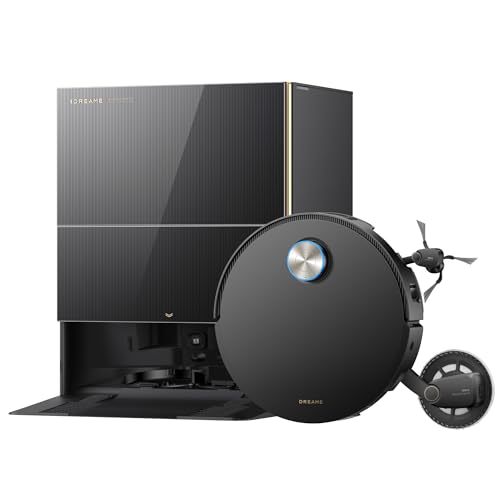
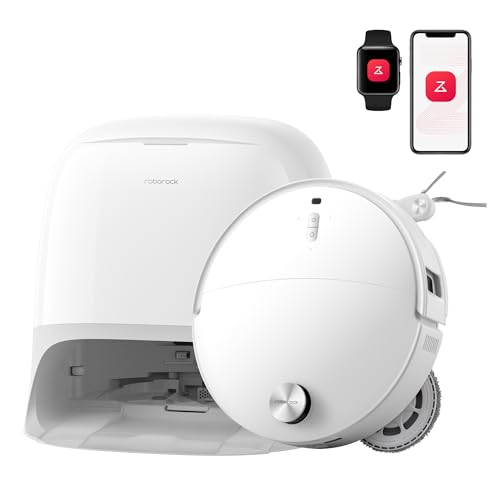
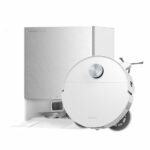
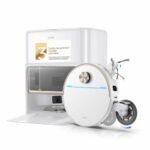
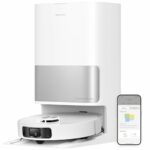
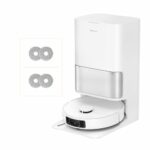
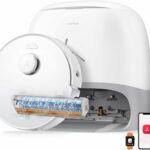
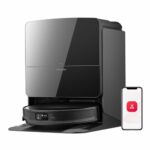
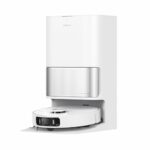
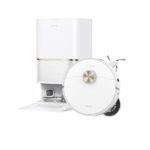
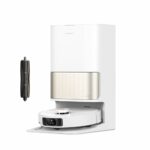
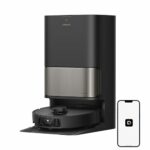
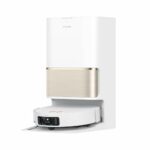
The Roborock Qrevo Curv 2 Pro and Dreame X60 Pro Ultra represent two premium robot vacuum cleaners equipped with multifunctional docking stations. The Roborock model launched in 2025, whilst the Dreame arrived in May 2026. Both units combine powerful suction with rotating mop systems and advanced AI navigation, making them suitable for larger homes requiring comprehensive floor care with minimal intervention.
These aren\'t entry-level machines. Each model features dual cameras, retractable LIDAR, and multifunctional bases that empty dust, wash mops with hot water, and dry them with heated air. The differences lie in their approach to suction power, obstacle climbing ability, and specific cleaning features that can significantly impact daily performance depending on your home layout and flooring types.
Power and Suction
The suction power gap between these models is substantial. The Dreame X60 Pro Ultra generates 42,000 Pa, making it one of the most powerful robot aspirators currently available. The Roborock Qrevo Curv 2 Pro offers 25,000 Pa, which remains impressive but significantly lower. In practical terms, this difference becomes noticeable when dealing with deeply embedded dirt in carpets or fine dust in hard-to-reach corners.
Both robots feature anti-tangle main brush systems, though with different designs. The Roborock uses its DuoDivide technology, which channels hair towards the central suction point to minimise tangling. The Dreame employs a dual HyperStream 2.0 configuration with two brushes anchored at one end. Both systems elevate the main brush during mopping to prevent contamination, and both incorporate anti-tangle side brushes.
The side brush configuration reveals a key distinction. Whilst both models extend their side brushes for better edge cleaning, only the Dreame elevates its side brush during mopping. The X60 Pro Ultra also deploys its side brush robotically by 12 cm and includes a dedicated skirting board brush—a feature absent from the Qrevo Curv 2 Pro. For homes with intricate skirting or challenging edges, this could prove significant.
Mopping Performance
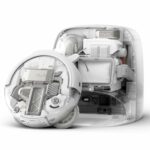
Both robots use dual rotating mop systems, but the Dreame operates at higher specifications. Its mops spin at 280 RPM with 15N of downward pressure, compared to 200 RPM and 12N on the Roborock. This translates to more aggressive scrubbing action, potentially more effective on stubborn marks.
Mop extension differs markedly. The Dreame X60 Pro Ultra extends its mops robotically by 18 cm to reach edges more thoroughly, whilst the Roborock offers mop extension without specifying the mechanism or distance. The elevation capabilities also vary: the Dreame lifts mops to 10.5 mm (21.5 mm when combined with chassis elevation), whereas the Roborock achieves 7 mm (17 mm total). For homes with mixed flooring or thick rugs, the Dreame\'s greater lift height reduces the risk of dragging wet mops across carpets.
A notable difference lies in floor mopping temperature. The Dreame heats water to 40°C before applying it to floors, which can help dissolve grease and grime more effectively. The Roborock uses cold water for floor mopping. Both models, however, wash their mops in the base using 100°C water, ensuring thorough sanitisation between cleaning runs.
Both robots detect dirt on their mops and on the floor, triggering rewashing or additional passes as needed. Each can automatically remove mops at the base when switching to vacuum-only mode. The Dreame includes a detergent tank in its base, dispensing cleaning solution during mop washing; the Roborock lacks this feature.
Navigation System
Navigation hardware is broadly similar. Both employ retractable 360° LIDAR for mapping, dual cameras for AI processing, and frontal 3D laser sensors for obstacle detection. Each robot offers remote camera access, LED lighting for night vision, and recognises pets within the home environment.
The Dreame X60 Pro Ultra recognises 320 different obstacles, compared to 200 on the Roborock Qrevo Curv 2 Pro. Whilst both figures are high, the Dreame\'s broader recognition library may reduce the frequency of missed objects. The X60 Pro Ultra also features proactive illumination to improve obstacle avoidance in dim conditions—a function not specified on the Roborock.
Only the Dreame detects curtains and adjusts its cleaning approach accordingly, potentially useful for homes with floor-length drapes. The Roborock uses SmartPlan 3.0 for intelligent cleaning routines, whilst the Dreame relies on CleanGenius 3.0. Both systems incorporate AI-driven stain recognition and adapt cleaning intensity based on detected dirt levels.
Battery and Autonomy
Battery capacity favours the Roborock significantly. Its 6,400 mAh cell provides 290 minutes of declared runtime, compared to 5,000 mAh and 232 minutes on the Dreame. For larger properties or homes where the robot must cover multiple floors in a single session, the Roborock\'s extended autonomy reduces the likelihood of mid-clean recharging.
The Dreame compensates with PowerMaster fast charging technology, which restores 24% battery capacity in just 5.5 minutes. This rapid top-up can be advantageous if the robot needs to resume cleaning quickly after a partial recharge. The Roborock does not offer fast charging.
Smart Features
Obstacle climbing ability differs dramatically between these models. The Roborock Qrevo Curv 2 Pro manages single steps up to 30 mm and double steps up to 40 mm. The Dreame X60 Pro Ultra tackles single obstacles of 52 mm and double obstacles reaching 100 mm. In practical terms, the Dreame can navigate over door thresholds, thick rugs, and uneven flooring transitions that would stop the Roborock entirely.
Both robots include built-in voice assistants and support external assistants such as Alexa and Google Home. Each is compatible with Matter, though the Roborock requires an OTA update to enable this functionality.
Multifunctional Docking Station
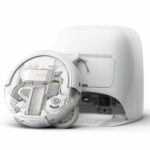
Both bases auto-empty dust, wash mops with 100°C water, and dry them with heated air. The Roborock dries mops at 55°C, slightly warmer than the Dreame\'s 50°C. The Roborock employs its 3.0 generation auto-cleaning system for the washing tray, whilst the Dreame uses 100°C water for tray cleaning.
Dust bag capacity is larger on the Dreame at 3.2 litres versus 2.5 litres on the Roborock, meaning less frequent bag changes. Clean water tanks are similar: 4.2 litres for the Dreame, 4 litres for the Roborock. Dirty water capacity is identical at 3 litres.
The Dreame offers an optional plumbing connection kit, purchased separately, allowing the base to refill and drain automatically. The Roborock has no such option. Neither model includes integrated plumbing connections as standard.
Dimensions
The Roborock Qrevo Curv 2 Pro measures 352 mm in diameter and stands 79.8 mm tall, making it the lower-profile option. The Dreame X60 Pro Ultra has a 350 mm diameter but reaches 89 mm in height when retracted. That extra centimetre in height could prevent the Dreame from fitting beneath certain furniture where the Roborock would pass comfortably.
Base dimensions differ in layout. The Roborock\'s base is a 450 mm cube, whilst the Dreame measures 390 mm wide, 499 mm tall, and 456 mm deep. The Dreame\'s narrower footprint may suit tighter spaces, though its greater height requires more vertical clearance.
Onboard dust capacity is 245 ml for the Roborock and 310 ml for the Dreame. Water tank sizes are 67 ml and 80 ml respectively. These differences are modest but may influence how often the robot returns to the base during large cleaning sessions.
Real-World Use Experience
For large homes, the Roborock\'s extended battery life and lower profile offer clear advantages. Its 290-minute runtime covers expansive floor areas without recharging, and its 79.8 mm height allows it to clean under more furniture. However, the Dreame\'s superior obstacle-climbing ability means it handles varied flooring levels and thick rugs more reliably, reducing the need for manual intervention.
Households with pets benefit from both models\' anti-tangle brushes and pet recognition features. The Dreame\'s higher suction power may prove more effective at extracting embedded pet hair from carpets, whilst the Roborock\'s longer runtime ensures it completes large areas without pausing.
For hard floors and parquet, the Dreame\'s 40°C heated mopping water and faster mop rotation provide a more intensive clean. The detergent tank in its base adds cleaning solution automatically, reducing manual effort. The Roborock\'s cold water mopping is less aggressive but still effective for routine maintenance, and its lower profile helps it reach under cabinets and beds.
Homes with significant level changes favour the Dreame decisively. Its ability to surmount 52 mm single steps and 100 mm double obstacles means it navigates transitions the Roborock cannot manage. Conversely, the Roborock\'s lower height and longer battery make it ideal for single-level homes with extensive floor space and low-clearance furniture.
Conclusion: Which Should You Choose?
Choose the Roborock Qrevo Curv 2 Pro if you have a large, single-level home with extensive floor area and low-clearance furniture. Its 290-minute battery life ensures it covers wide spaces without recharging, and its 79.8 mm height allows it to clean beneath beds, sofas, and cabinets where taller robots cannot reach. The 6,400 mAh battery provides peace of mind for expansive properties, and the 450 mm cubic base fits neatly into corners. Ideal for users prioritising extended autonomy and access to tight spaces over maximum suction power.
Choose the Dreame X60 Pro Ultra if your home features multiple floor levels, thick rugs, or challenging thresholds. Its 52 mm single-step climbing ability and 100 mm double-step capability mean it navigates obstacles the Roborock cannot manage. The 42,000 Pa suction power excels at deep carpet cleaning, whilst the 40°C heated mopping water and faster mop rotation deliver more intensive floor care. The detergent tank, proactive illumination, and larger dust bag reduce maintenance frequency. Best suited to homes with mixed flooring, pets, and varied floor levels where powerful cleaning and obstacle navigation outweigh concerns about battery life and furniture clearance. The optional plumbing kit (sold separately) also appeals to users seeking maximum automation.