✨ VS Analyze · VacuumSpain comparison technology. AI-generated explanation based on verified technical data.
Introduction
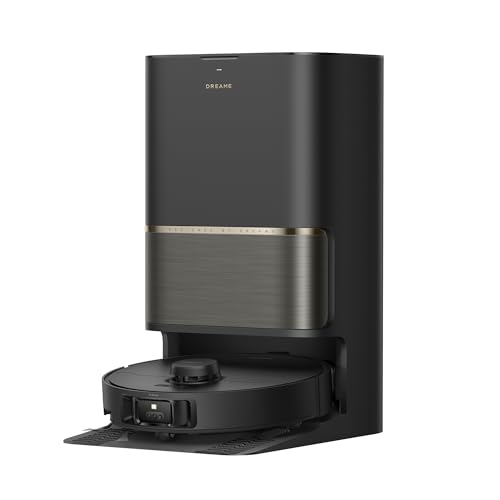
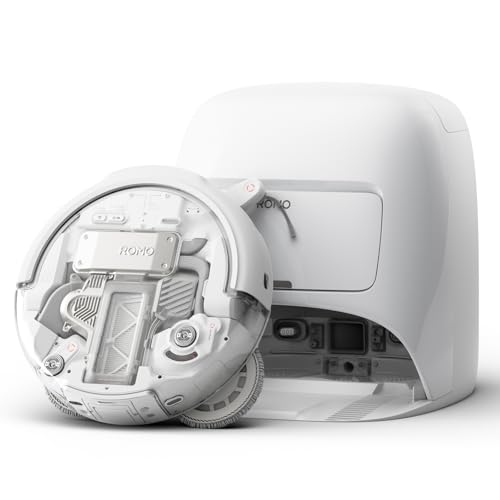
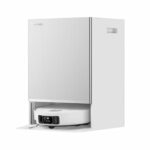
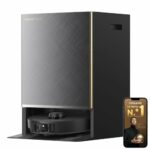
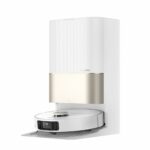
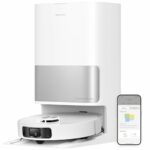
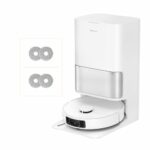
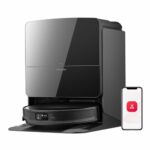
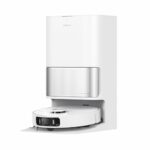
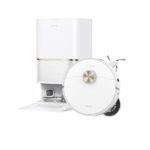
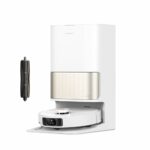
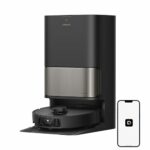
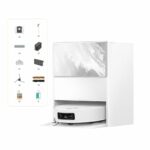
The Dreame L50s Pro Ultra and the DJI Romo A (Robot Transparente) represent two high-end proposals with complete multifunction base. The Dreame model arrives in 2026 with a focus on suction power and advanced cleaning capabilities, whilst the DJI Romo A landed in 2025 marking this brand's entry into the robot vacuum sector with a distinctive design and proprietary technology.
Both units are designed for users seeking a comprehensive cleaning solution without manual intervention, with rotating mopping systems, automatic mop washing and automatic dust bin emptying. The main difference lies in suction power, the design of their brushing systems and some specific functionalities that may make a difference depending on the type of home and particular needs.
Power and Suction
The 5,000 Pa difference between both models is significant. The Dreame L50s Pro Ultra offers 30,000 Pa, a figure that places this robot amongst the most powerful on the market. The DJI Romo A, with its 25,000 Pa, is not far behind and maintains more than sufficient suction capacity for most domestic situations.
Regarding the main brushing system, the Dreame opts for its dual HyperStream brush technology, specifically designed to prevent hair tangles thanks to its anchoring at one end. The DJI Romo A employs a split brush that pushes hairs towards the central gap to facilitate suction. Both systems are effective against tangles, albeit with different design philosophies.
Both models lift the main brush during mopping to prevent it from interfering with the mops, and both feature an extendable side brush to improve corner cleaning. The Dreame L50s Pro Ultra's advantage lies in its liftable side brush, a function the DJI does not incorporate. This allows the Dreame model to raise the side brush during mopping, preventing it from getting unnecessarily wet or interfering with the mop system. Both include anti-tangle technology on the side brush, with the DJI featuring a specific dual brush for this function.
Mopping
Both robots use a two rotating mop system, currently the most effective configuration for domestic mopping. Both models incorporate mop extension to better reach edges and skirting boards, although the Dreame L50s Pro Ultra adds Roboswing movement, a system that performs a lateral movement to slightly introduce the mop under furniture or protrusions.
Mop lifting is present on both units, with the Dreame standing out with 10.5 mm of lift. This function is especially useful when the robot moves from hard floor areas to carpets or rugs, preventing them from getting wet during mopping.
An important difference is found in mop washing. The Dreame L50s Pro Ultra washes mops with hot water, which improves the removal of grease and adhered dirt. The DJI Romo A performs washing with cold water. Both dry the mops with hot air, a feature that helps reduce bad odours and bacterial growth.
The Dreame confirms the ability to automatically detach the mops at the base when only vacuuming is desired, avoiding having to do it manually. This information is not confirmed for the DJI Romo A. Both robots detect dirt on both the mops and the floor, automatically adjusting the cleaning process as necessary.
Navigation System
The Dreame L50s Pro Ultra mounts a traditional 3D LiDAR turret, whilst the DJI Romo A uses solid-state LiDAR. Both technologies allow precise home mapping, albeit with different technical implementations.
Regarding artificial intelligence, the Dreame incorporates dual AI camera compared to the DJI's single camera. The Dreame model recognises up to 220 different objects, a figure that is not specified for the DJI Romo A. This recognition capability includes pets and curtains, two elements that the Dreame specifically identifies and which are not confirmed on the DJI robot.
Both units feature a front 3D laser sensor, remote camera access and LED for night vision. Both models incorporate intelligent AI cleaning and stain recognition for automatic re-mopping of particularly dirty areas.
Autonomy and Battery
The Dreame L50s Pro Ultra is equipped with a 5,200 mAh battery, slightly superior to the DJI Romo A's 5,000 mAh. This 200 mAh difference may translate into a few additional minutes of autonomy, although actual duration will depend on the cleaning mode used.
The DJI Romo A specifies an autonomy of 180 minutes, data that is not available for the Dreame. In practice, with these battery capacities, both robots are prepared to clean large homes without requiring intermediate recharges.
Smart Functions
The DJI Romo A can overcome steps of up to 20 mm, whilst the Dreame L50s Pro Ultra manages simple steps without specifying the exact height. This capability is useful for overcoming small level differences between rooms or when moving from one room to another with different floor types.
The Dreame L50s Pro Ultra incorporates its own voice assistant thanks to its CleanGenius system, a function not confirmed on the DJI. Both models are compatible with external voice assistants such as Alexa or Google Home, allowing control via voice commands through these ecosystems.
Multifunction Cleaning Base
Both bases include automatic dust bin emptying, mop washing and drying with hot air, and detergent tank for adding product during mop washing. Both feature self-cleaning systems for the washing tray: the Dreame with third-generation technology and the DJI with automatic cleaning nozzle.
The dust bag capacity is greater on the Dreame L50s Pro Ultra with 3.2 litres compared to the DJI's 2.4 litres. This means fewer bag changes over time. Regarding water tanks, the Dreame also offers greater capacity: 4.5 litres of clean water and 4 litres of dirty water, compared to the DJI Romo A's 4 litres and 3.2 litres respectively.
The Dreame L50s Pro Ultra offers a plumbing connection kit that is purchased separately, allowing direct connection to water supply and drainage. The DJI Romo A does not include this option. Neither model incorporates UV disinfection nor automatic mop changing.
Dimensions
The DJI Romo A has a clear advantage in height: 98 mm compared to the Dreame L50s Pro Ultra's 103.8 mm. Almost 6 millimetres difference can make a difference when passing under low furniture, sofas or beds with little clearance.
In diameter they are practically identical: 350 mm for the Dreame and 351 mm for the DJI. Both maintain the standard size of circular robot vacuums.
The bases present different designs. The Dreame's is taller (590 mm) and narrower (340 mm wide), whilst the DJI's is lower (440 mm) but wider (453 mm). The depth is similar: 457 mm for the Dreame and 425 mm for the DJI. It is advisable to measure the available space before deciding, especially if planning to place the base in a specific gap.
Real-world experience
For large homes, the Dreame L50s Pro Ultra offers clear advantages: greater suction power, larger tanks in the base and a slightly superior battery. The 4.5-litre clean water capacity allows cleaning more surface area without manual refilling, something appreciated in homes over 100 square metres.
In homes with pets, both anti-tangle brushing systems work well. The Dreame's greater power may be a point in favour for hair embedded in carpets, although the DJI with its 25,000 Pa also offers reliable results. The Dreame's specific pet recognition can help avoid unwanted surprises during cleaning.
If the home has low furniture, the DJI Romo A has an advantage with its 98 mm height. Those 5.8 millimetres less may allow it to access spaces where the Dreame would not fit. For those who value deep mopping, the Dreame's hot water mop washing makes a difference in removing grease and difficult stains.
Maintenance is similar on both models, although the Dreame requires less frequent bag changes thanks to its greater capacity. The option to connect the Dreame to plumbing completely eliminates the need to refill or empty tanks, although it requires additional investment in the kit and proper installation.
Conclusion: Which to choose?
Choose the Dreame L50s Pro Ultra if: You seek the maximum available suction power, you have a large home that benefits from larger tanks, you value hot water mop washing for more effective mopping, or you are interested in the future possibility of connecting the robot to plumbing. It is also the best option if you have pets and want more extensive specific object recognition, or if the liftable side brush is important to you for cleaner mopping.
Choose the DJI Romo A (Robot Transparente) if: You need a lower robot that can access under furniture with little clearance, you prefer a more compact base in height even if somewhat wider, or you are attracted to DJI's distinctive design. With 25,000 Pa of suction it remains a very powerful unit, and its split brush system works effectively against tangles. It is a solid option for those who trust DJI technology and seek a complete cleaning solution without needing the extras that the Dreame offers.