✨ VS Analyze · VacuumSpain comparison technology. AI-generated explanation based on verified technical data.
Introduction
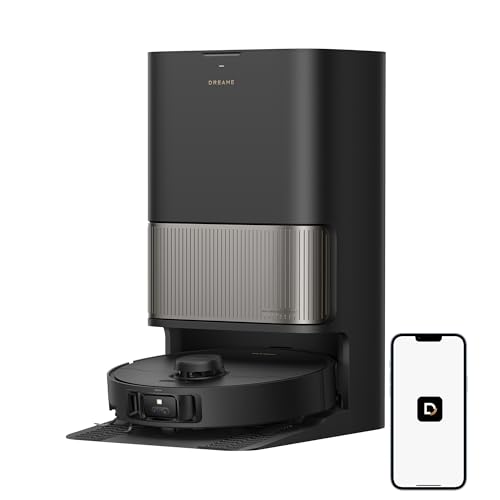
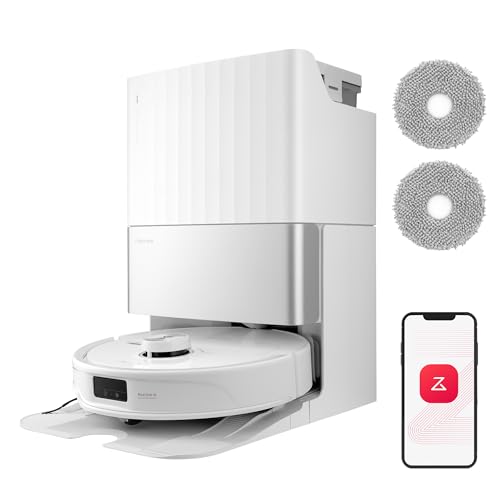
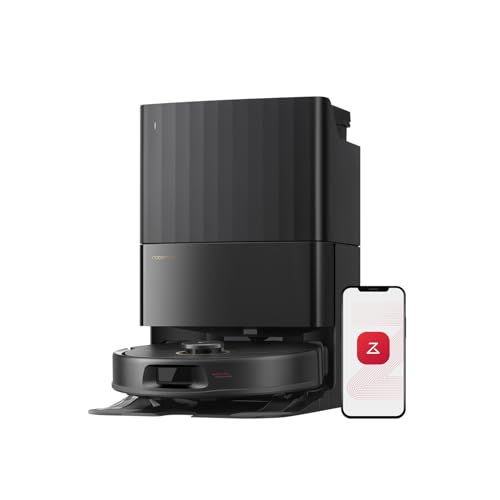
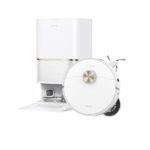
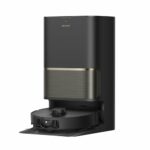
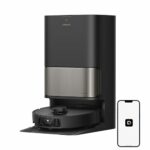
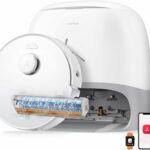
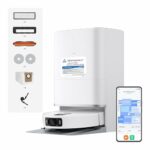
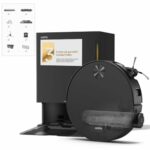
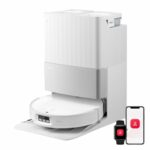
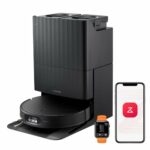
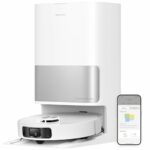
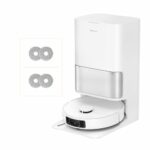
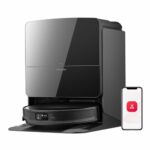
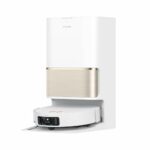
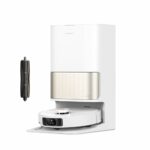
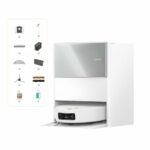
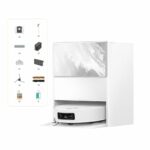
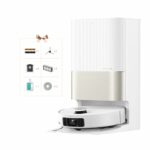
The Dreame L40s Pro Ultra, the Roborock Qrevo Master and the Roborock Qrevo S5V represent three distinct approaches within the high-end range of robot vacuum cleaners with mopping. The Dreame model arrives in 2025 with specifications aimed at the premium segment, whilst the Roborock Qrevo Master debuted in 2024 as a balanced option. The Qrevo S5V, also from 2025, is positioned as a more accessible alternative within the Qrevo family, dispensing with some advanced functions to adjust the price.
These devices are designed for users seeking complete automation in home cleaning. All three incorporate a multifunctional base with mop washing and drying, but the differences in power, navigation and smart functions mark clearly differentiated usage profiles.
Power and Suction
The most striking difference appears in suction power. The Dreame L40s Pro Ultra practically doubles the Roborock Qrevo Master with its 19,000 Pa, a figure that places it amongst the most powerful robots on the market. The Qrevo S5V remains at 12,000 Pa, surpassing the Master but falling well short of the Dreame. In homes with thick carpets or pets that shed a lot of hair, this difference can be particularly noticeable during deep vacuuming.
All three devices feature dual anti-tangle brush systems. The Dreame uses HyperStream, whilst the two Roborock models opt for DuoDivide. Both designs aim to reduce hair tangles, albeit with different technical approaches. The main brush of the Dreame and the Qrevo Master can be lifted during mopping, something the S5V doesn't offer. This allows the robot to vacuum carpets without unnecessarily wetting the mops.
The extendable side brush is present in the Dreame L40s Pro Ultra and in the Qrevo Master, facilitating corner cleaning. The S5V dispenses with this function. More relevant is that only the Dreame incorporates side brush lifting during mopping, preventing it from projecting dirty water towards already clean areas. The anti-tangle side brush appears in the Dreame and in the Qrevo S5V, but not in the Master.
Mopping
All three models employ two rotating mop systems for mopping. All extend the mops to better reach edges, although the Dreame adds the Roboswing system that allows additional movement to slightly get under furniture or overhangs. Mop lifting reaches 10.5 mm in the Dreame compared to 10 mm in both Roborock models, a minimal difference in practice.
Mop washing is carried out with hot water in all three devices. Drying also uses hot air in all cases, speeding up the process and reducing the appearance of bad odours. Where the Dreame stands out is in the ability to automatically detach the mops at the base when you only want to vacuum, something the Roborock models don't allow.
Dirt detection both in the mops and on the floor is available in the Dreame L40s Pro Ultra and in the Qrevo Master. This allows the robot to go over particularly dirty areas again or rewash the mops when it detects they're too stained. The Qrevo S5V lacks this function, which limits its ability to adapt to difficult stains.
Navigation System
The Dreame L40s Pro Ultra and the Roborock Qrevo Master integrate dual camera with artificial intelligence and front 3D laser sensor. This combination allows them to recognise obstacles with precision and adjust the route in real time. The Qrevo S5V is left with basic LIDAR turret without cameras or 3D sensors, a simplification that reduces costs but also capabilities.
The number of recognised obstacles is significantly higher in the Dreame: 180 objects compared to the Qrevo Master's 62. For the S5V this data isn't specified, probably because its camera-less system doesn't allow advanced identification. Pet recognition works in Dreame and Qrevo Master, useful for avoiding accidents with feeding bowls or toys. Curtain detection only appears in the Dreame.
Remote camera access is available in the two models with dual camera, allowing you to monitor the home from the app. The front LED for night vision is also exclusive to these two devices. The Qrevo S5V, lacking a camera, doesn't offer any of these functions.
Autonomy and Battery
All three robots feature 5,200 mAh batteries, but performance differs. The Dreame L40s Pro Ultra achieves 220 minutes of battery life, whilst both Roborock models remain at 180 minutes. This 40-minute difference can be decisive in homes of more than 150 square metres, where the robot needs to complete cleaning without intermediate recharges.
The Dreame's greater suction power doesn't seem to excessively penalise its battery life, which suggests efficient energy management. For large houses with multiple rooms, those extra minutes make the difference between a complete clean and having to schedule two passes.
Smart Functions
The ability to overcome obstacles varies between models. The Dreame L40s Pro Ultra can cross simple steps, although the exact height isn't specified. The two Roborock models reach 20 mm, sufficient for most transitions between rooms and small level changes such as thick carpets or door thresholds.
The built-in voice assistant appears in the Dreame L40s Pro Ultra and in the Roborock Qrevo Master, allowing control by commands without depending on Alexa or Google Home. The Qrevo S5V only supports external assistants, which remains functional but less integrated. All three models are compatible with these third-party services.
Multifunctional Cleaning Base
All three bases include auto-emptying, washing with hot water and drying with hot air. Washing tray self-cleaning marks important differences: the Dreame incorporates third generation of this system, the Qrevo Master version 1.0 and the S5V directly doesn't have it. This affects maintenance: without self-cleaning, you have to manually clean the tray more frequently to avoid dirt accumulation.
Only the Dreame L40s Pro Ultra includes an integrated detergent tank in the base, dispensing product during mop washing. The Roborock models force you to use only water. The plumbing connection kit is available as an optional purchase for the Dreame, although it doesn't come as standard. The two Roborock models don't offer this possibility even as an accessory.
Dust bag capacity reaches 3.2 litres in the Dreame compared to 2.7 litres in both Roborock models. The clean water tank is 4.5 litres in the Dreame and 4 litres in the Roborock models. Dirty water is stored in 4 litres and 3.5 litres respectively. These differences allow the Dreame to space out maintenance more, especially in large houses where more waste is generated.
Dimensions
The diameter barely varies: 350 mm in the Dreame compared to 353 mm in the two Roborock models. Height does show relevant differences. The Qrevo S5V measures 96.5 mm, becoming the lowest and facilitating access under furniture. The Qrevo Master reaches 103 mm and the Dreame L40s Pro Ultra 103.8 mm. Those extra millimetres can prevent the Dreame from getting under some sofas or low beds where the S5V would access.
The bases have similar dimensions in width (340 mm in all three cases), but differ in height and depth. The Dreame base is the tallest at 590.5 mm, compared to 521 mm for both Roborock models. In depth, the Dreame occupies 456.7 mm whilst the Roborock models need 487 mm. It's advisable to measure the available space before deciding, especially if you plan to locate the base in a tight space.
Real-World Usage Experience
For large homes, the Dreame L40s Pro Ultra offers clear advantages: greater battery life, larger tanks and superior suction power. If you have more than 150 square metres with carpets and pets, these features translate into more complete cleaning without manual intervention.
The Roborock Qrevo Master balances advanced functions with more compact base dimensions. The dual camera and 3D sensor guarantee precise navigation, although the 10,000 Pa power may fall short on long-pile carpets. It's suitable for medium-sized flats with hard floors and thin carpets.
The Qrevo S5V is aimed at those who prioritise price over advanced functions. Its lower height allows access under more furniture, but the absence of cameras, dirt detection and tray self-cleaning requires greater supervision. It works well in small houses without pets and with basic cleaning needs.
The Dreame's tray self-cleaning (third generation) significantly reduces maintenance compared to the Qrevo Master (first generation) and especially compared to the S5V which lacks it. If you value the robot's total autonomy, this can be decisive.
Conclusion: Which to Choose?
Choose the Dreame L40s Pro Ultra if you're seeking maximum performance without compromises. Its 19,000 Pa power, 220-minute battery life, detergent tank and recognition of 180 obstacles make it the most complete option. Ideal for large houses with pets, thick carpets and users who want to forget about maintenance for weeks. The liftable side brush and third-generation tray self-cleaning justify the investment if you prioritise absolute convenience.
Choose the Roborock Qrevo Master if you want advanced functions with more manageable base dimensions. The dual camera, 3D sensor and built-in voice assistant cover the needs of most homes. Although its 10,000 Pa power is lower than the Dreame, it's sufficient for hard floors and medium-thickness carpets. Good option for flats up to 120 square metres where Roborock's reliability provides peace of mind.
Choose the Roborock Qrevo S5V if your priority is to adjust the budget whilst maintaining a multifunctional base. Its 96.5 mm height facilitates cleaning under low furniture, and the 12,000 Pa power covers standard needs. Suitable for small houses without pets, with mainly hard floors and users willing to carry out somewhat more manual maintenance. The absence of cameras and dirt detection limits it in complex environments, but it performs more than adequately in simple scenarios.