✨ VS Analyze · VacuumSpain comparison technology. AI-generated explanation based on verified technical data.
Introduction
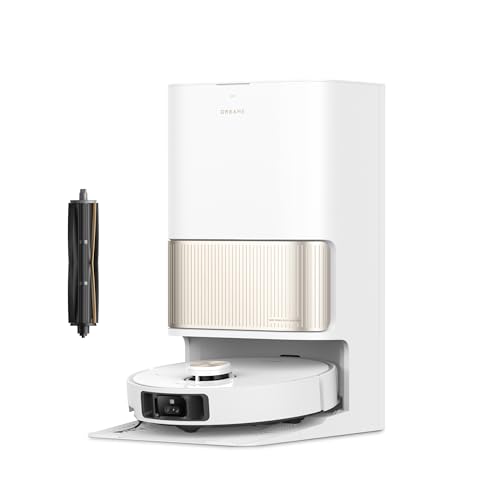
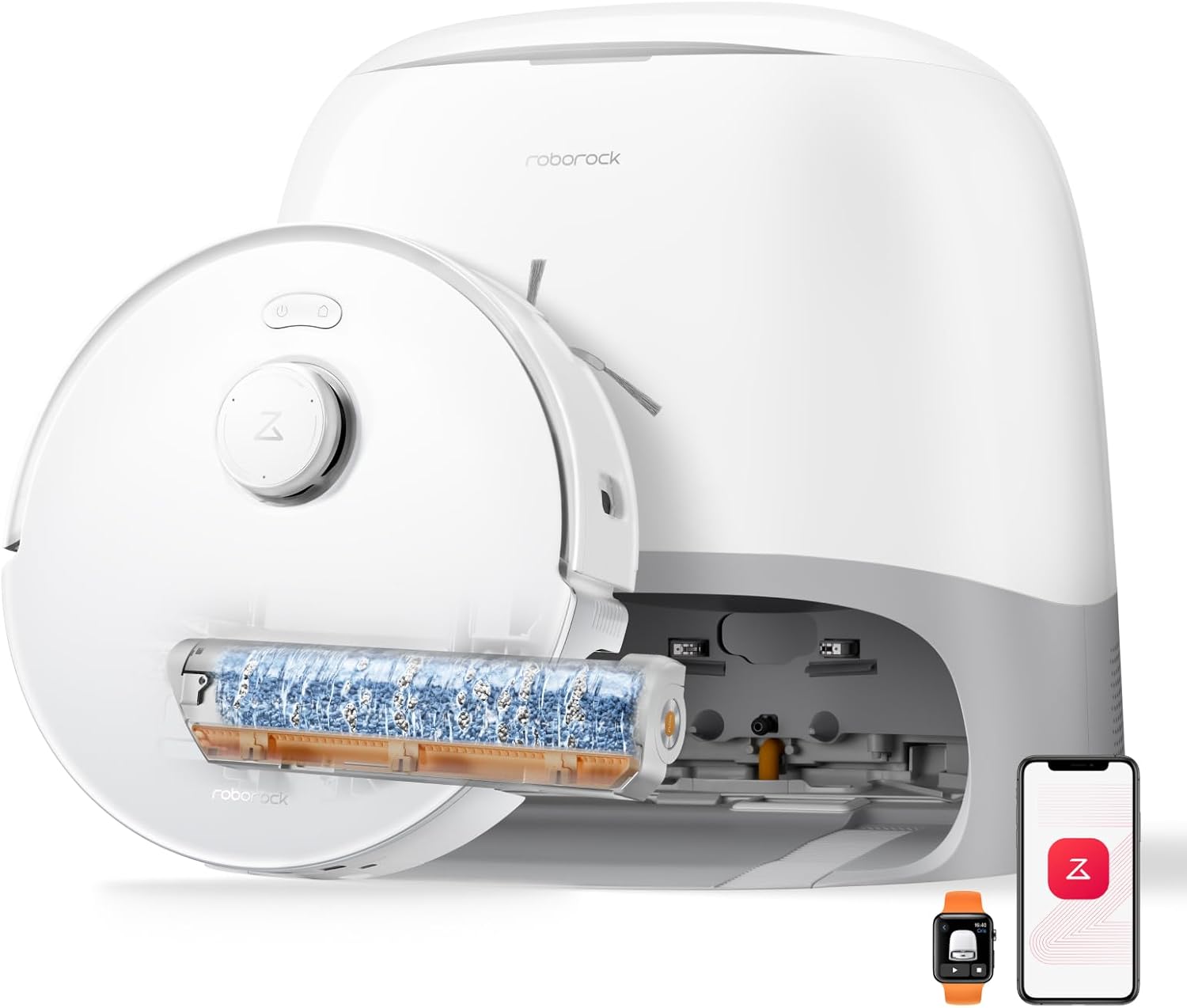
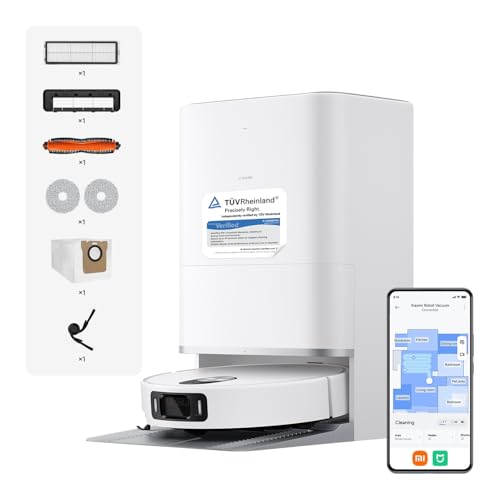
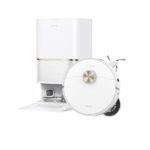
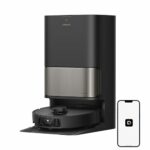
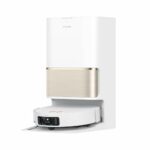
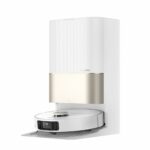
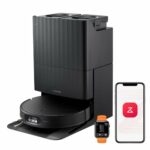
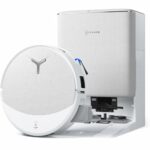
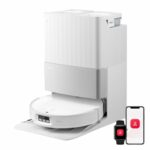
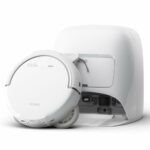
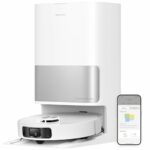
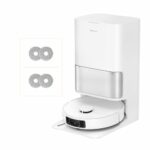
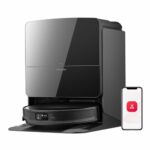
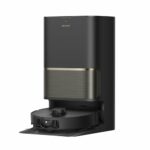
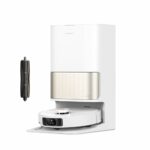
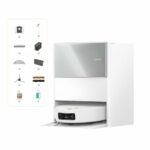
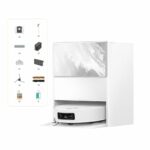
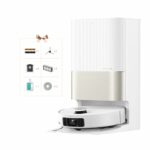
This comparison brings together three high-end robot vacuum cleaners launched between 2024 and 2026: the Dreame L40 Ultra, the Roborock Qrevo Curv 2 Flow and the Xiaomi Robot Vacuum 5 Pro. All three units integrate a complete multifunction base, which guarantees professional mopping thanks to automatic mop washing during cleaning. These are models designed for users seeking total automation and demanding cleaning results, especially in medium or large homes with a combination of hard floors and carpets.
The Dreame L40 Ultra arrives as a well-established option from the Chinese manufacturer, whilst the Roborock Qrevo Curv 2 Flow represents the latest generation from the world's leading robot vacuum brand, with a launch scheduled for February 2026. The Xiaomi Robot Vacuum 5 Pro, launched in 2025, completes the trio with a proposal that shares technology with Dreame but with its own nuances in design and features.
Power and Suction
The most striking difference in this section is marked by suction power. The Dreame L40 Ultra stays at 11,000 Pa, a figure that may seem modest when compared to the 20,000 Pa developed by both the Roborock Qrevo Curv 2 Flow and the Xiaomi Robot Vacuum 5 Pro. This difference is particularly noticeable on medium or long pile carpets, where deep extraction capacity is crucial.
Regarding the main brush, we find two different philosophies. The Dreame L40 Ultra and the Xiaomi Robot Vacuum 5 Pro feature the TriCut 3.0 system, which combines bristles with blades to cut tangled hair. The Roborock Qrevo Curv 2 Flow opts for the DuoDivide Antienredos brush, a design that pushes hair towards the central gap to facilitate direct suction. All three models allow the main brush to be raised during mopping, avoiding contaminating the mops with dry dirt.
The side brush also presents interesting variations. The Dreame and Xiaomi integrate an extendable side brush, useful for better sweeping corners. The Roborock does without this function but compensates with a dual anti-tangle side brush system. Only the Dreame and Roborock can raise the side brush during mopping, a feature that the Xiaomi does not incorporate.
Mopping
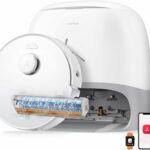
Here appears one of the most significant differences in this robot vacuum comparison. The Roborock Qrevo Curv 2 Flow uses a 270 mm roller for mopping, a system that covers more surface area in one pass and is especially effective on stubborn stains. The Dreame L40 Ultra and Xiaomi Robot Vacuum 5 Pro employ two rotating mops, a more traditional design but equally effective when the mops are washed frequently at the base.
All three robots extend the mops to better reach edges. The Dreame also adds the Roboswing system, a lateral movement that helps get the mop under furniture overhangs. Mop lift marks another difference: the Roborock and Xiaomi lift up to 15 mm, whilst the Dreame is limited to 10.5 mm. Those extra millimetres can be decisive on high pile carpets.
An exclusive advantage of the Dreame L40 Ultra is the ability to automatically remove the mops at the base when you only want to vacuum. Neither the Roborock nor the Xiaomi offer this function, which means they must be removed manually if you want to avoid dragging them unnecessarily. All three models detect dirt both on the mops and on the floor, automatically adjusting mopping intensity or repeating passes when necessary.
Navigation System
The Xiaomi Robot Vacuum 5 Pro stands out for featuring a retractable LiDAR, which contributes to its reduced height of 88 mm. The Dreame L40 Ultra and Roborock Qrevo Curv 2 Flow use a traditional LiDAR turret, taller but equally precise. All three units integrate an AI camera, front 3D laser sensor, LED for night vision and remote camera access.
Object recognition capability varies notably. The Roborock and Xiaomi identify up to 200 different obstacles, whilst the Dreame stays at 100. In practice, this translates to greater precision in avoiding cables, toys or clothes on the floor. The Dreame and Roborock recognise pets, a function absent in the Xiaomi. Only the Dreame detects curtains, avoiding getting tangled in them during cleaning.
The Dreame L40 Ultra specifies its AI Sage 11.0 processor with CleanGenius system, although the other two manufacturers do not detail their algorithms in the available information. All three models feature stain recognition using artificial intelligence, adapting cleaning to the real needs of each area.
Autonomy and Battery
All three robots feature 5,200 mAh batteries, but energy management produces very different results. The Roborock Qrevo Curv 2 Flow leads with 242 minutes of battery life, sufficient to clean large homes without intermediate recharges. The Dreame L40 Ultra reaches 194 minutes, a more than adequate figure for most homes. The Xiaomi Robot Vacuum 5 Pro stays at 140 minutes, the tightest battery life of the trio.
This difference can be explained by the higher suction power of the Roborock and Xiaomi, which in theory should consume more energy. However, the Roborock manages to optimise consumption better than the Xiaomi, resulting in superior battery life despite developing the same 20,000 Pa power.
Smart Functions
The ability to overcome obstacles shows small differences. The Dreame L40 Ultra can climb steps up to 22 mm, whilst the Roborock Qrevo Curv 2 Flow and Xiaomi Robot Vacuum 5 Pro stay at 20 mm. Those extra two millimetres can make the difference on door thresholds or level changes between rooms.
The Dreame and Roborock integrate their own voice assistant, allowing the robot to be controlled via direct commands without needing a smartphone. The Xiaomi does not include this function, although all three models are compatible with Alexa and Google Home for integration into home automation ecosystems.
Multifunction Cleaning Base
All three bases perform auto-emptying of the dust container, mop washing with hot water and drying with hot air. They also include self-cleaning of the washing tray, avoiding accumulation of dirt and bad odours. None incorporates UV disinfection or integrated connection to water pipes.
The Dreame L40 Ultra is the only one that includes a detergent tank, dispensing product during mop washing to improve hygiene. This function is not present in the Roborock or Xiaomi. The Dreame also offers an optional pipe connection kit, although it must be purchased separately.
Dust bag capacity favours the Dreame with 3.2 litres, followed by the Roborock with 2.7 litres and the Xiaomi with 2.5 litres. In clean water tanks, the Dreame leads with 4.5 litres compared to 4 litres for the Roborock and Xiaomi. For dirty water, the Dreame offers 4 litres, the Xiaomi 3.8 litres and the Roborock 3.5 litres. These differences determine the frequency of maintenance required.
Dimensions
The Xiaomi Robot Vacuum 5 Pro stands out for its height of just 88 mm, which allows it to slip under low furniture where the other two cannot access. The Dreame L40 Ultra measures 103.8 mm and the Roborock Qrevo Curv 2 Flow reaches 119 mm, the tallest height of the group. For homes with low sofas or beds, this difference is crucial.
In diameter, the Dreame and Xiaomi share 350 mm, whilst the Roborock goes to 353 mm. These are minimal differences that barely affect real-world use. The bases present more notable variations. The Roborock's is the most compact at 450 x 450 x 450 mm, forming an almost perfect cube. The Dreame's measures 340 x 590.5 x 456.7 mm, narrower but also taller. The Xiaomi's occupies 360 x 572 x 470 mm, a middle ground between the other two.
Real-world user experience
For large homes, the Roborock Qrevo Curv 2 Flow offers the best combination of battery life and power. Its 242 minutes of operation and 20,000 Pa of suction guarantee complete cleaning without recharges. The Dreame L40 Ultra works well in medium-sized homes, especially if you value the detergent tank and the larger dust bag capacity.
If you have pets, the Dreame and Roborock recognise animals and adjust cleaning accordingly. The Xiaomi lacks this function, although its 20,000 Pa of power and TriCut 3.0 brush handle pet hair well. The Xiaomi's limited battery life can be a drawback in large homes with several animals that constantly make mess.
For getting under furniture, the Xiaomi wins hands down with its 88 mm height. If you have low sofas or beds, this model accesses areas that the other two cannot reach. The Roborock's roller mopping system is more effective on difficult stains, whilst the rotating mops of the Dreame and Xiaomi work better for daily maintenance.
Conclusion: Which one to choose?
Choose the Dreame L40 Ultra if you're looking for the largest storage capacity in the base, you value the integrated detergent tank and you need to automatically remove the mops when you only want to vacuum. It's ideal for medium-sized homes where the 194-minute battery life is sufficient and the budget is tighter than with the Roborock.
Choose the Roborock Qrevo Curv 2 Flow if you prioritise maximum battery life, want the best roller mopping system and need the broadest obstacle recognition. Perfect for large homes, demanding users seeking the most advanced technology and those who trust the sector's leading brand. Its launch in February 2026 makes it the best robot vacuum 2025 projected towards the immediate future.
Choose the Xiaomi Robot Vacuum 5 Pro if you need the lowest robot on the market to access under furniture, you value 20,000 Pa of power at a competitive price and your home is not excessively large. It's the most balanced option for medium-sized flats with low furniture, although you sacrifice battery life and some smart functions present in the other two models.