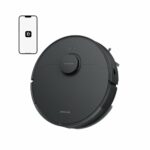
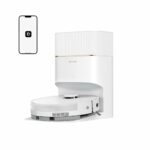
✨ VS Analyze · VacuumSpain comparison technology. AI-generated explanation based on verified technical data.
Introduction
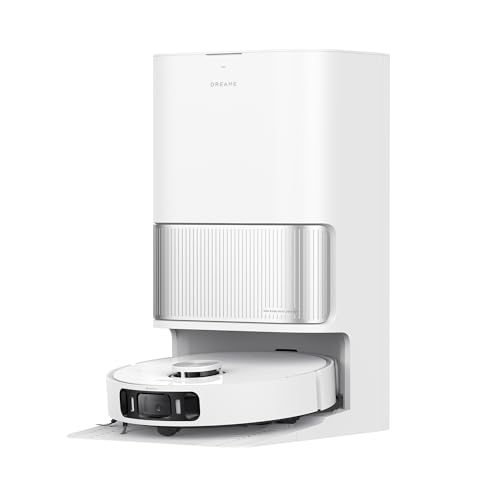
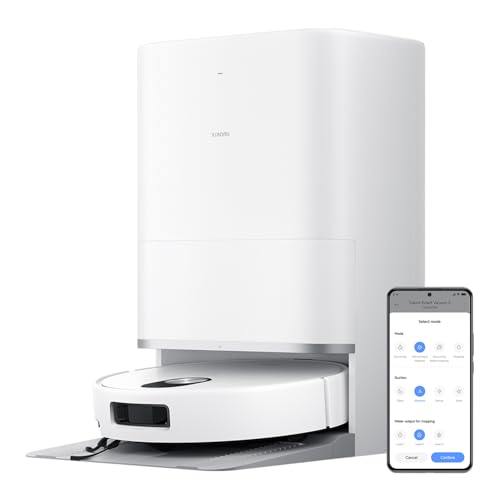
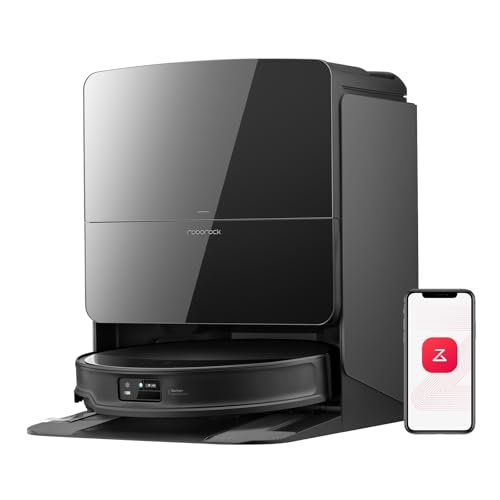
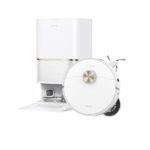
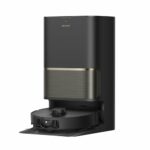
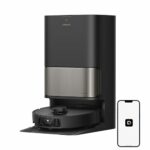
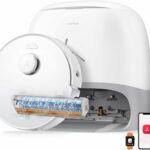
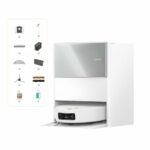
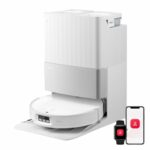
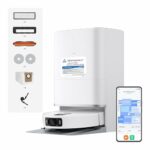
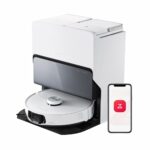
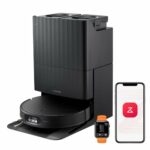
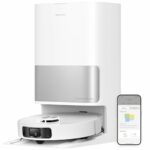
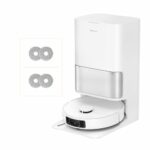
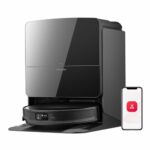
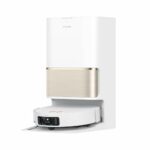
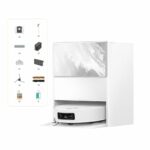
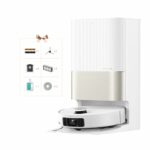
We're looking at three 2025 models that represent the latest in autonomous cleaning technology. The Dreame L40 Ultra AE, the Xiaomi Robot Vacuum 5 and the Roborock Saros 10R arrive on the market with complete multifunction bases and advanced navigation systems, although each manufacturer has made different technical decisions worth analysing.
Dreame opts for 19,000 Pa power with dirt detection functions on both mops and floor, whilst Xiaomi reaches 20,000 Pa in a more compact design. Roborock, the world's leading brand in this sector, presents the Saros 10R with 18,500 Pa but with the highest battery capacity in the group and a StarSight 2.0 navigation system with dual camera. Three proposals designed for homes seeking total automation in vacuuming and mopping.
Power and Suction
The Xiaomi Robot Vacuum 5 leads this section with 20,000 Pa of suction power, although the difference with the Dreame L40 Ultra AE's 19,000 Pa is minimal in daily practice. The Roborock Saros 10R stays at 18,500 Pa, a figure more than sufficient for any type of household dirt.
All three units feature different main brush systems. Dreame and Xiaomi use the TriCut 3.0, which combines bristles with blades to cut tangled hair. Roborock opts for its DuoDivide anti-tangle system, specifically designed to push hair towards the central suction gap and prevent it from wrapping around the brush. This difference can be particularly noticeable in homes with pets.
Regarding main brush lifting during mopping, Dreame and Roborock incorporate it, whilst the Xiaomi model does not. This means the Xiaomi Robot Vacuum 5 keeps the brush in contact with the floor even when mopping, which can be counterproductive in some scenarios.
The side brush presents different configurations. Xiaomi and Roborock include side extension to improve corner cleaning, a function the Dreame doesn't have. However, only the Roborock Saros 10R lifts the side brush during mopping and features an anti-tangle system on this component. Xiaomi also incorporates the anti-tangle function on its side brush, whilst Dreame does without it.
Mopping
All three robots use dual rotating mop systems, but differences appear in the implementation details. All extend the mops to better reach edges, although Dreame adds the Roboswing system which performs a characteristic movement to slightly introduce the mop under furniture and protrusions.
Mop lifting varies: Dreame reaches 10.5 mm, Roborock offers an adjustable range between 12 and 22 mm, and Xiaomi reaches up to 15 mm. These differences matter when climbing carpets or passing over floor transitions.
An important distinction: the Roborock Saros 10R mops with warm water, whilst Dreame and Xiaomi use cold water. Water temperature influences the ability to dissolve grease and adhered dirt. Additionally, Roborock automatically removes the mops at the base when you only need to vacuum, something neither Dreame nor Xiaomi do.
Dreame and Roborock incorporate dirt detection on both the mops and the floor, allowing the robot to identify dirtier areas and adjust its behaviour. The Xiaomi Robot Vacuum 5 lacks these intelligent detection functions.
All three bases wash the mops with hot water and dry them with hot air, ensuring they don't remain damp between cleans. They also include self-cleaning of the washing tray, with second-generation systems on Dreame and version 2.0 on Roborock.
Navigation System
Here we find significant differences. The Dreame L40 Ultra AE features a traditional LiDAR turret with front AI camera that recognises up to 120 different types of obstacles. It includes LED for night vision and allows remote camera access from your mobile.
Xiaomi has opted for a retractable LiDAR without AI camera, which explains its lower height. It has a front 3D laser sensor to avoid obstacles, but doesn't offer visual object recognition or remote camera access. It also doesn't include a front LED.
The Roborock Saros 10R presents the StarSight 2.0 system with dual AI camera capable of identifying up to 108 types of obstacles. It incorporates LED for night vision and remote camera access. Its RR Mason 11.0 algorithm manages navigation and intelligent route planning. Additionally, it recognises stains through AI and adapts cleaning accordingly, a function absent in the other two models.
Dreame and Roborock recognise pets thanks to their cameras, whilst Xiaomi cannot do so as it lacks this hardware. For homes with animals, this capability enables functions such as avoiding areas where the pet is resting or following it to clean up after it.
Autonomy and Battery
The Roborock Saros 10R sets itself apart with a 6,400 mAh battery offering 180 minutes of autonomy. This superior capacity allows cleaning large homes in a single run without needing intermediate recharges.
Dreame and Xiaomi share a 5,200 mAh battery. Xiaomi specifies 140 minutes of autonomy, whilst Dreame doesn't provide this data in the available documentation. The 1,200 mAh difference compared to Roborock can translate to 30-40 minutes less continuous operation.
For homes up to 120-150 m², any of the three is sufficient. In larger surfaces or complex layouts, Roborock's battery provides greater safety margin.
Smart Functions
All three robots overcome obstacles up to 20 mm in height, allowing them to pass over thick cables, door frames or small level changes without getting stuck.
The Roborock Saros 10R incorporates its own voice assistant in addition to compatibility with Alexa and Google Home. Dreame and Xiaomi only work with external assistants. This feature allows the Roborock to respond to commands without needing connection to third-party services.
Multifunction Cleaning Base
All three bases perform auto-emptying of the dust container, washing with hot water and drying with hot air of the mops. They also include self-cleaning of the tray where the mops are washed.
The main difference lies in the detergent tank: Dreame and Roborock incorporate it, dispensing product during mop washing to improve results. The Xiaomi Robot Vacuum 5 doesn't have this function.
In storage capacities, the Dreame L40 Ultra AE stands out with a 3.2-litre dust bag and 4.5-litre clean water tank. Its dirty water tank reaches 4 litres. Xiaomi offers 2.5 litres in the dust bag, 4 litres of clean water and 3.8 litres of dirty water. Roborock has a 2.5-litre bag, 4 litres of clean water and 3 litres of dirty water.
These differences impact maintenance frequency. The Dreame requires emptying the bag and refilling tanks less frequently, an advantage for those seeking maximum autonomy between manual interventions.
Dreame includes an optional plumbing connection kit purchased separately, allowing continuous clean water supply and automatic drainage. Xiaomi and Roborock don't offer this possibility.
Dimensions
The robot's height is crucial for accessing under furniture. The Roborock Saros 10R measures only 79.8 mm, the Xiaomi Robot Vacuum 5 reaches 88 mm and the Dreame L40 Ultra AE reaches 97 mm. In homes with low sofas, beds with little clearance from the floor or kitchen units with reduced plinths, every centimetre counts.
All three have similar diameters: 350 mm for Dreame and Xiaomi, 353 mm for Roborock. This measurement barely influences manoeuvrability between obstacles.
The bases also present variations. Dreame's measures 340 mm wide, 590.5 mm high and 456.7 mm deep. Xiaomi has 360 mm wide, 572 mm high and 470 mm deep. Roborock reaches 381 mm wide, 488 mm high and 475 mm deep. Roborock's base is the lowest and widest, whilst Dreame's is the tallest and narrowest.
Real-World Experience
For large homes, the Roborock Saros 10R offers clear advantages: greater battery autonomy, lower height to access under more furniture and dual-camera navigation system that optimises routes. Its ability to automatically remove the mops is practical when you only need to vacuum certain areas.
In homes with pets, both Dreame and Roborock recognise animals via camera. Roborock adds the DuoDivide system specifically designed to prevent hair tangles, whilst Dreame relies on the TriCut 3.0. Xiaomi, without AI camera, cannot identify pets but its anti-tangle side brush helps reduce maintenance.
The Dreame L40 Ultra AE stands out in maintenance autonomy thanks to its 3.2-litre bag and larger water tank capacity. If you're looking to intervene as little as possible with the robot, this configuration reduces the frequency of emptying and refilling. Its dirt detection system on mops and floor optimises results without needing manual configuration.
Xiaomi presents the best balance between power (20,000 Pa) and reduced height (88 mm), allowing powerful suction in low spaces. The absence of AI camera and detergent tank simplifies the design but limits advanced functions. For those prioritising powerful vacuuming and access under furniture without needing visual object recognition, it's a balanced option.
Roborock's warm water improves results on floors with grease or adhered dirt, especially in kitchens. Dreame and Xiaomi with cold water obtain good results in general cleaning, but may require additional passes on difficult stains.
Conclusion: Which to Choose?
Choose the Dreame L40 Ultra AE if you're looking for maximum autonomy between maintenance thanks to its 3.2-litre bag and large water tanks. Its dirt detection on mops and floor optimises cleaning without manual configuration. The detergent tank improves mopping results. Also interesting if you value the future option of plumbing connection, although it requires purchasing the kit separately.
Choose the Xiaomi Robot Vacuum 5 if you prioritise the highest suction power (20,000 Pa) in a design of only 88 mm height that accesses under more furniture than the Dreame. A good option for homes with hard floors and low furniture where suction power and access matter more than advanced AI functions or visual recognition.
Choose the Roborock Saros 10R if you want the most complete proposition: greater battery autonomy (180 minutes), lower