✨ VS Analyses · VacuumSpain comparison technology. Explanation created with AI from verified technical data.
Introduction
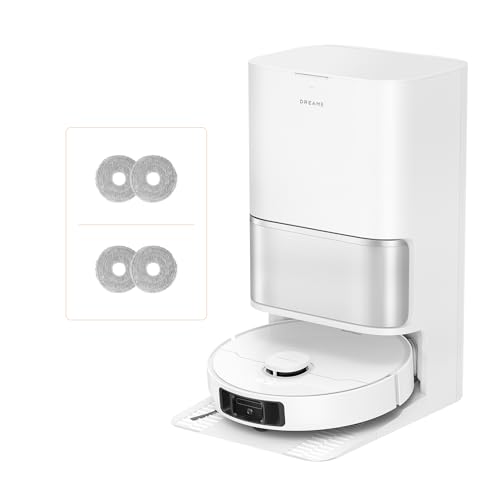
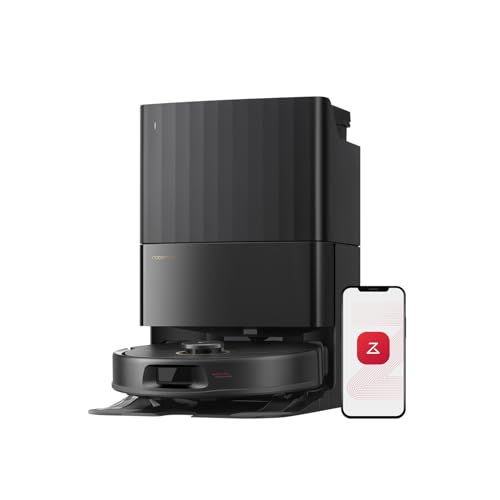
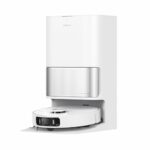
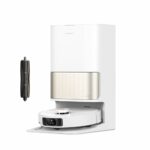
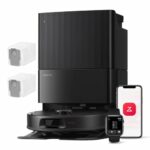
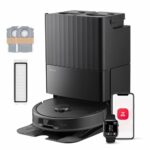
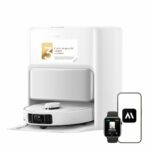
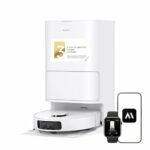
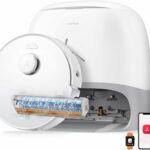
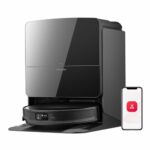
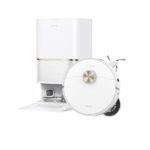
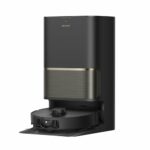
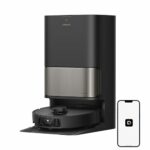
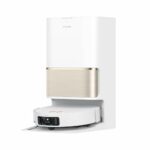
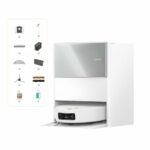
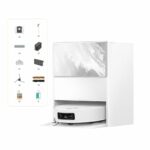
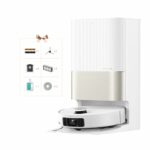
When choosing between high-end robotic vacuum cleaners, understanding the nuances becomes essential. The Dreame L10s Ultra Gen 2 arrived in 2024 as a robust option within the brand's premium range, whilst the Dreame L10s Ultra Gen 3 represents the latest iteration launched in November 2025. Joining this comparison is the Roborock Qrevo S5V from 2025, a model from the world's leading manufacturer in this category.
All three feature multifunction bases capable of auto-emptying dust, washing mops, and drying them with hot air. They're designed for users seeking maximum automation in homes with mixed flooring, particularly those who want effective mopping without manual intervention. The key differences lie in suction power, intelligent features, and certain design refinements that affect day-to-day performance.
Power and suction
The most striking difference appears in raw suction power. The Dreame L10s Ultra Gen 3 reaches 25,000 Pa, more than doubling the Gen 2's 10,000 Pa. This leap represents a significant upgrade for households with deep-pile carpets or persistent dirt. The Roborock Qrevo S5V sits comfortably in the middle at 12,000 Pa, which proves more than adequate for most residential scenarios.
Regarding brush systems, the Roborock deploys its DuoDivide anti-tangle main brush, a design that pushes hair towards the central suction channel to minimise tangles. Both Dreame models use a SimpliCut brush, which combines bristles with cutting elements to reduce hair wrapping. In practice, these systems work well for pet owners, though the DuoDivide has earned particular praise for its efficiency.
The Gen 3 introduces an extendable side brush, allowing it to reach deeper into corners and along edges. Neither the Gen 2 nor the Qrevo S5V offer this feature. The Roborock counters with an anti-tangle side brush, something neither Dreame model provides. None of the three elevate their main or side brushes during mopping.
Mopping
All three robots use dual rotating mops, a configuration that applies consistent pressure and movement for effective floor cleaning. Each model extends its mops to reach edges better—the Dreame units achieve this through their RoboSwing system, which adds a slight swaying motion to push the mop beneath furniture edges and skirting boards. The Qrevo S5V extends its mops without this additional movement.
Mop elevation stands at 10.5 mm for both Dreame models and 10 mm for the Roborock. This half-millimetre difference proves negligible in real-world use. What matters more is that all three can lift their mops sufficiently to avoid dragging wet pads across carpets during mixed-floor cleaning.
The multifunction bases wash mops with hot water during cleaning cycles, ensuring the robots return to work with fresh pads. They also dry the mops using hot air afterwards, which prevents odours and bacterial growth. None of the models automatically detach their mops at the base for vacuum-only sessions, nor do they detect dirt levels on mops or floors to trigger additional cleaning passes.
Navigation system
Each robot navigates using LiDAR laser mapping housed in a top-mounted turret, creating precise floor plans and efficient cleaning routes. All three incorporate obstacle avoidance systems to navigate around everyday items.
Both Dreame models feature a frontal 3D laser sensor that enhances obstacle detection, particularly useful for recognising pets. This sensor allows the Gen 2 and Gen 3 to identify animals and adjust their cleaning behaviour accordingly. The Roborock Qrevo S5V lacks this 3D sensor and cannot specifically recognise pets, though its general obstacle avoidance remains competent.
None of the three includes a front-facing camera, LED lighting for night vision, or remote camera access. They rely purely on laser-based navigation rather than visual AI. The Dreame models use CleanGenius AI for intelligent cleaning planning, whilst the Qrevo S5V employs Roborock's SmartPlan system. Both approaches analyse room layouts and adjust cleaning strategies, though Roborock's reputation for app reliability and user experience gives it an edge here.
Battery and autonomy
Battery capacity stands identical at 5,200 mAh across all three models. However, runtime varies noticeably. The Dreame L10s Ultra Gen 2 manages 240 minutes, the Gen 3 runs for 231 minutes, and the Qrevo S5V achieves 180 minutes. The Gen 3's slightly reduced runtime compared to its predecessor likely reflects the increased power consumption of its 25,000 Pa motor.
For most homes, these differences matter little. Even the Qrevo S5V's 180 minutes provides ample time to clean large properties, as the robots automatically return to recharge and resume if needed. The manufacturer hasn't specified charging times or maximum recommended floor areas for these models.
Intelligent features
All three robots can climb obstacles up to 20 mm high, allowing them to traverse standard door thresholds and thick rugs without assistance. This capability proves essential for homes with varied flooring levels.
None of the models includes a robotic arm for additional cleaning tasks. They all support external voice assistants like Alexa and Google Home, but none features a proprietary voice assistant built into the robot itself.
Multifunction base
The bases handle three core tasks: auto-emptying the robot's dust bin, washing the mops with hot water, and drying them with hot air. The Dreame L10s Ultra Gen 3 distinguishes itself with third-generation automatic tray cleaning, which maintains the washing area inside the base without manual intervention. Neither the Gen 2 nor the Qrevo S5V offer this self-cleaning tray feature.
Both Dreame models include a detergent dispenser that adds cleaning solution during mop washing. The Roborock Qrevo S5V lacks this feature, relying on water alone. For households dealing with stubborn kitchen grime or sticky spills, the detergent option proves genuinely useful.
Dust bag capacity reaches 3.2 litres in both Dreame units, compared to 2.7 litres in the Qrevo S5V. Clean water tanks measure 4.5 litres for the Dreame models and 4 litres for the Roborock. Dirty water capacity sits at 4 litres and 3.5 litres respectively. These differences translate to slightly longer intervals between maintenance for the Dreame models, though the Roborock's smaller tanks remain perfectly adequate for most homes.
Both Dreame models support an optional plumbing connection kit, sold separately, that allows automatic water refilling and draining. The Qrevo S5V doesn't offer this option. Worth mentioning, but not a deciding factor unless you're committed to absolute hands-off operation.
None of the bases include UV disinfection or automatic mop changing systems.
Dimensions
The robots themselves measure remarkably similar. The Dreame models have a 350 mm diameter and 97 mm height, whilst the Qrevo S5V measures 353 mm across and 96.5 mm tall. That half-millimetre height advantage for the Roborock makes no practical difference when navigating under furniture.
Base dimensions show more variation. All three measure 340 mm wide, but the Dreame bases stand 590-590.5 mm tall compared to the Qrevo S5V's more compact 521 mm. The Roborock base extends deeper at 487 mm versus 456.7-457 mm for the Dreame units. If you're tight on vertical space, the Qrevo S5V's lower profile might prove advantageous.
Real-world experience
For large homes, the Dreame L10s Ultra Gen 2's 240-minute runtime offers the longest single-charge coverage, though all three handle extensive properties comfortably through automatic recharge and resume. The Gen 3's exceptional 25,000 Pa suction makes it particularly effective in homes with thick carpets or persistent dirt tracked in from outdoors.
Pet owners face an interesting choice. The Dreame models' pet recognition via 3D laser sensors adds a layer of intelligence when navigating around animals, whilst the Roborock's DuoDivide brush and anti-tangle side brush excel at managing hair without manual cleaning. Both approaches work well, addressing the problem from different angles.
The Gen 3's extendable side brush improves corner coverage, something that becomes noticeable in square rooms and along skirting boards. The Roborock's reputation for reliable software and intuitive app control shouldn't be underestimated—Roborock leads the market partly because their systems simply work without fuss.
For mopping performance, the detergent dispensers in both Dreame models provide an edge when dealing with kitchen floors or sticky residues. The Gen 3's self-cleaning tray reduces maintenance further, keeping the base fresher between manual cleans.
Conclusion: which to choose?
Choose the Dreame L10s Ultra Gen 2 if you want solid all-round performance with the longest battery life, effective mopping with detergent support, and pet recognition at a potentially lower price point than the newer Gen 3. It suits medium to large homes where the 10,000 Pa suction handles your flooring adequately.
Choose the Dreame L10s Ultra Gen 3 if you need maximum suction power for deep carpets or challenging dirt, want the latest refinements including the extendable side brush and self-cleaning base tray, and prefer the newest technology. It's the best option for demanding environments or homes where automation and power matter most.
Choose the Roborock Qrevo S5V if you value Roborock's proven reliability and superior app experience, need exceptional anti-tangle brush systems for pet hair, or prefer a more compact base. It balances strong performance with the brand's reputation for dependable long-term operation, making it ideal for users who prioritise consistent results over cutting-edge specifications.