✨ VS Analyze · VacuumSpain comparison technology. AI-generated explanation based on verified technical data.
Introduction
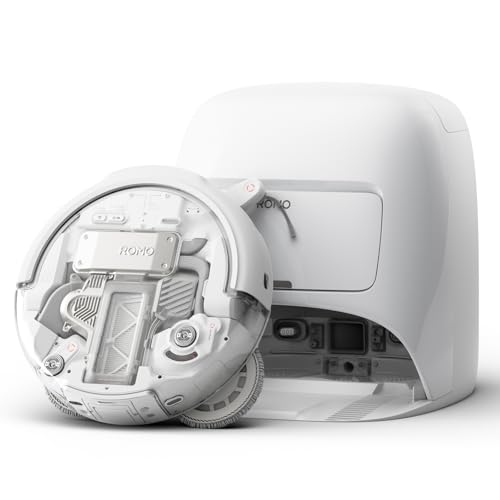
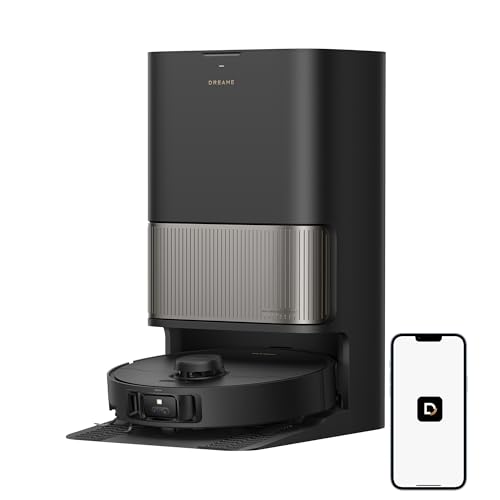
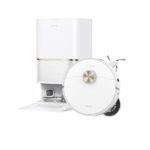
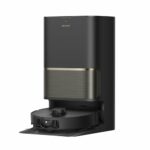
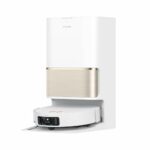
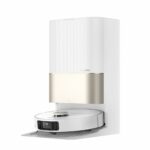
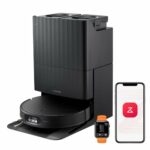
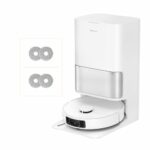
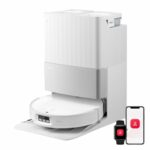
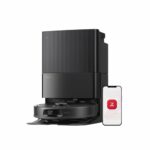
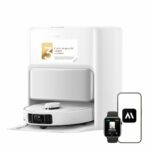
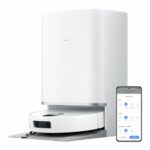
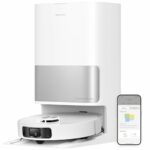
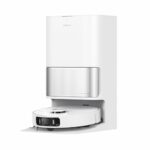
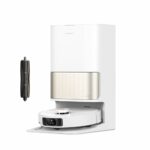
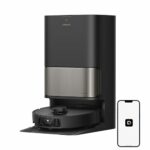
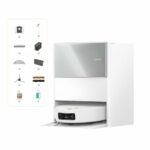
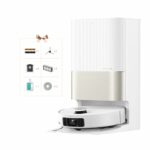
The DJI Romo A (Transparent Robot) and the Dreame L40s Pro Ultra represent two high-end proposals launched in 2025. These are units with complete multifunction bases, designed for users seeking total autonomy in home cleaning. The DJI model stands out for its raw power and transparent design, whilst the Dreame focuses on artificial intelligence and versatility with obstacles. Both integrate advanced laser navigation systems, mopping with rotating mops and bases that wash and dry automatically.
These are robots prepared for medium and large homes, with the capacity to manage carpets, hard floors and parquet without manual intervention. The presence of cameras with remote access and object recognition makes them interesting options for homes with pets or specific surveillance needs during cleaning.
Power and Suction
The most notable difference in this section is marked by the DJI Romo A with its 25000 Pa of suction power. This is a considerable figure that exceeds the Dreame L40s Pro Ultra by 6000 Pa. In practice, this translates into greater capacity to extract ingrained dirt from long-pile carpets or vacuum heavy debris such as sand or dry soil.
Regarding the main brush, the DJI features a Dividido system (probably similar to the DuoDivide from other brands), whilst the Dreame mounts a Doble Cepillo Antienredos, most likely the HyperStream with two brushes anchored at one end. Both designs are intended to minimise hair tangles, something essential in homes with pets.
Both models lift the main brush when mopping, preventing it from getting unnecessarily wet. They also feature an extendable side brush to better reach corners. The difference is that the Dreame also lifts the side brush during mopping, something the DJI doesn't do. This allows the Dreame to mop without the side brush interfering or getting wet, improving the final result. The DJI incorporates a double anti-tangle side brush, whilst the Dreame has one with an anti-tangle system.
Mopping
Both robots use two rotating mops, the current standard in the high-end range. The DJI Romo A lifts the mops without specifying exact height, whilst the Dreame raises them up to 10.5 mm, sufficient to pass over carpets without wetting them. Both extend the mops to better reach edges, and the Dreame adds the Roboswing 3.0 system, that swinging movement that allows the mop to get under overhangs or low furniture.
In mop washing, the Dreame makes a difference with water at 75°C, a high temperature that improves the elimination of grease and bacteria. The DJI also washes the mops with hot water, although the exact temperature is not specified. Drying works with hot air in the DJI and at 45°C in the Dreame, which speeds up the process and prevents bad odours.
The Dreame allows you to leave the mops at the base when you only want to vacuum, a practical function that is not confirmed in the DJI. Both detect dirt on both the mops and the floor, adjusting mopping as needed. This can be especially noticeable in kitchens or high-traffic areas, where the robot automatically goes over the dirtiest areas again.
Navigation System
The DJI Romo A integrates a solid-state LiDAR, advanced technology that offers precise mapping without moving parts. The Dreame L40s Pro Ultra mounts a Torreta Lidar 3D, more traditional but equally effective. Both include a camera with artificial intelligence and a front 3D laser sensor to avoid obstacles.
The Dreame's advantage lies in its ability to recognise up to 180 different obstacles, a detail that the DJI doesn't specify. It also detects curtains, something the DJI doesn't do, avoiding tangles or pulls. The Dreame confirms pet recognition, useful for adjusting routes or sending notifications with photos.
Both offer remote access to the camera and LED for night vision. The Dreame incorporates CleanGenius, its AI-based intelligent cleaning system, whilst the DJI also integrates similar functions without a specific commercial name. In homes with many objects on the floor or pets, the Dreame may prove more accurate thanks to its larger recognition library.
Autonomy and Battery
Here the Dreame L40s Pro Ultra takes the lead with 5200 mAh and 220 minutes of autonomy. The DJI Romo A features 5000 mAh and reaches 180 minutes. That's a 40-minute difference that can set the pace in large homes or complete cleans without intermediate recharging.
For homes up to 150-180 m², either one has sufficient autonomy. On larger surfaces, the Dreame offers a greater safety margin. Neither specifies charging time, although in this range it usually takes around 4-6 hours for a full charge.
Smart Functions
The DJI Romo A overcomes obstacles up to 20 mm, sufficient to pass over thick cables or small uneven surfaces. The Dreame L40s Pro Ultra goes further with 22-40 mm thanks to an extra system, probably liftable wheels or structure. This allows it to navigate thick carpets, thresholds or even small steps without getting stuck.
The Dreame includes a simple proprietary voice assistant, whilst this function is not confirmed in the DJI. Neither features a robotic arm, something still reserved for experimental or niche models.
Multifunction Cleaning Base
Both bases feature self-cleaning of the washing tray. The DJI uses a pressure nozzle, whilst the Dreame boasts third generation in this system. Both include a detergent tank to dispense during mop washing, improving mopping hygiene.
The Dreame's dust bag has 3.2 L compared to the DJI's 2.4 L. In practice, this means changing it every 2-3 months instead of every month and a half, depending on use. The Dreame's clean water tank is 4.5 L, half a litre more than the DJI. Dirty water is also larger in the Dreame: 4 L compared to 3.2 L.
The Dreame offers an optional kit for connection to plumbing, something the DJI doesn't have. It's purchased separately and allows automatic refilling and emptying of tanks, although it's not a standard integrated function. Neither includes UV disinfection.
Dimensions
The DJI Romo A measures 98 mm in height, almost 6 mm less than the Dreame L40s Pro Ultra with its 103.8 mm. This difference can be decisive for passing under low furniture, sofas or beds with little clearance from the floor. The diameter is practically identical: 351 mm in the DJI and 350 mm in the Dreame.
The bases present different configurations. The DJI's is wider (453 mm compared to 340 mm) but less tall (440 mm compared to 590.5 mm). The Dreame's grows vertically, occupying less floor space but requiring more free height. In depth, the Dreame reaches 456.7 mm and the DJI 425 mm. It's advisable to measure the available space before deciding, especially if you're planning to place the base under furniture or in a corner with shelving.
Real-World Usage Experience
For large homes over 180 m², the Dreame L40s Pro Ultra offers greater autonomy and capacity in the base tanks. If you have pets, both feature anti-tangle brushes, although the Dreame adds specific animal recognition and a larger obstacle library.
The DJI stands out in pure power, ideal for thick carpets or floors with persistent dirt. Its lower height allows it to access tighter spaces under furniture. The Dreame compensates with better ability to navigate high obstacles, useful in homes with many uneven surfaces or carpets of different thicknesses.
In mopping, the Dreame washes mops at higher temperature and allows you to leave them at the base for vacuum-only sessions. It also lifts the side brush when mopping, avoiding interference. The Roboswing system can make a difference in kitchens with low furniture or protruding skirting boards.
Both require minimal maintenance thanks to the multifunction base. Emptying tanks and changing bags is spaced out over weeks or months depending on use. Dirt detection automatically adjusts intensity, reducing unnecessary consumption.
Conclusion: Which to Choose?
Choose the DJI Romo A (Transparent Robot) if: You're looking for the highest suction power on the market, you have thick carpets or pets that shed a lot of hair, you need to pass under very low furniture (less than 10 cm) and you value an innovative design with visible components. Also if your home doesn't exceed 150 m² and you prefer a more compact base in height.
Choose the Dreame L40s Pro Ultra if: You live in a large house that requires more autonomy, you have many obstacles or uneven surfaces greater than 2 cm, you're looking for the most complete object recognition (180 obstacles, curtains, pets) and you prefer greater capacity in the base tanks to forget about maintenance for longer. The optional plumbing connection kit may interest you if you're planning a permanent installation. Also if you value mop washing at 75°C and the Roboswing function to reach under overhangs.