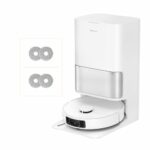
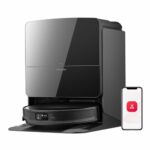
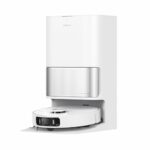
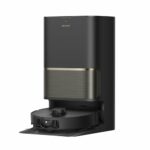
✨ VS Analyze · VacuumSpain comparison technology. AI-generated explanation based on verified technical data.
Introduction
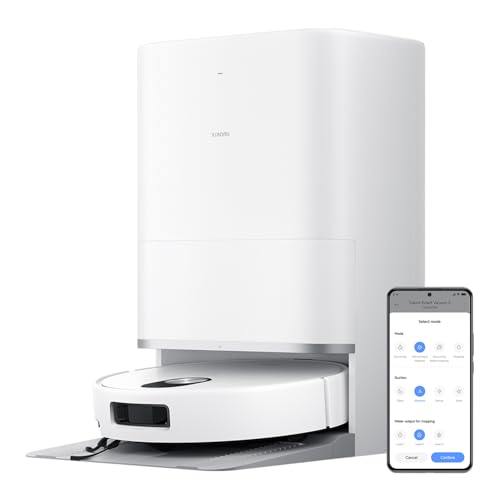
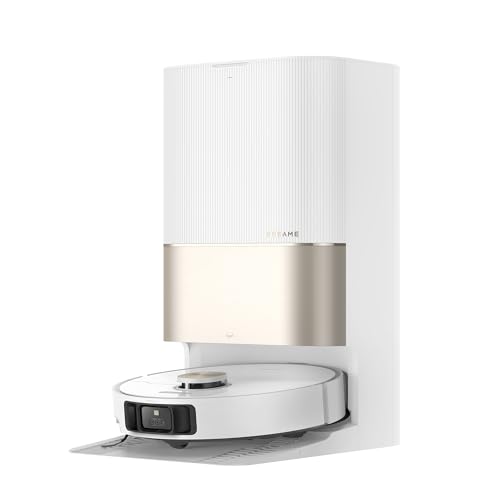
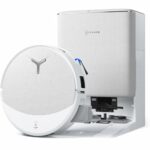
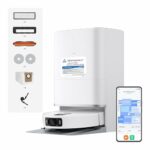
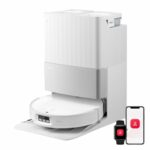
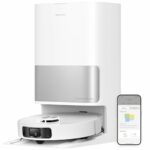
The Dreame X40 Ultra and the Xiaomi Robot Vacuum 5 represent two distinct approaches within the premium range of robot vacuum cleaners with multifunctional base stations. The former arrived on the market in 2024, whilst the Xiaomi model was launched in 2025. Both units are designed for homes seeking complete cleaning automation, combining powerful suction with advanced mopping and bases that handle maintenance.
These robots are intended for medium or large homes where the user prefers to delegate cleaning tasks as much as possible. The Dreame focuses on advanced artificial intelligence and sophisticated detection functions, whilst the Xiaomi stands out for its raw suction power and more compact design.
Power and Suction
The most notable difference in suction is marked by the Xiaomi Robot Vacuum 5 with its 20,000 Pa of suction power, almost double the Dreame X40 Ultra's 12,000 Pa. In practice, this translates to greater capacity for lifting ingrained dirt from carpets or vacuuming heavier particles.
The brushing system shows different philosophies. The Dreame features a simple anti-tangle brush, whilst the Xiaomi opts for the TriCut 3.0, which combines bristles with blades to cut hair and reduce tangles. Both models include an extendable and anti-tangle side brush.
Where the Dreame X40 Ultra takes the advantage is in brush lifting. Both the main brush and the side brush can be raised during mopping, preventing them from wetting carpets or the main brush from interfering with the mops. The Xiaomi does not have this function, which may limit its versatility in homes with combined carpets and hard floors.
Mopping
Both robots use two rotating mops for mopping, but the Dreame X40 Ultra also incorporates the Roboswing system, a lateral movement that allows the mop to reach under furniture and ledges. Both models extend the mops to reach edges and corners.
The Xiaomi Robot Vacuum 5 raises the mops up to 15 mm when it detects carpets, exceeding the Dreame's 10.5 mm. This can make a difference on high-pile carpets or thick doormats.
Dirt detection is exclusive to the Dreame X40 Ultra. This robot analyses both the state of the mops and floor dirt, re-mopping areas it detects as dirtier and washing the mops again when necessary. The Xiaomi does not incorporate these intelligent detection functions.
Another advantage of the Dreame is the automatic mop removal at the base. When you only want to vacuum without mopping, the robot removes the mops automatically when returning to the base. With the Xiaomi you would have to do this manually.
Navigation System
Here the differences are significant. The Dreame X40 Ultra features a 3D LiDAR turret along with dual AI cameras that recognise up to 120 different obstacles. It identifies pets, curtains and everyday objects, adapting its behaviour according to what it finds. It includes LED for night vision and allows remote access to the camera from the app.
The Xiaomi Robot Vacuum 5 uses retractable LiDAR and a front 3D laser sensor to avoid obstacles, but does not incorporate a camera. This means precise navigation and object avoidance, but without specific recognition of pets, curtains or other elements that the Dreame does detect.
The Dreame works with the AI Sage 11.0 Qualcomm processor and the CleanGenius function for adaptive intelligent cleaning. Both models offer intelligent cleaning via AI, but the level of recognition and environmental analysis is superior in the Dreame robot.
Autonomy and Battery
The Dreame X40 Ultra features a 6,400 mAh battery that offers 194 minutes of autonomy. The Xiaomi Robot Vacuum 5 has 5,200 mAh with 140 minutes of continuous operation. The difference is considerable: almost an hour more autonomy for the Dreame.
For large homes or complete cleans that include intensive vacuuming and mopping, the Dreame's greater autonomy reduces interruptions for recharging. The Xiaomi, with its greater suction power, consumes more energy, which partially explains the shorter battery life despite being a more recent model.
Smart Functions
Both robots can overcome obstacles, albeit with slight differences. The Dreame X40 Ultra reaches up to 22 mm in height, whilst the Xiaomi reaches 20 mm. Two millimetres may seem little, but they make a difference with certain types of carpet or transitions between rooms.
Both models are compatible with external voice assistants such as Alexa or Google Home, allowing voice control of basic functions.
Multifunctional Cleaning Base
The bases of these robots are complete multifunctional units: they auto-empty dust, wash the mops with hot water and dry them with hot air. Both feature self-cleaning of the washing tray, although the Dreame X40 Ultra boasts a second generation of this system.
The major difference lies in the detergent tank. The Dreame X40 Ultra includes it, dispensing product during mop washing for greater effectiveness. The Xiaomi Robot Vacuum 5 does not incorporate this function.
In capacities, the Dreame has a slight advantage: 3.2-litre dust bag compared to 2.5 litres, 4.5-litre clean water tank compared to 4 litres, and 4-litre dirty water tank compared to 3.8 litres. These are minor differences, but they can translate to greater autonomy between maintenance.
The Dreame also offers an optional plumbing connection kit, which is purchased separately. It is not an integrated function, but may interest those seeking total automation by avoiding filling and emptying tanks.
Dimensions
The diameter is identical in both: 350 mm. The height makes a difference. The Xiaomi Robot Vacuum 5 measures 88 mm, whilst the Dreame X40 Ultra reaches 97 mm. Nine millimetres can determine whether or not the robot passes under certain low furniture, sofas or beds.
The bases have similar sizes. The Dreame's measures 340 mm wide, 590.5 mm high and 456.7 mm deep. The Xiaomi's is slightly wider (360 mm) and deeper (470 mm), but less tall (572 mm). It is advisable to measure the available space before deciding.
Real-World Experience
For homes with pets, the Dreame X40 Ultra offers clear advantages: specific animal recognition, dirt detection and greater autonomy to cover the entire surface without interruptions. The liftable main and side brushes prevent spreading hair during mopping.
If the priority is raw suction power, especially on carpets or with difficult dirt, the Xiaomi Robot Vacuum 5 with its 20,000 Pa is more effective. Its lower height also facilitates access under low furniture.
The Dreame excels in intelligence and automation: automatic mop removal, dirt detection, detergent tank and advanced obstacle recognition. For those seeking to intervene as little as possible, this model reduces manual maintenance.
In large homes, the Dreame's 194 minutes of autonomy compared to the Xiaomi's 140 can make a difference, especially if cleaning includes complete mopping that consumes more battery.
Conclusion: Which to Choose?
Choose the Dreame X40 Ultra if you seek the maximum level of automation and artificial intelligence. It is ideal for homes with pets where specific recognition and dirt detection provide real value. The greater autonomy makes it recommendable for large homes, and functions such as automatic mop removal or the detergent tank reduce manual intervention. If you value remote camera access or need to raise brushes during mopping in homes with combined carpets and hard floors, this model offers more versatility.
Choose the Xiaomi Robot Vacuum 5 if you prioritise maximum suction power and have low furniture under which you need the robot to access. With 20,000 Pa and 88 mm height, it is the most effective option for thick carpets or difficult dirt in vertically restricted spaces. Its 15 mm mop lift also exceeds the Dreame on high-pile carpets. It is suitable for small or medium homes where 140 minutes of autonomy is sufficient and you do not need advanced detection functions or pet recognition.