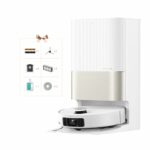
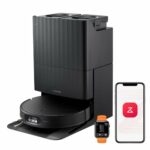
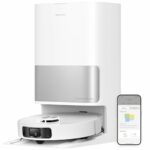
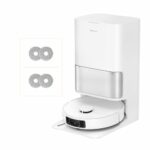
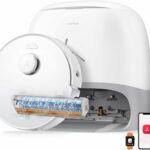
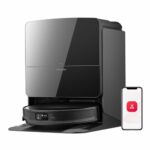
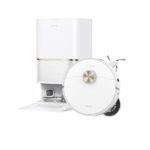
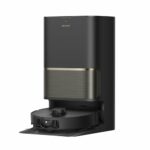
✨ VS Analyze · VacuumSpain comparison technology. AI-generated explanation based on verified technical data.
Introduction
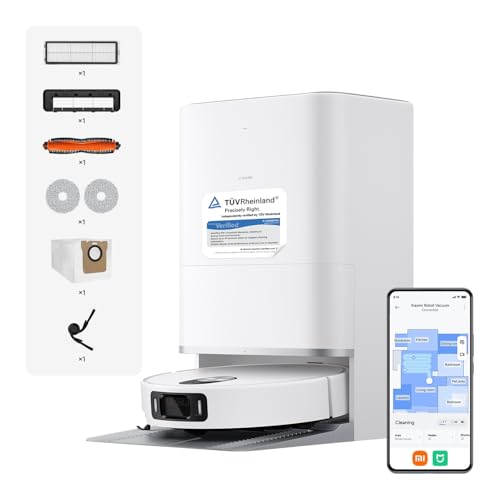
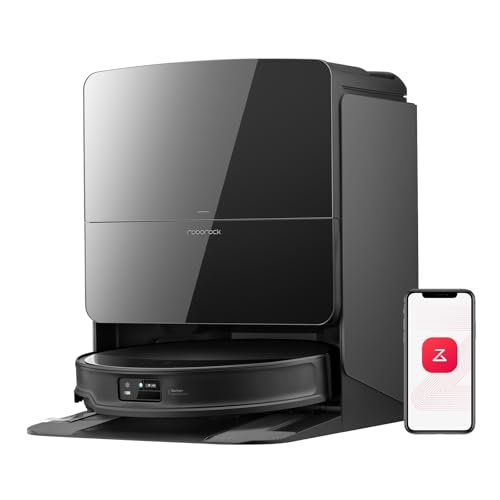
The Xiaomi Robot Vacuum 5 Pro and Roborock Saros 10R represent two flagship cleaning solutions launched in 2025, each bringing substantial technological improvements to the robot vacuum market. Both models feature multifunctional bases that handle everything from self-emptying to mop washing and drying, positioning them as premium options for users seeking minimal maintenance and maximum automation.
The Xiaomi model focuses on raw suction power and extensive object recognition capabilities, whilst the Roborock Saros 10R emphasises longer battery life, advanced navigation systems, and pet-specific features. These machines are designed for medium to large homes where automated cleaning cycles need to cover significant ground without constant supervision.
Suction Power and Brush Systems
When it comes to pure suction force, the Xiaomi Robot Vacuum 5 Pro delivers 20,000 Pa compared to the Roborock's 18,500 Pa. This difference becomes noticeable when tackling embedded dirt in carpets or dealing with heavier debris like cat litter or cereal spills.
The brush technologies differ fundamentally. Xiaomi employs its TriCut 3.0 system, which combines bristles with integrated cutting blades to slice through tangled hair during operation. The Roborock Saros 10R uses the DuoDivide anti-tangle design, which channels hair and debris towards the central suction opening to minimise wrapping around the roller itself. Both approaches reduce maintenance, though the DuoDivide system tends to require slightly less manual intervention with long hair.
Both machines can lift their main brushes during mopping to avoid dragging dirt across wet floors. The side brushes also feature anti-tangle properties and extend outwards to reach corners more effectively. However, only the Roborock Saros 10R can elevate its side brush during mopping, which prevents it from flicking water onto carpets or skirting boards when transitioning between floor types.
Mopping Performance
Each model uses dual rotating mops that extend to clean along edges. The Xiaomi Robot Vacuum 5 Pro lifts its mops 15 mm when encountering carpets, whilst the Roborock Saros 10R offers adjustable lifting between 12 mm and 22 mm, providing greater flexibility for thicker rugs.
Water temperature makes a tangible difference here. The Xiaomi cleans floors with cold water, whereas the Roborock Saros 10R uses warm water for mopping, which helps dissolve stubborn stains and sticky residues more effectively. In practice, this can mean fewer repeat passes on kitchen floors or areas prone to grease marks.
The Roborock takes automation further by automatically removing its mops at the base when switching to vacuum-only mode, eliminating the need for manual intervention. The Xiaomi model doesn't offer this feature, meaning you'll need to detach the mops yourself if you want a dry vacuuming session.
Both systems detect dirt on the mops and the floor itself, triggering additional cleaning passes or mop washing cycles as needed. This adaptive behaviour ensures consistently clean results without requiring user input during the cleaning cycle.
Navigation and Intelligence
Navigation approaches vary between these models. The Xiaomi Robot Vacuum 5 Pro uses a retractable LiDAR system combined with AI-powered cameras and 3D laser sensors. The Roborock Saros 10R employs its StarSight 2.0 system, which integrates dual AI cameras with 3D sensors for obstacle detection and room mapping.
The Xiaomi recognises up to 200 different objects, significantly more than the Roborock's 108 items. This extensive database helps it navigate around toys, cables, shoes, and household clutter with greater precision. However, the Roborock Saros 10R includes specific pet recognition capabilities, allowing it to identify and navigate around cats and dogs more carefully—a feature absent from the Xiaomi model.
Both machines provide remote camera access through their respective apps and include LED lighting for effective navigation in dark rooms or under furniture. The Roborock runs on its RR Mason 11.0 algorithm with SmartPlan 2.0 intelligence, whilst the Xiaomi's processing details aren't specified.
Battery Life and Coverage
Battery capacity differs substantially. The Roborock Saros 10R packs a 6,400 mAh cell delivering 180 minutes of runtime, compared to the Xiaomi's 5,200 mAh battery providing 140 minutes. This 40-minute advantage translates to roughly 30-40% more coverage per charge, which matters considerably in larger homes or when performing intensive mopping routines that drain power faster.
For homes exceeding 120 square metres, the extended runtime of the Roborock becomes increasingly valuable, reducing the need for mid-clean recharging sessions.
Smart Features
Both models can climb obstacles up to 20 mm high, though the Roborock Saros 10R specifically mentions capability for simple step transitions, suggesting optimised handling of thresholds between rooms.
The Roborock Saros 10R includes its own built-in voice assistant, allowing direct voice commands without requiring external smart speakers. The Xiaomi Robot Vacuum 5 Pro doesn't have this feature, though both models integrate with Alexa and Google Home for voice control through those platforms.
Multifunctional Base Station
Both bases automatically empty the robot's dust container into 2.5-litre bags and maintain 4-litre clean water tanks. The dirty water capacity differs slightly: 3.8 litres for the Xiaomi versus 3 litres for the Roborock.
Mop washing happens with hot water on both systems, and drying uses warm air to prevent odours and bacterial growth. The Roborock Saros 10R features its 2.0 version of base tray self-cleaning, whilst the Xiaomi includes standard self-cleaning functionality.
A significant practical difference: the Roborock Saros 10R includes a detergent dispenser that automatically adds cleaning solution during mop washing. The Xiaomi model doesn't have this tank, so mop cleaning relies solely on hot water. For households dealing with heavy soiling or sticky messes, the automated detergent dosing simplifies maintenance considerably.
Neither model offers UV disinfection or integrated plumbing connections, though optional kits aren't mentioned for either machine.
Physical Dimensions
The Roborock Saros 10R measures 79.8 mm in height, making it noticeably slimmer than the Xiaomi Robot Vacuum 5 Pro at 88 mm. This 8.2 mm difference allows the Roborock to access spaces under low furniture, sofas, and bed frames that the Xiaomi simply cannot reach. Diameter remains similar: 350 mm for the Xiaomi versus 353 mm for the Roborock.
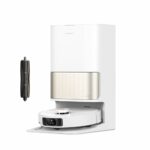
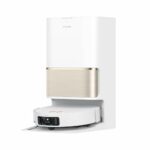
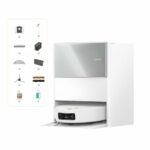
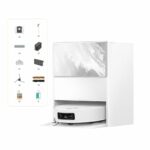
Base station footprints differ more substantially. The Xiaomi base stands 572 mm tall compared to the Roborock's 488 mm—nearly 85 mm shorter. Width and depth are comparable: 360×470 mm (Xiaomi) versus 381×475 mm (Roborock). The more compact Roborock base fits more easily under counters or in utility cupboards where vertical space is limited.
Real-World Usage Scenarios
For larger properties, the Roborock Saros 10R's extended battery life and warm water mopping deliver more thorough cleaning across expansive floor plans without requiring mid-session charging. The lower profile also ensures it reaches under more furniture pieces during each cycle.
Pet owners benefit specifically from the Roborock's dedicated animal recognition and the anti-tangle DuoDivide brush, though the Xiaomi's higher suction power helps extract embedded pet hair from carpets more aggressively. The automatic mop removal on the Roborock prevents damp mops from sitting on the robot between cleaning sessions, which matters in multi-pet households where frequent vacuum-only runs are common.
The Xiaomi Robot Vacuum 5 Pro excels in homes with substantial clutter or varied objects, where its recognition of 200 items helps it navigate more confidently. The extra suction power also proves valuable on high-pile carpets or in homes with children where crumbs and small debris accumulate frequently.
Maintenance convenience leans towards the Roborock thanks to its detergent dispenser and automatic mop removal, reducing the number of manual tasks required between cleaning cycles. This makes it particularly suitable for users seeking maximum automation with minimal intervention.
Conclusion: Which Should You Choose?
Choose the Xiaomi Robot Vacuum 5 Pro if: you prioritise maximum suction power for deep carpet cleaning, need extensive object recognition for cluttered spaces, or have a smaller to medium-sized home where the 140-minute runtime suffices. The higher suction makes this model especially effective for households with children or heavy foot traffic.
Choose the Roborock Saros 10R if: you own a larger property requiring extended battery life, keep pets that need specific recognition features, want warm water mopping with automatic detergent dispensing, or need a slimmer robot to access low-clearance furniture. The automatic mop removal and more compact base station also suit users seeking maximum automation and space efficiency. The built-in voice assistant adds convenience for those preferring direct voice interaction without external speakers.